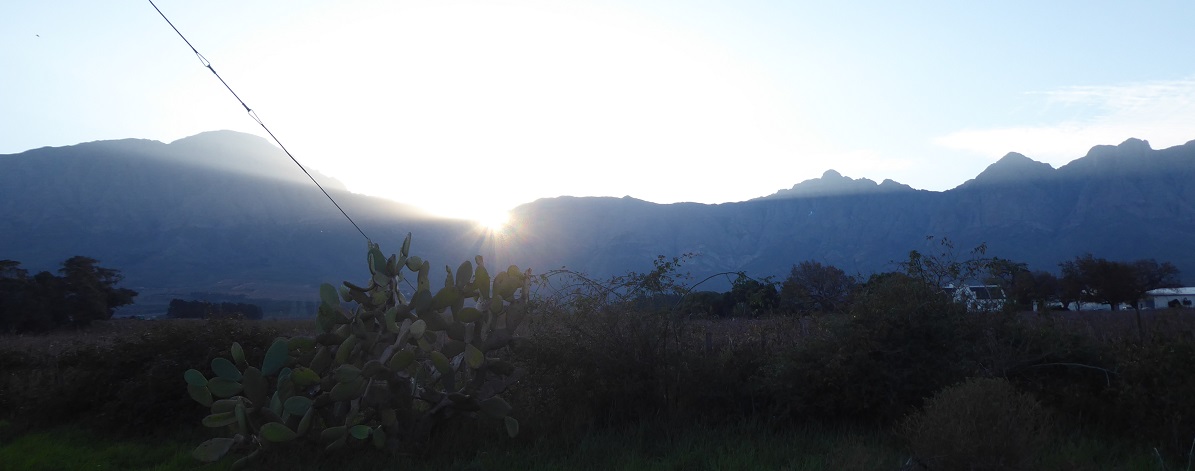
Winter has definitely arrived. The days are short and although it rose at 8:40 on the midwinter solstice, there is no warmth in the sun until after 10 am. Then it is lovely to find a sheltered spot and to bask like a dassie (Hyrax). By 4pm it is getting cool again. The sun set at 5:15pm at the solstice.
Although I have never experienced frost at KSU, winter nights are usually below 10 °C and often down to 3-5°C. The old cottage we live in has no fireplace. The large chimney breast attached to the kitchen had a wood stove in days gone by. Now we use the alcove for storage and rely on heaters for warmth.
Fortunately we have had more rain but often accompanied by gale force winds, but no snow yet. As I write I hear the rain falling on our tin roof and I have a blanket wrapped around my knees. They promise snow and it certainly feels cold enough.
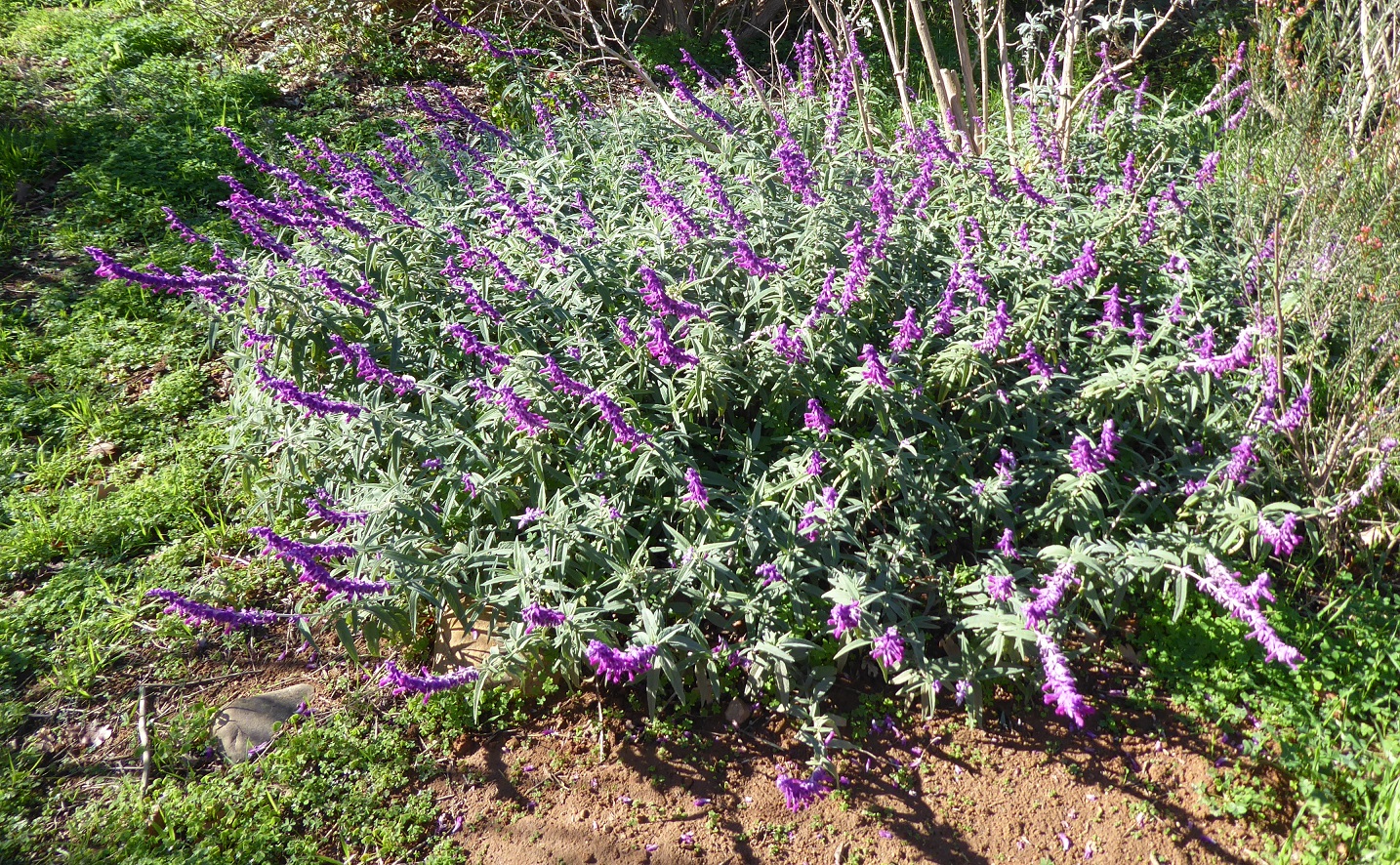
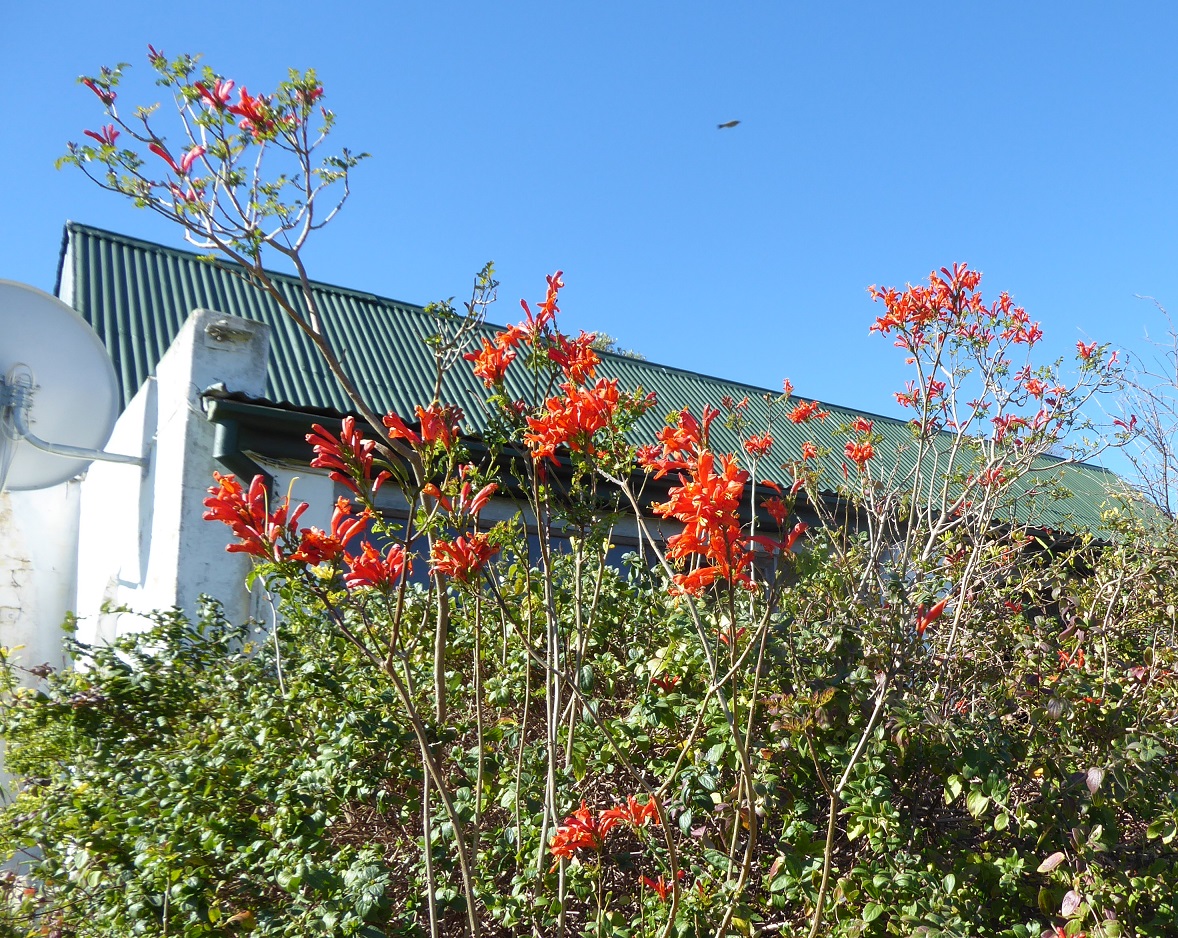
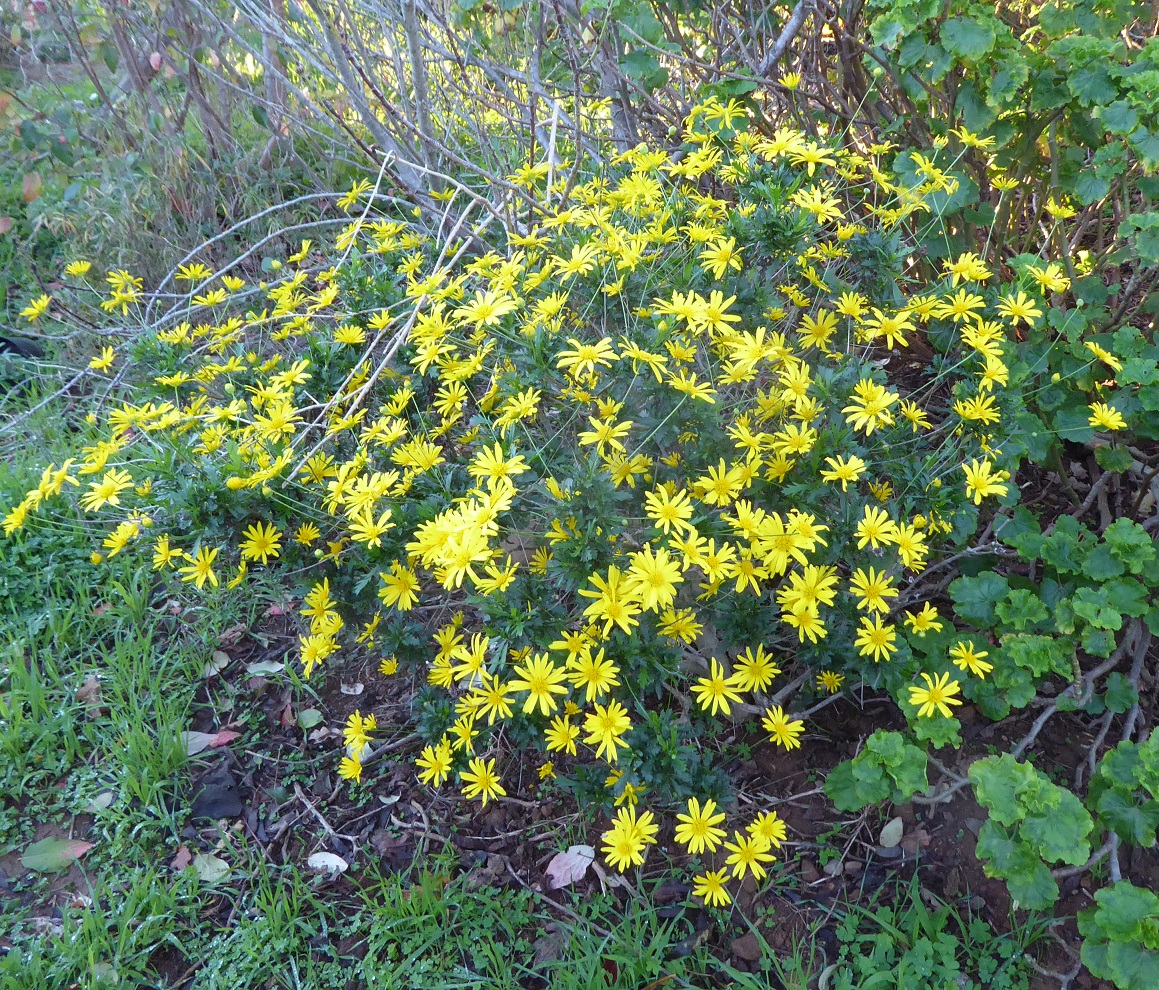
In the garden the tecomarias are still flowering as is the Mexican sage. Lavenders are coming into flower and they look splendid near the Seville oranges which are full of fruit. In the old rose garden, a small shrub which started off with variegated leaves which have reverted to plain green, is full of bright yellow daisy flowers. I think it is a euryops but cannot be sure.
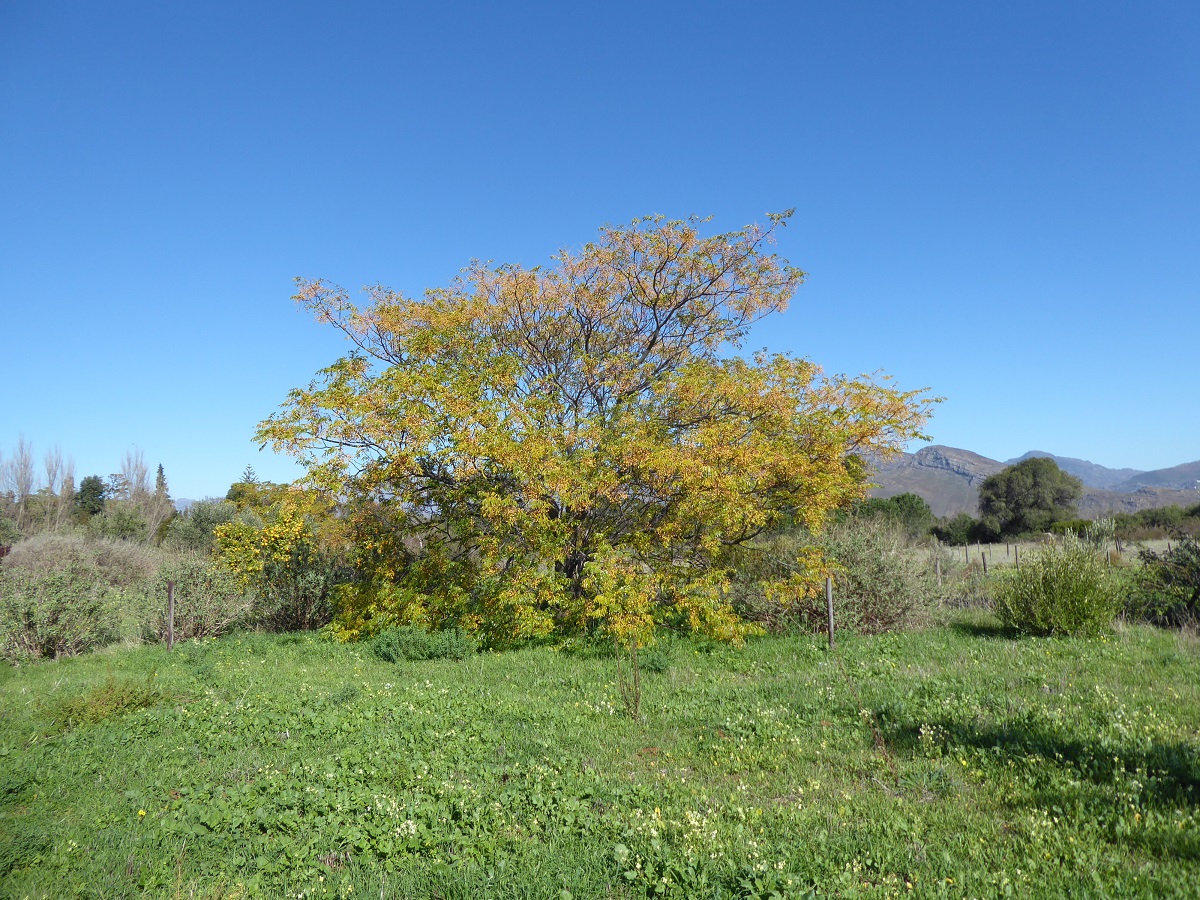
The gales have blown most of the leaves off the trees and the oaks are almost bare, although some have retained drab brown leaves. The syringas, (Melia azedarach) which I should not be growing as they are on the invasive list, make a splendid show with their leaves turning bright yellow before they fall enhancing the yellow berries. I think they will be even more splendid next month when the berries in the leafless tree light up the winter sky. These trees were here when I arrived.
The real joy of the garden is all the green; grass, oxalis and the wild mustard weed with its pale yellow flowers. The birds are celebrating too and the garden is alive with bird song. It is difficult to recall the pale brown of the summer months. Nowhere is this more noticeable than in the veggie patch which yields barrow loads of weeds for the compost heap.
Guavas and Seville oranges
There is little fruit at this time of the year, but we do have a single white guava tree. It is the only guava in the vicinity and the fruit is usually stolen. This year we erected a fence topped with razor wire around it and I harvested one bowl of fruit ( cost R500) before the birds attacked. Sometimes you just cannot win!
We also have 5 Seville orange trees and this year they have borne exceptionally well. They are too bitter to eat, but perfect for making marmalade. That is a lot of marmalade so I have given away as many oranges as possible and taken some to the local padstals (farm stalls) to see if they can sell them.
Marmalade is one of the easiest jams to make. I use an old family recipe which works on the formula 1 fruit:3 water:2 sugar. Wash the fruit and remove any scars from the peel. If waxed, scrub to remove the wax. Cut the fruit up finely, removing pips and the pith between the segments. Take 4 cups of finely chopped fruit to 12 cups of water. Leave overnight to soak. Next day boil for about 45 mins until the fruit is soft and almost half the water has evaporated. Let it cool, then add a bit less than 8 cups of sugar. Boil up again until setting point reached.
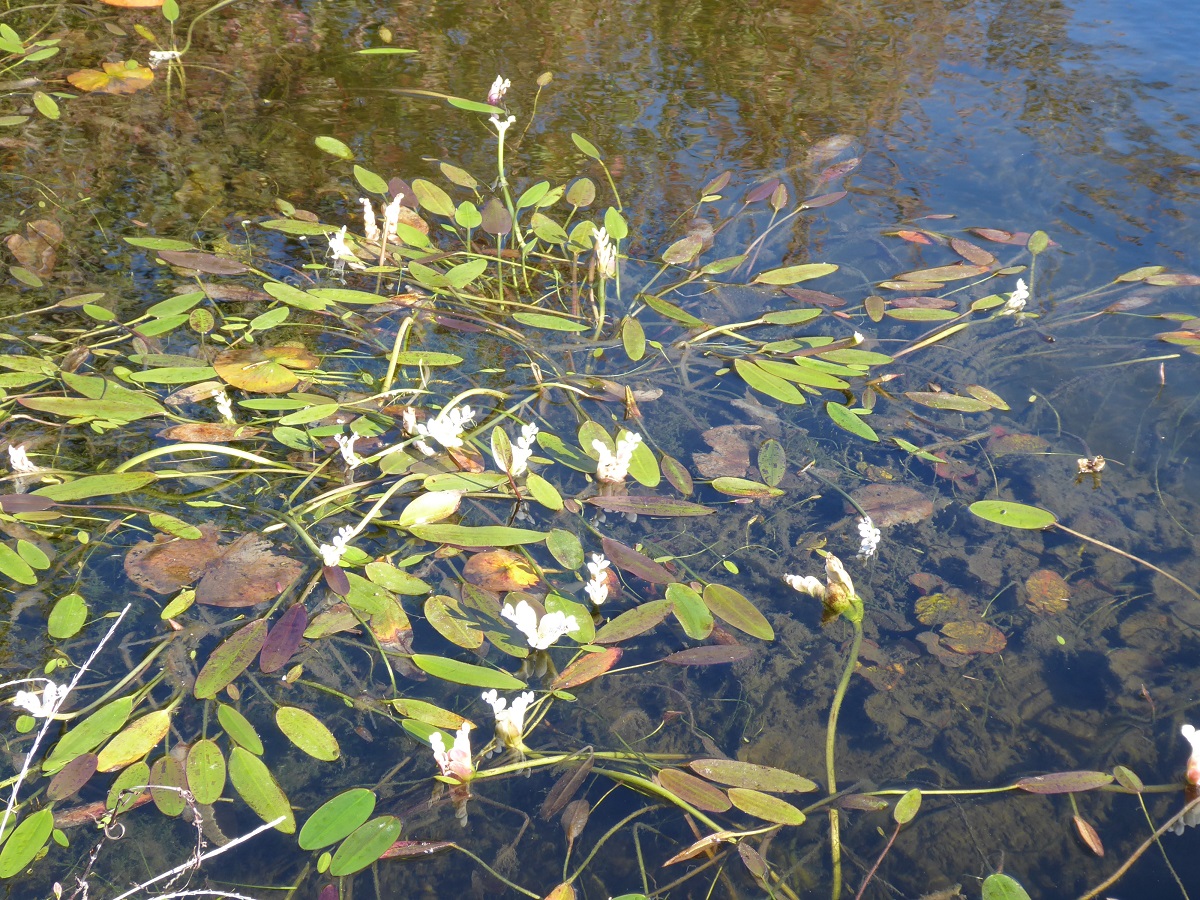
In the pond the waterlilies have died back. However the waterblommetjies (Aponogeton distachyos) are flowering, but I haven’t waded in yet to collect any for bredies.
Succulent garden
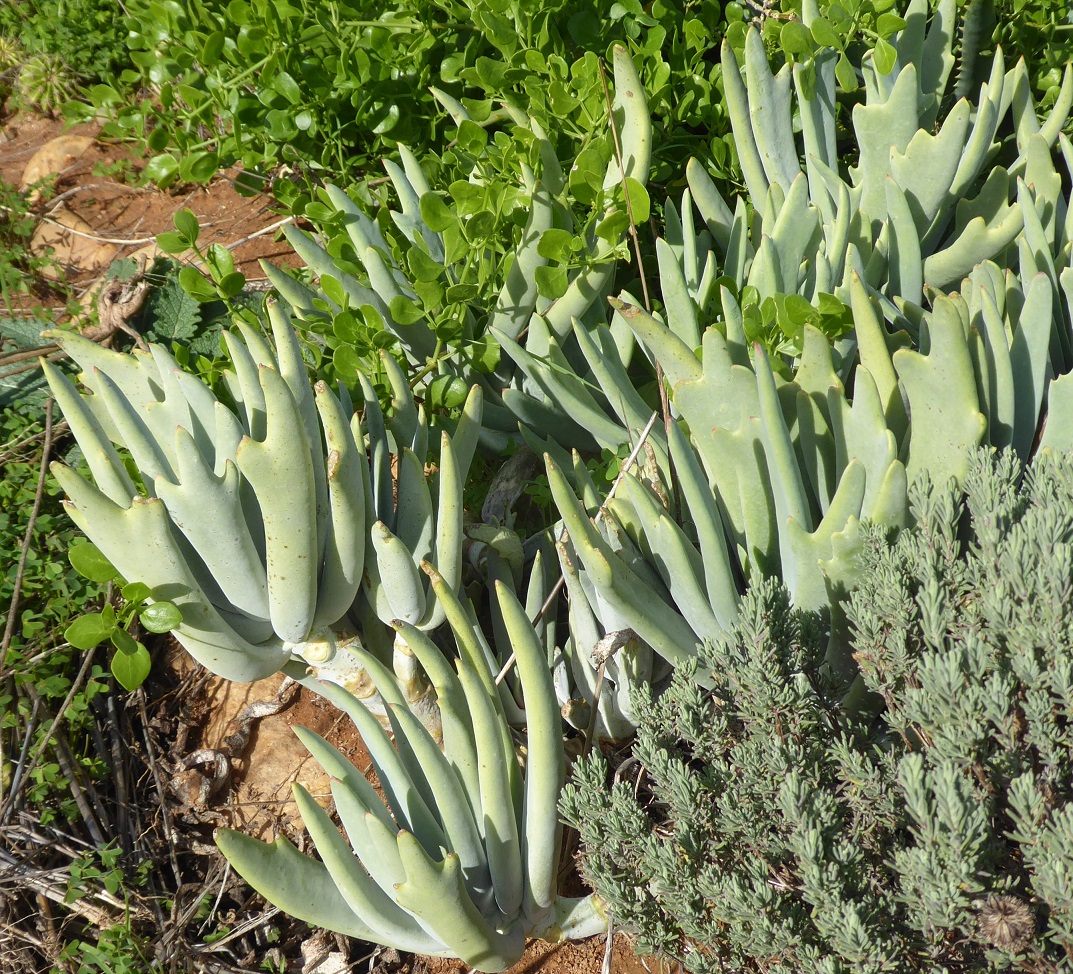
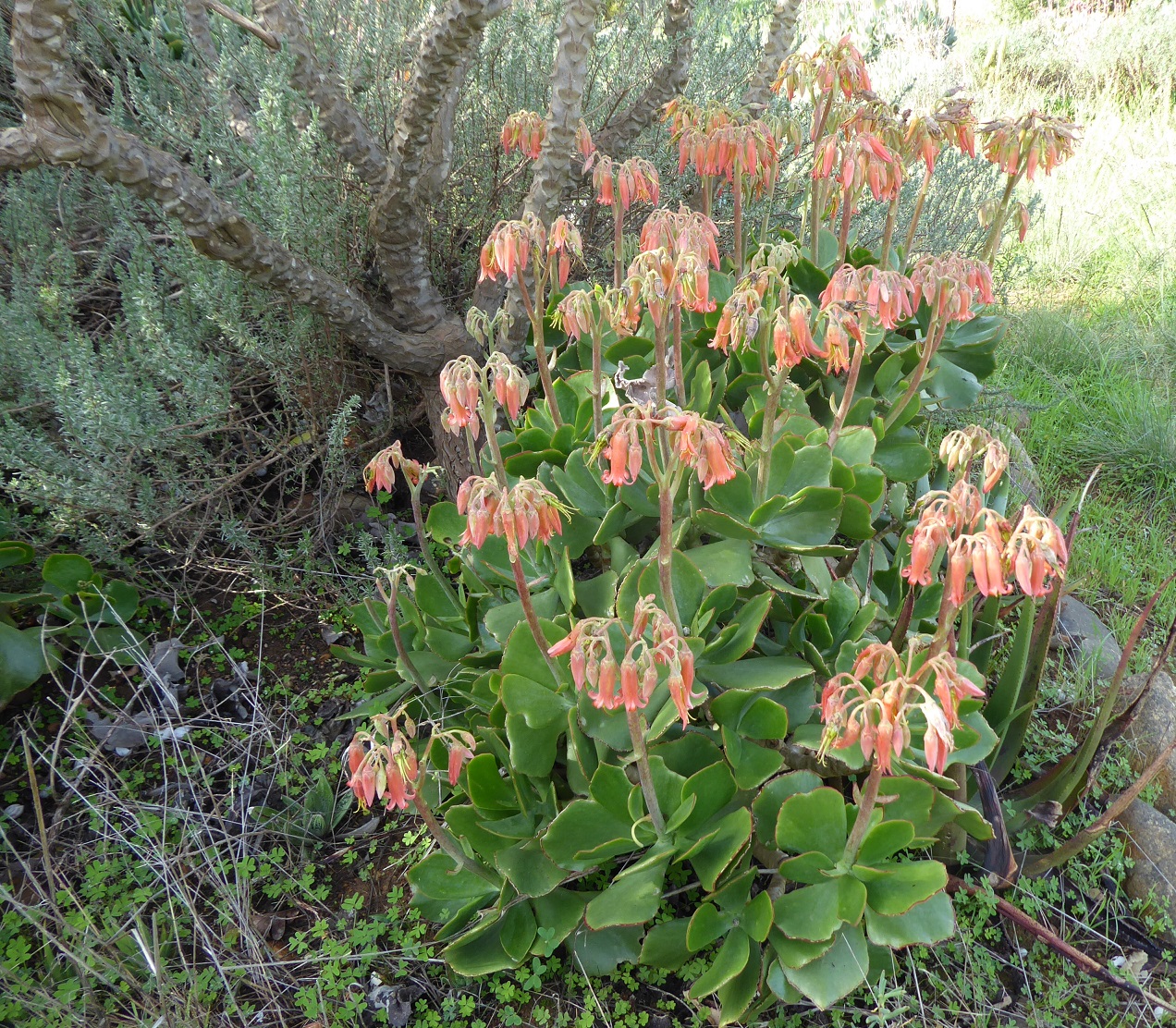
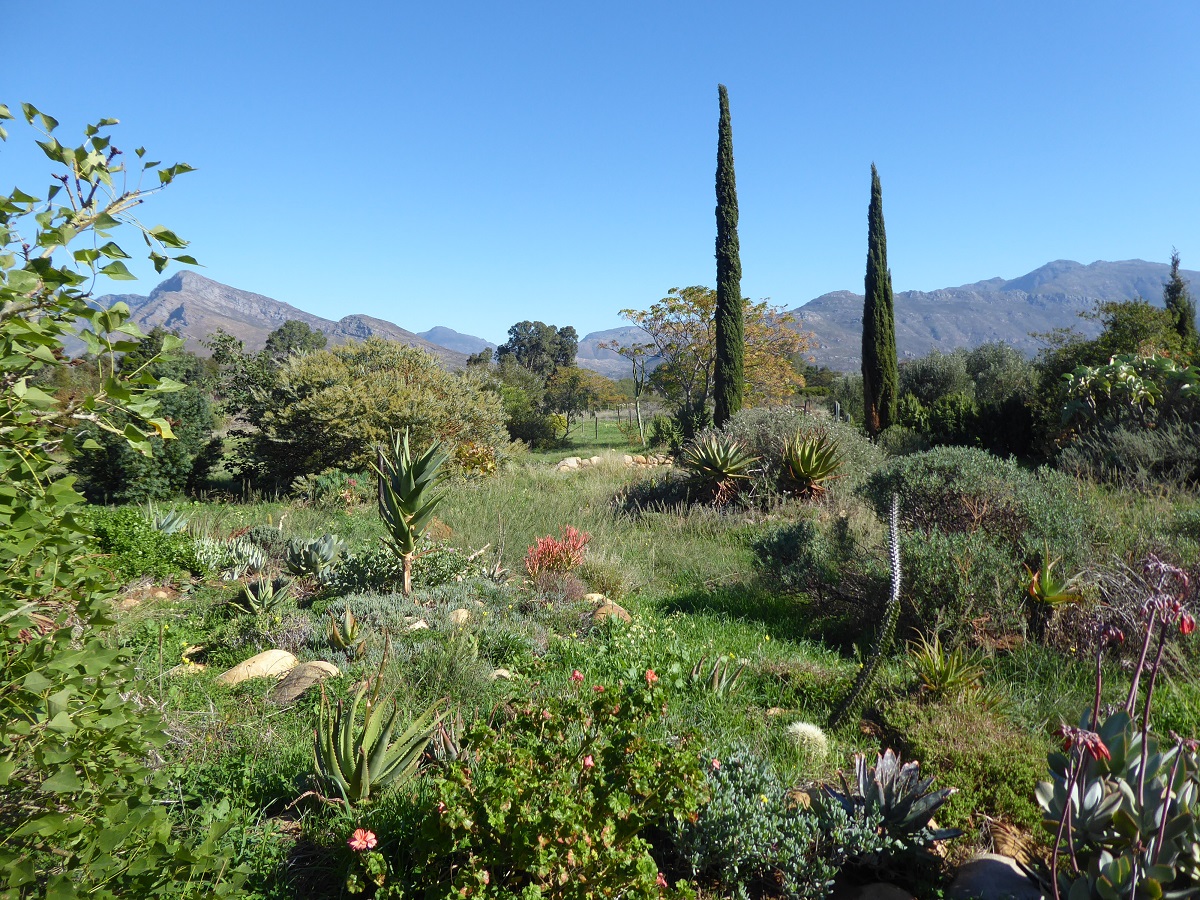
The most exciting section of the garden in winter are the succulent mounds. It is still too early for the mesembs, but the cotyledons are flowering – not as well this year as in the some years, but they are still very pretty. There are several varieties at KSU. I think they are all forms of Cotyledon orbiculata with different leaf shapes. Four varieties have grey leaves: one is round, the traditional pig’s ear shape with dark red flowers and another with similar leaves but pale pink flowers; another has thin round pencil shaped leaves and paler flowers; the final variety with grey leaves has forked shaped leaves. I also have a variety with green, round leaves and pink flowers. Also in the succulent garden, the wild rosemary bushes are still covered in white blossom.
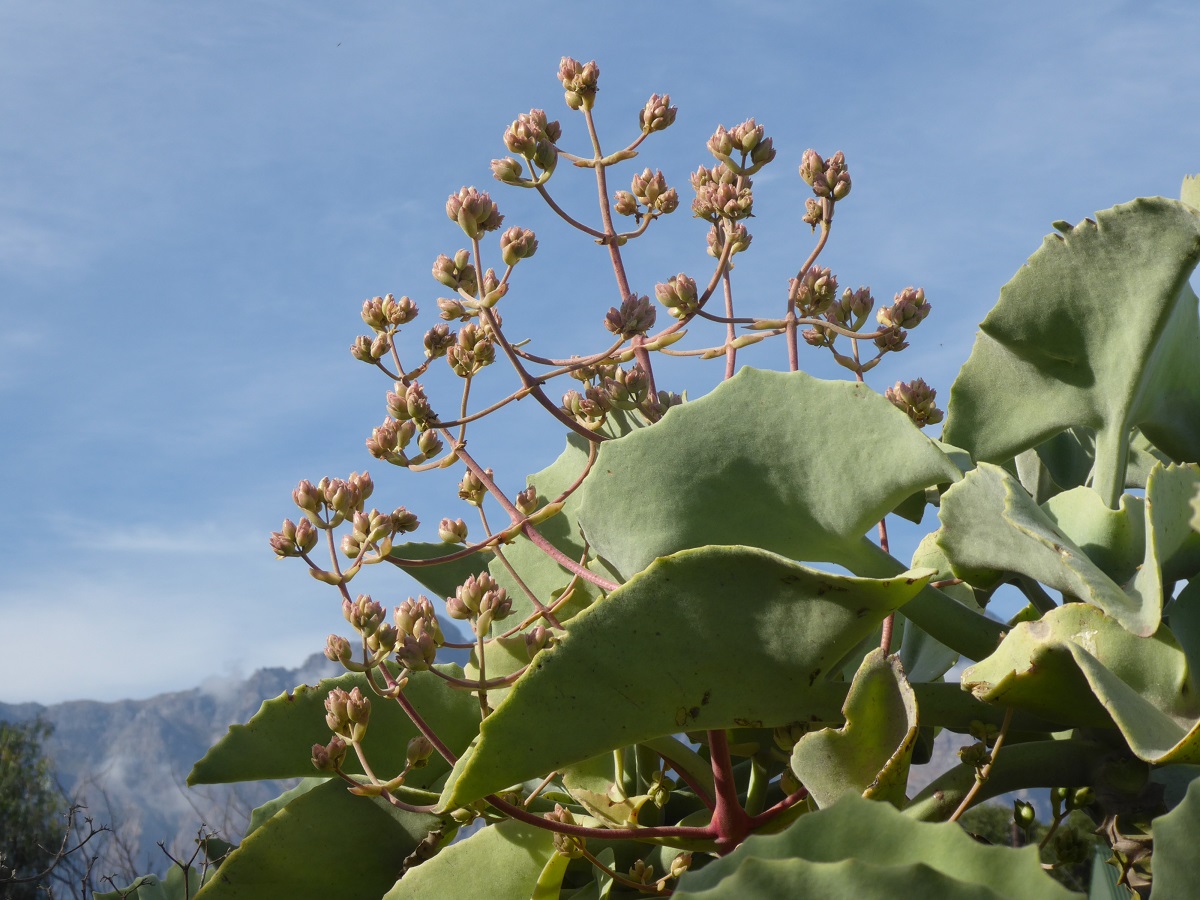
A splendid feature plant on the original succulent mound is a Kalanchoe beharensis, or elephant’s ear kalanchoe. This large succulent has big grey felted leaves and comes from Madagascar. It has fairly insignificant heads of pale pink flowers now in winter. Each year it grows a bit taller and its branches are marked with the scars of fallen leaves. It struggles a bit in our dry summers and requires water occasionally.
Euphorbias
I like euphorbias. They come in all shapes and sizes. One of the most splendid flowers now in winter, the poinsettia (Euphorbia pulcherrima) from Mexico, but grown the world over. Once it was very common to see the big bright red bracts of this shrub flowering in winter, but now they are only found in old fashioned gardens and impossible to buy from nurseries. They only sell the dwarf pot plant form. I will need to beg some cuttings in spring. I do have the limey yellow form however, growing near a maroon caster oil bush and it is delight at this time of year.
In KZN I have seen one with twisted red bracts called the Ramshorn poinsettia which is very eye catching. Many years back local nurseries were also selling a salmon pink form of the standard shape, but it has also vanished from nursery stocks. If the cold has caused the leaves to fall at flowering time, so much the better.
Another euphorbia which I have only had for about a year, but which is slowly growing on a succulent mound is the Firesticks form of E.tirucalli, the rubber hedge euphorbia. This is currently a very fashionable plant, used extensively in landscaping. The normally green stems are bright orange in the top half of the plant. It doesn’t seem quite as tough as the original green form, but this is normal for sports which have less chlorophyll. I look forward to the increased display as the plant grows and becomes a feature of the mound both in summer and winter.
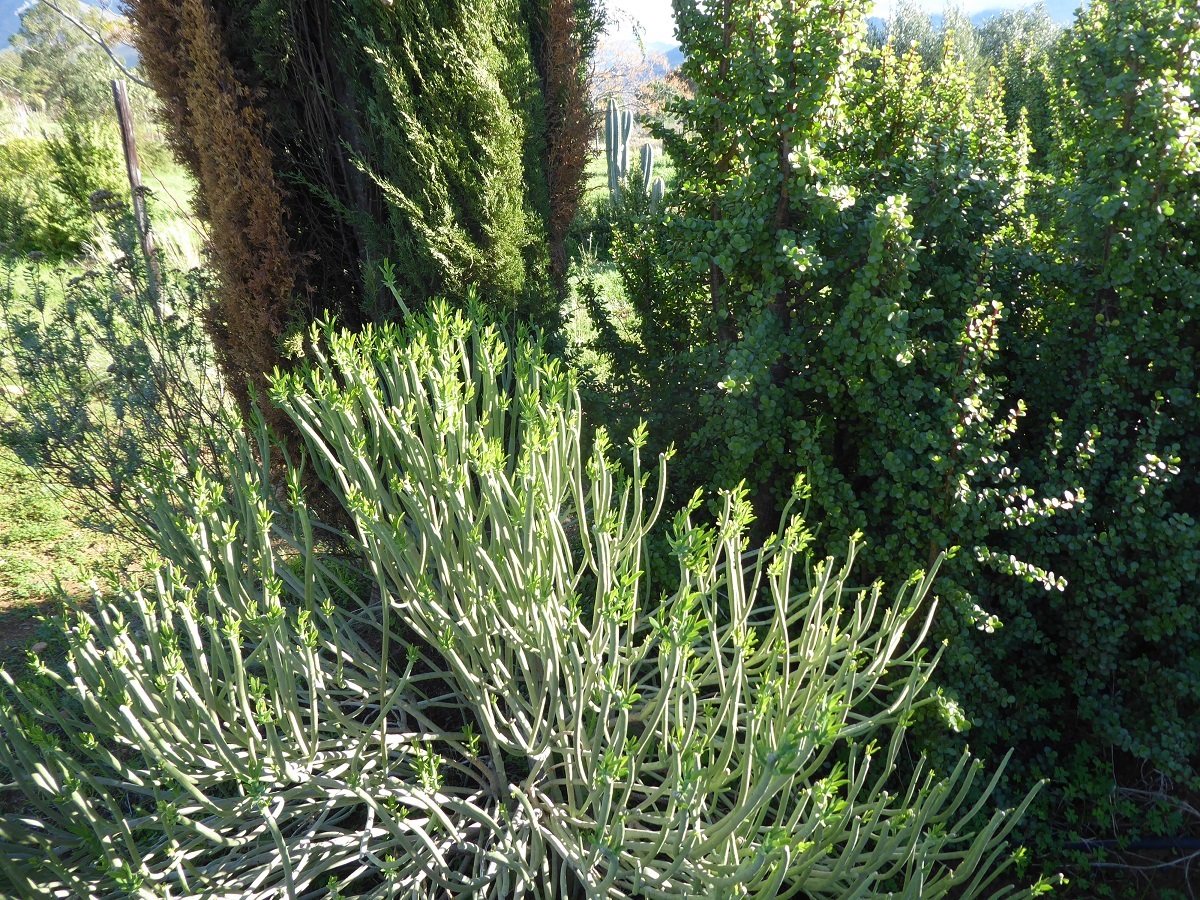
Lastly I have been admiring Euphorbia mauritanica, sometimes called the yellow or pencil milkbush because of its thin cylindrical stems. This is a common plant in the strandveld and succulent karoo and elsewhere in South Africa, but not always available in nurseries. All summer long its bare stems have formed a mound in front of a tall cypress and beside the spekboom hedge, now the bright green leaves are sprouting. I look forward to its yellow flowers in spring before the leaves fall as summer comes. I very much enjoy the contrast of the 3 green plants together.
Big brother, the naboom, Euphorbia ingens, which looks like a cactus grows fairly close by. These last 2 euphorbias never get a drop of water in summer, but the others do. All euphorbias are poisonous and have milky latex which is an irritant. They must be handled with care. There are several other species at KSU.
In the pink
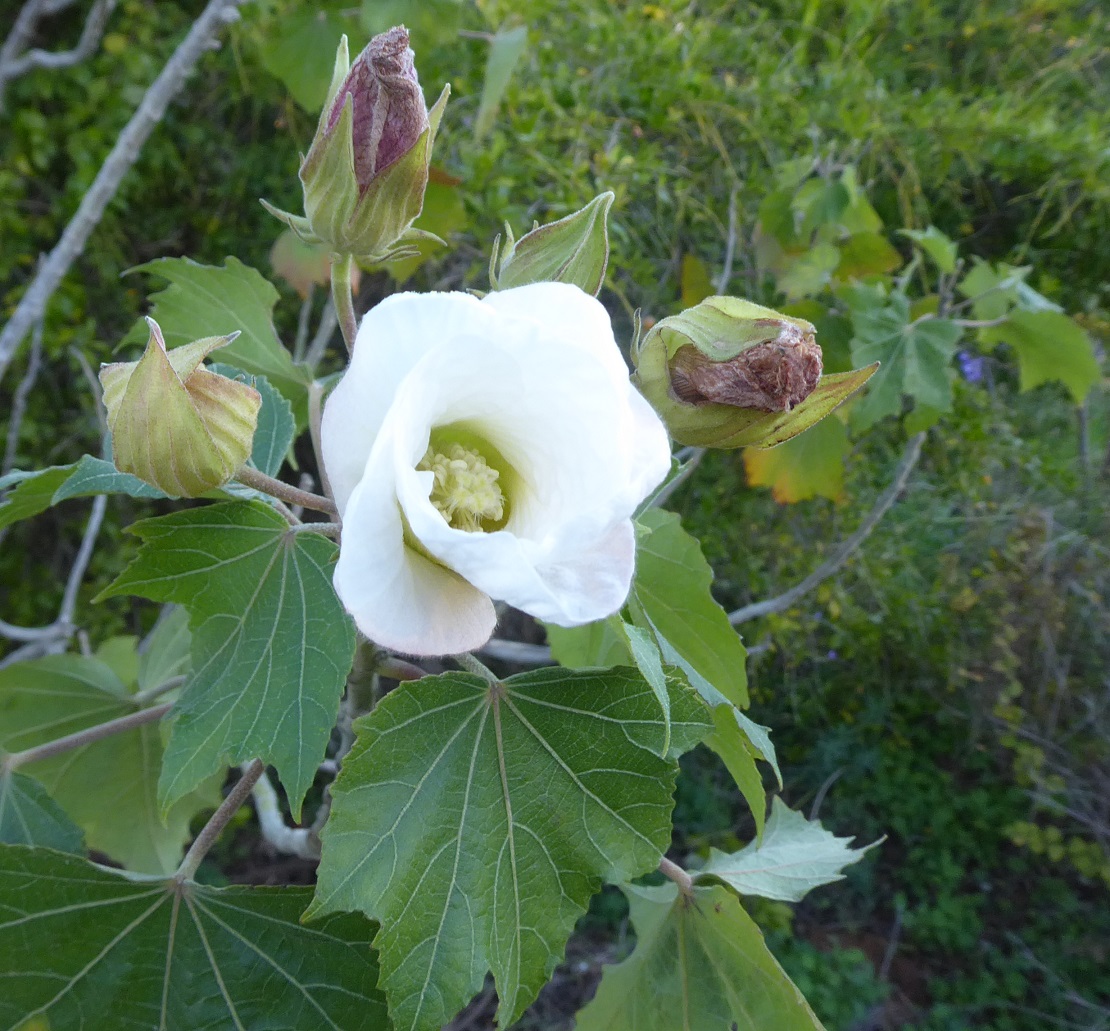
At the edge of the old rose garden is a large bush of Hibiscus mutabilis that is still flowering. This does not flourish at KSU and only comes into its own in autumn with the rain. I grew it from a slip from the tree which for many years grew at Rosebank station. I am not sure if it is still there. It is an intriguing plant with flowers that change colour, starting out white and turning pink.
In the Arderne garden in Claremont there are/were big bushes of a double form which is even more lovely. I have a plant of this, but it is really struggling and needs far more water than I can provide. It is known as the Confederate rose as it does so well in the SE of the USA, although it hails from China.
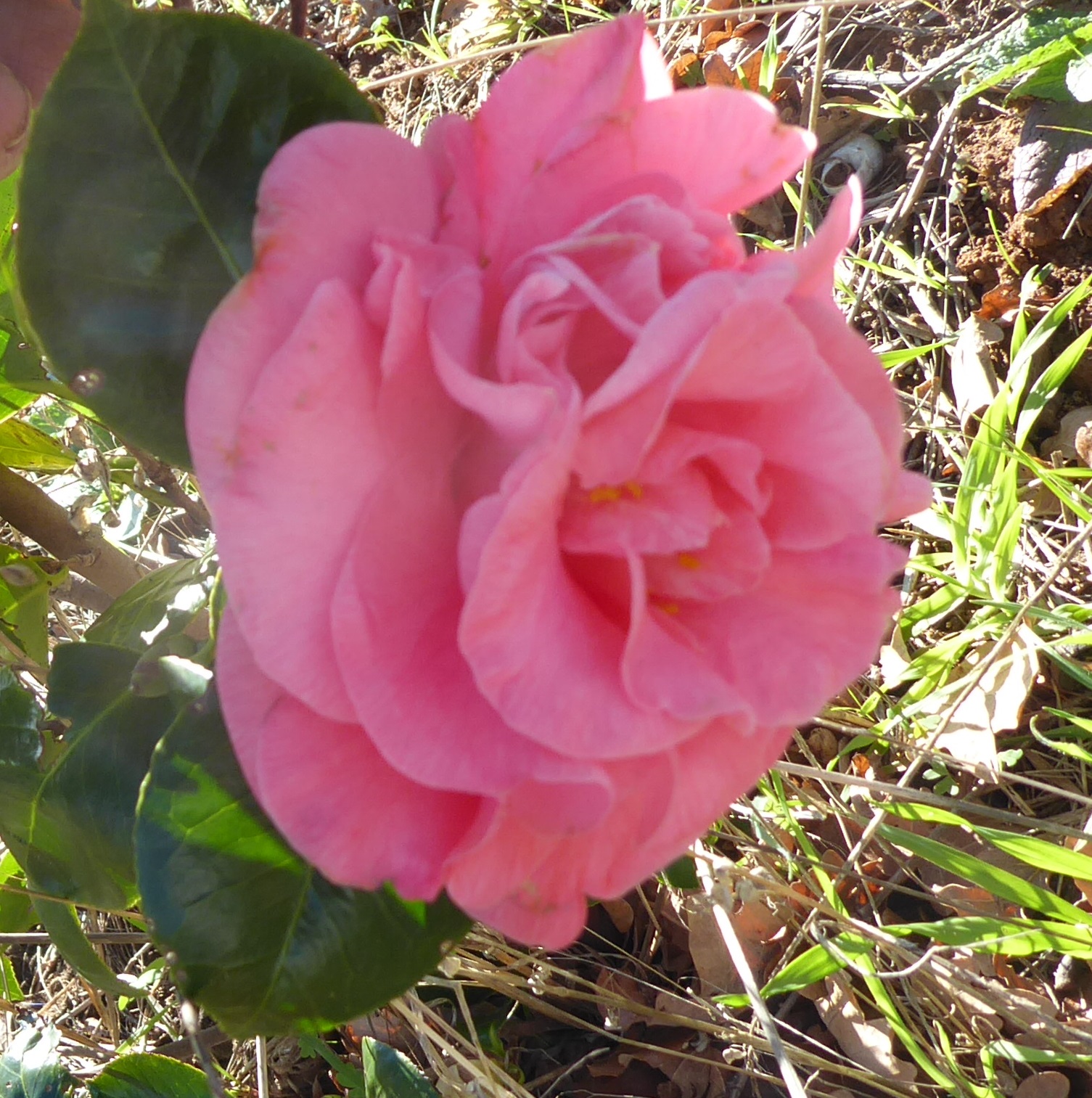
Other beauties from China are the camellias. I wish I could say they thrive here and they should as my neighbours have large bushes and the soil is very acid, but mine struggle and I have lost many of my treasured plants. I fear I will have to plant them all in pots if they are to survive. One has obliged with a beautiful pink flower.
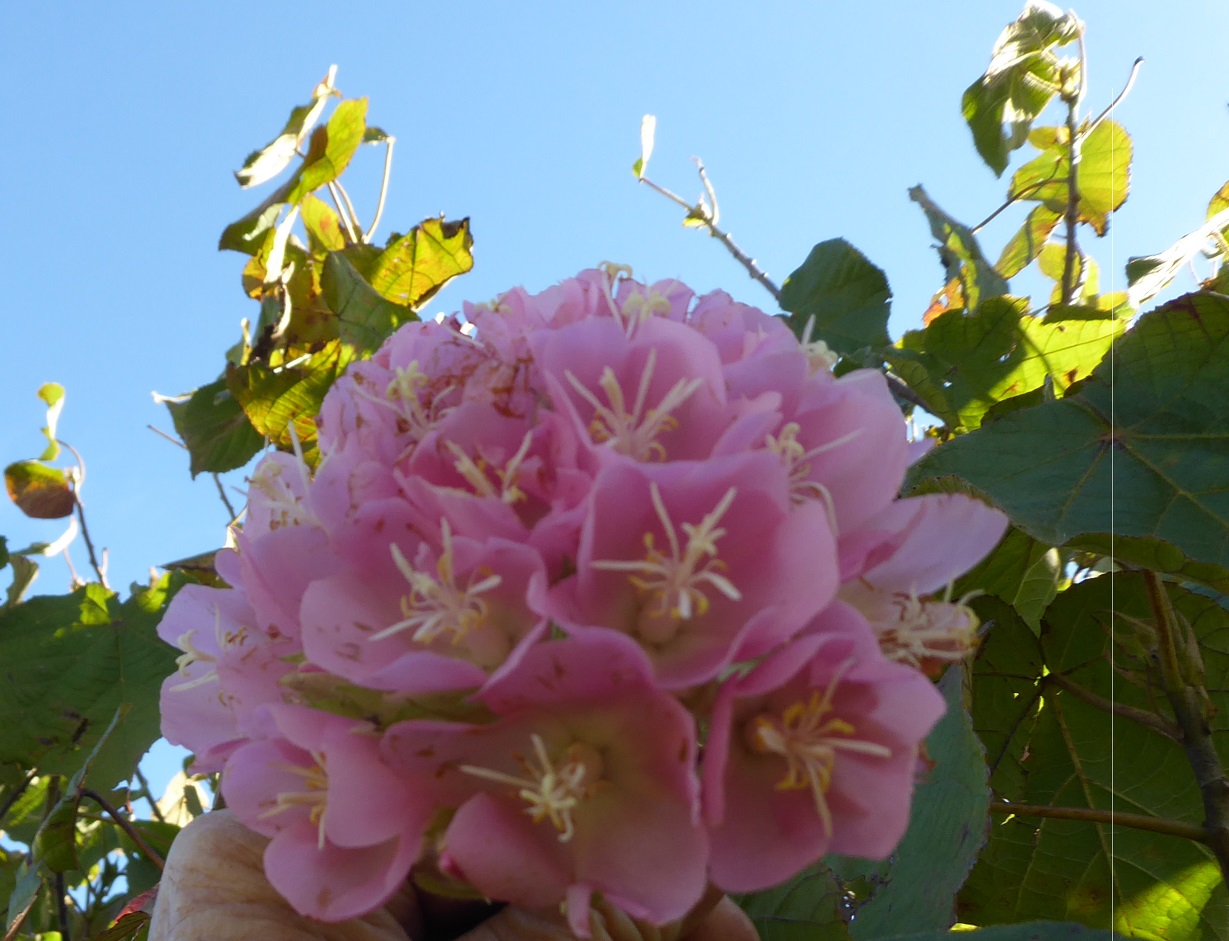
Last of the pinks is a dombeya. This big bush grows down near the pond and struggles a bit in the summer, but survives with minimal water. The leaves and flowers are now being battered by the gales, but nevertheless the big hanging heads of pink flowers are a joy. I am not sure of the species, but I grew it from a slip from a huge bush which grows outside the old offices at Kirstenbosch. I think it might be the hybrid called Dombeya x cayeuxii.
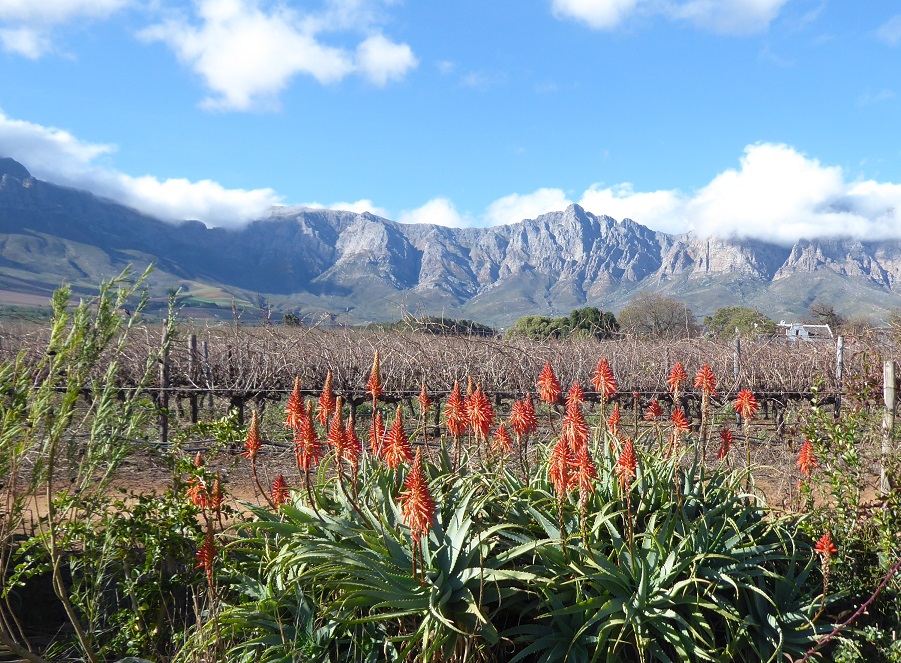
To end I want to celebrate Aloe arborescens, the only aloe to survive the mysterious enemy which ate all the buds off my other aloes. Here on the boundary fence they are the iconic winter image of KSU- only the snow on the mountain tops is missing- hopefully along with the peas I will be able to write about that next month.
June 2019 Gallery