September is high spring at KSU, a month of pink and white fleeting glories. It is also the equinox, when the sun sets behind the highest peak in the mountains to the west and starts its gallop down to the dip which gives us our long summer evenings. The sun rose just before 7:30 am and set at about 6:10 pm on the 21st September. It has also been unseasonably hot with a temperature of 35°C one day and we have had very little rain, less than 5ml for the whole month. This does not augur well for the summer ahead.
The vineyards started leafing out at the beginning of the month as the oaks (Quercus robur) got their fresh green leaves. Is there anything lovelier than an oak tree with spring foliage? Now at the end of the month almost all deciduous trees are in leaf and we are surrounded by fresh green. However, we have started cutting the grass as it goes to seed. Soon the green carpet of winter will give way to the summer browns.
Pink and White
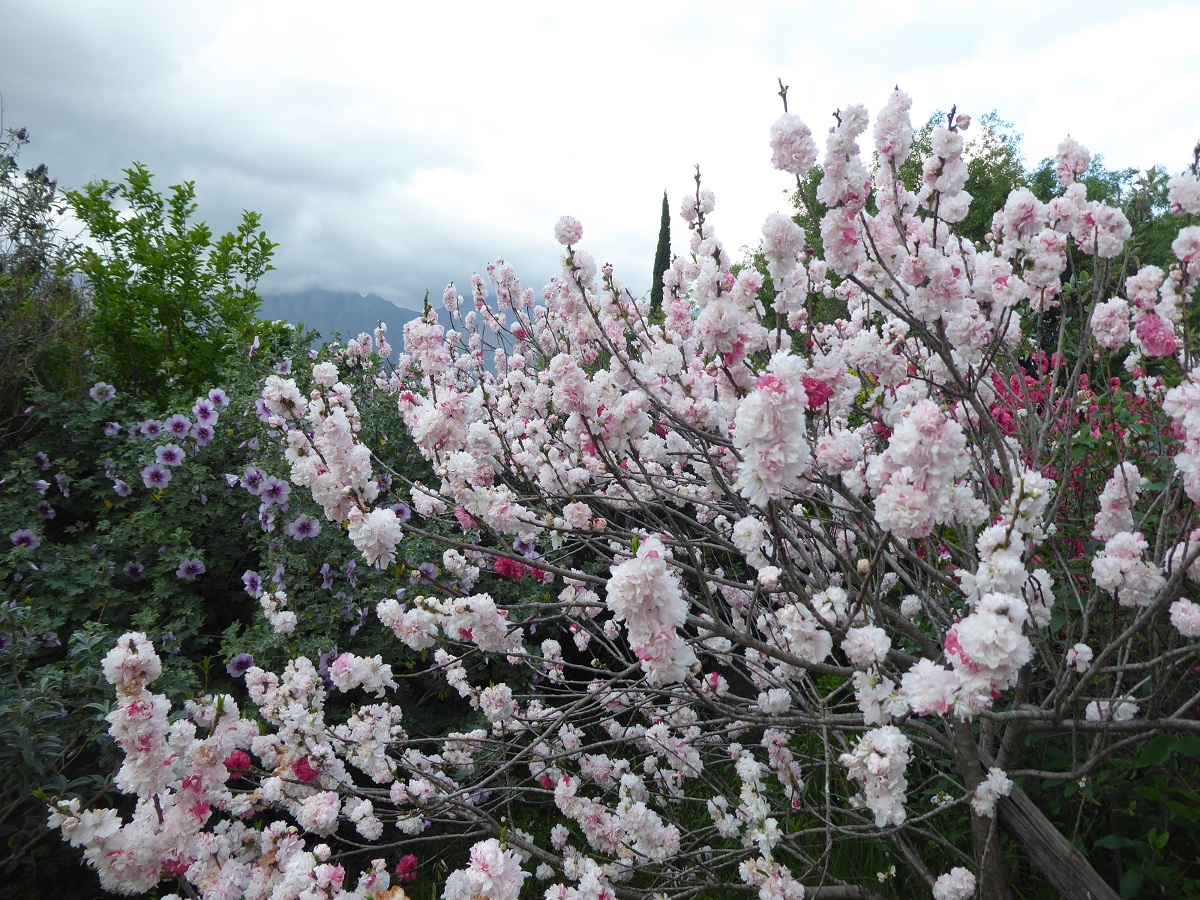
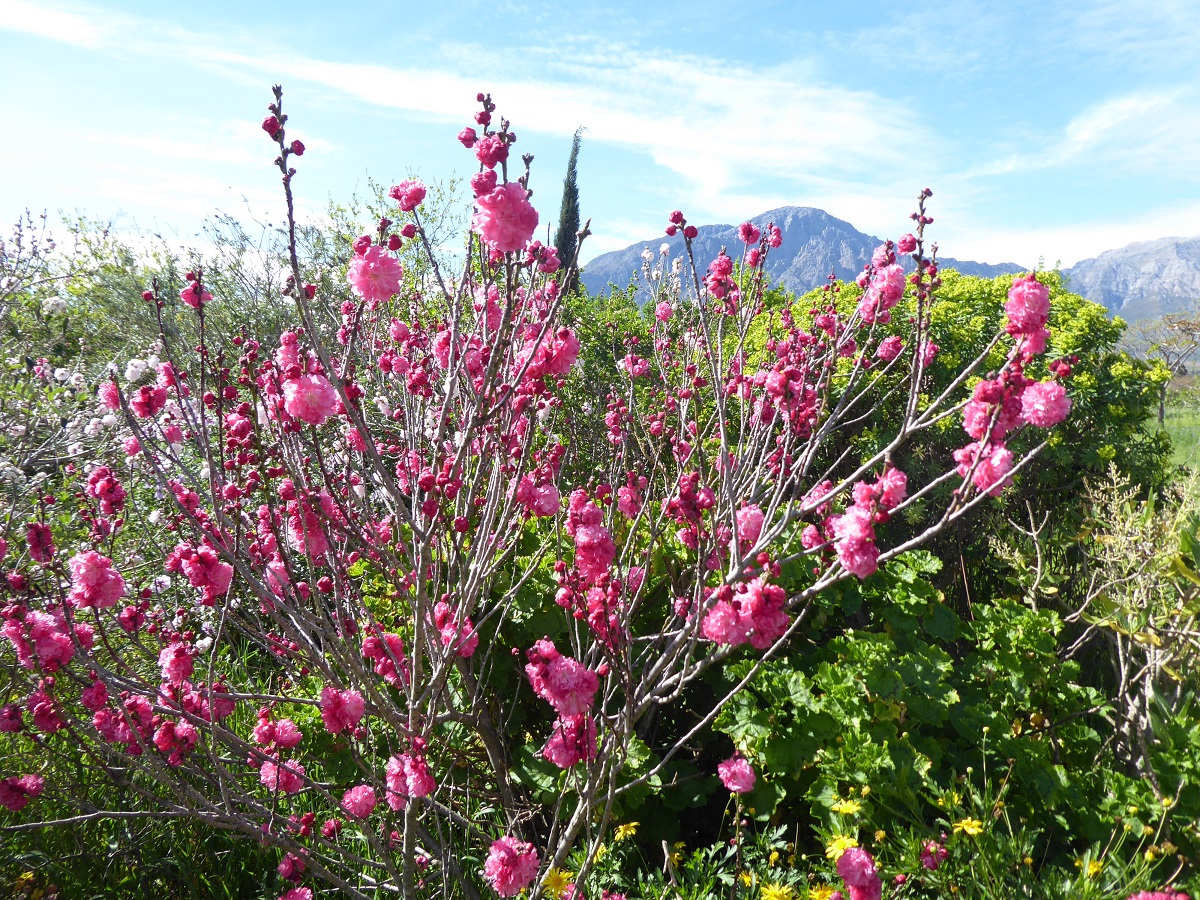
Leading the pack of pink and white glories of September are the flowering peaches (Prunus persica). All mine have double flowers and a few white fleshed small peaches later in the season. There is nothing subtle about these beauties; the bright pink in particular is shocking and vulgar and against a blue sky absolutely splendid; the white is crisp and pristine and my favourite is the white flecked with pink. Even 15 years ago it was difficult to find these plants and I was delighted to get them from an old nursery near the Drostdy in Tulbagh, long since closed.
From there I also bought my magnificent wisteria (Wisteria sinensis) which is also a joy at this time of the year. For years I have been meaning to build it an elegant pergola, but it still just sprawls making a big heap and engulfing Cape May bushes in the hedge. The scent is fabulous and it flowers for weeks, with a few blossoms lingering on into summer.
Flowering with the wisteria, Cape May is a tough old plant, out of fashion and much under-estimated. It comes in single and double forms and despite the name is neither from the Cape nor a hawthorn. I think the botanical name is Spiraea reevesiana or S. cantoniensis and it comes from China, but seems to do very well here at the Cape and makes a large semi deciduous bush, needing no summer watering. In spring it is covered in heads of small white flowers. In our family there is a belief that it is unlucky to pick it to bring indoors.
The English May or Hawthorn (Crataegus sp.) is also covered in creamy white flowers this month. I grow it because I like the shape of the leaves and I thought it would be lovely with roses scrambling up in it. Also it has nice red autumn berries, but the flowers have a rather unpleasant scent.
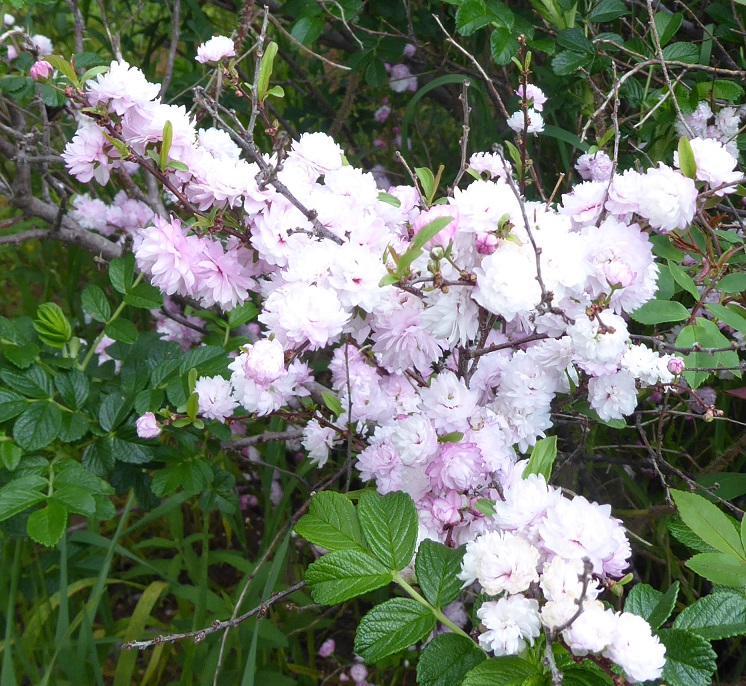
Another prunus looking lovely this month is one with small double fluffy almond pink flowers whose name I have never known. It grows to about half a metre and spreads to make a small clump.
The crabapples and quinces are also pink and white beauties of the month. The quince hedge is a sea of silvery green new leaves and pale pink single flowers.
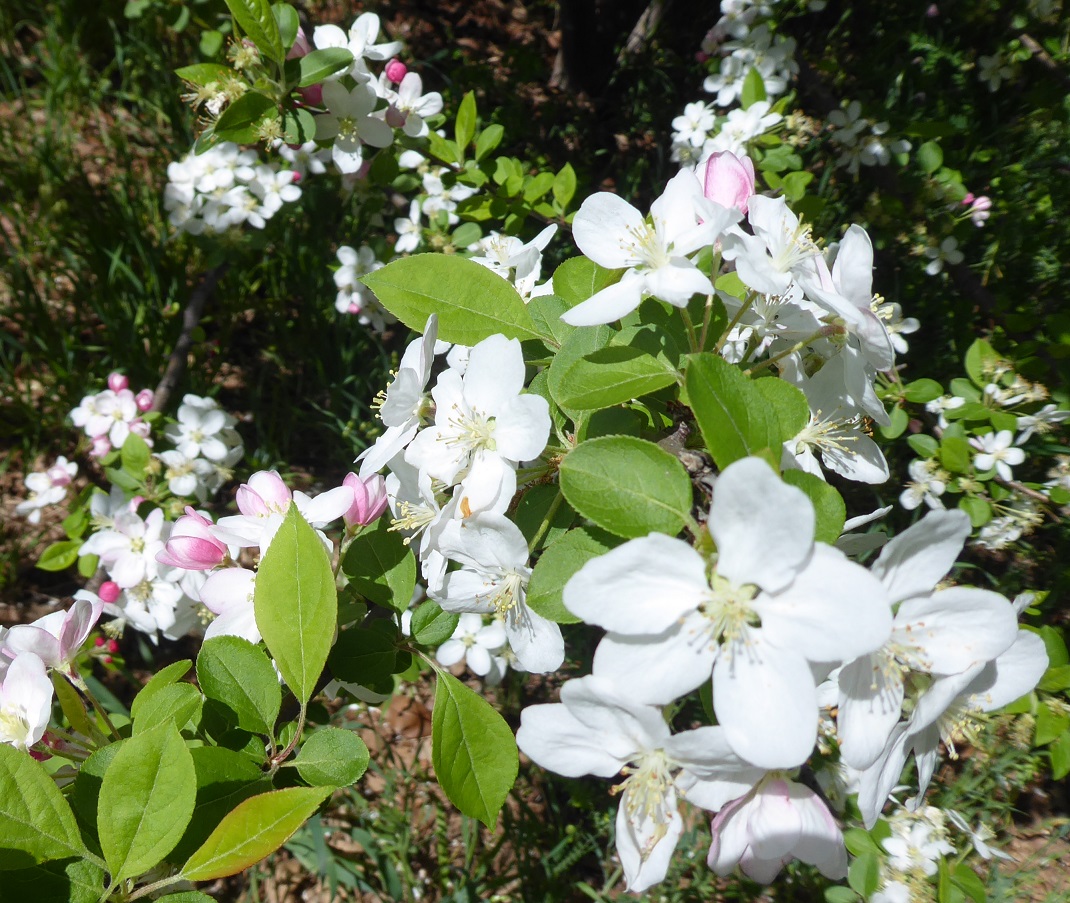
I have 3 crab apple trees, all with single white flowers emerging from red buds. The flowering is fleeting, a week to 10 days and it is all over.
The flowering quinces (Chaenomeles sp.) are excellent shrubs here. When I arrived at KSU, three old bushes of the common red form were some of the only plants in the garden of the old cottage. They get no water in summer but reward me with flowers from late winter onwards. The mousebirds eat the first blossom, but this month, the birds have other targets and the bushes are a resplendent crimson. I also have a pure white form and another which has pale pink and white flowers. In autumn they reward one with highly scented hard fruits.
The big lavender bushes are past their best, but a small dwarf lavender with pink tufty bracts at the top of the flower spikes is looking splendid.
Jasmines and Viburnums
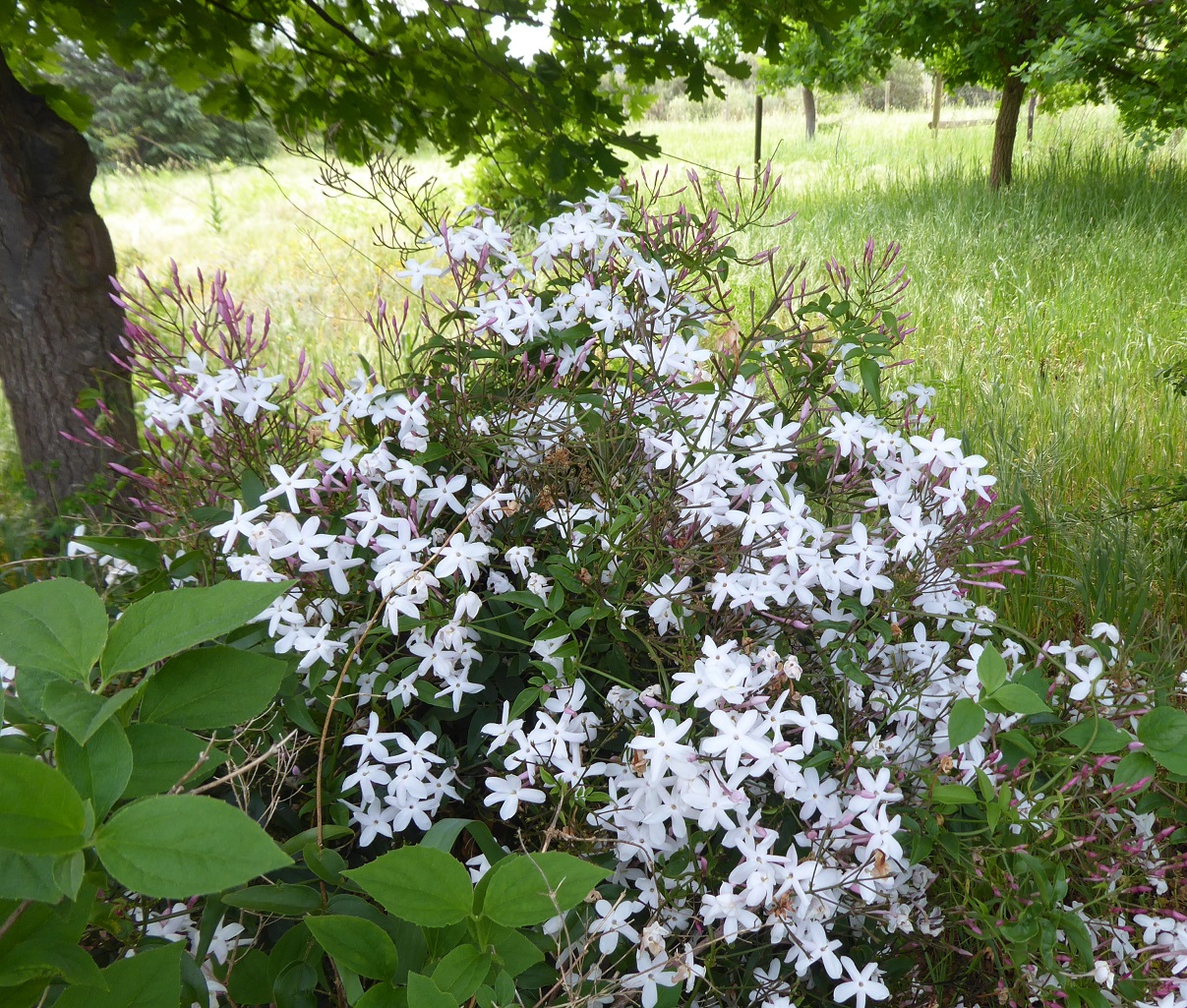
Continuing our pink and white theme, but with a glorious scent is the Chinese jasmine (Jasmine polyanthum). In warmer areas with more water this plant can be a bit of a thug, but here it is kept in check and we can enjoy the lovely heads of long tubal flowers, pink in bud opening white.
One of native Jasmines, Jasmine multipartitum is also at its best this month. I have 2 forms; one with smaller flowers and paler green leaves that winds its way through a plumbago hedge; the other a more bushy form with sturdy darker green leaves a much bigger flowers. Both are heavily scented and a delight.
Less common at the Cape are the two yellow jasmines flowering now. One is I think called Italian jasmine ( J.humile ‘revolutum’) which makes a large bush with fresh green leaves and tubular lightly scented yellow flowers and the other which has been flowering since winter makes a big weeping shrub with unscented flowers. I am not sure of the name; it may be J.mesnyi, but it is a tough shrub and makes a nice background plant.
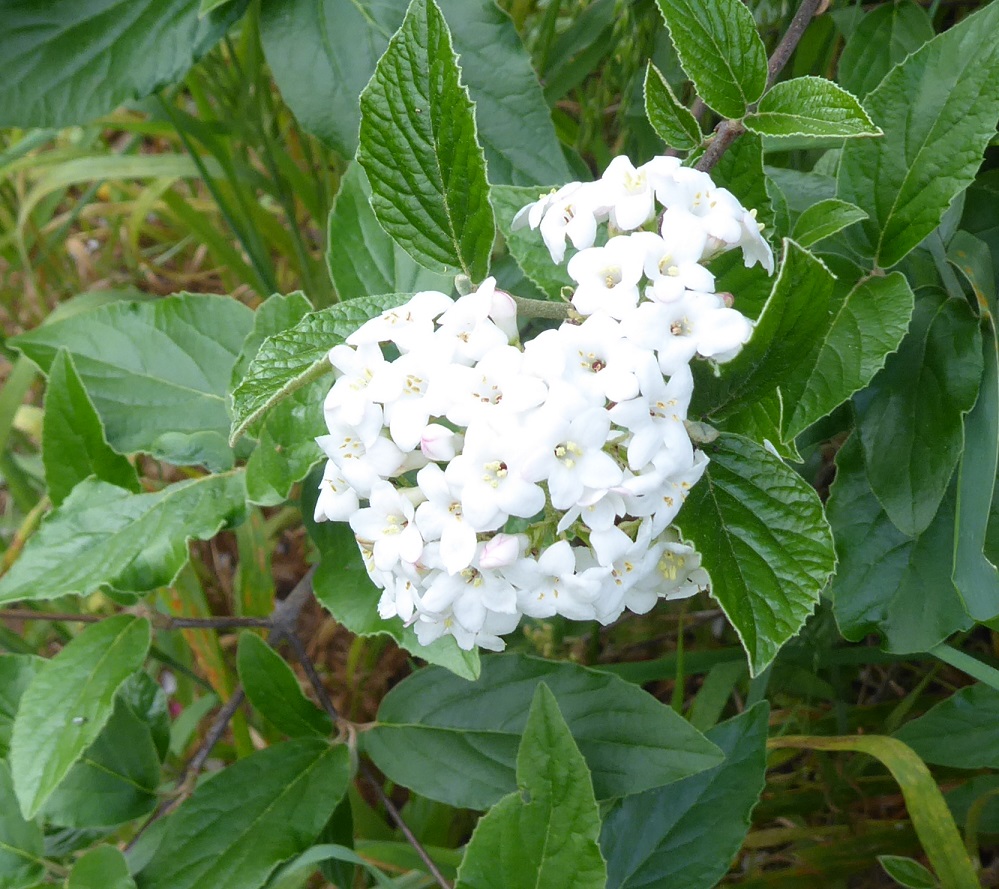
Flowering near the peaches and lending them some scent is what I think is Viburnum burkwoodii. This is an unexpectedly tough shrub with deciduous dark green leathery foliage and round heads of small deliciously scented white flowers which emerge from pale pink buds. One flower-head is enough to scent a whole room.
More common here at the Cape is Viburnum tinus. This has big heads of unscented white flowers emerging from pink buds and flowers from winter into spring and is evergreen. I seem to have 2 forms, one which has bigger shinier leaves and bigger flowerheads than the other. They both have blue black fruits later.
Another viburnum which grows into a dense evergreen tree here at the Cape with healthy paler green leaves is Viburnum sinensis. Although some websites list the flowers as fragrant, I have not noticed this. They are smaller and creamy white. It is a very fast growing plant though and would make a good large hedge. My shrub is still very young. I think all these viburnums come from China.
Indigenous beauties
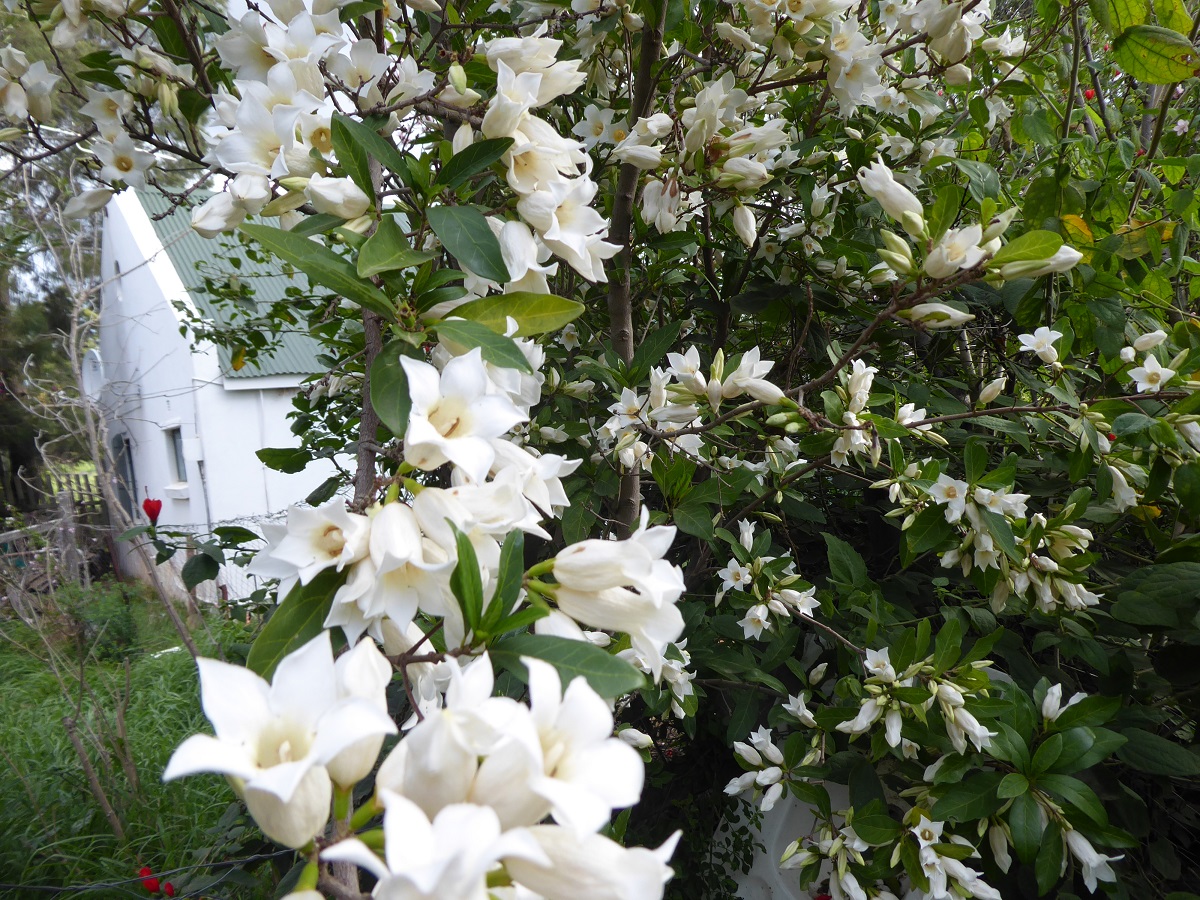
One of the loveliest sights of the month has been the September bells in flower. This little tree (Rothmannia globosa) comes covered in scented white tubular flowers. Ours grows near the house and may have its feet down in the septic tank. Beside it is a seedling peach whose pink flowers appear at the same time. The Rothmannia is a joy for several weeks and this year I picked a branch for the vase where it lasted for a week.
Another very pretty shrub which flowered for several weeks is the white form of Podalyria calyptrata. The common form is pink. This shrub grows naturally in the mountains around here and has silvery grey leaves. It makes a big bush and comes covered in beautifully scented sweetpea like flowers. Ours is growing along a seasonal furrow and gets lots of water in winter.
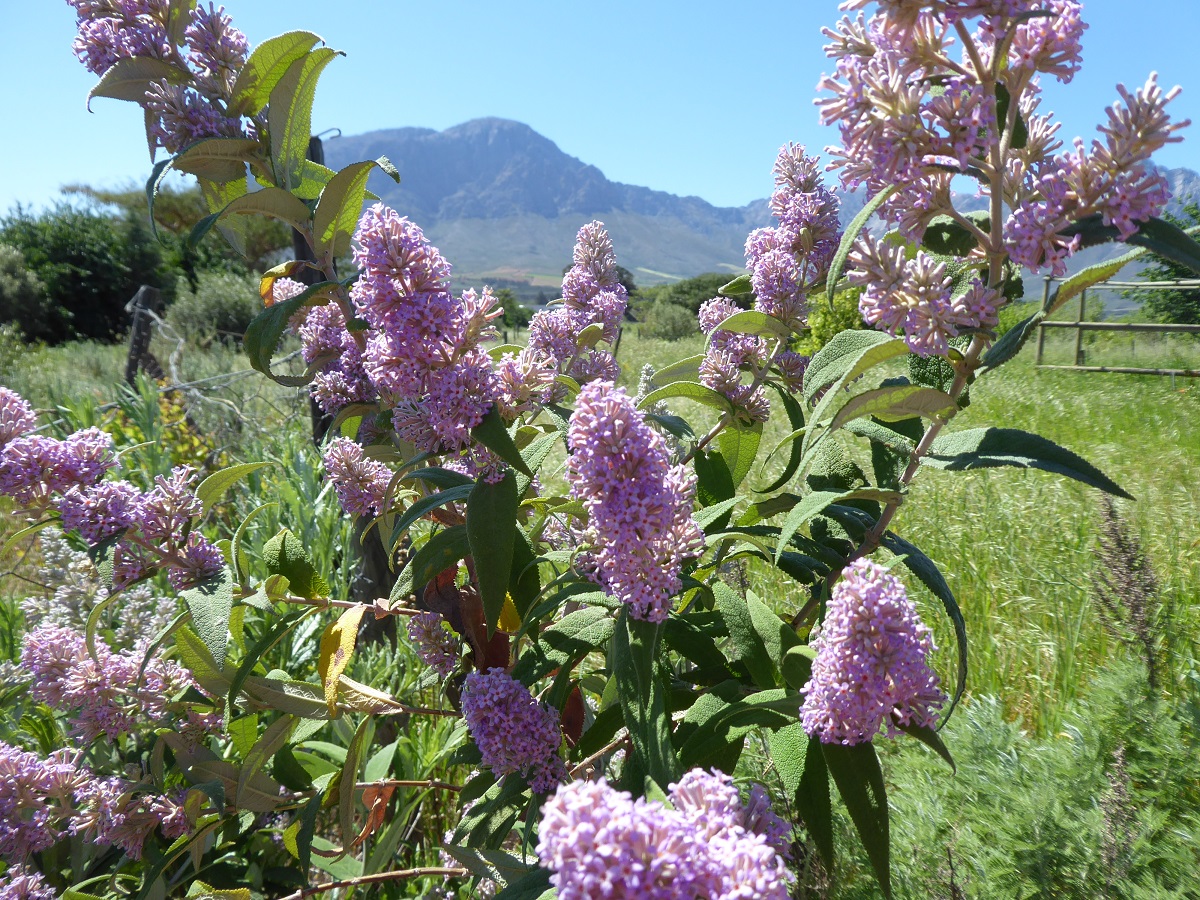
Another gloriously scented treat this month has been the large bush/small tree of Buddleja salvifolia. My form has lovely lilac flowers to complement its grey sage like leaves. Buddleja scent seems to waft on the wind and one bush can scent a large area.
The confetti bushes (Coleonema album) are covered in tiny white flowers. They are not scented , but their fine foliage is aromatic. I have planted 4 along a path where one will need to force ones way through and so brush against the scented leaves.
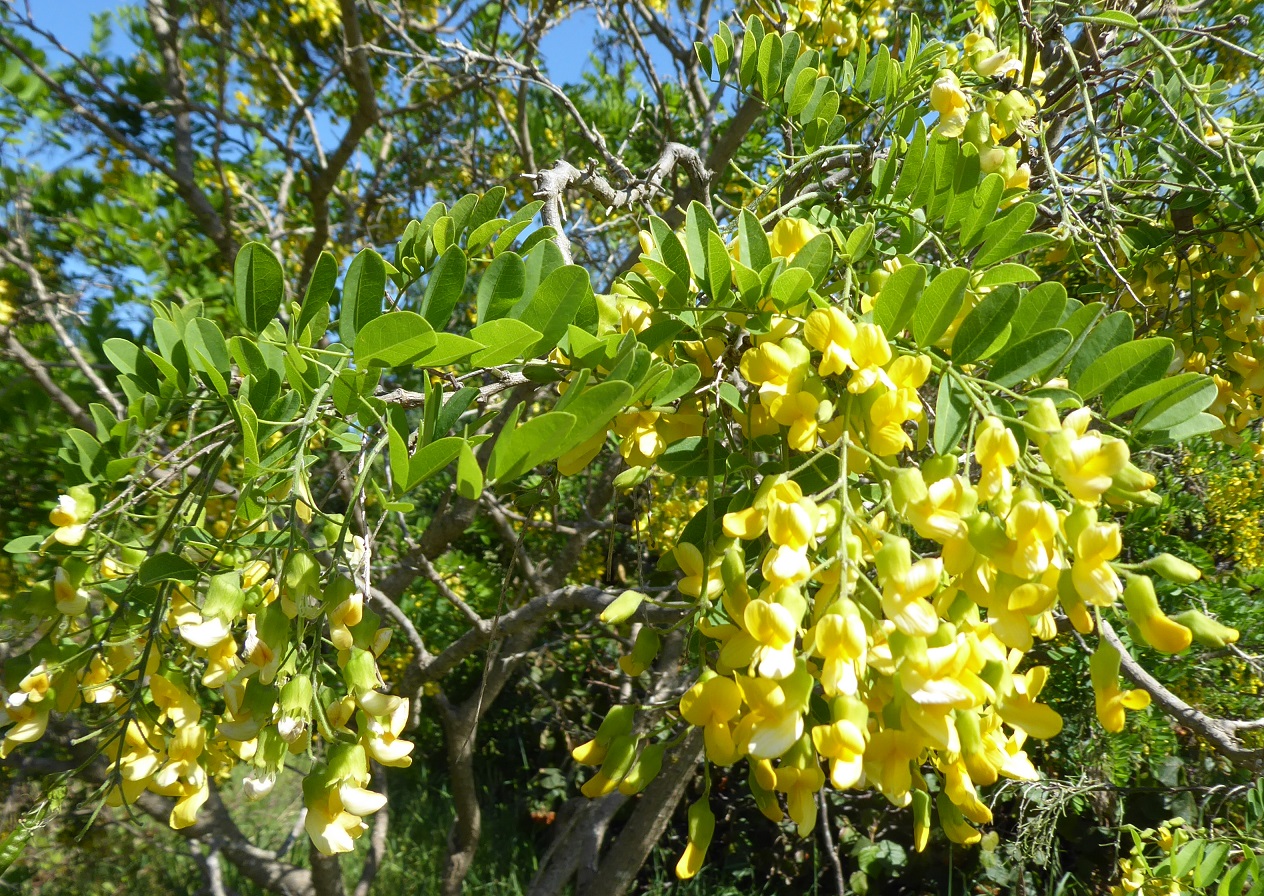
Breaking away from the pink and white theme, the pale yellow laburnum like flowers of Calpurnia aurea are also a treat. This little tree flowers in autumn and spring here at KSU.
Early September is also the peak of the indigenous bulb season here at the Cape. We do have a few pots of of these to enjoy. One of the best scented is Freesia leichtlinii subsp. alba. Growing across the garden is a strange little green orchid which flowers this month too. I have no idea what it is called.
Early roses
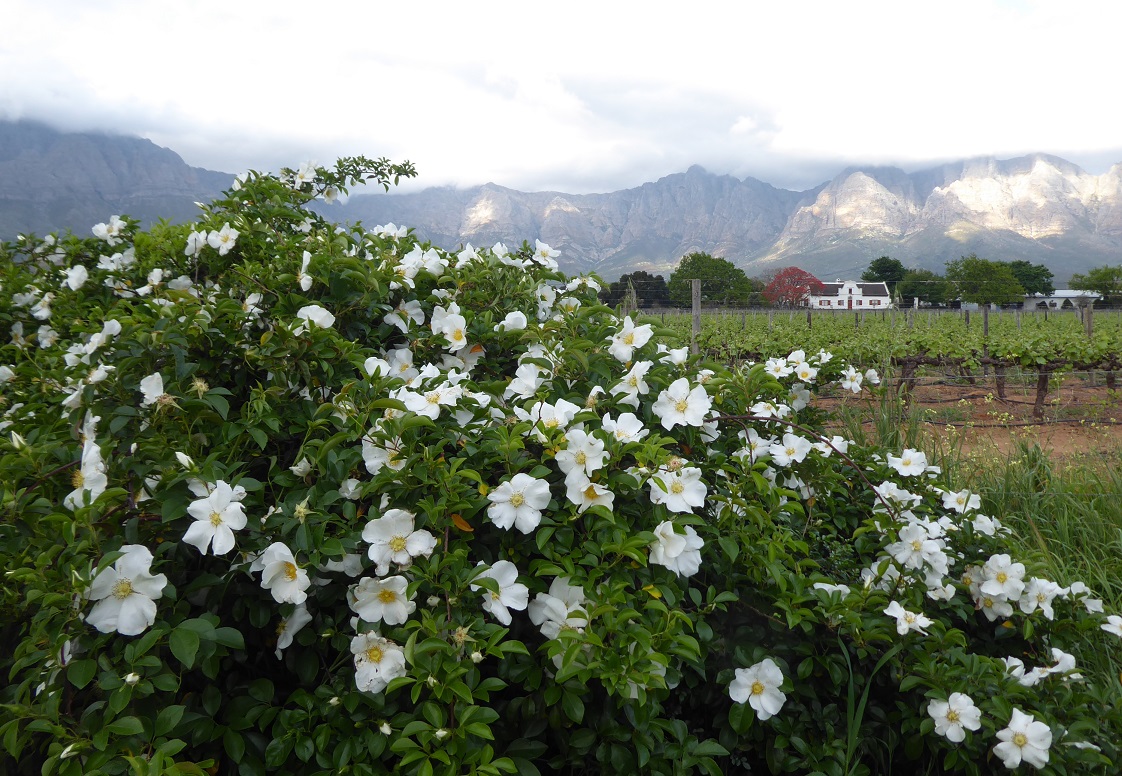
Called the dog rose here at the Cape, the big single white Cherokee rose (Rosa laevigata) is in full bloom now. It is a glorious sight with long waving branches of big white flowers. It makes an excellent barrier plant as it has big hooked thorns. It only flowers now in spring, but what a flowering. I once had its offspring, the beautiful pink single Anemone rose which came from the same nursery in Tulbagh as my wisteria, but sadly I have lost it.
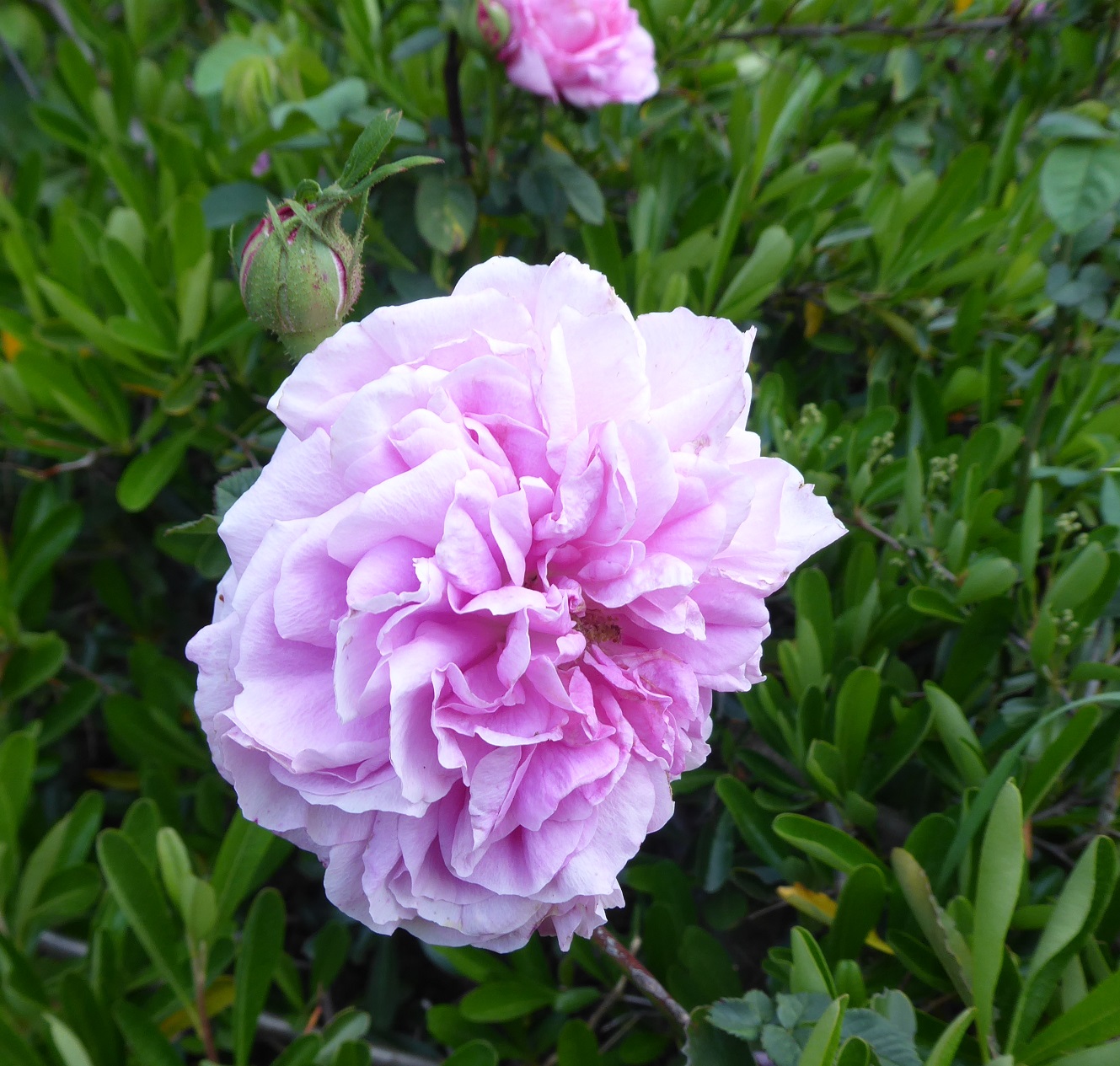
Also in flower this month is the rose we call the Paarl rose. This climber has clusters of scented pink flowers and rough foliage and it runs about. I have it scrambling up into a wild olive. We collected it from beside the N1 about a km from the tunnel tollgate where it was growing wild beside the road and thriving on neglect. Houses are built there now and the rose has been totally obliterated. This rose has a long flowering period and it is the similar to a rose on our home farm in the Eastern Cape. It might once have been used as a root stock.
Another pink rose which runs about and is in flower this month is the rose which Gwen Fagan in her beautiful rose book listed as R.centifolia. This has very full, highly scented, quartered flowers. Sometimes they are a little misshapen. It also thrives on neglect.
The single white rugosa rose is also starting to flower. This is another runner and it rewards one with big bright hips later.
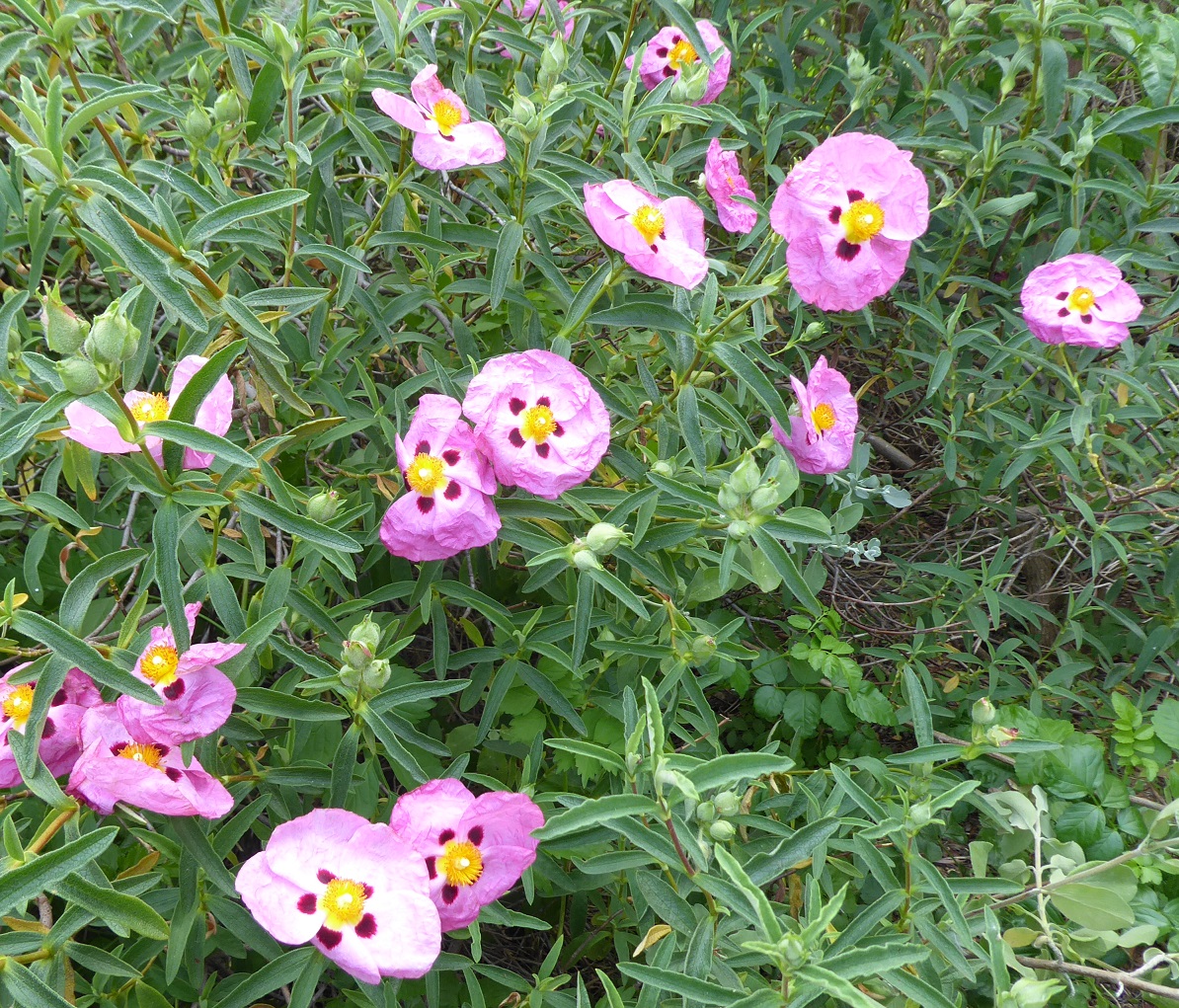
Not a rose, but just a showy with big bright pink flowers enhanced by maroon central spots, is a cistus. Usually very short lived here, I have 1 bush I have managed to keep going for over a decade by never watering it in summer. I think they die of fungal disease, or perhaps they need a limey soil. I cherish this Mediterranean plant and wish I had more. It is in full bloom now.
A little bit of California
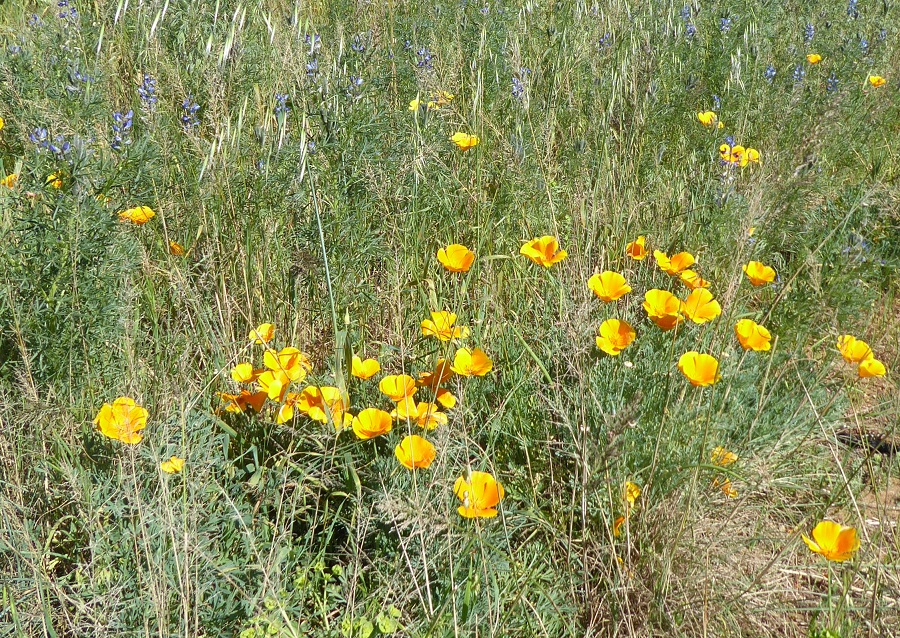
For a few weeks in September, the succulent mounds are surrounded by a sea of blue lupins punctured by bright orange Californian poppies (Eschscholzia). They all self-seed and this vibrant treat is an annual event.
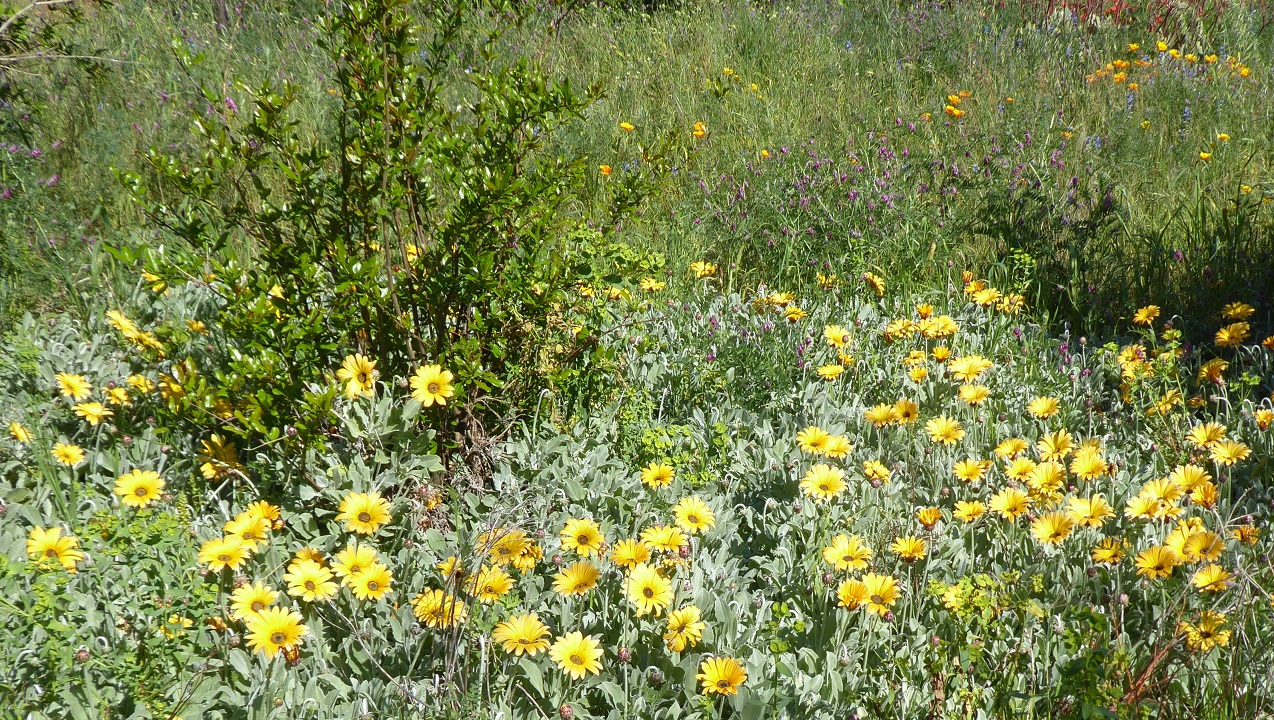
Scrambling through the lupins is a strange little purple vetch which is probably a weed, but which adds to the charm. Close by a patch of grey leafed arctotis daisies is also covered in large butter yellow flowers which have stripes of red on the reverse. This bright ensemble is a contrast to the predominantly pink and white colour scheme of the month. I see from Wikipedia that the Californian poppies can also be used as a food or garnish. Their foliage is silvery grey and fine, very decorative.
Off-setting all these bright colours are the euphorbias which are also sporting their yellow green flowers now. I have several different bushes about the garden and they are a lovely foil for more colourful plants close by.
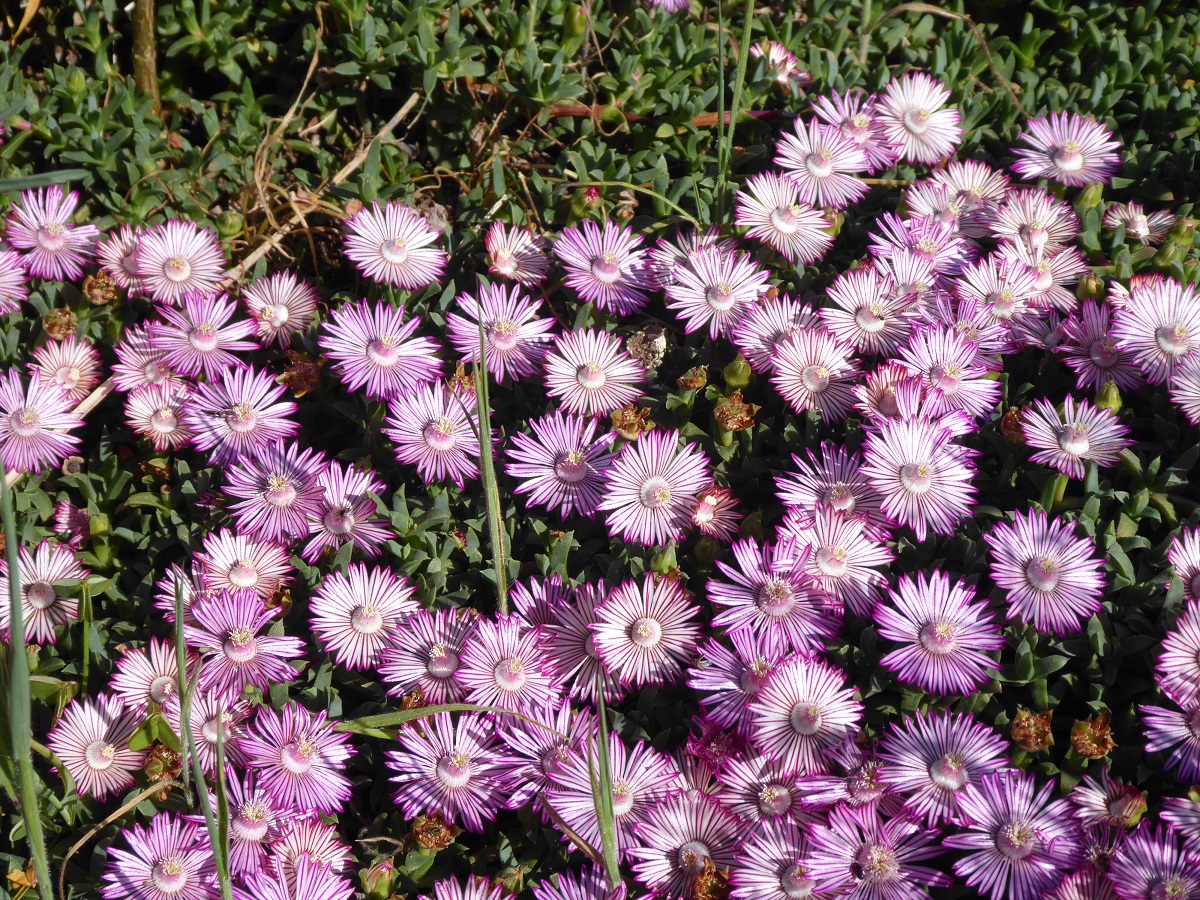
On the succulent mounds themselves, a tough ground hugging little pink mesemb is in flower. I bought it in a six pack seedling tray from the Kirstenbosch nursery but have mislaid its name.
The delicacies of spring
Not only is September full of blossom and scent, it is also the season for asparagus. For my mum and I this is the highlight of the year in the veggie garden. I have 2 rows with about 8 plants in each and this provides us with plenty of spears. I feed it very well in early autumn when the rains come with old manure and if I can, also provide some chopped up well washed kelp. Once the plants have leafed out, I don’t water them unless the season is very dry and I cut back the foliage in April before feeding the plants.
The peas are coming to an end and we have a few broad beans, but these don’t really flourish here. I think winters are not cold and wet enough. The plants flop over too. Perhaps I won’t bother next winter.
Florentine fennel though is a treat which is almost carefree. The plants self-seed and grow like weeds in winter at KSU. We cook them in lots of ways; baked with chicken and olives and tomatoes in the oven, or following a friend’s advice, just cut up and tossed in a bit of olive oil and coarse salt and baked.
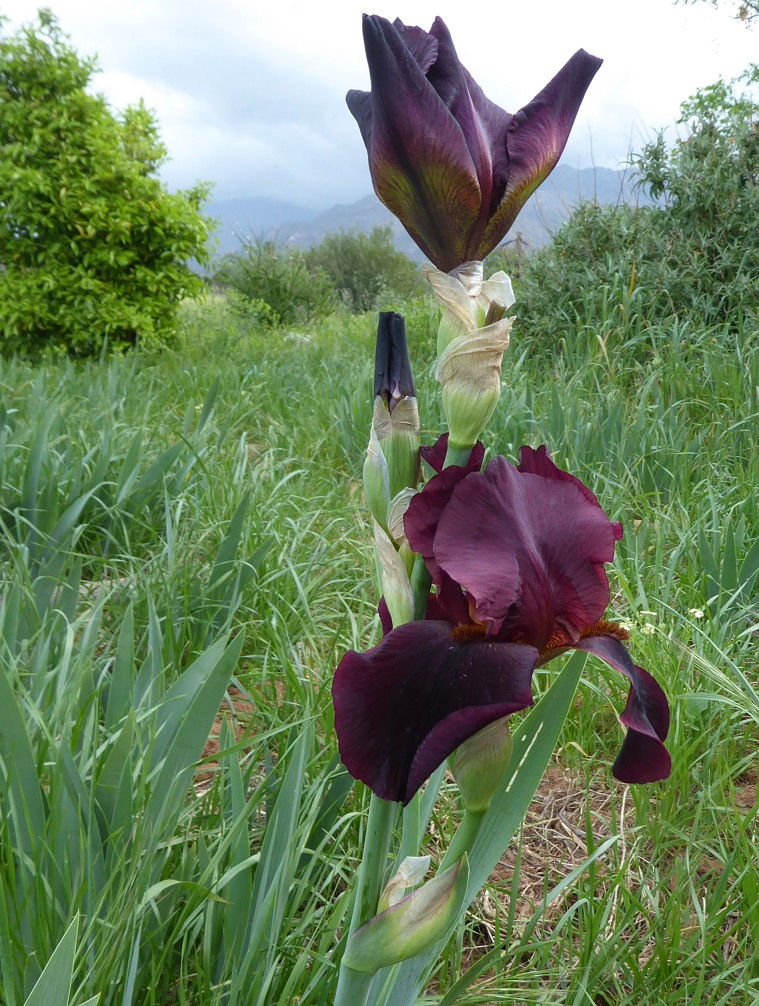
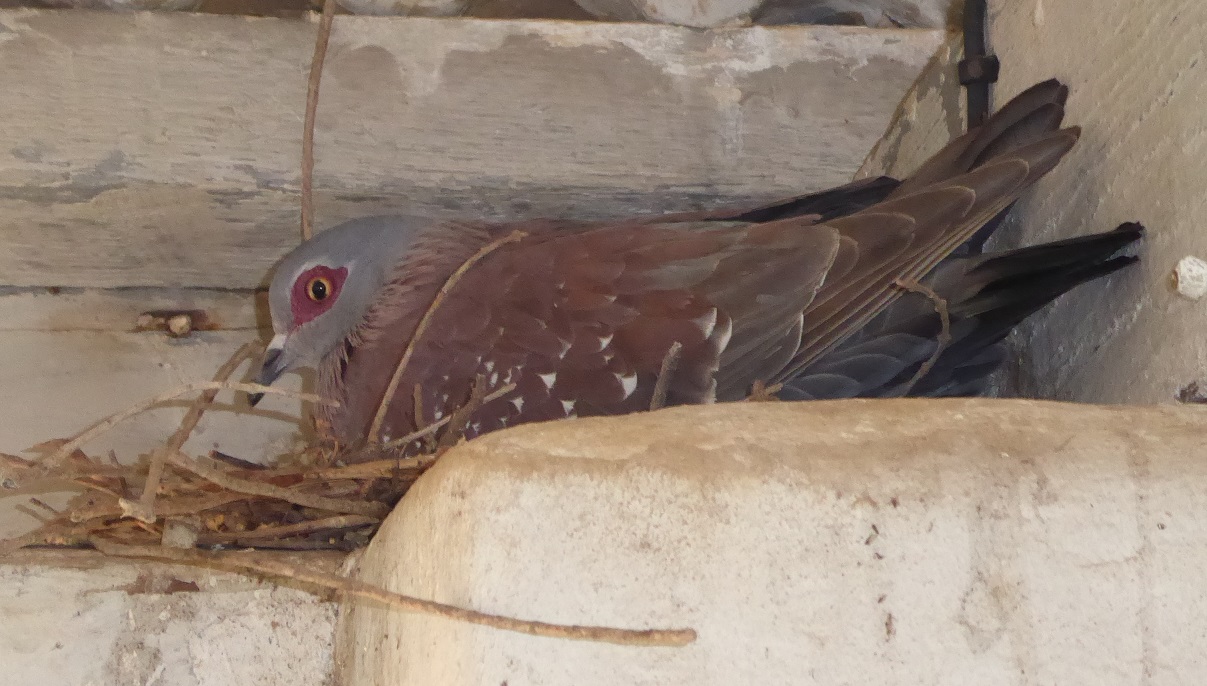
As September comes to an end we need to brace ourselves for the southeasters, the heat and flies that lie ahead. The joys of September are fleeting, but looking ahead the irises are starting to bloom led by Hell’s fire. There are big bushes of purple lampranthus to lead us into October and we can look forward to watching the chicks of the speckled pigeon who is nesting on a pillar on the verandah.
September 2019 gallery