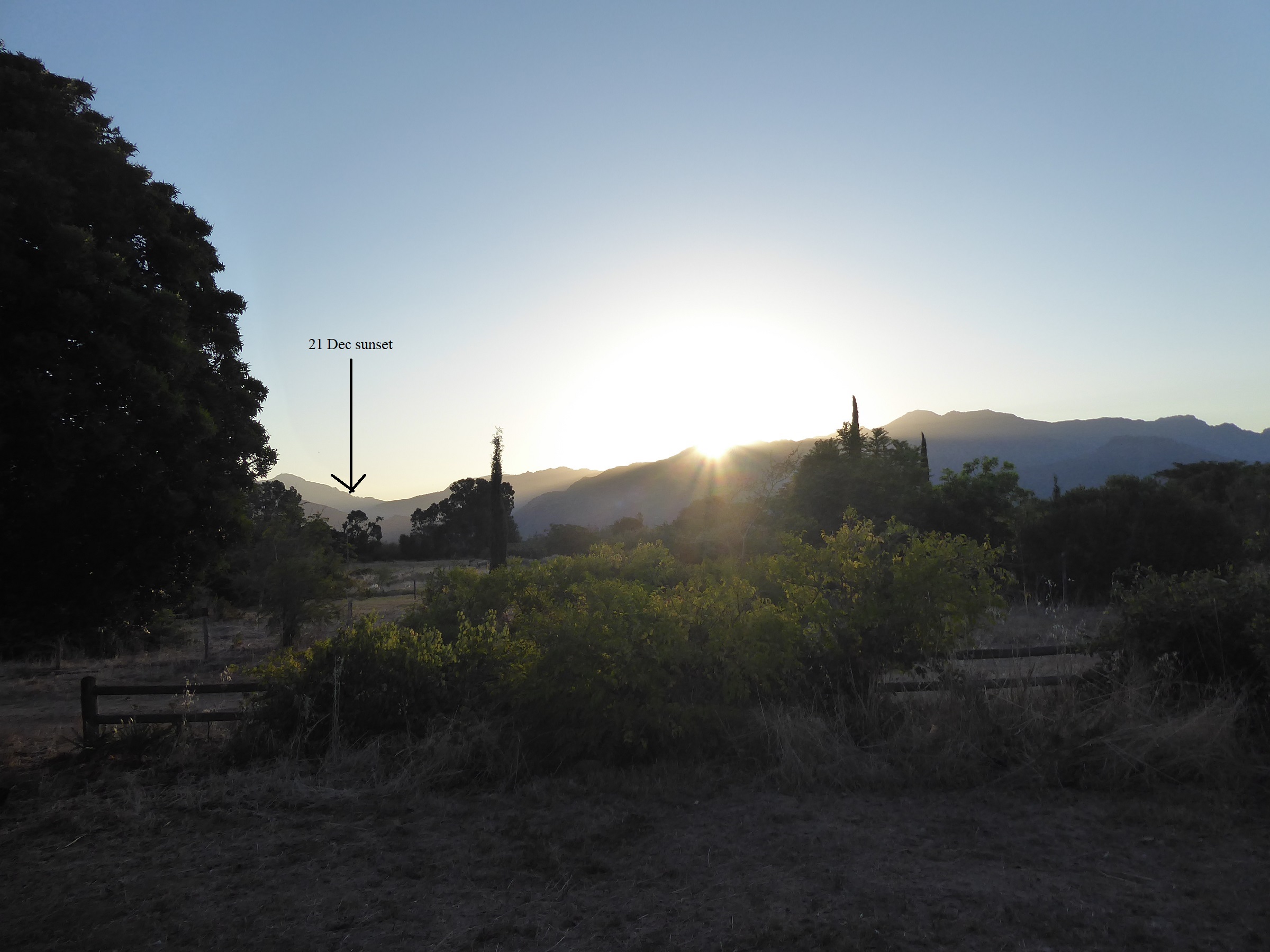
Although February is traditionally regarded as the hottest month at the Cape, it doesn’t seem to be the case here at KSU. I think it may have to do with the shape of the mountain ranges to the east and west of us. The mountains to the east are much closer and can delay sunrise by an hour or more, but they taper away to the south, so the midsummer sun in Nov/ Dec rises comparatively early at about 5:30 am. However the range rises steeply to peaks which delay sunrise as we move towards the equinox. The sun in February is now rising well after 7am.
The same occurs on the west. The gap in the mountains formed by Bainskloof is directly opposite the house and this is where the sun sets in midsummer after 8pm. The range rises gently to the north and now sunset is around 7pm. Thus the mountain profiles shorten the hours the sun beats down in February compared to December.
The days and nights nevertheless are still hot and we have had no rain this month except for 3ml on the 2nd Feb. Plants are starting to look stressed and long for autumn rain. The south-easter has also blown almost all month. Although this cools and makes the heat bearable, it also desiccates. The air is often hazy with dust and smoke, but this is a month of plenty harvest-wise.
Figs & Grapes
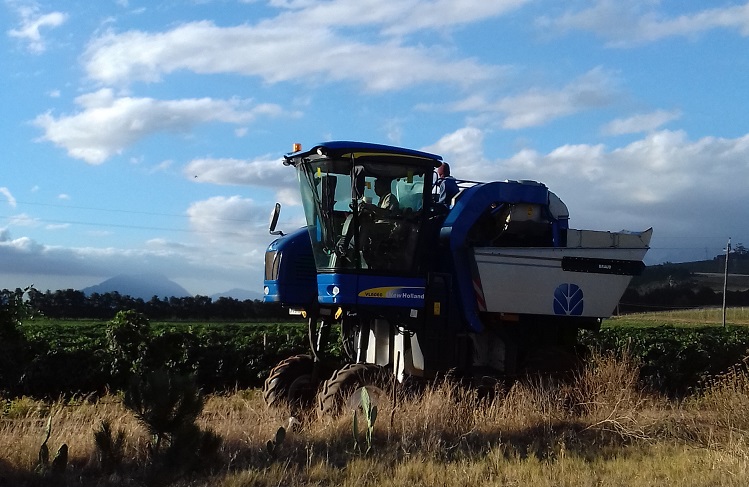
Farmers around me grow wine grapes and the harvest has started. When I first came to KSU the grapes were harvested by hand, but within the last 5 years all farmers have acquired tall harvesting machines which straddle the rows – great behemoths with big headlights in the sky, scary to meet on the road before daylight. Roads are busy with tractors dragging trailers full of grapes to the co-ops. The trailers tilt to tip out the grapes once the load has been weighed then back race the tractors for another load.
Grapes
My garden has been developed on an old Hanepoot vineyard. Some of the old vines are still in the garden and the grapes ripen towards the end of the month. First to ripen are the tiny black seedy Jacques grapes. Pronounced Yak-kay locally, Jacques was an old rootstock, no longer used. The grapes I look forward to are the Catawba grapes. This is an American grape which has a particular musky flavour, not admired by everyone, but addictive to those who like it. The skins are firm and the flavour only develops when the grapes are completely ripe. When I lived in Cape Town I had a vine which grew amazingly well, but the 3 vines I grew from cuttings and planted on a pergola here struggle a bit. They bear well though and grapes make delicious jelly which is especially nice mixed into plain Greek yoghurt.
Figs
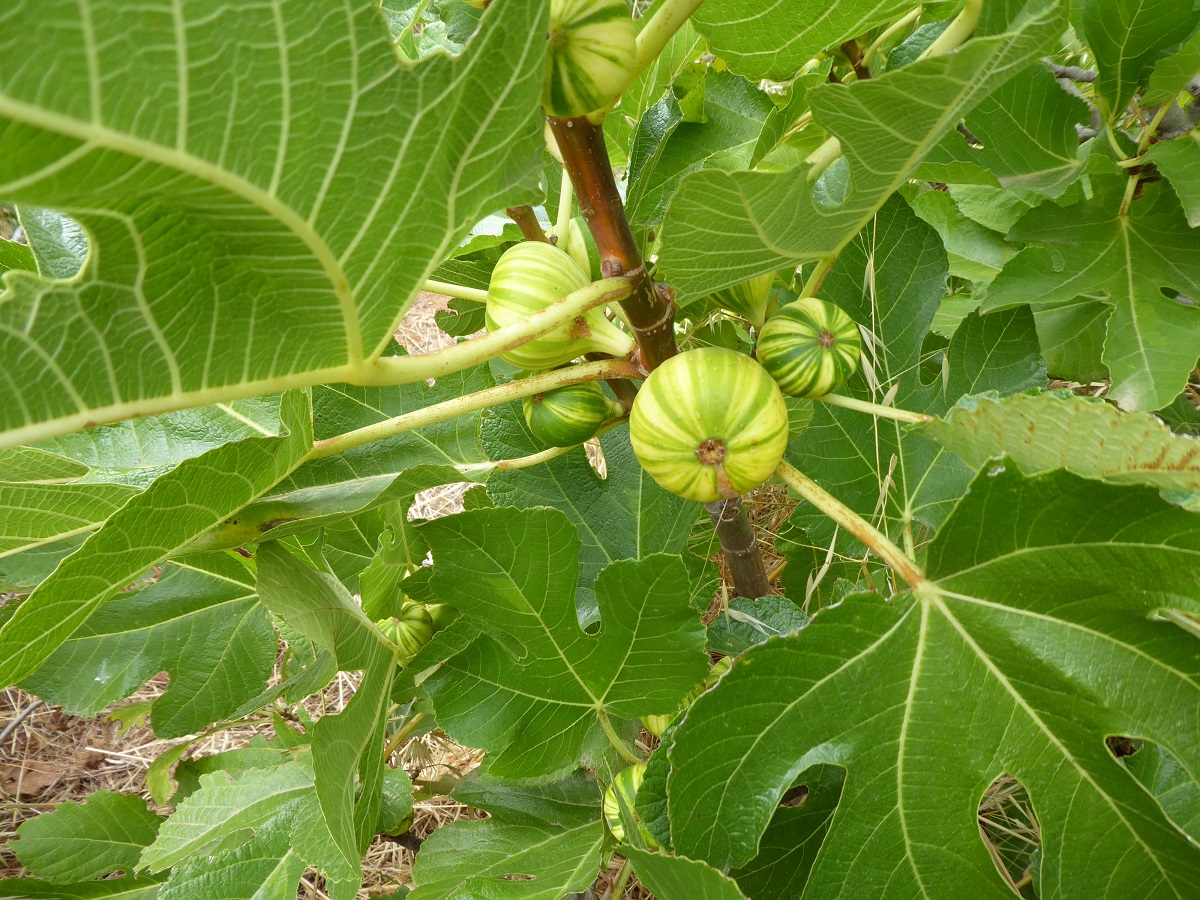
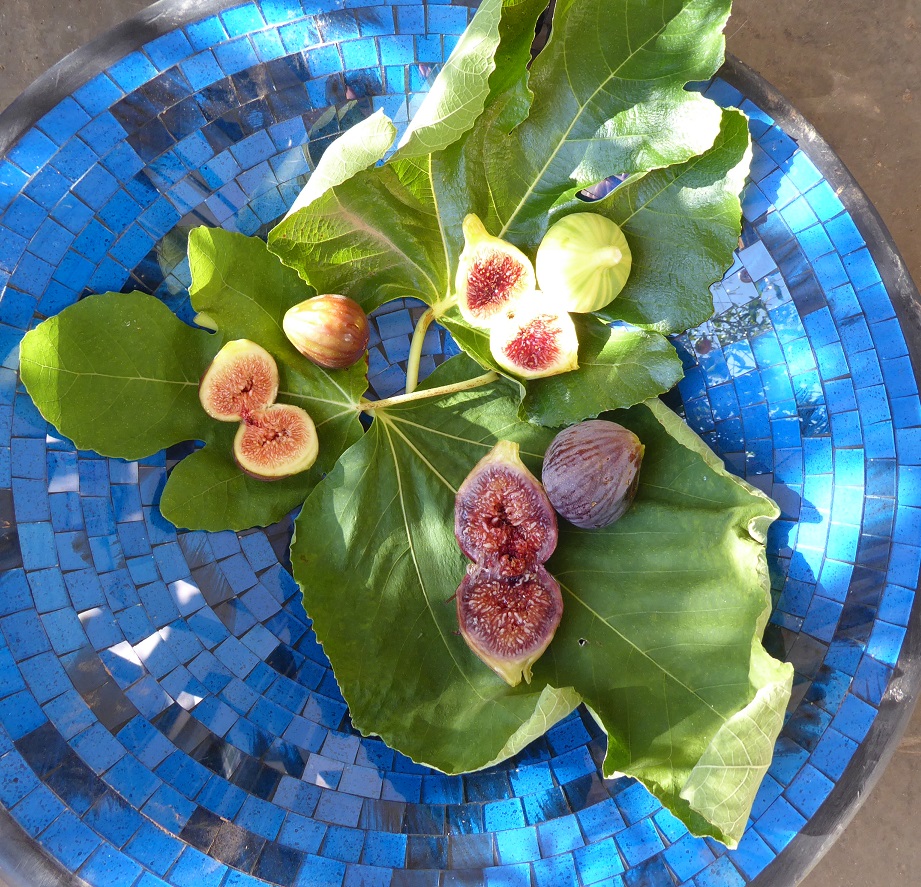
February is fig time. They ripen faster than we can pick them and the mouse birds are having a great time. First to ripen is the little Cape brown fig, a firm little fig which makes a tasty bite. This year the big purple Adam fig starting ripening at almost the same time. These are luscious figs with a deep red centres. Lastly come the tiger figs, with green and yellow stripes these figs are also red inside and are very sweet making them my mom’s favourite fig. The strong winds blew down and broke a big branch this year just as the fruit was ripening.
Figs don’t keep and are best eaten straight off the tree. One of the rewards for watering the garden is making frequent forays to the figs trees for sustaining snacks! I have friends who enjoy fresh figs too so lots get given away. Some get cut up and covered with brown sugar or honey and port and popped in the oven to bake and then enjoyed either warm or cold with Greek yoghurt- a very easy and delicious dessert. Some get made into jam. I find plain fig jam is not always a success and this year I have mixed them with Kei apples to add a bit of acid and pectin and I think the results are yummy. Best of all is sandkorrel konfyt. Mrs Olive Niewoudt of the Cedarberg shared her recipe with me many years ago. This jam is a mixture of fig, hanepoot grapes and watermelon rind. It is tricky to make, but absolutely delicious when you get it right. The famous green fig preserve is made in spring from young green figs, not now in late summer.
Pomegranates and prickly pears
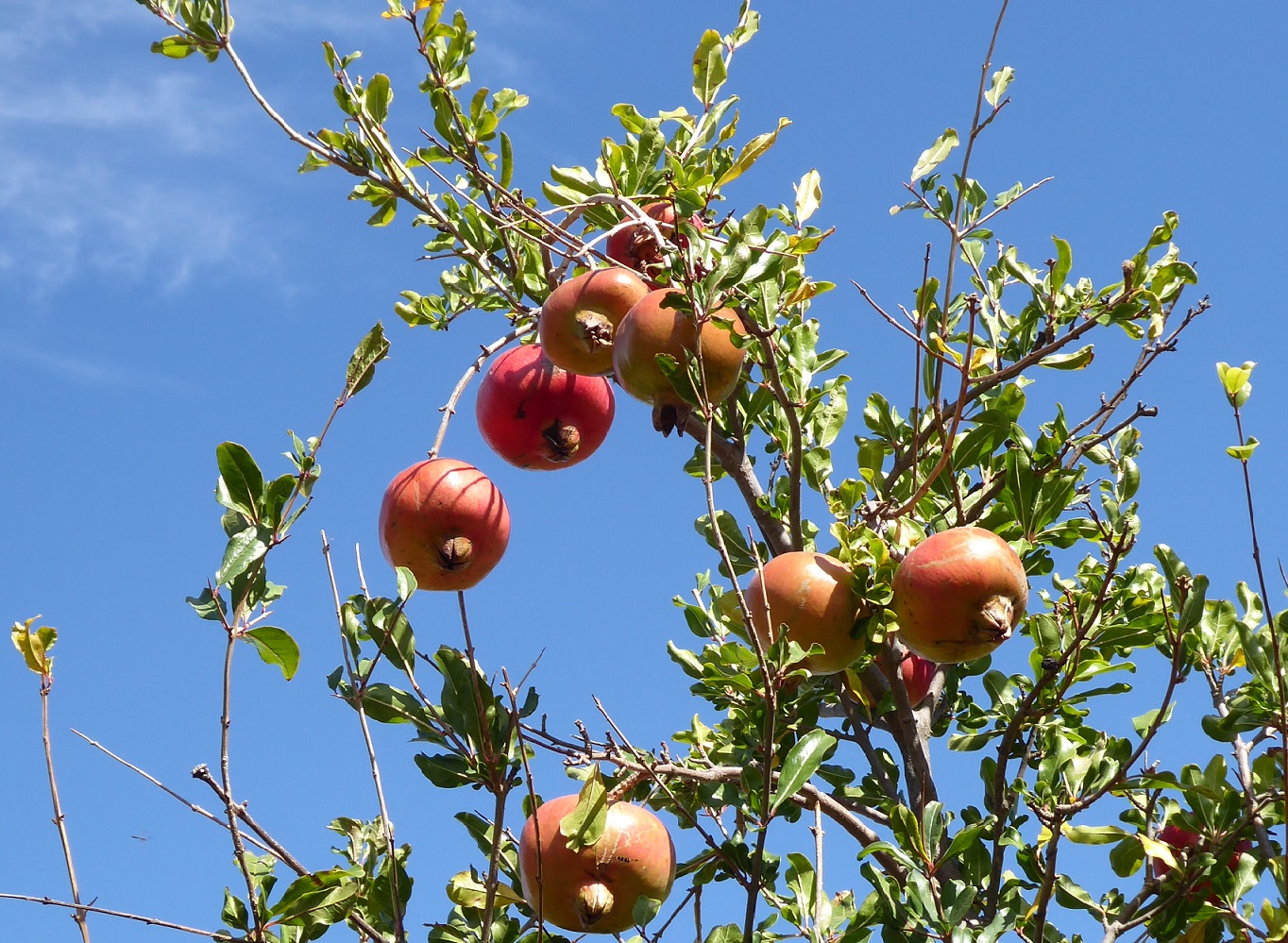
Pomegranates are also ripening now. It is great to see that this ancient fruit is back in fashion. It is one of my favourite trees as you can see from the banner of this site, and I have one growing just off the stoep. In spring the new leaves are a lovely bronze, then come the bright orange flowers and the bright green leaves. It is lovely to watch the beautifully shaped little fruits swell and ripen and then split to reveal the jewel-like red pips. When the chilly nights come the leaves turn yellow before falling and let the sun through to warm us on winter afternoons. I have also planted some pomegranate hedges. We eat the fruits and some years I try making pomegranate molasses, but it takes lots of pips to get a little bottle.
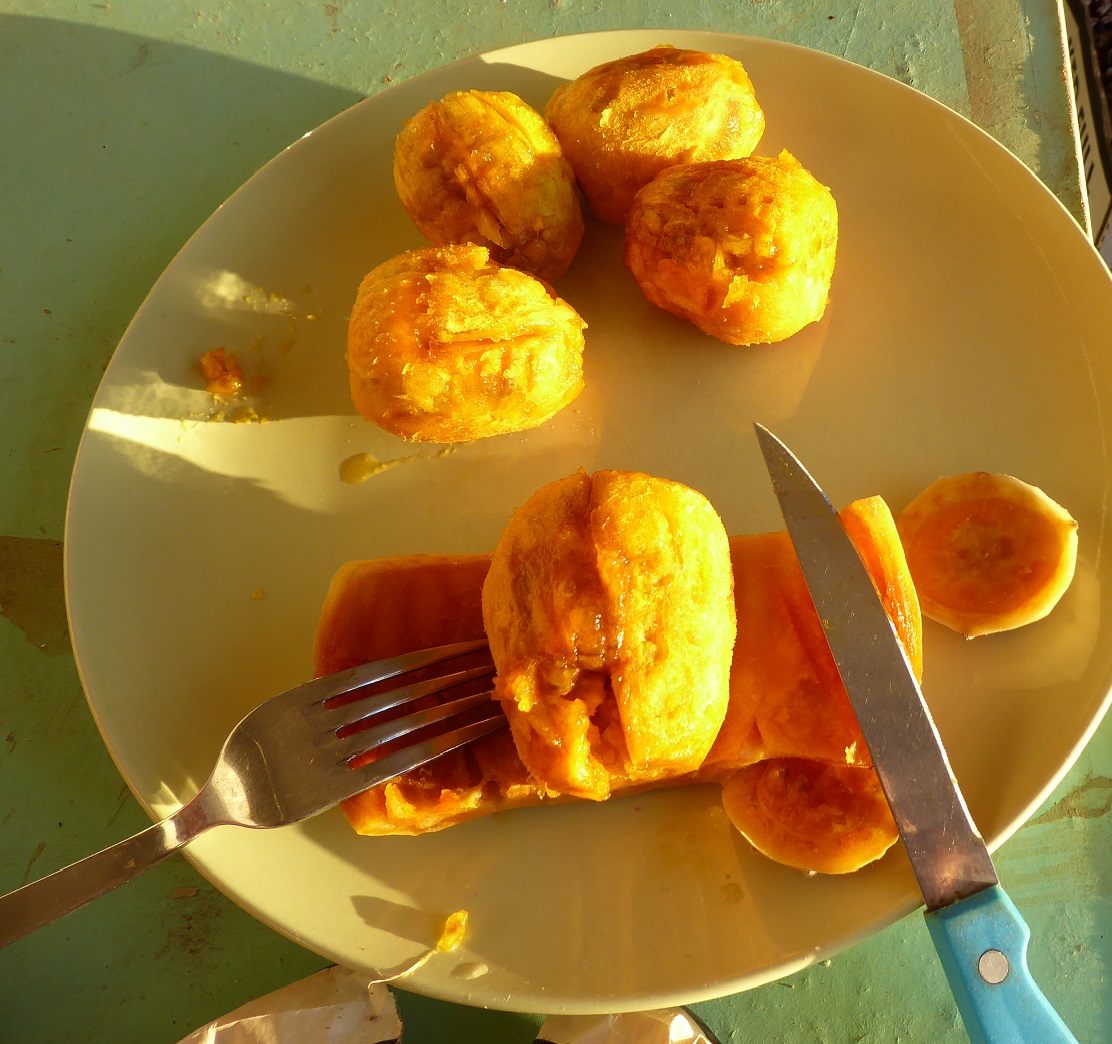
Prickly pears (Opuntia sp.) take me back to my childhood growing up in the Eastern Cape. My father would peel lots and chill them in the fridge for breakfast. It is still the way we enjoy them. When I bought KSU there were several old plants on the boundaries. Some are massive. The tastiest form has yellow flowers, lots of prickles and orange flesh. The one with less prickles has paler fruit which is less tasty. Safely picking and peeling prickly pears is an art to cultivate as the tiny prickly hairs are fiendish.
Pretty barrier plants
Aside from Kei apples (Dovyalis caffra)which I wrote about last month and prickly pears, two other prickly tough plants which can be grown as barrier shrubs are carissas and durantas. Both are long flowering and are still looking good in February.
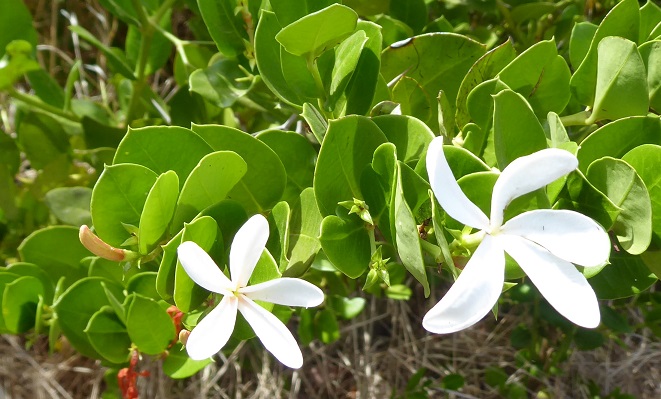
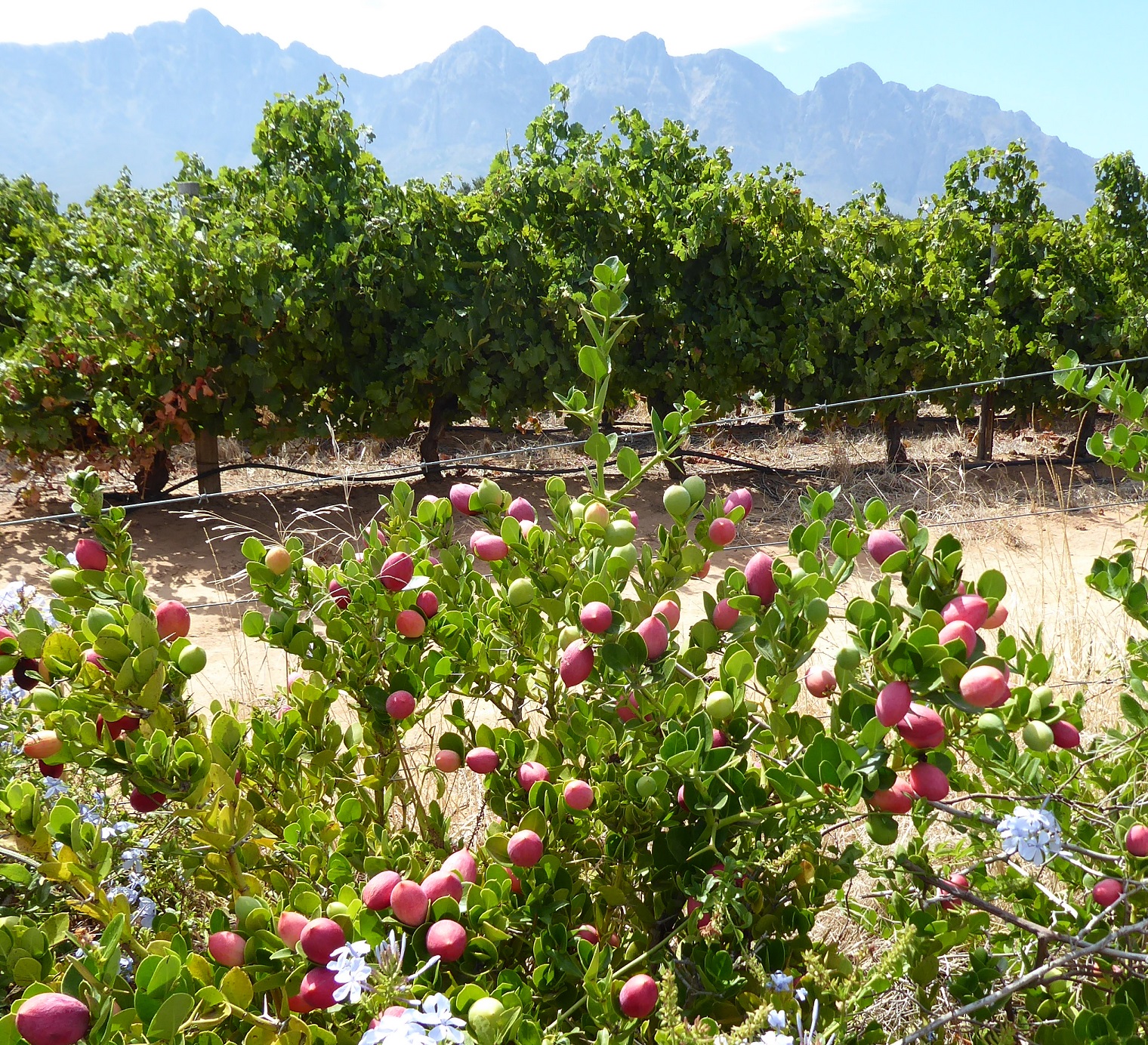
Amatungula, num-num or Natal plum (Carissa macrocarpa) is full of fruit now and still has a few flowers. The fruits are quite tasty and I believe make a good jelly, but I have not tried yet. It is native to the eastern coastal parts of the country and I have been surprised that it grows quite well here but is not as tall as in coastal areas. The large scented single white flowers are followed by bright red, oval fruits about the size of a prune.
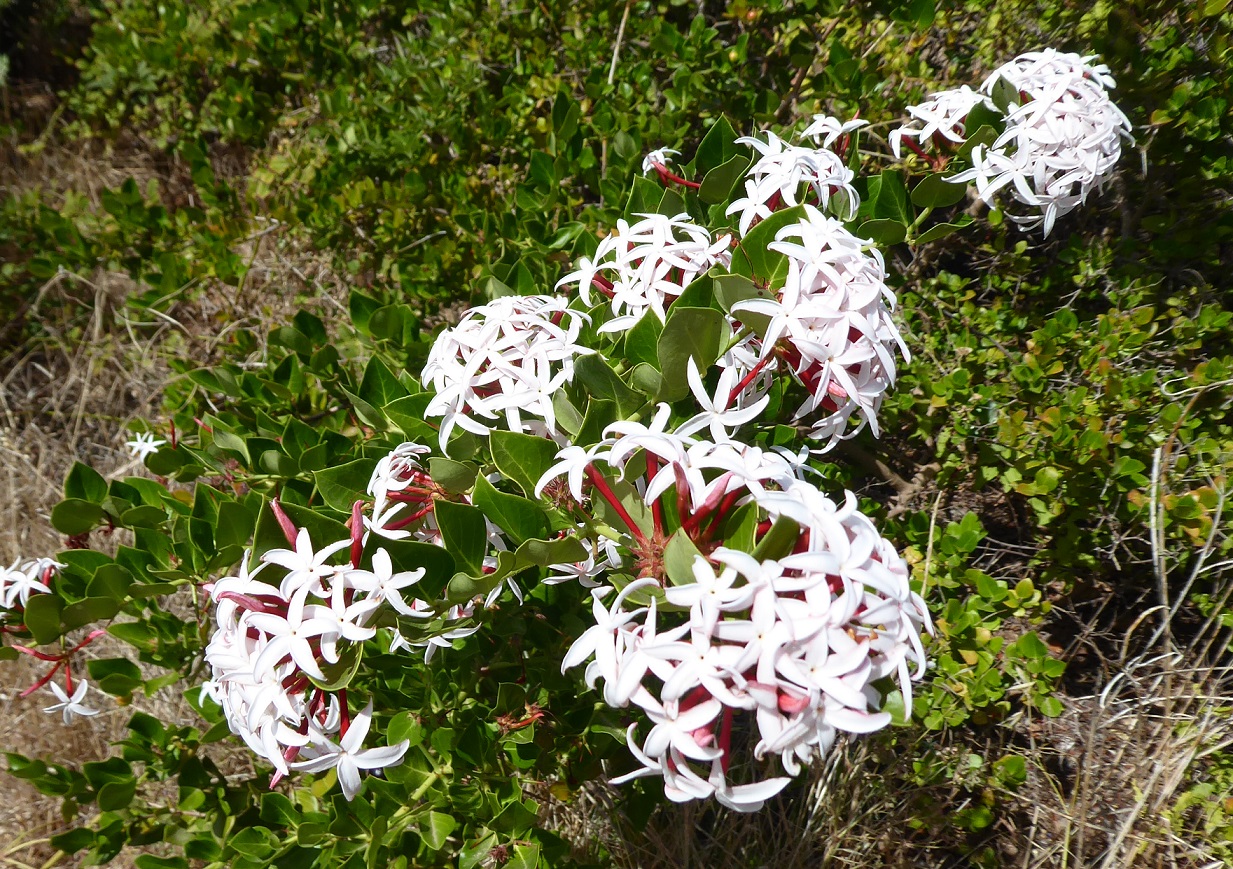
Carissa edulis has much smaller black round fruits, and smaller tubular flower which come in clusters like spring jasmine. The shrub has been flowering on and off all summer. The scent is heavenly, the buds and flower tubes are red pink which contrasts beautifully with the starry white flowers. The long spines are vicious. It comes from the bushveld and further north in Africa and does well here.
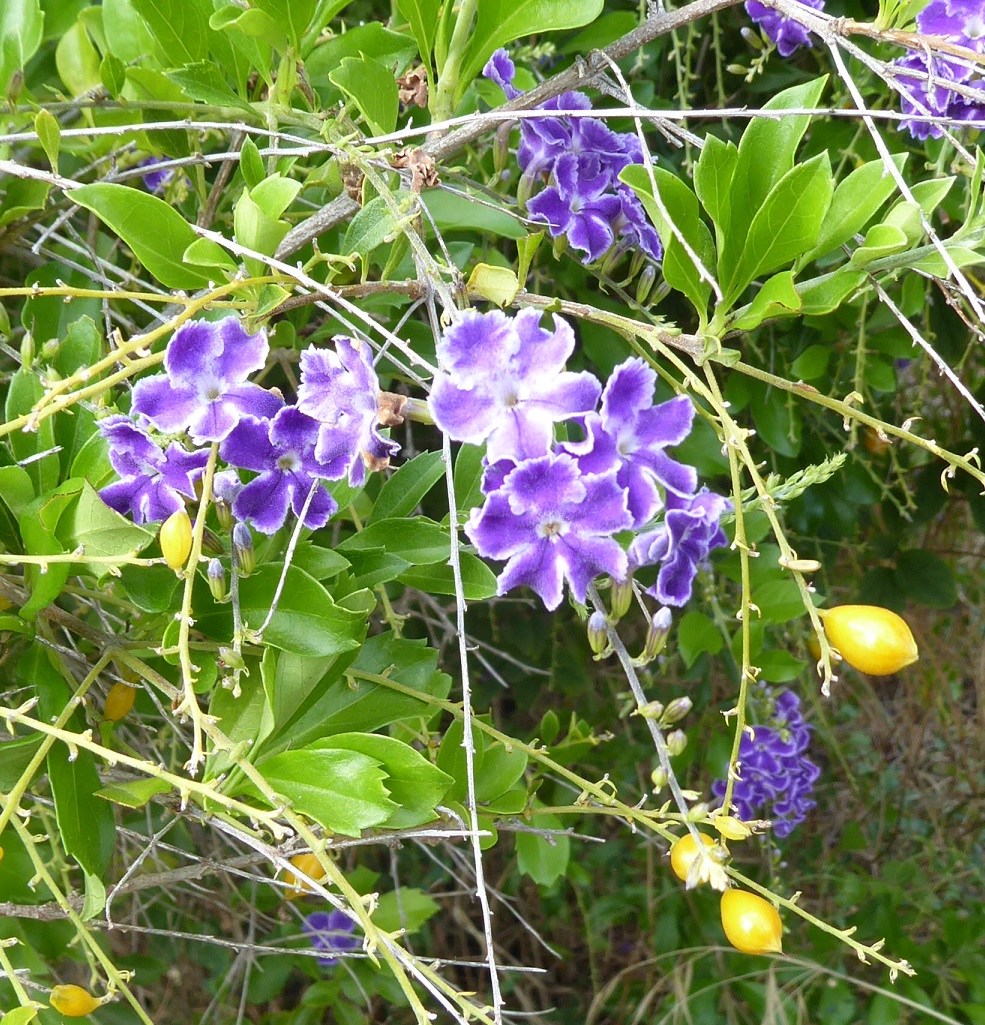
I have two duranta bushes, but may acquire more as they are tough shrubs requiring very little water when established, real stalwarts for summer. They come from Mexico and South America and are sometimes called golden dewdrops. One of mine has variegated leaves with a silvery gold edging and pale blue flowers. The other is the real beauty with darker violet blue flowers which are edged with white. I think it is the cultivar called Sapphire showers. The flowers are faintly sweetly scented and cover the large shrub all summer. Both shrubs also have golden berries now.
Stars of February
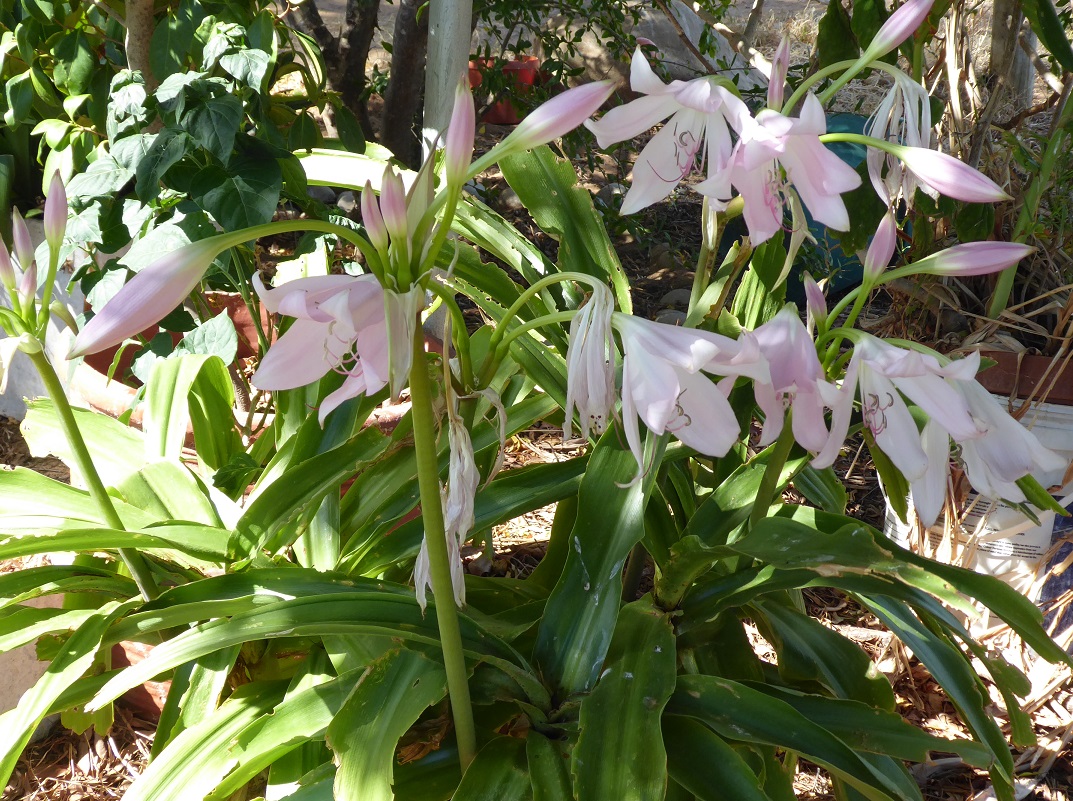
With elegant, pale pink lily like, scented flowers, Crinum moorei has been a treat all month. The flowers remind me of ballerinas in Giselle. Sometimes called the Natal lily, this member of the Amaryllis family has big bulbs and prefers shade. Mine are growing in a big pot under a tree and have survived considerable neglect. Their scent is stronger at night making them a good choice for a shady courtyard.
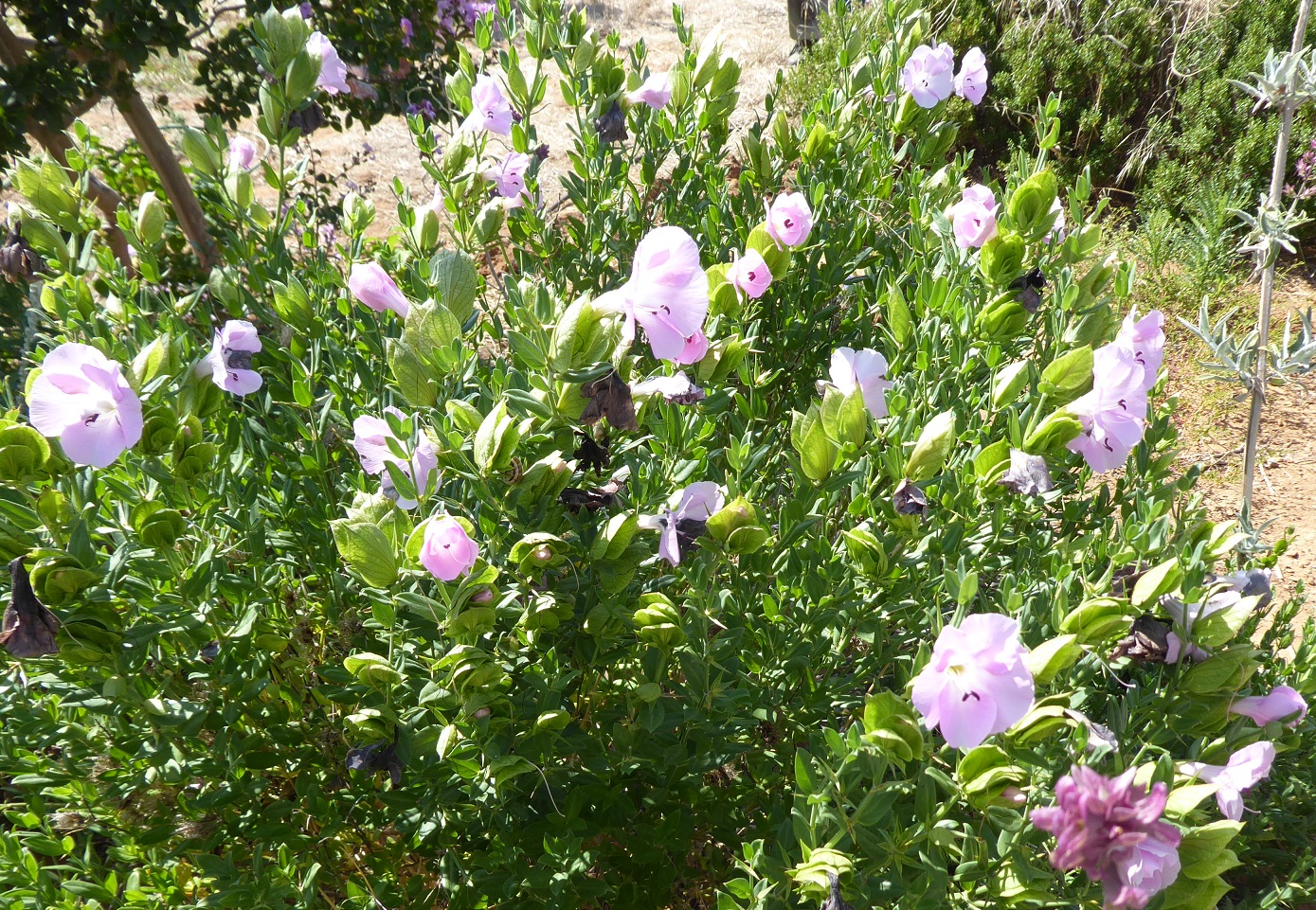
Another pale pink beauty flowering for weeks from mid to late summer is Barleria greenii. This likes some sun and also comes from KZN and I read that it is also scented at night. It is critically endangered in the wild. A bushy perennial with big (for a barleria) delicate flowers, it has prickly leaves. My single plant has survived in the garden for many years, but I must try to propagate more as it is out of its comfort zone here. I do prune it back a bit each winter and wait anxiously to see if it will shoot in spring. I also water it weekly in summer.
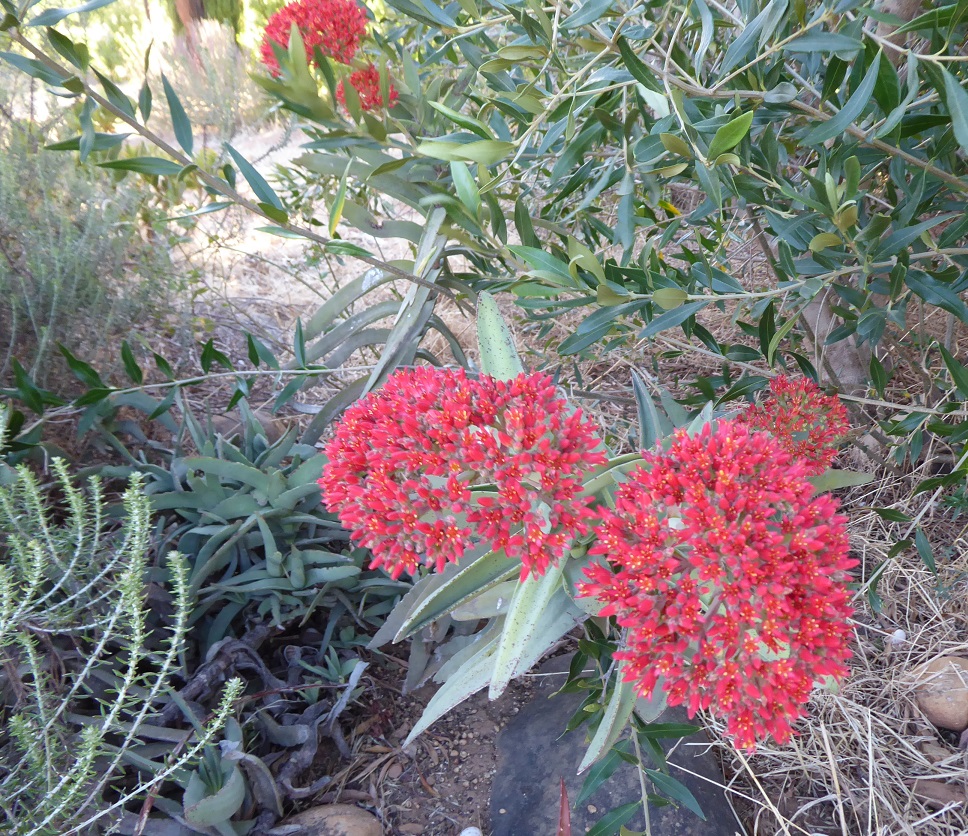
Much tougher and brighter is Crassula perfoliata var. falcata which is also a February star at KSU. This is a succulent from the Eastern Cape with attractive grey stems of grey sickle shaped leaves which complement the big heads of tiny bright red flowers. Easy to propagate from cuttings, I have a few plants in the rockery and have noticed that those which get afternoon shade do best. There seems to be some confusion about the name of this plant.
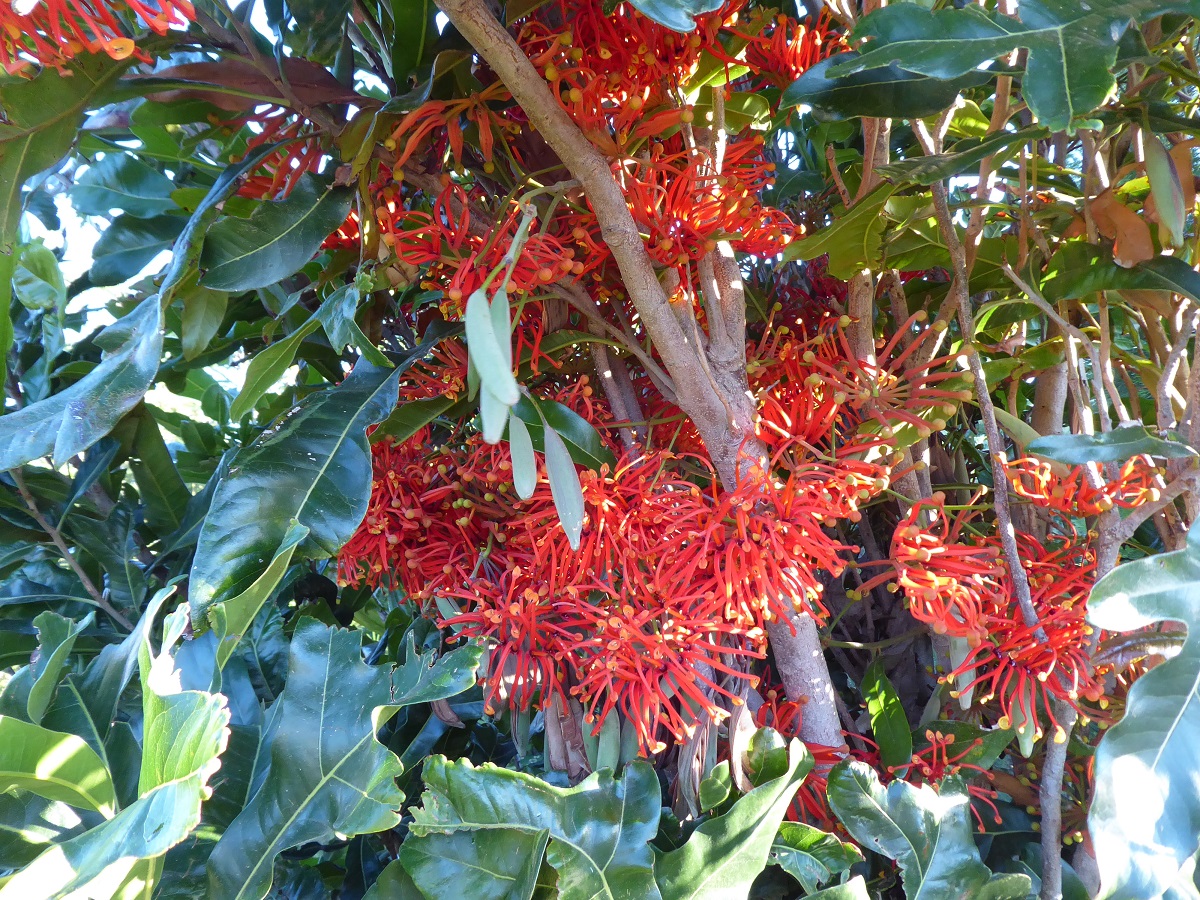
Even bigger and brighter is the firewheel tree, Stenocarpus sinuatus, from tropical rain forests of Australia. I have been amazed that it has grown and flowered here, but it is a member of the protea family and I think must like the acid soil. The flowers are like bright red, spidery catherine wheels and the seedpods an elegant pale green. It has very handsome glossy dark green leaves too which make it attractive all year round.
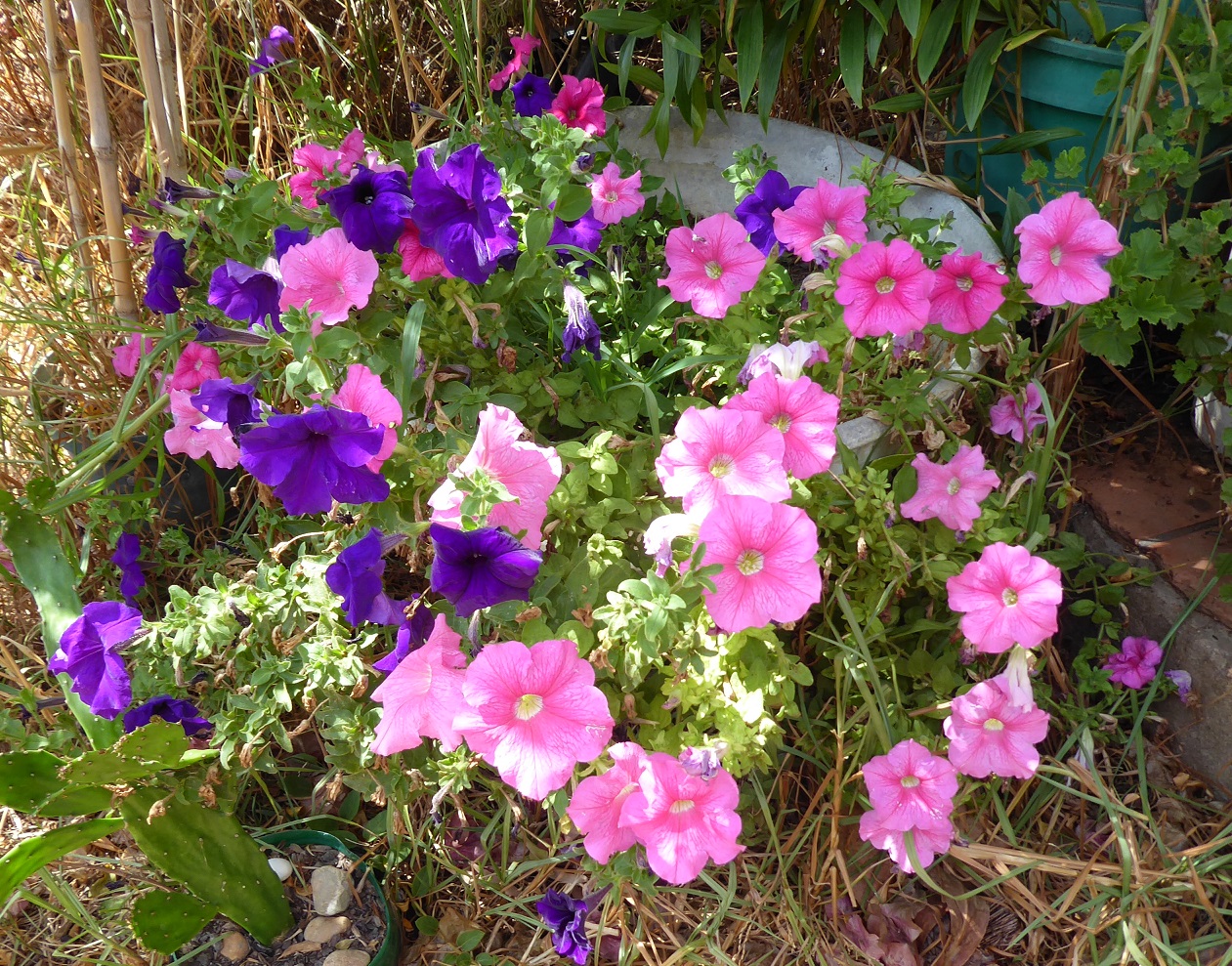
And lastly let us not forget the humble petunia, a pot of them have been flowering beside the front steps all summer long, a daily star.
February 2019 Gallery