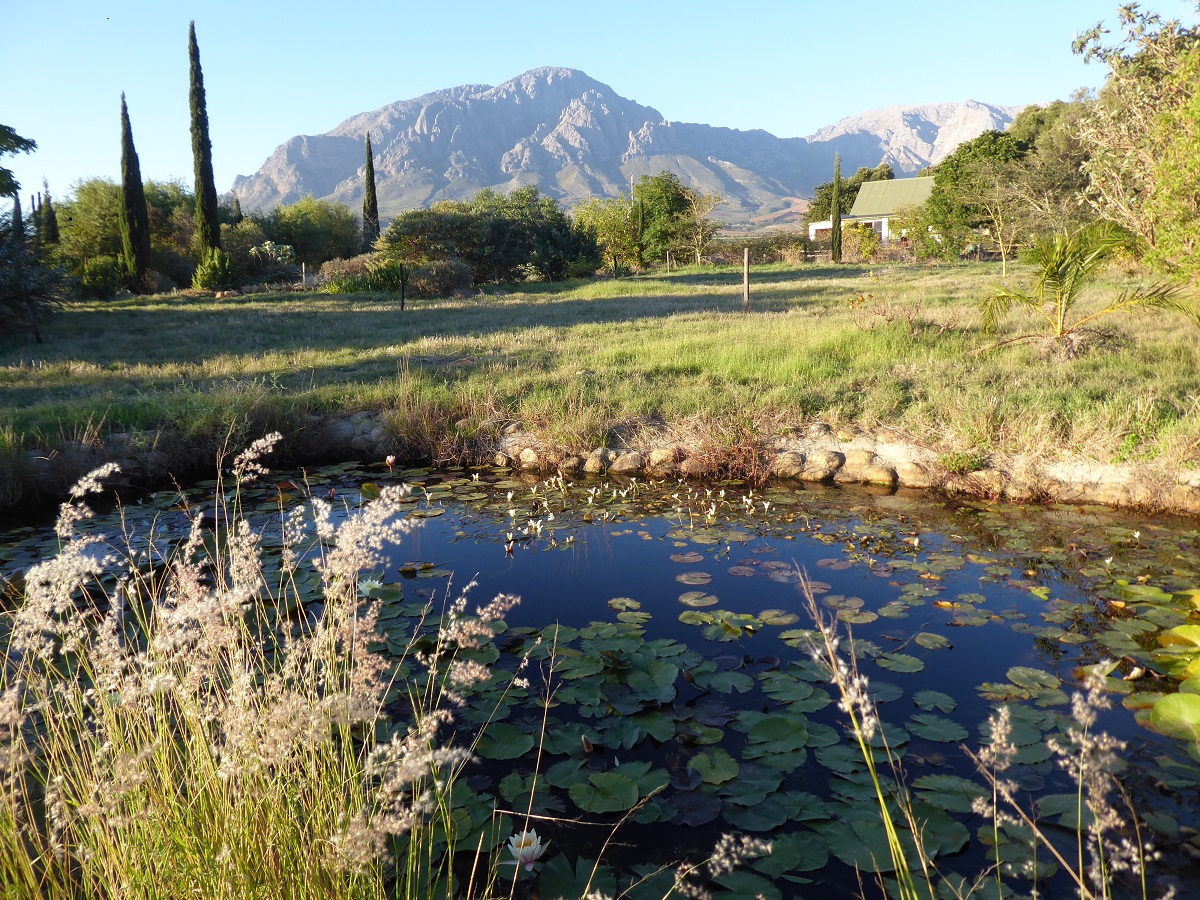
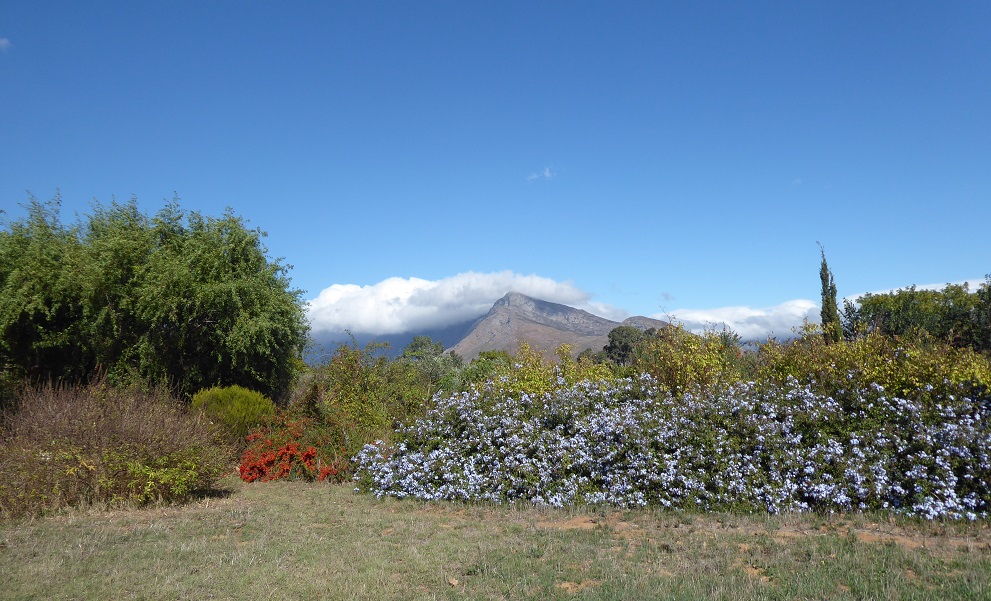
Autumn has arrived. After 12 mm of rain in mid April the grass greened up. A cold snap followed the rain and we rushed to find our winter pjs. I am still having to water the garden occasionally as it has not rained enough yet to saturate the soil. It is a pleasure being in the garden on the days the wind does not blow. Even the cypress trees look fresher against the crisp blue sky and the waterblommetjies have started flowering in the pond. Waterblommetjie bredie is a favourite winter stew here at the Cape.
Autumn colour
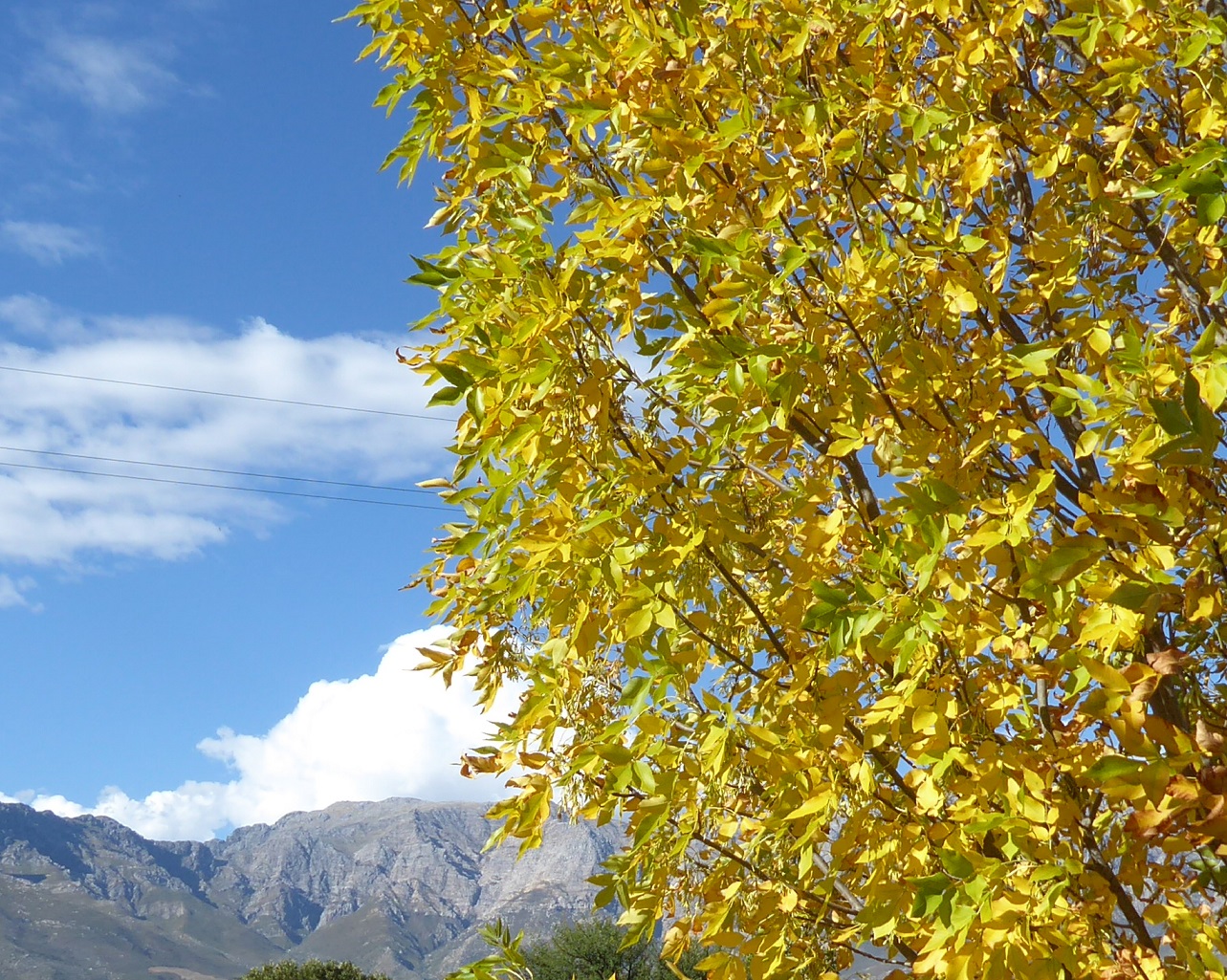
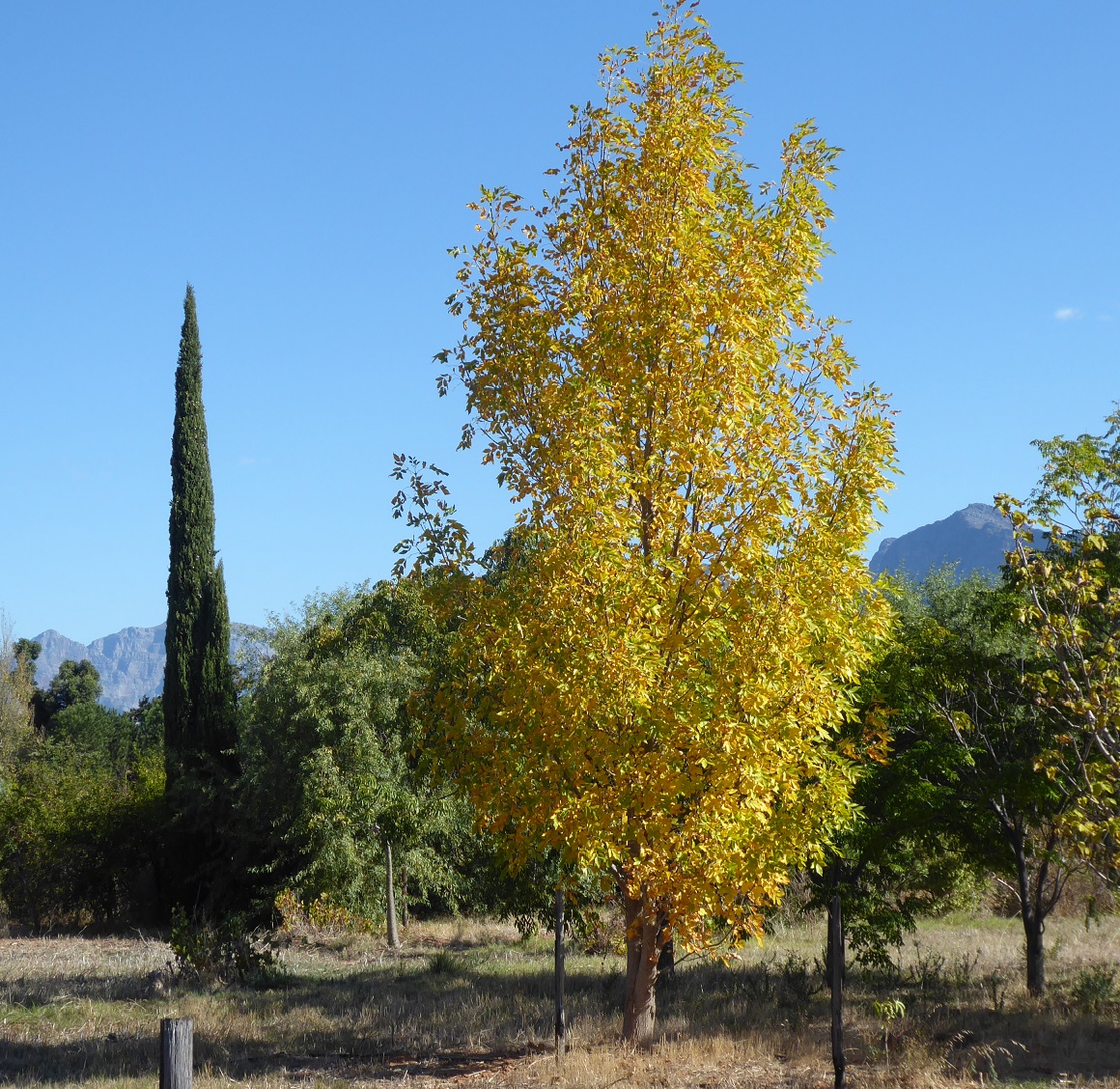
Leaves on some trees such as the pomegranates and ash started turning yellow and falling. It is not cold and wet enough for autumn colour to be a great feature here at KSU. Leaves usually brown off and drop at the end of summer without any autumn glory, but the ash is an exception. I am not sure which Fraxinus species it is. At least two grow in this part of the Cape. This one has bigger leaves and lovely autumn colour, being one of the first trees to lose its leaves. The persimmon tree leaves are turning red and glow like jewels in the autumn sunlight.
There are also some special berries to enjoy in autumn. The most spectacular are the red pyracanthas which have been ripening for a few months now. The birds eat some but leave enough for us to enjoy.
Fruit
April is also when we harvest the olives. I have 3 Frantoio trees and a Manzanilla which we pick for oil. Then there are several Kalamatas and Missions which I pick for table olives. They were all planted about 14 years ago. It took three of us a whole day to pick the Frantoios as the fruits are relatively small. We take the olives to be pressed at River Bend olive farm. Freshly pressed olive oil is totally delicious- green and thick. This year we got 9.6 litres from our 76 kilos of fruit. I have a bag of Kalamatas packed in coarse salt to cure and have given away part of the crop to friends.
The fruit season is drawing to a close, but we still have the rather strange pineapple guava (Feijoa sellowiana/Acca sellowiana) fruits to enjoy. This is an attractive tree from South America with silvery leaves and bright red flowers. The fruits remain green, and fall from the bush when ripe. They are about the size of a very big egg with a taste a little like a cross between a guava and pineapple, hence the common name. The best way to eat them is to cut them in half and eat them out with a teaspoon. Swastika fruit is another common name and when they are cut in half it is easy to see why.
Autumn activities
As soon as the autumn rains fall we rush to plant up the vegetable garden. I love peas especially mange tout varieties and so peas are the first things to go in. I make about 4 separate plantings to extend the season. I have started planting by the moon and try to plant seed with a waxing moon. I am not sure if it works. I also plant broad beans, although it isn’t really cold enough here for them to thrive. Garlic cloves and leek seeds also go in. This year I was very excited to find parsnip and celeriac seedling plugs at Hart’s nursery in Ottery, so some of them have gone in too. I hope the self-seeding fennel will form bulbs as we look forward to eating fennel in winter. There is also a spot for sweet peas in the veggie garden. All these young plants are struggling a bit as we haven’t had enough rain yet.
The dahlias also need lifting in autumn. I store my tubers in sand over winter to prevent them rotting, but this year has been a total disaster for dahlias and most of my tubers had rotten before I lifted them.
April is also when the indigenous Cape bulbs start growing again. I have bought lots of little bulbs and seed and have planted up a trough and old sink. A few have gone directly into the soil- probably to make a tasty treat for the moles. Gardeners live in anticipation. Various lachenalias, sparaxis, moraeas, ferrarias, gladioli, cyanella and babianas all planted to make a little jewel box in spring.
The big pot near the front door has also been planted up with primulas and pansies for the winter.
April stars
Koelreuterias bear terminal clusters of small yellow flowers in late summer and now in April their pinkish red seedpods are most decorative. This is a tough little tree and survives with little water. I am not sure if the species I have is K. paniculata or K.bipinnata. I think the former, but I need to take a good look at the leaves. I grew the two trees I have from seed collected from a garden in Mowbray.
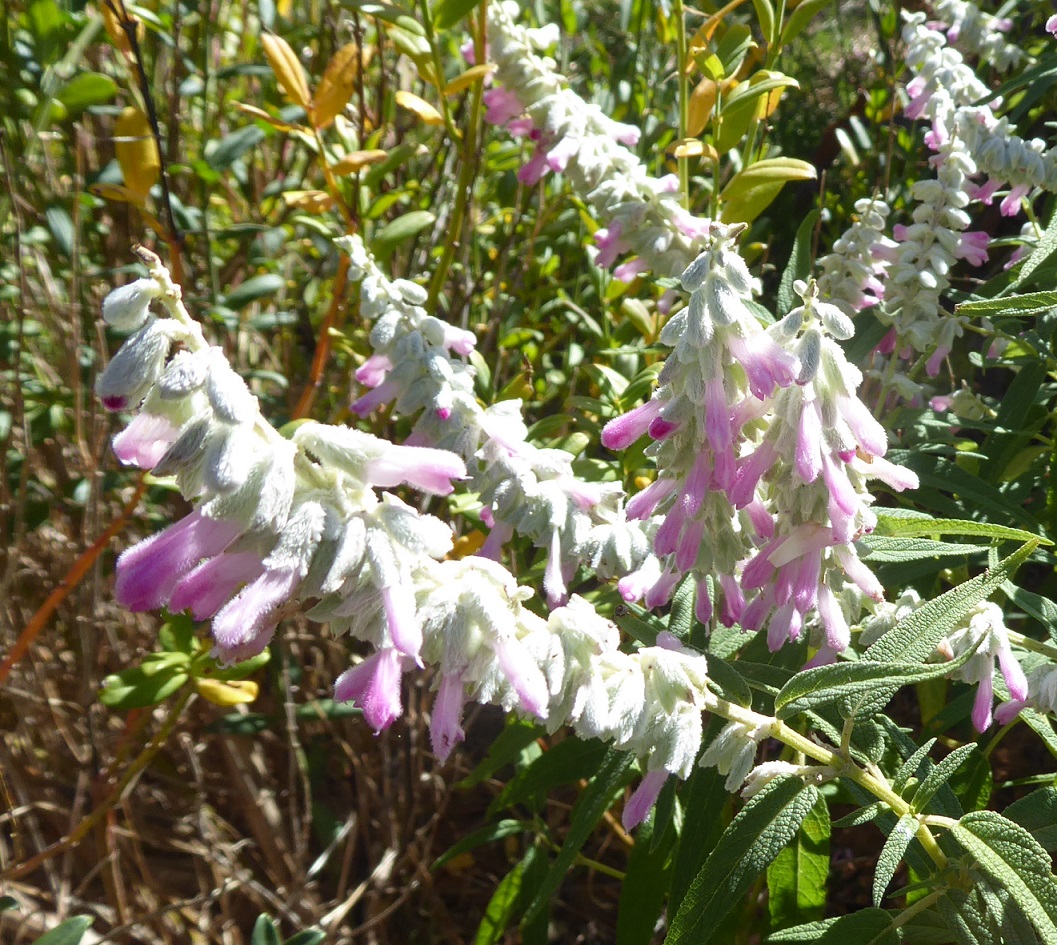
The other stars of April are ribbon bushes (Hypoestes aristata) and Mexican sage bushes (Salvia leucantha). Both of these do well here at KSU and will flower for a few months. The ribbon bushes seed themselves all over. Most are a lovely lilac pink form, but I have one bush with white flowers.
The Mexican sage bush forms creeping beds of half metre white stems with grey lance shaped leaves which are silver beneath. Even when it is not in flower it is an attractive plant. I have two forms; one with purple flowers and another from Jenny Ferreira’s garden which has pink bracts or sepals and white flowers.
I plan to get more of the common blue barleria, Barleria obtusa for the garden. They are stunning , tough plants at their best this month. Talking of blue flowered plants, the plumbago hedges are still going strong and so is the yellow tecomaria which responds to the rain.
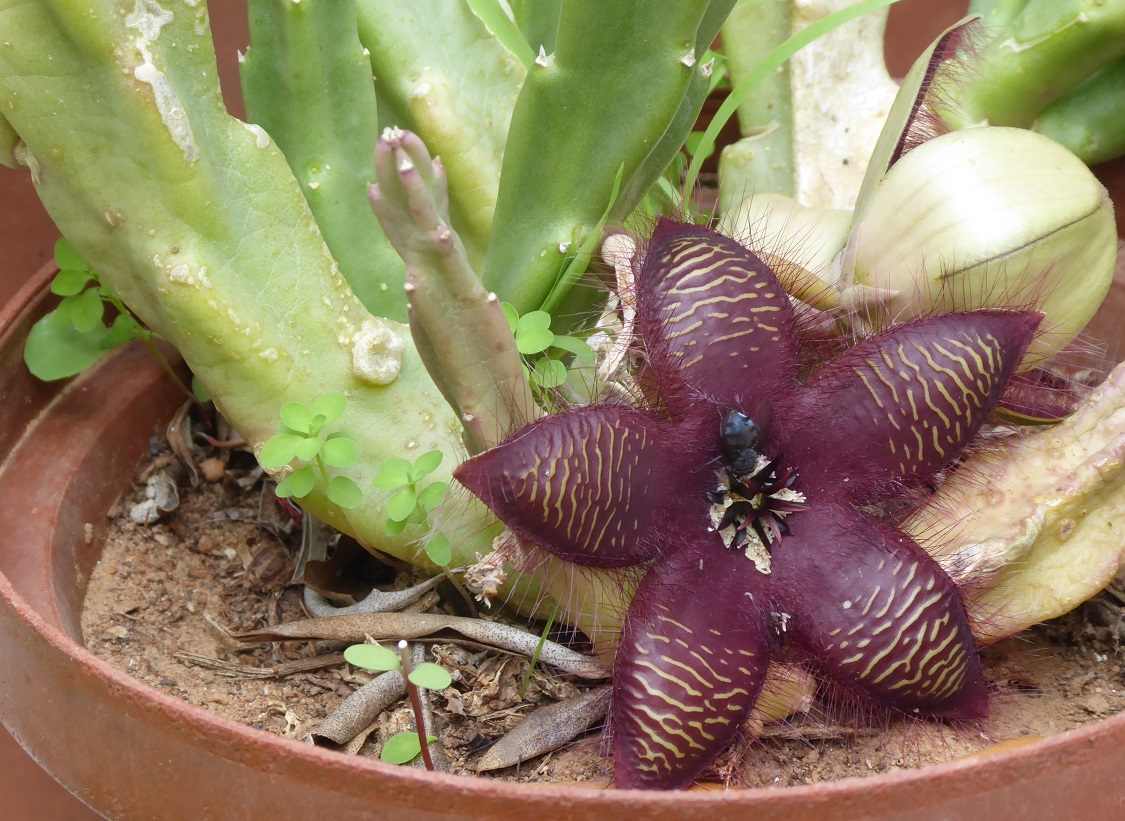
Among the succulent pots, one of the stapeliads has been flowering again. We have had a plague of flies as the neighbouring farmers have been spreading manure on their crops. (Paradise does have its pests). This stapeliad has a carrion smell that attracts them.
Owls to end
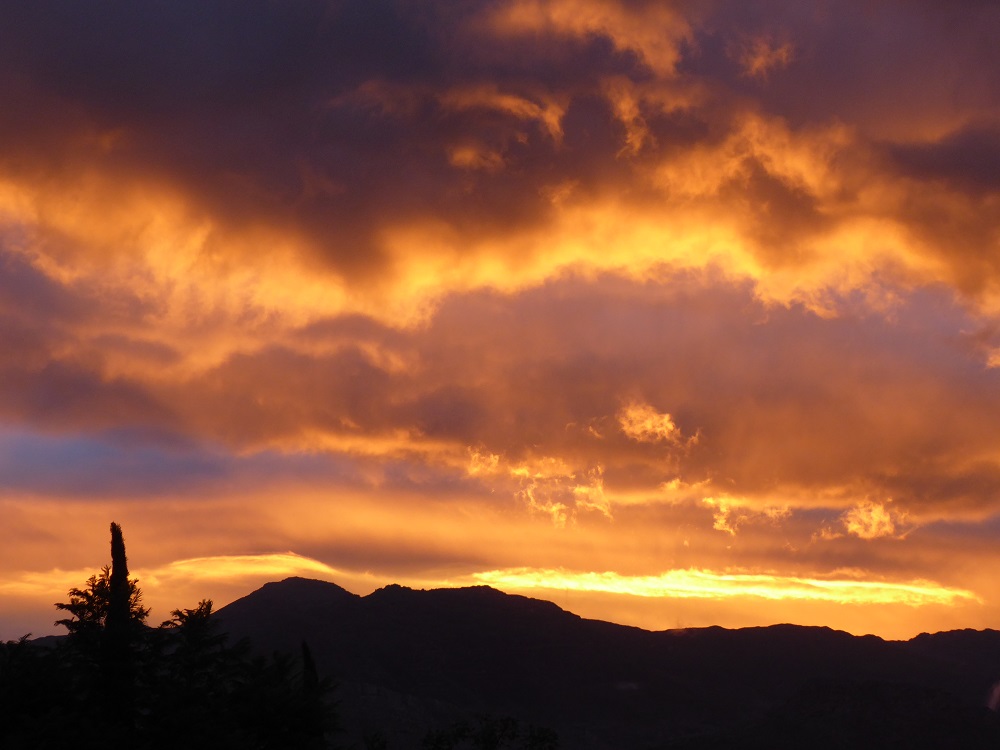
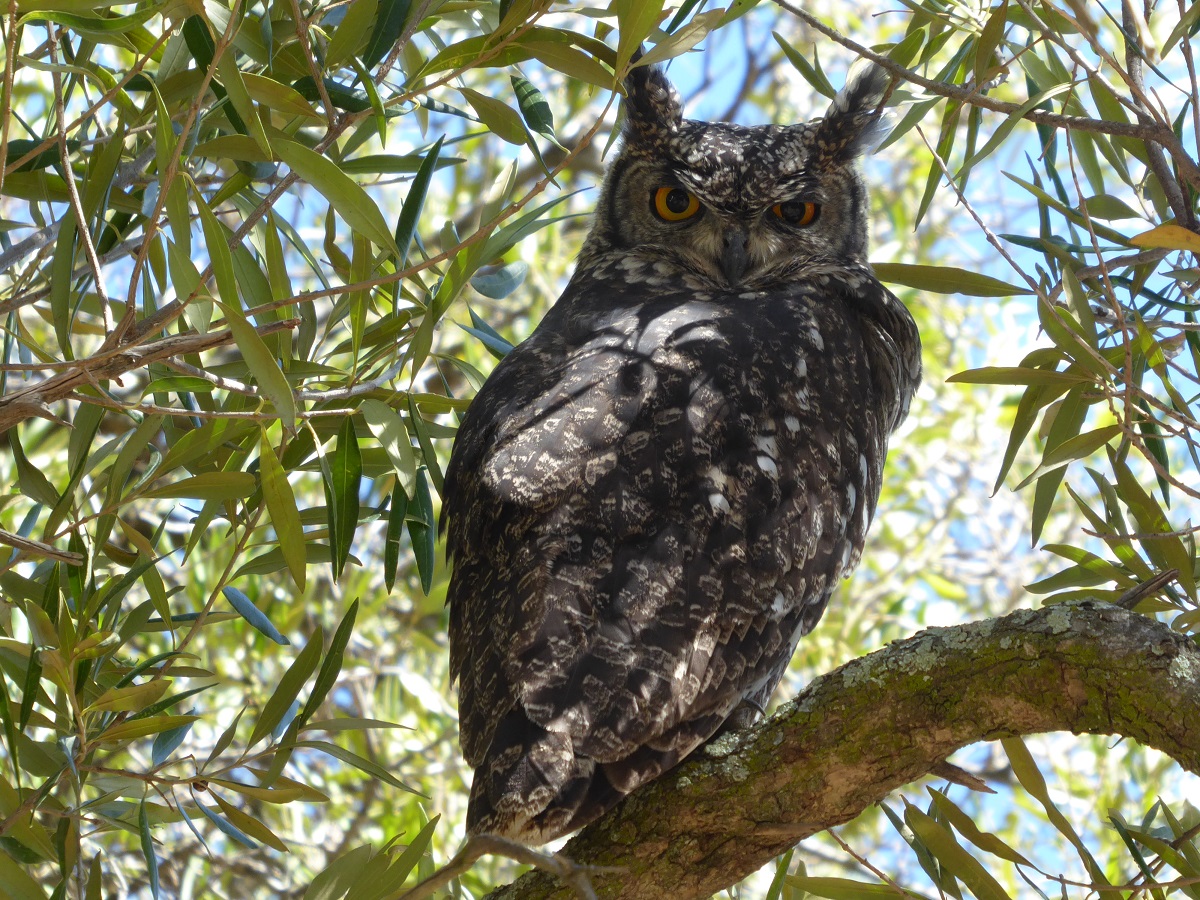
We are blessed with many birds at KSU. I am woken most mornings by the francolins making a racket on the front lawn and we sometimes hear the owls hooting in the wild olives around the house at night. In early April one came at sat in a low branch during the day so we could photograph it. Along with the owls, we have had some lovely sunsets this month especially when there are some clouds. Who can resist photographing sunsets?
April 2019 Gallery