Time has sped by since I last wrote this blog and the worst of winter is over. I escaped the coldest and wettest period when I went to the UK for almost three weeks towards the end of July for a family wedding. Here is a description of my trip. While I was away we had a few light snow falls on the mountains and about 100 ml of rain.
Trees to welcome spring
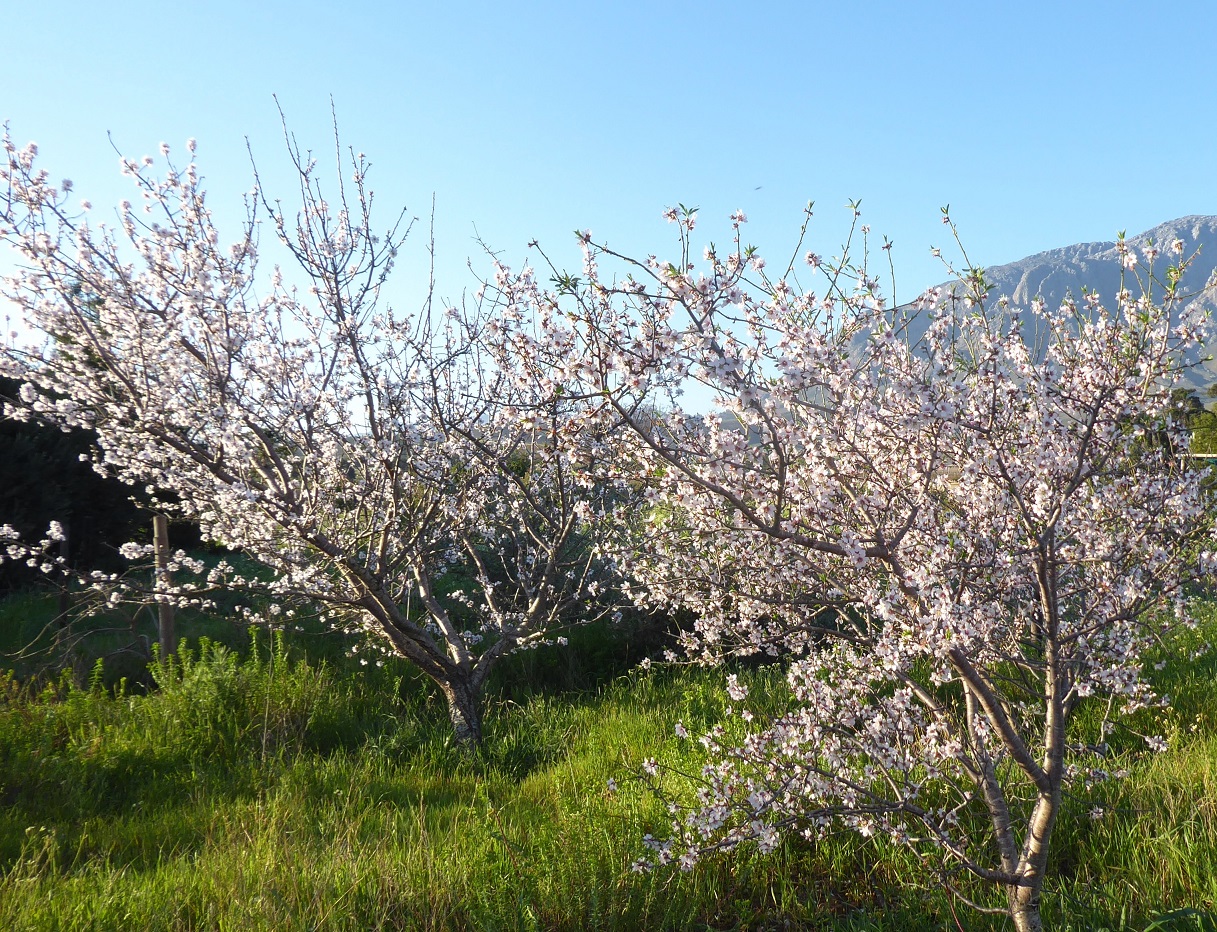
The days are getting longer with the sun rising at 8 am and setting around 6 pm. It feels as if spring is here with the almond trees in full bloom. I hope for a good crop of nuts this summer. I have noticed some bees and midges among the flowers which are an exquisite pale pink in colour. Against a blue sky, the trees in bloom are almost as lovely as a bevy of brides.
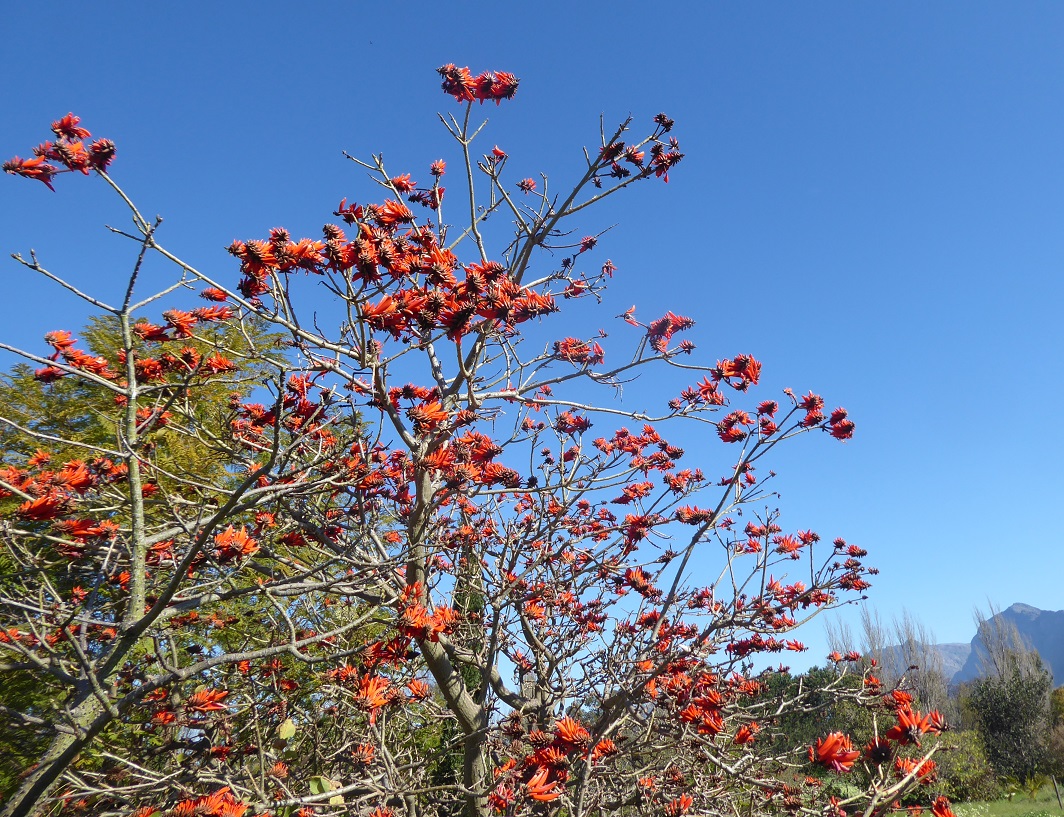
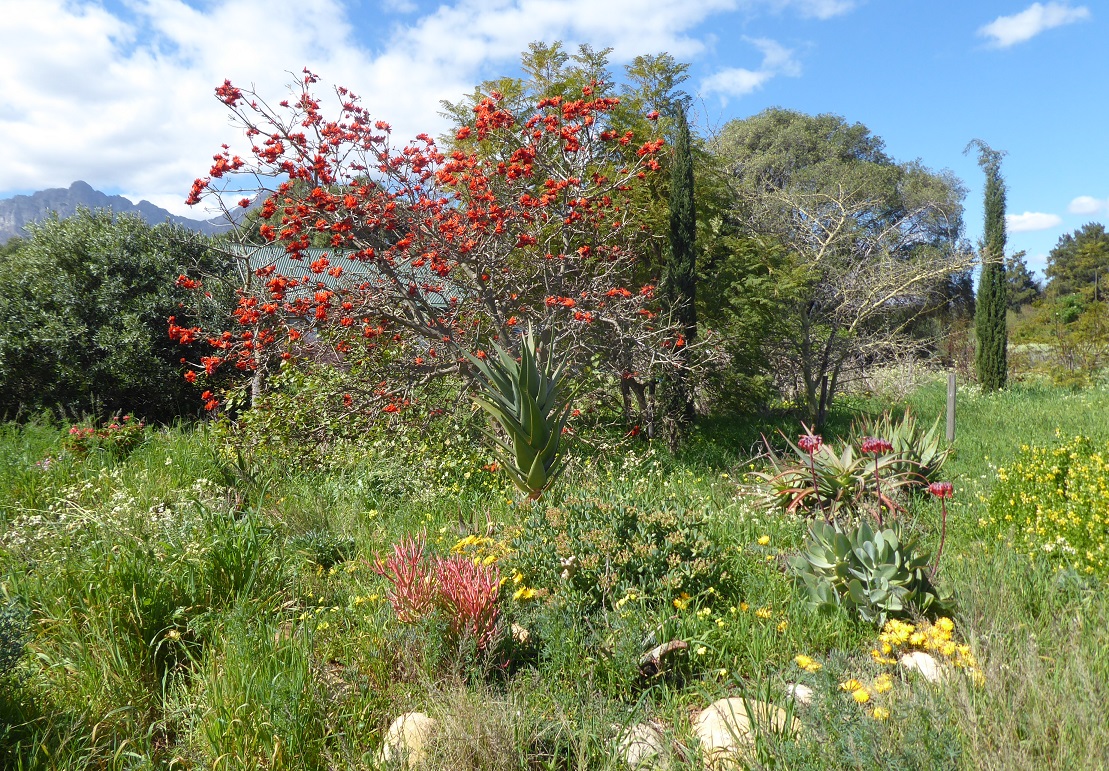
From the verandah we admire Erythrina lysistemon , the lucky bean tree, covered in crimson flowers. The malachite sunbirds love it and are always darting in and out, but they are shy and difficult to photograph. This tree is a star of the garden for about two months. It comes from the interior of SA, but does well here and there are splendid specimens in Worcester. I also have Erythrina caffra from the east coast but it flowers a little later. I grew my tree from seed collected from a white form in Port Elizabeth many years ago, but the flowers of mine are the usual orange.
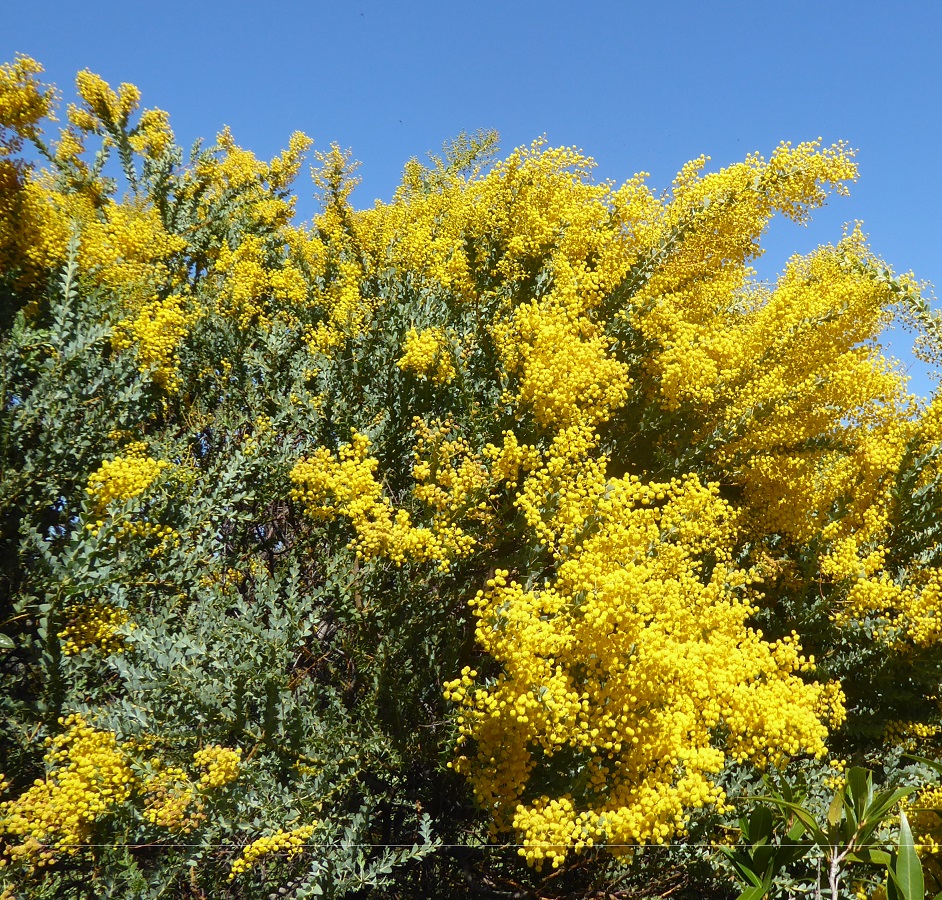
For a fortnight now we have a blaze of yellow in the garden. This is from 2 trees of Acacia cultriformis, the knife leafed wattle, from Australia. The flowers are very fleeting, but the trees are tough and have beautiful grey leaves which look good all summer long. Sadly we can no longer grow other grey leafed Australian wattles such as Acacia baileyana and A. podalyriifolia as they are deemed invasive.
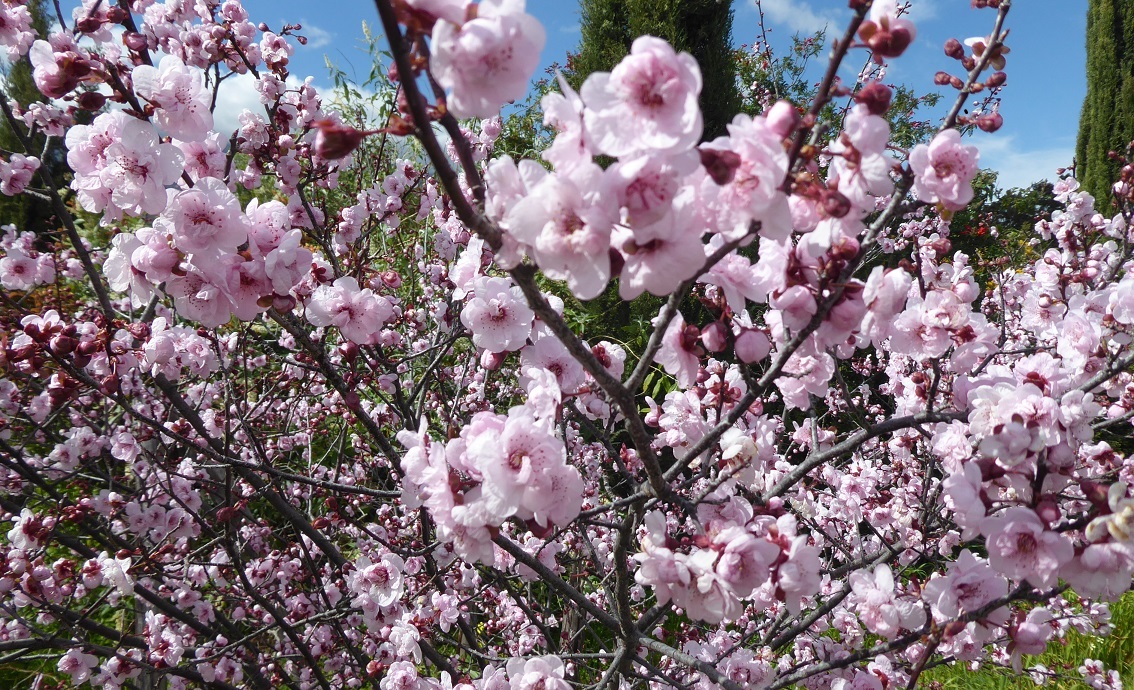
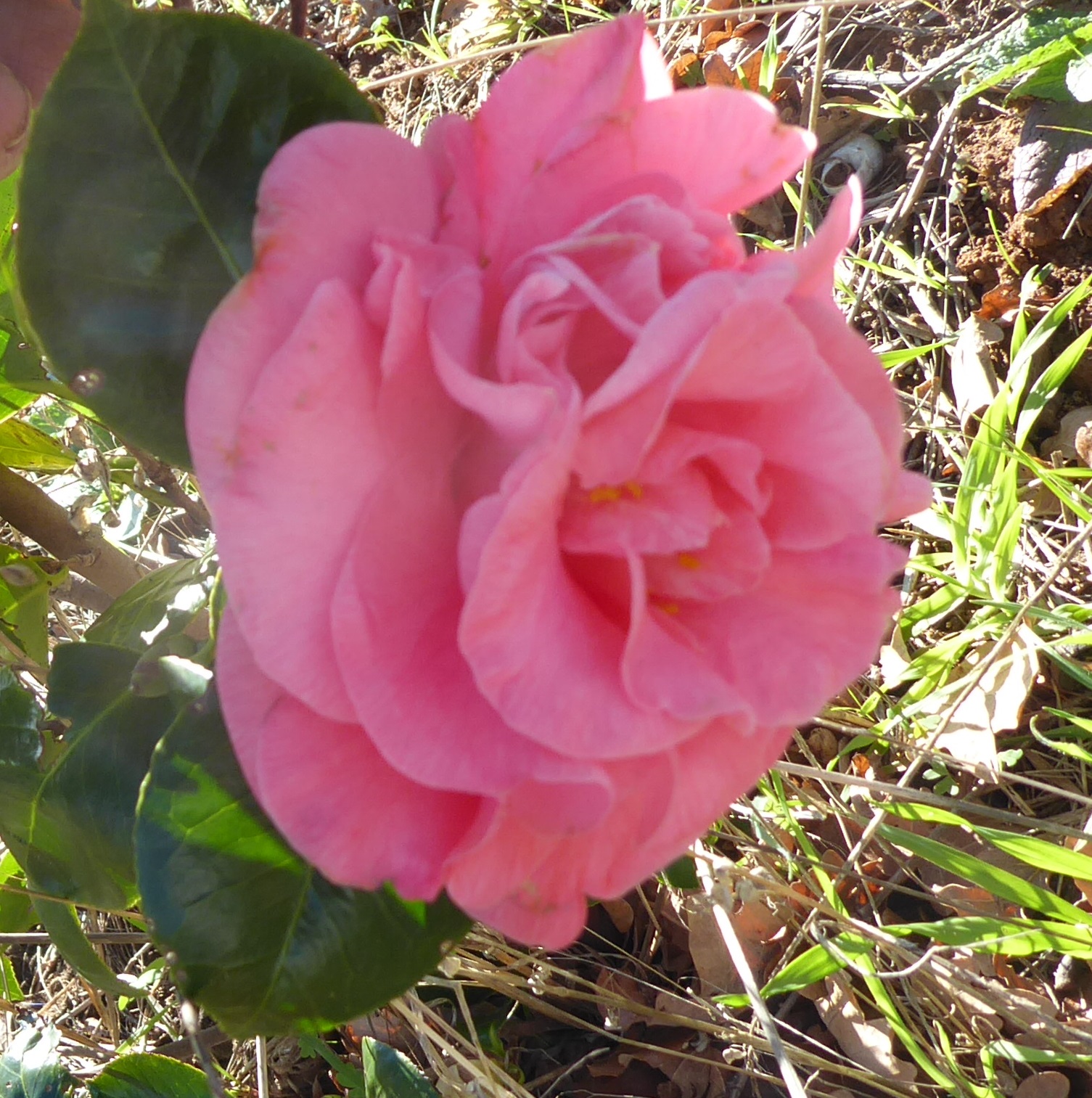
Although flowering cherries do not grow here as it is too hot, flowering plums /prunus and peaches do well. As I write one of the purple leafed plums with pale pink double flowers is in full bloom. I grew it from a slip from a very old tree neglected in the garden at Welgelegen at UCT. This old house had some special plants in the garden but many have been swept away or have died from neglect. I am very pleased to have saved the plum. Nearby I have one with fragrant single white flowers which comes from Fresh woods the beautiful garden of Peter and Barbara Knox Shaw in Elgin. It is called Vesuvius and has very dark purple leaves and little cherry sized plums later in the season. These 2 and the common single pink prunus make a little purple grove when their leaves appear.
Other early spring treats
Nearby is the old rose Souvenir de Madame Leonie Viennot with soft peach pink and cream flowers. The plan is one day she will scramble up into the prunus, and the purple foliage will enhance her flowers. Such are the hopes of gardeners.
One little cluster that always delights me at this time of year is a combination of Salvia africana-lutea, Buddleja glomerata (Karoo buddleja) and the purple leafed dodonea (Dodonea viscosa ‘Purpurea’). Salvia africana-lutea is the bruin salie or brown sage or salvia, whose flowers are uniquely coloured with dark brown bracts and paler brown/tan orange flowers. These are complemented by grey leaves. It is a tough plant from coastal areas of the Western Cape and does well here in the garden. It looks lovely growing near anything with cream flowers. I have another form too which has paler greeny bracts.
Buddleja glomerata has shiny silver leaves and bright yellow fluffy flowers. Unlike most buddlejas the flowers are unscented , the plant is incredibly tough and looks good all year round. It is growing near the purple dodonea, or sand olive whose foliage is even darker purple in winter and the 2 look stunning together.
The brown sage also grows near a cream lantana and near another buddleja with soft creamy yellow flowers. This is another plant that I grew from a slip from an old garden in Rondebosch. I think it is the cross between B. asiatica with white flowers and B. madagascariensis which I think has brighter yellow flowers. The flowers have a delicious fragrance and come in long spikes. It is quite a big, lax shrub and does not thrive for me as it doesn’t get enough water here.
When I returned from the UK, the garden was scented by Buddleja auriculata with its tawny, biscuit cream flowers in small spikes. It doesn’t look much, but the fragrance carries on the air and it is always a winter delight in the garden.
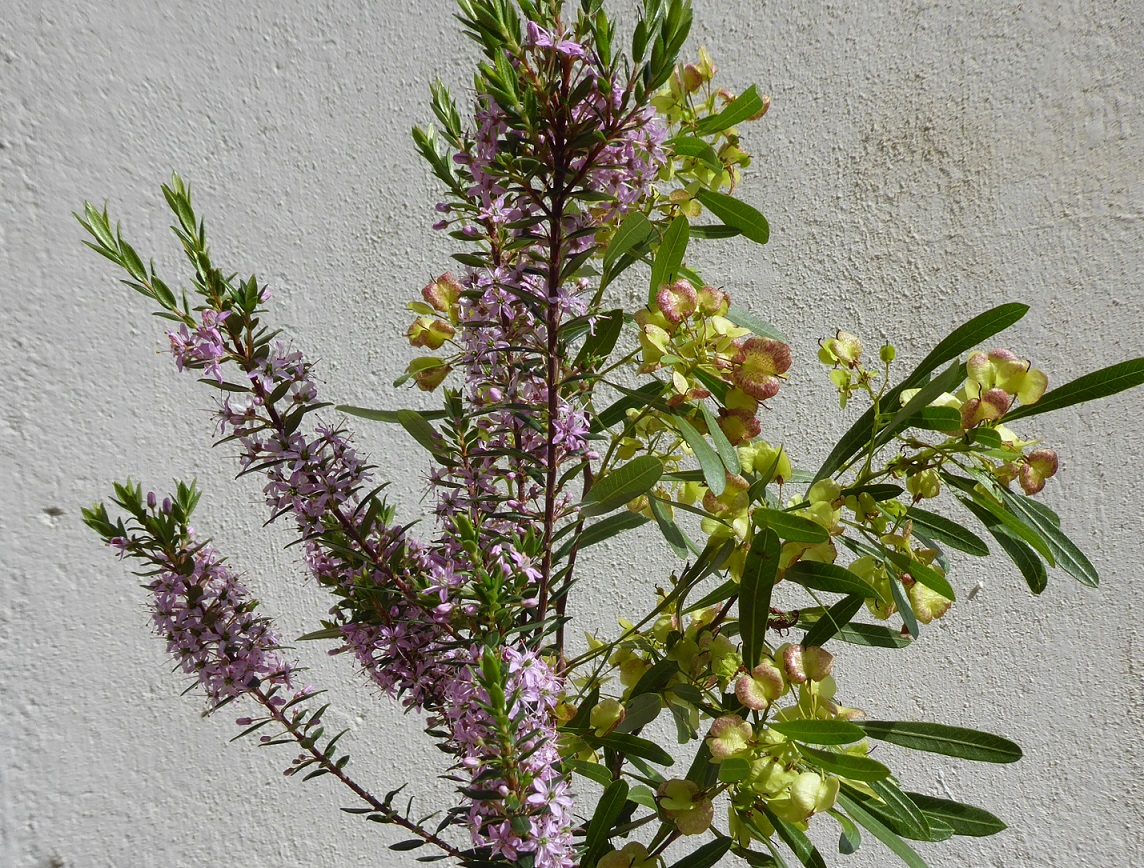
It is always fun to find a different form of a common plant. For years I have grown the rosemary with bright blue flowers and I was delighted to find a form with pale pink flowers to complement it. I plan to grow them side by side. The purple dodonea mentioned earlier isn’t native to SA, but the green leafed form, is. They are both garden stalwarts in dry areas with sandy soils. They are especially pretty now with their winged seeds which adorn the bushes. The limey green shading to creamy pink colours of the wings of the green sand olive complement a pink flowering buchu close by and they look good in a vase together.
One of the first harbingers of spring and which has been flowering since July is the beautiful tough climber Hardenbergia violacea from Australia. It has scrambled right to the top of the Searsia lanceolata tree and looks gorgeous with its clusters of bright purple flowers amidst the tree’s green leaves. This is a long lived creeper and I keep meaning to grow more from seed as I fear one day it might die. Competition from the Searsia roots must be fierce and I don’t often remember to water it in summer.
The poplars along the boundary have suddenly leafed out and the pomegranates are also looking lovely with their fresh bronze foliage.
Purple beauties
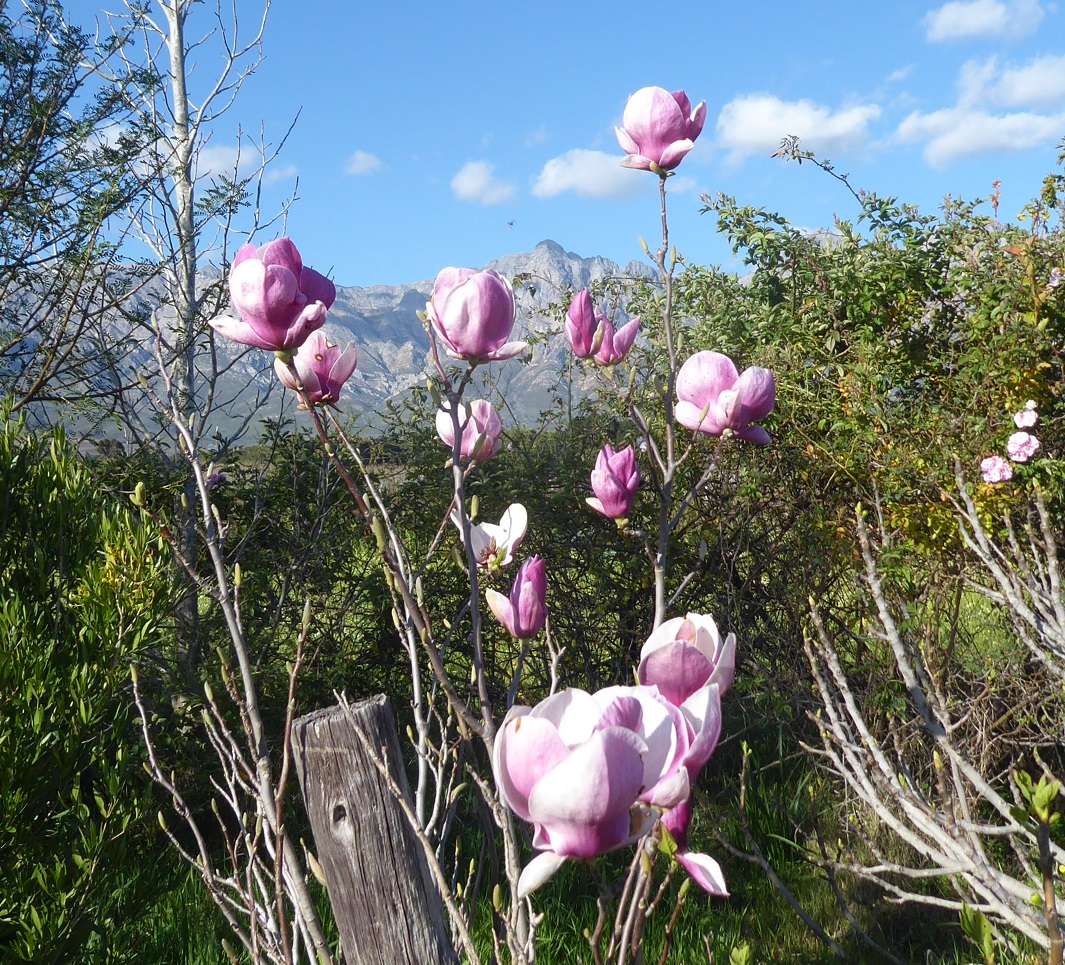
Another star of the garden this month is Magnolia soulangeana. My bush is still small, but this year it has rewarded me with more flowers than ever before – big purple pink goblets that are white within.
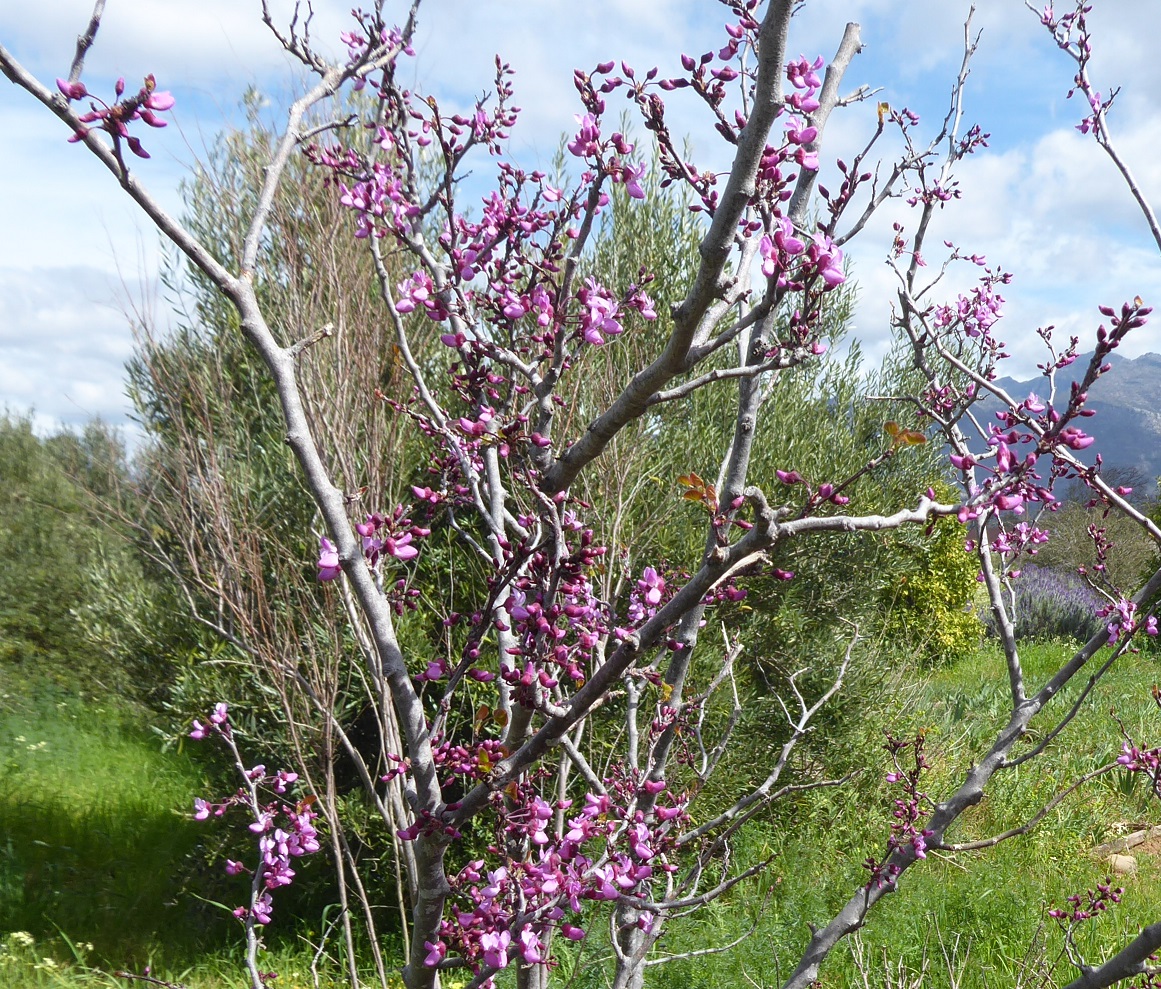
The Californian Judas tree is also flowering with tiny bright purple pink flowers clustered on the stems. It is a bit touch and go with this shrub as I never know whether to water it in summer or not. Parts of it have died back but it is still hanging in there.
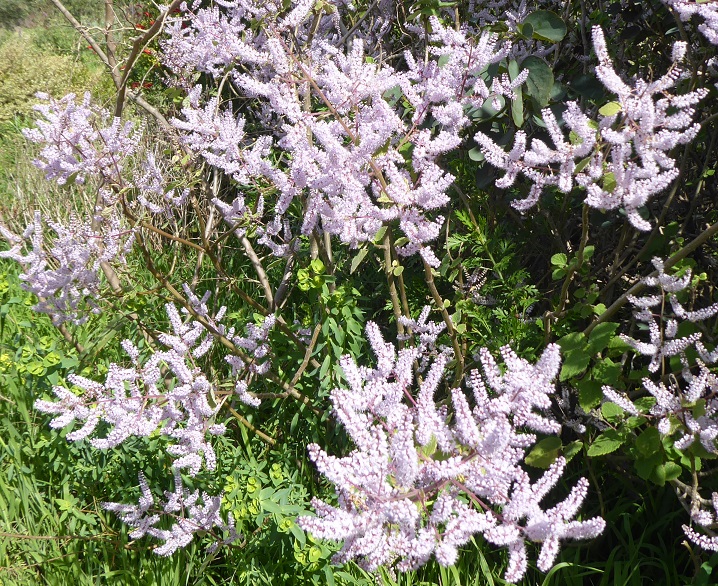
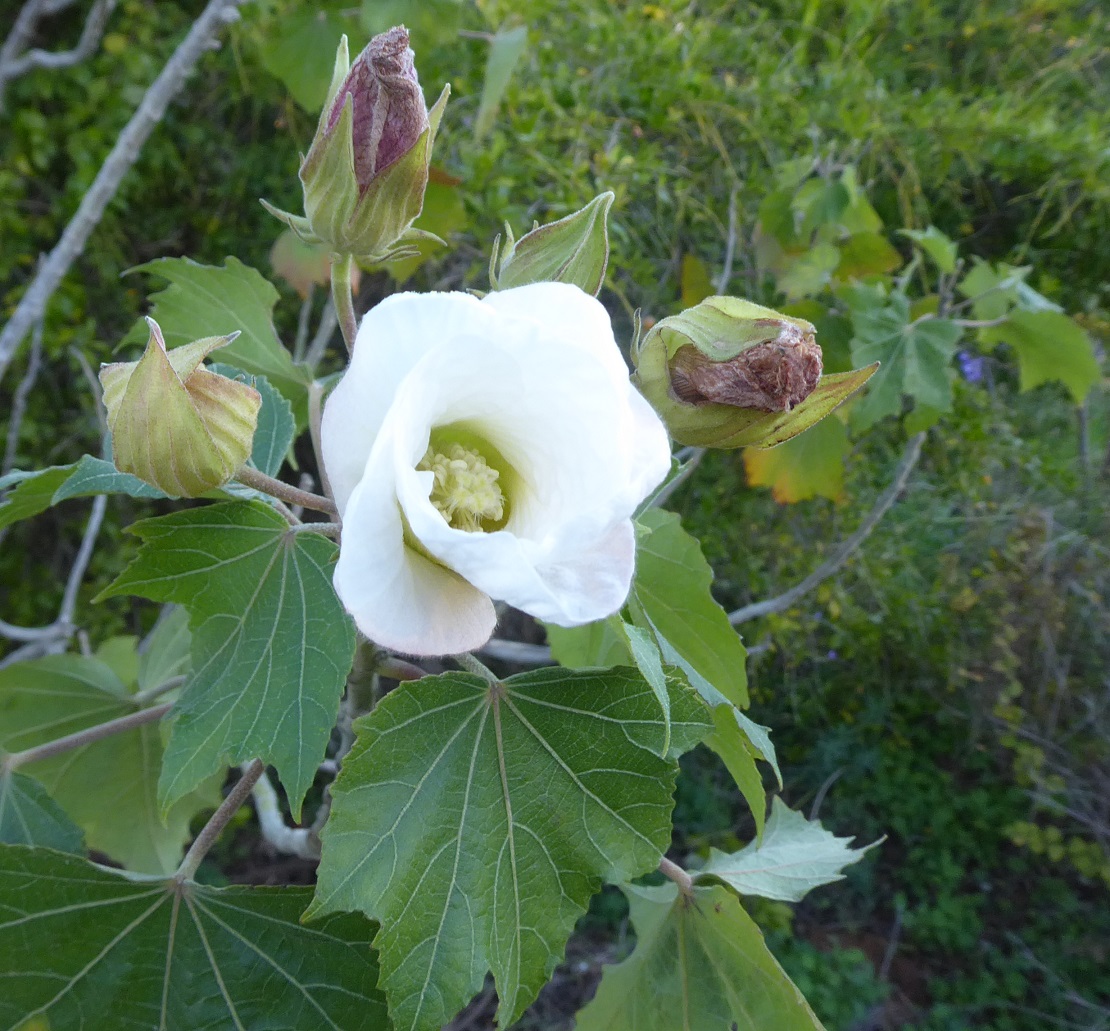
Continuing in the lilac purple theme this month are the ginger bush (Tetradenia riparia), Geraldton’s wax bushes (Chamaelaucium uncinatum) and a beautiful bushy plant that I think is a tree mallow (Lavatera sp.). The ginger bush which comes from the northern part of SA has catkins of lilac flowers which make its other common name, the misty plume bush most appropriate. Flower colour can vary from white to a darker lavender. I also have a related species from Madagascar given to me by my late friend Gill Scott which I treasure. It has similar flowers, but greyer more lanceolate leaves.
Geraldton’s wax bushes come from Australia. They have tiny leaves which allow them to survive hot summers without water. The small saucer shaped flowers come in a range of purples, pinks and whites. They are exceptionally good as cut flowers lasting for weeks in the vase.
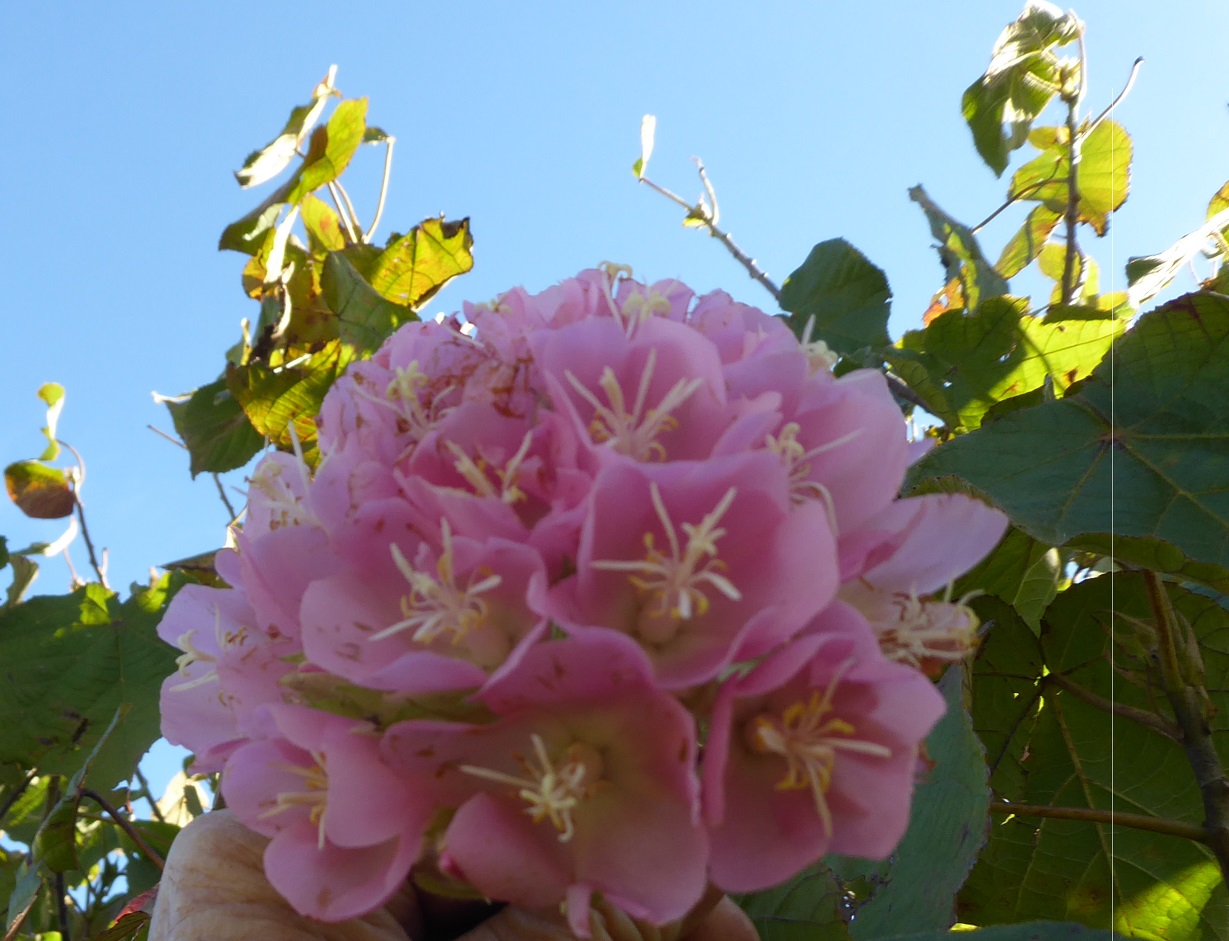
The tree mallow is a big bushy shrub with grey leaves and big hollyhock shaped flowers. I have two forms. One has clear pink flowers and the other lilac flowers with a darker eye. The shrubs flower for weeks now in spring and are great garden plants if one has the space for them.
Bromeliads
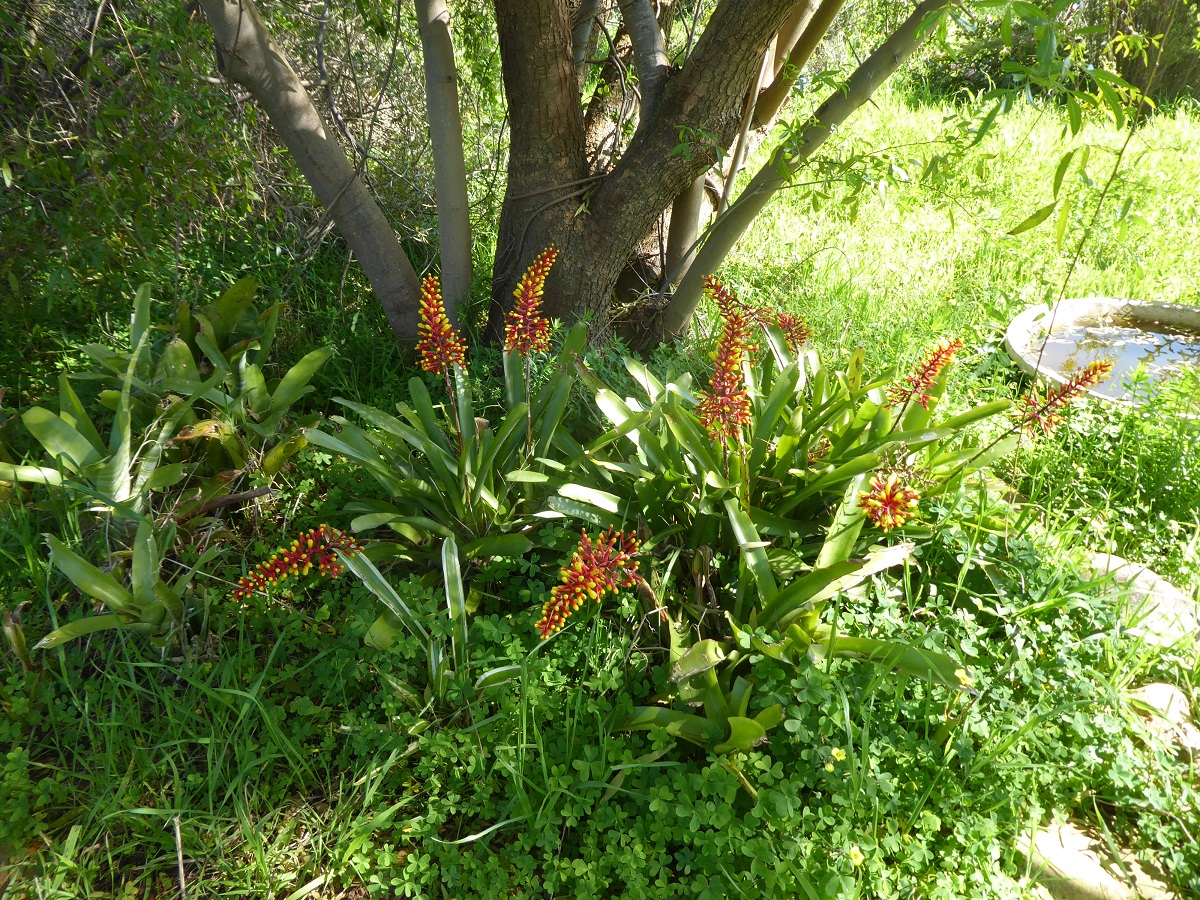
I am starting small collection of bromeliads. They grow well in shady places and don’t seem to require too much water. This month one with spiky red and yellow flowers has been flowering for weeks. I also have 2 forms of the one called angel’s tears (Bilbergia nutans). One far more delicate that the other. The hanging flower stalks and bracts are shrimp pink and the flowers which hang like tassels a combination of pink, green, navy and yellow.
Succulent mounds
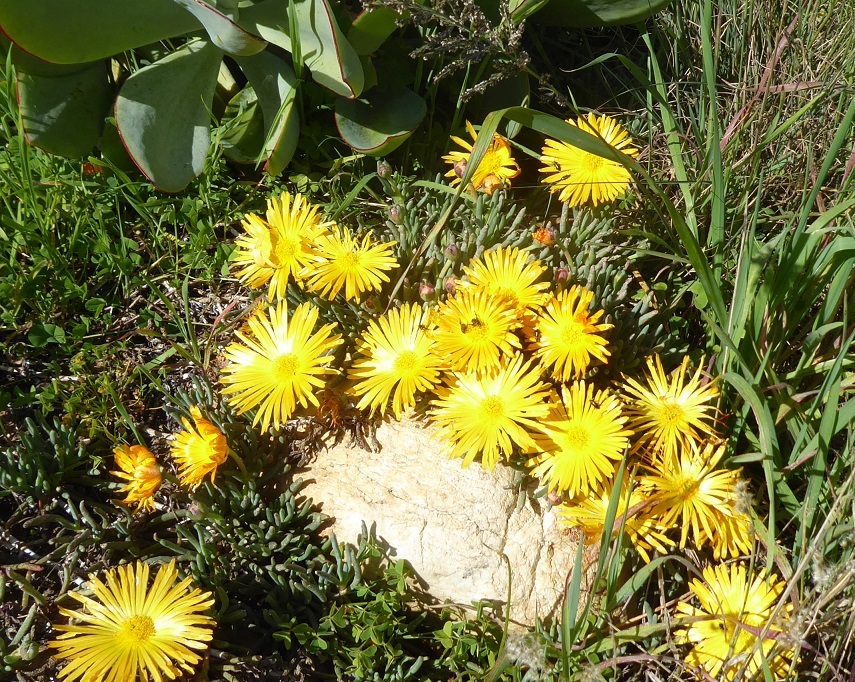
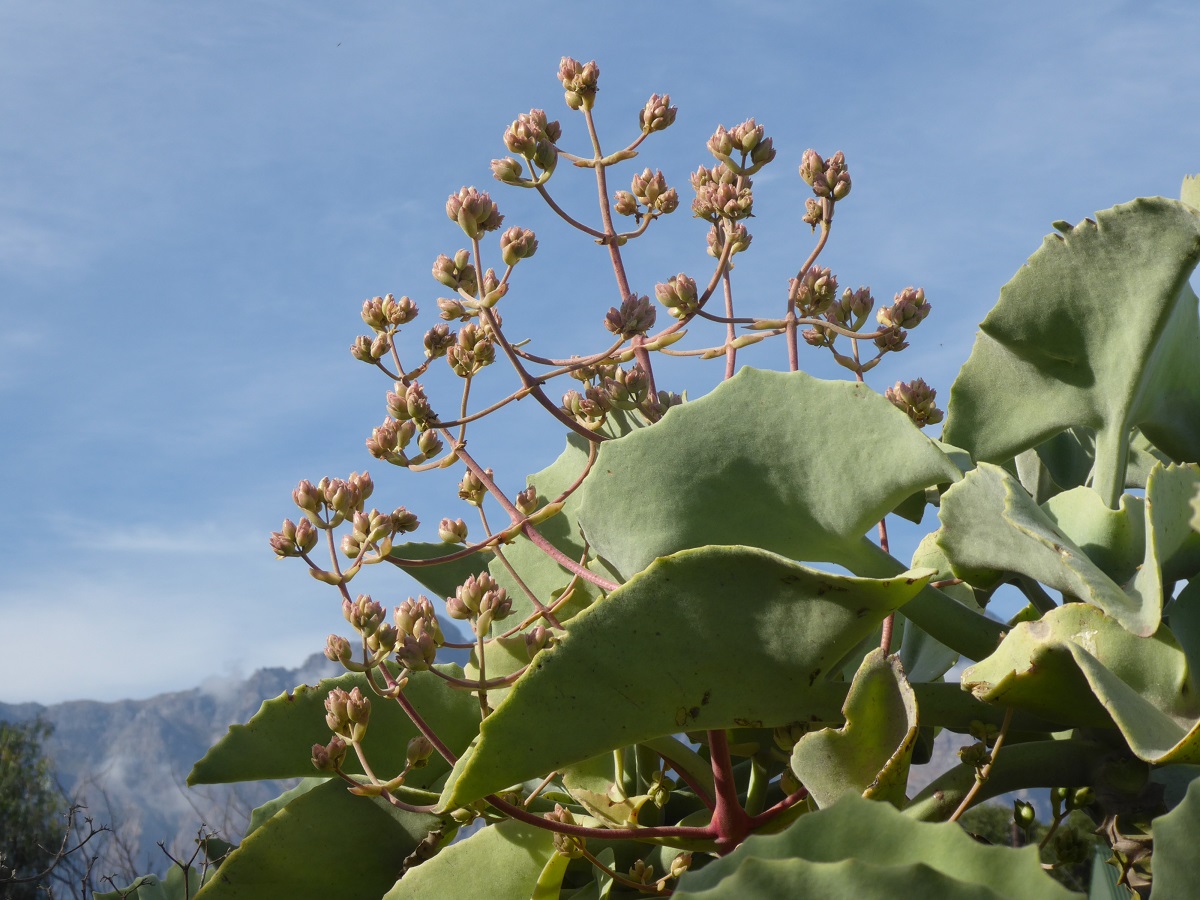
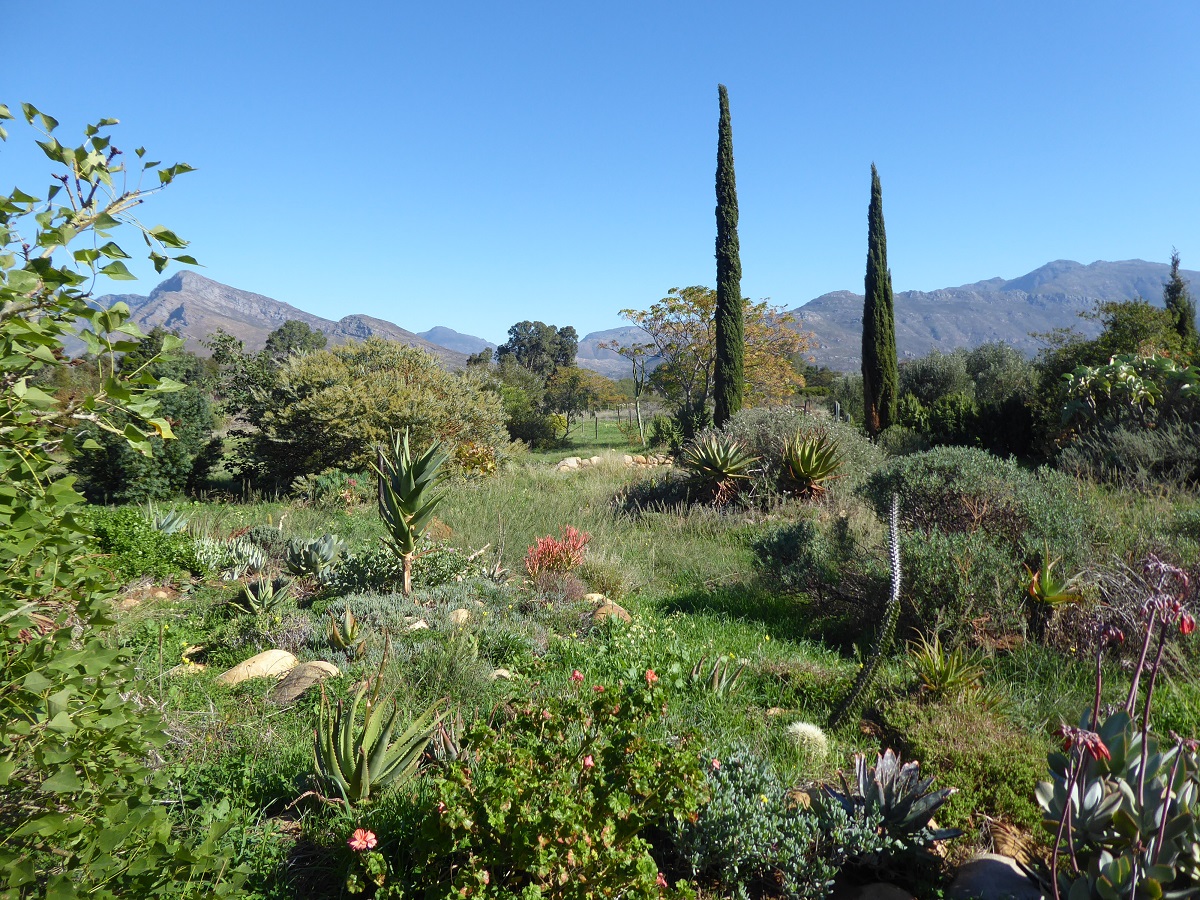
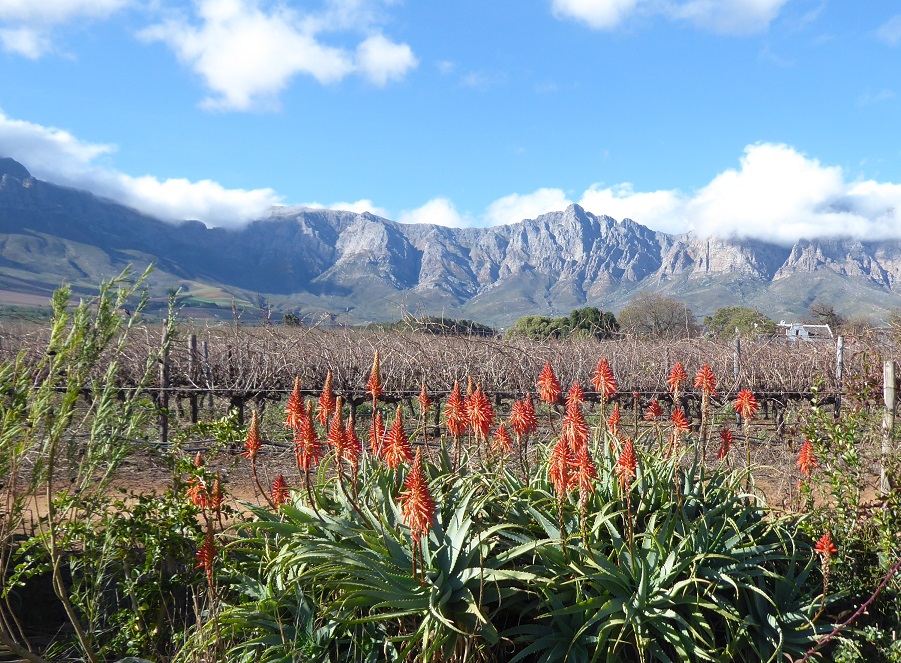
The succulent mounds are at their best in spring. Over the years I have planted many vygies/ mesembs, but although they flower in the first year, not many survive to flower the next year. One of the mesembs happy here is flat, creeping Jordaaniella dubia. This has bright yellow flowers which make bright patches on the mounds. One of the aloes which we bought in 2017 from the aloe nursery in Swellendam is also flowering with cheerful red and cream bicolour flowers. I think it might be Aloe cryptopoda bicolor.
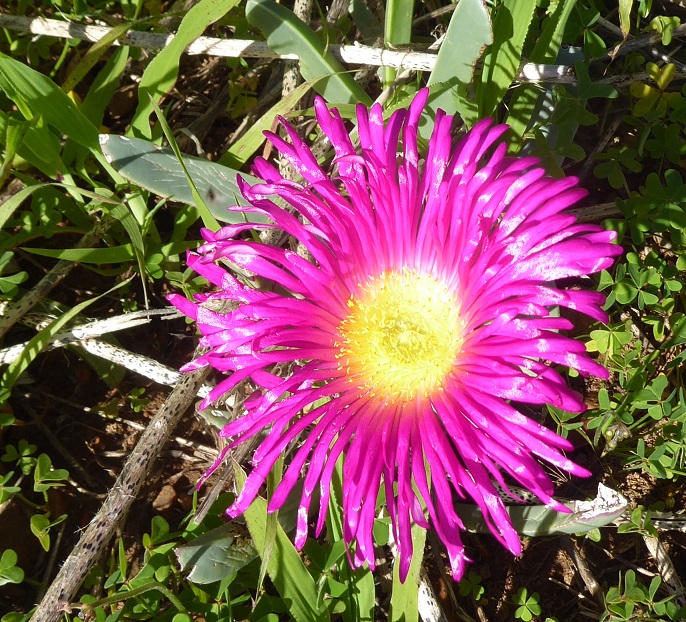
Growing close by is another vygie, given to me by my friend Tos Zeeman. It is a specially big bright purple pink carpobrotus and I hope the patch will be stunning when it establishes itself. These vygies grow well on sunny banks.
Weeds glorious weeds
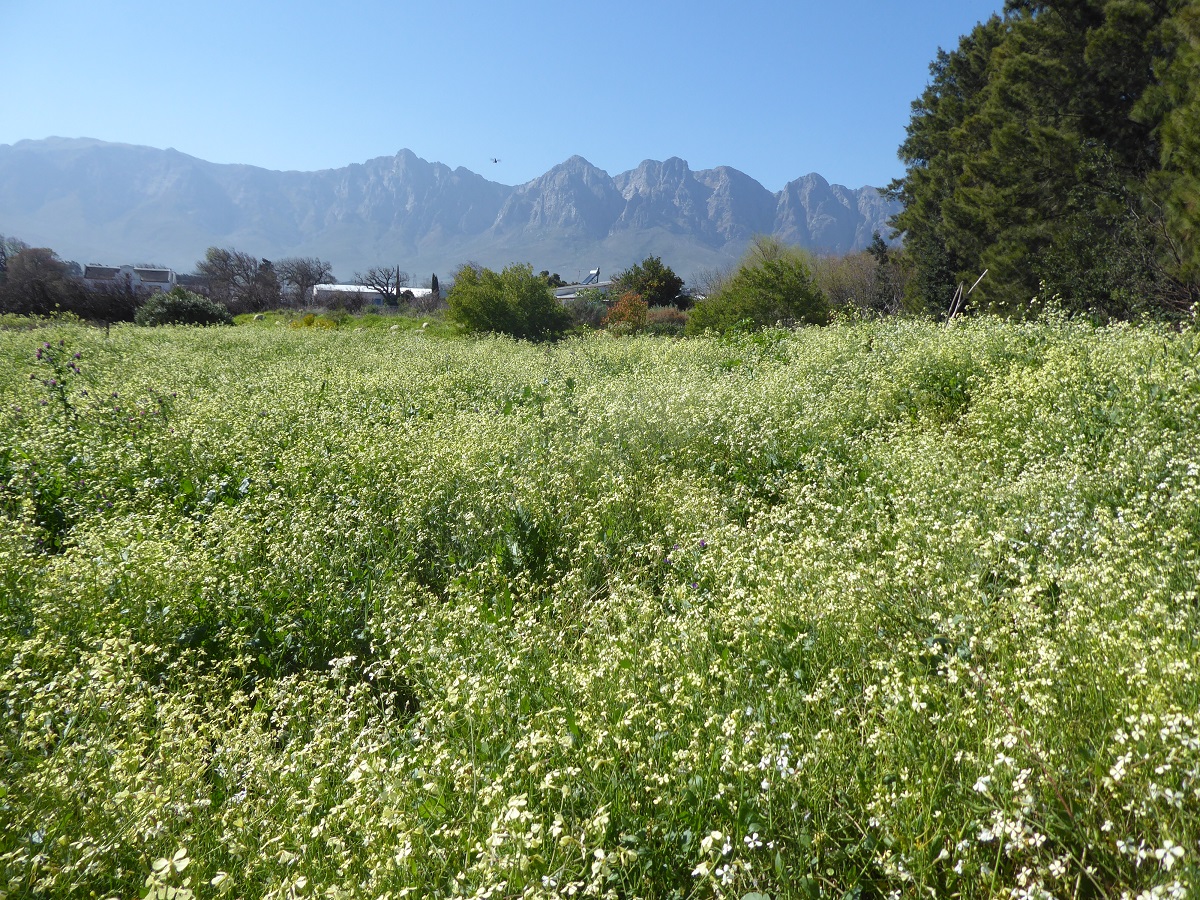
In August the whole farm is pale cream, awash with the flowers of a weed I call the wild mustard. This plant grows about 50cm tall and has leaves and flowers a bit like rocket, which is growing like a weed in the veggie garden. Here rocket, Florentine fennel and mustard lettuce all seed themselves each year. Florentine fennel in particular is a delicious vegetable. The other treats from the veggie garden this month are peas and celeriac and the asparagus is also starting to shoot.
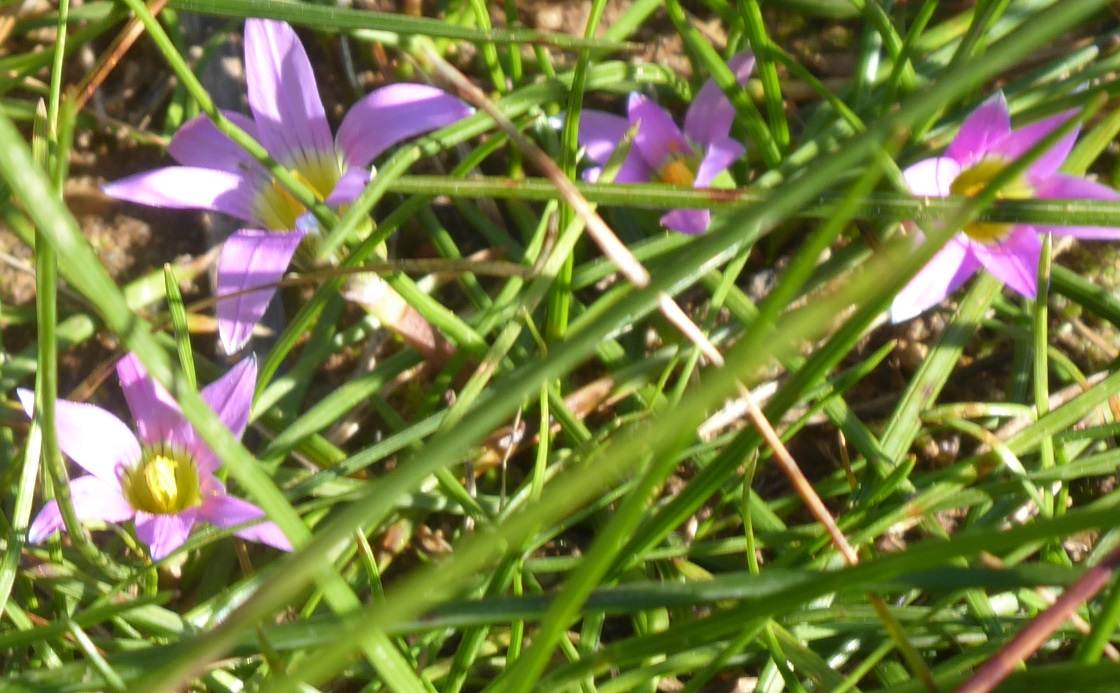
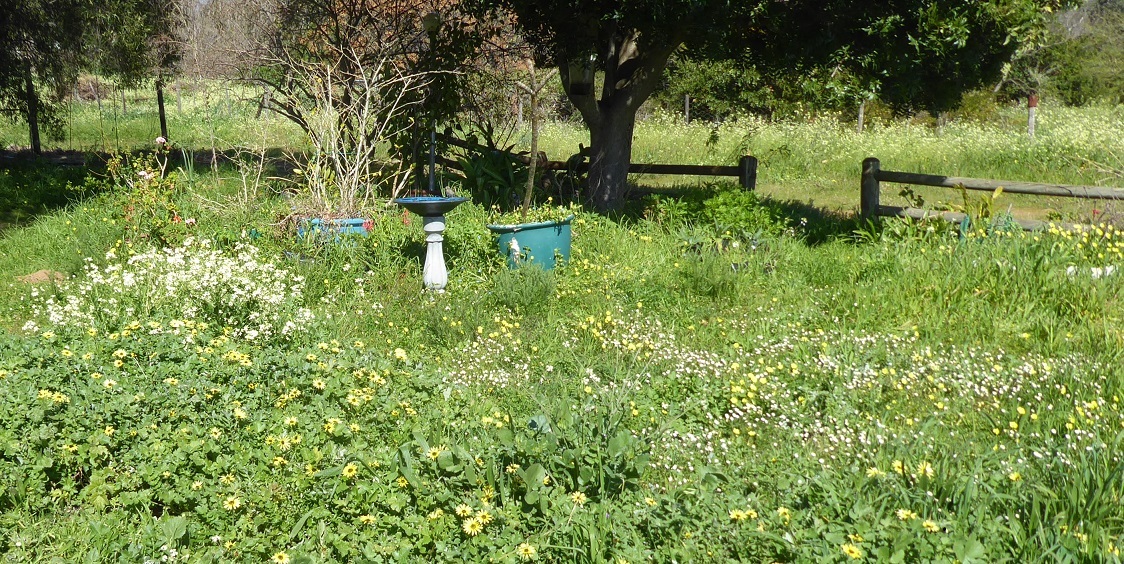
My front lawn also has some of the wild mustard, along with Arctotis daisies and small white flowers which might be a type of Cotula. Although many might frown upon this mess, I love the meadow look. It is such a contrast to the dry summer dust bowl. Tiny little purple flowers from a Romula species which has round grassy leaves also brighten empty areas.
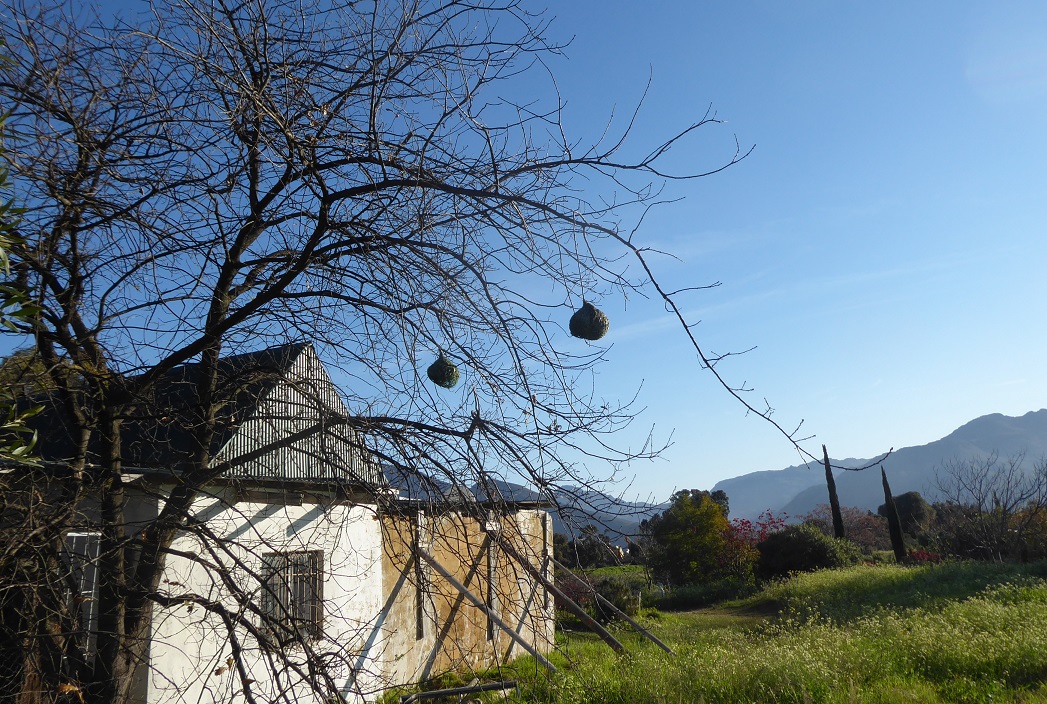
The birds are all busy making nests and the garden is alive with bird song. Weavers have selected a bare oak tree and owls have settled in the wild olives. One hears their hooting at night and one owl has decided a cypress is just the spot to set up watch at twilight.
August 2019 Gallery