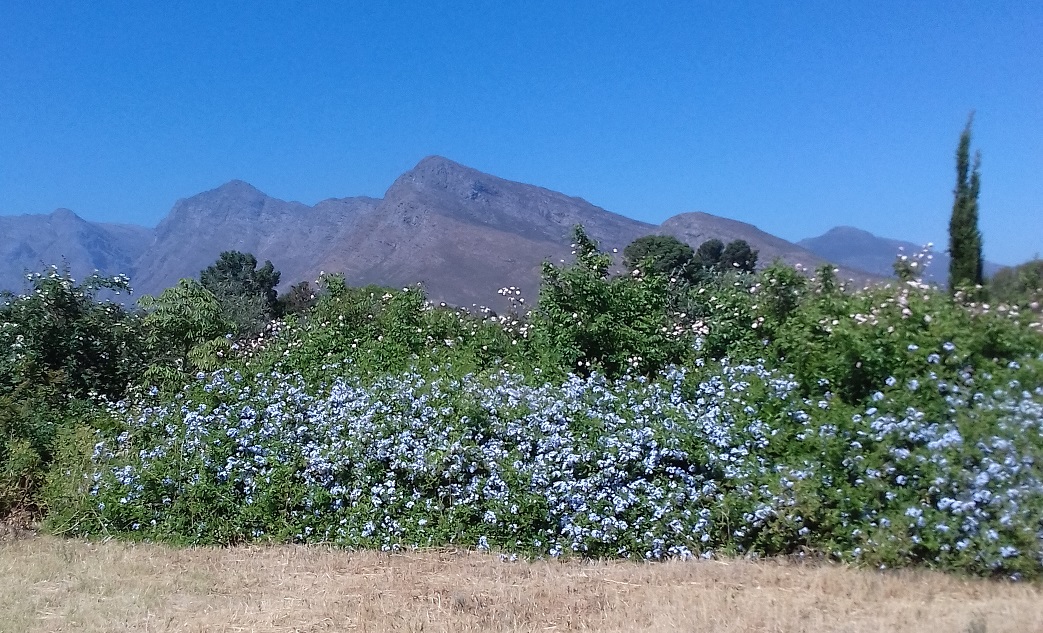
Although January is the beginning of the calendar year, it isn’t the beginning of the gardening year here at the Cape. It is midsummer with long dry days when survival is the name of the game. This is one of the “brown months” at KSU when the background to the garden is short dry grass. It is time to aestivate – a lovely word, which my dictionary defines as spending the summer in a state of torpor. Both days and nights are hot with daily temperatures in the 30’s even over 40°C. Most plants stop growing and just hang in there waiting for the cooler days making this a good time to examine the bones of the garden, to plan and prune back.
This year we have been very lucky in having a slightly cooler January and even a few showers, but the downside is that the fruit is not as sweet. The water is also still running in the big pipe which takes away the excess water in winter and is my main source of garden water, so there is still plenty to put on the garden. As this is high summer I have to spend hours watering each week. The garden does not look as scorched as some years, but this is definitely the time to enjoy shade trees.
Trees
Near my old cottage are several massive wild Africa olive trees Olea europea subsp. africana. They must be at least 100 years old and shelter the house from the worst of the south east winds and provide welcome shade. Birds love their fruits which are sweeter than the cultivated olive, they drop seeds all over the farm and little wild olives pop up everywhere as the most persistent weeds. This is a tough tree and I enjoy snacking on the fruits too- possible new gourmet food? I have planted some along the boundary fence as a screening hedge. Once established they are almost indestructible, so don’t let them get a hold where you don’t want them.
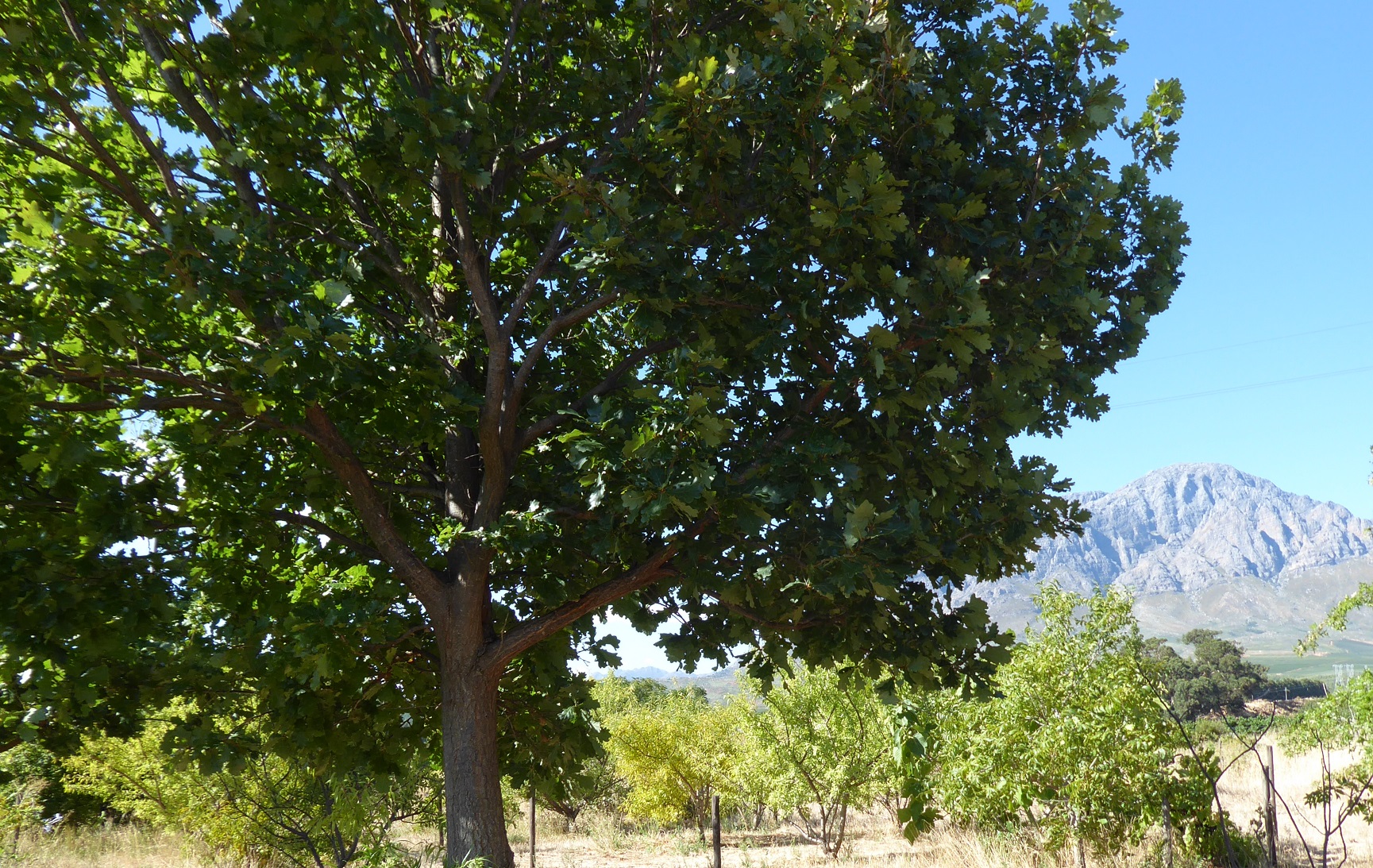
Among the first trees I planted were some oaks, Quercus robur, which have adorned Cape towns and farmsteads for centuries, but which are now out of fashion. They have thrived here and now make respectable little trees and I can enjoy their dense shade while watering.
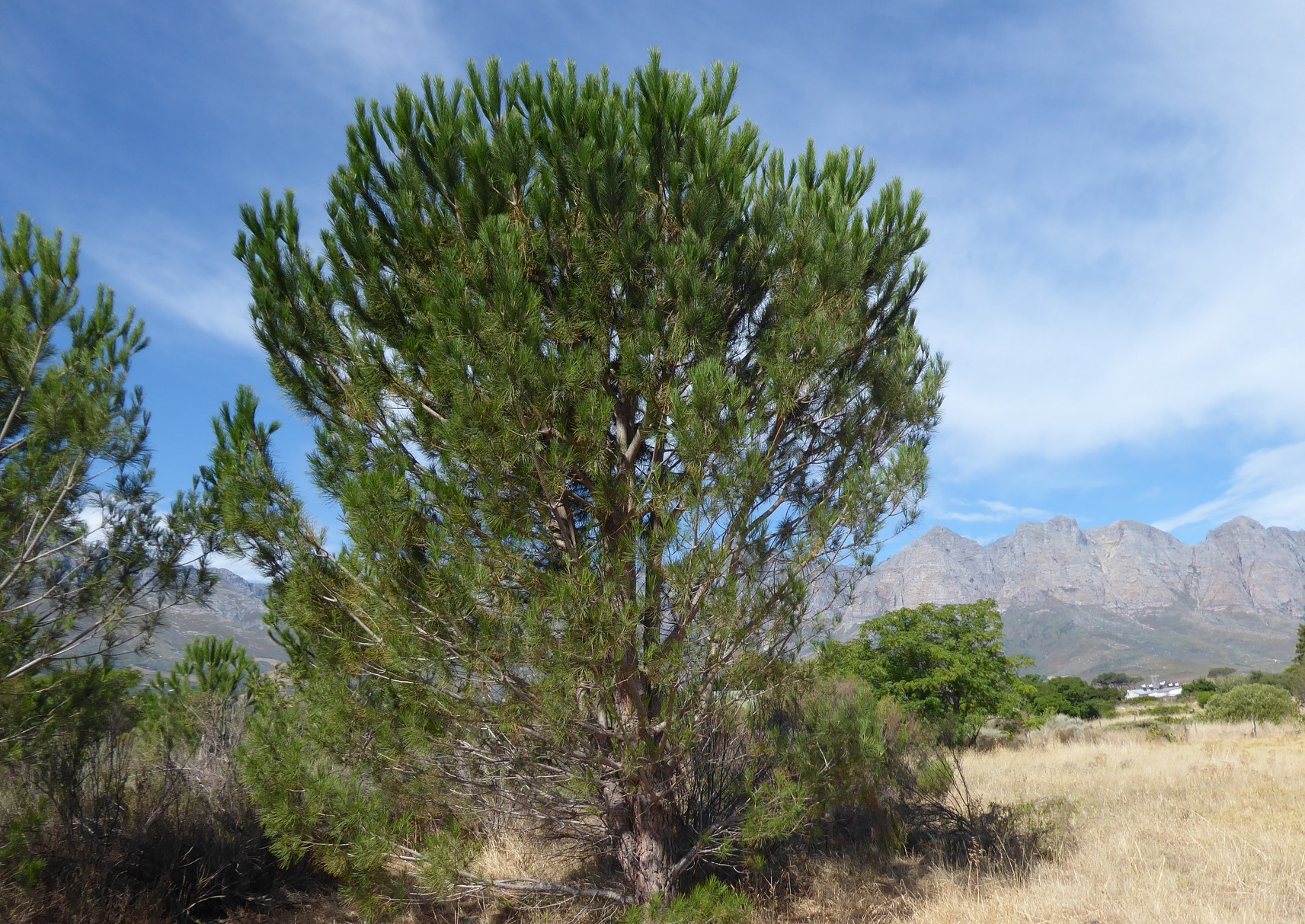
January is also the month to collect the cones from the umbrella or stone pines, Pinus pinea another tree which I think of as iconic of the Cape of yesteryear. People collected the dennepitte (pine nuts) to make tameletjies, brittle sweets. There is a recipe in Hilda Gerber’s book on Malay cookery. I love their dense glossy green healthy foliage and the silhouettes of mature trees at sunset, so I planted some when I came to KSU 14 years ago. They have grown well and have started bearing cones at last. They are a real hassle to shell though as one first has to dislodge the nuts from the resinous cones and then remove the sooty shells from the nuts. It is no wonder pine nuts cost so much to buy, but after a few hours of shelling I have enough for pesto. I must now remove the bottom branches from the trees to encourage their umbrella like shape, and also to prevent fire taking hold. Fires are what we all dread now in summer and all the farmers are on high alert.
Much easier to shell than pine cones and also ripening now in January are the almond trees. This year we have a meagre harvest unlike last year. I have 6 Nonpareil trees which is a papershell variety and 2 other varieties to pollinate them.
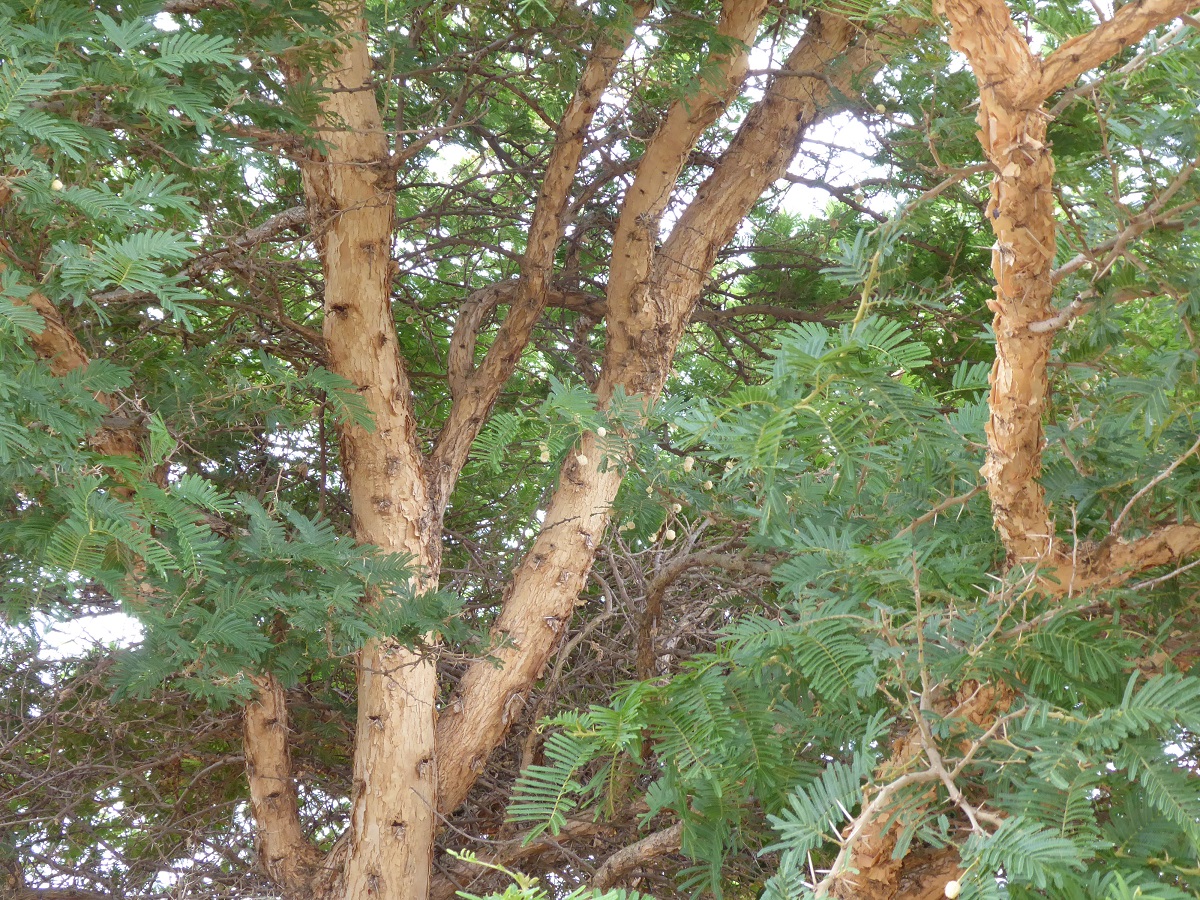
Although it started flowering at Xmas, January is the time the sweet thorn (Acacia karroo or Vachellia karroo as it is now called) flowers are at their best. The scent wafts across the garden and brings delight while I water and the bright yellow pompom flowers are alive with bees. Although not native to this part of the country they do surprisingly well here. The scented creamy white pompoms of the paperbark thorn Acacia sieberiana var. woodii /Vachellia sieberiana var. woodii also flowered here in January this year. The tree I planted as a weedy, almost dead sapling 14 years has grown into a large flat topped specimen and the scent is heavenly. I wish I could distill the fragrance as a perfume.
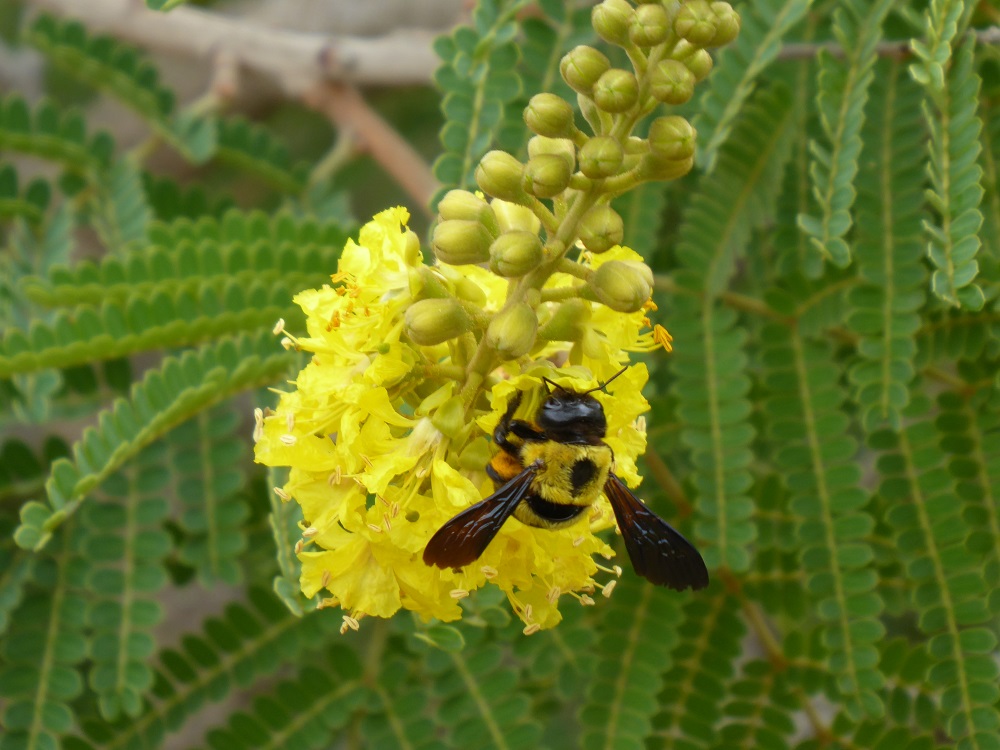
Another indigenous tree which is at its best in January at KSU is the huilboom or African wattle (Peltophorum africanum). It comes from the summer rainfall zone and I don’t really have enough water to do it justice. Each year I wait quite anxiously to see if it will leaf out again. It gets its light green wattle like leaves late in spring, but for most of January it is covered in spikes of yellow flowers which the bees and big black bumble bees love.
The other trees which are the stars of January are the Pride of India or Crepe myrtle trees, Lagerstroemia speciosa. Their flowers come in a range of pinks, lilacs and whites. I have lined one of the main walkways with these trees, but once again they have not grown as well as I had hoped through lack of water. Nevertheless they are still special trees, with their lovely satiny bark and their flowers are very gay against the blue sky and tall cypress trees. The town of Ceres grows these as street trees and we like to visit each year to admire them. Now there are new varieties with plum coloured leaves. I have just treated myself to one of these with crimson red flowers which are an electric contrast to the leaves. I just hope it will thrive.
Fruit and Veg
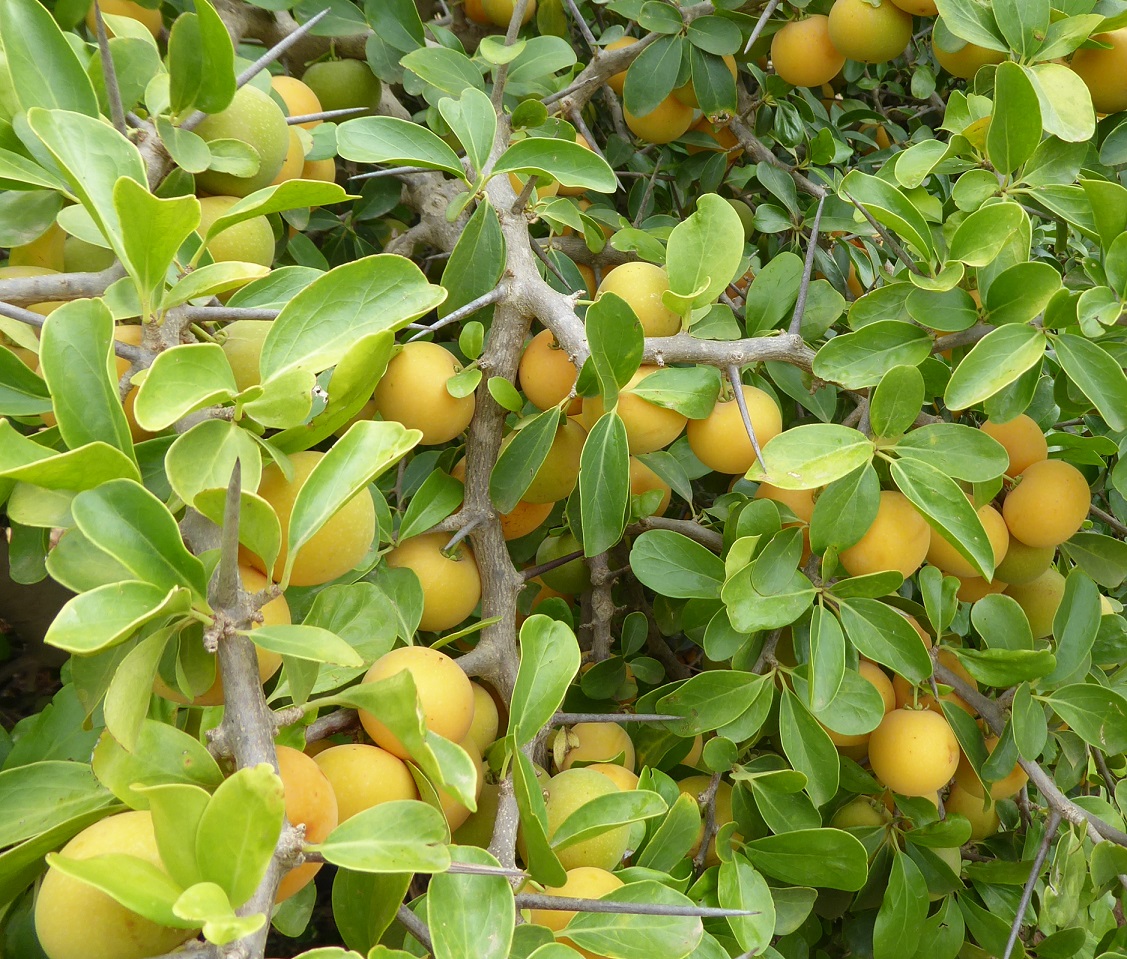
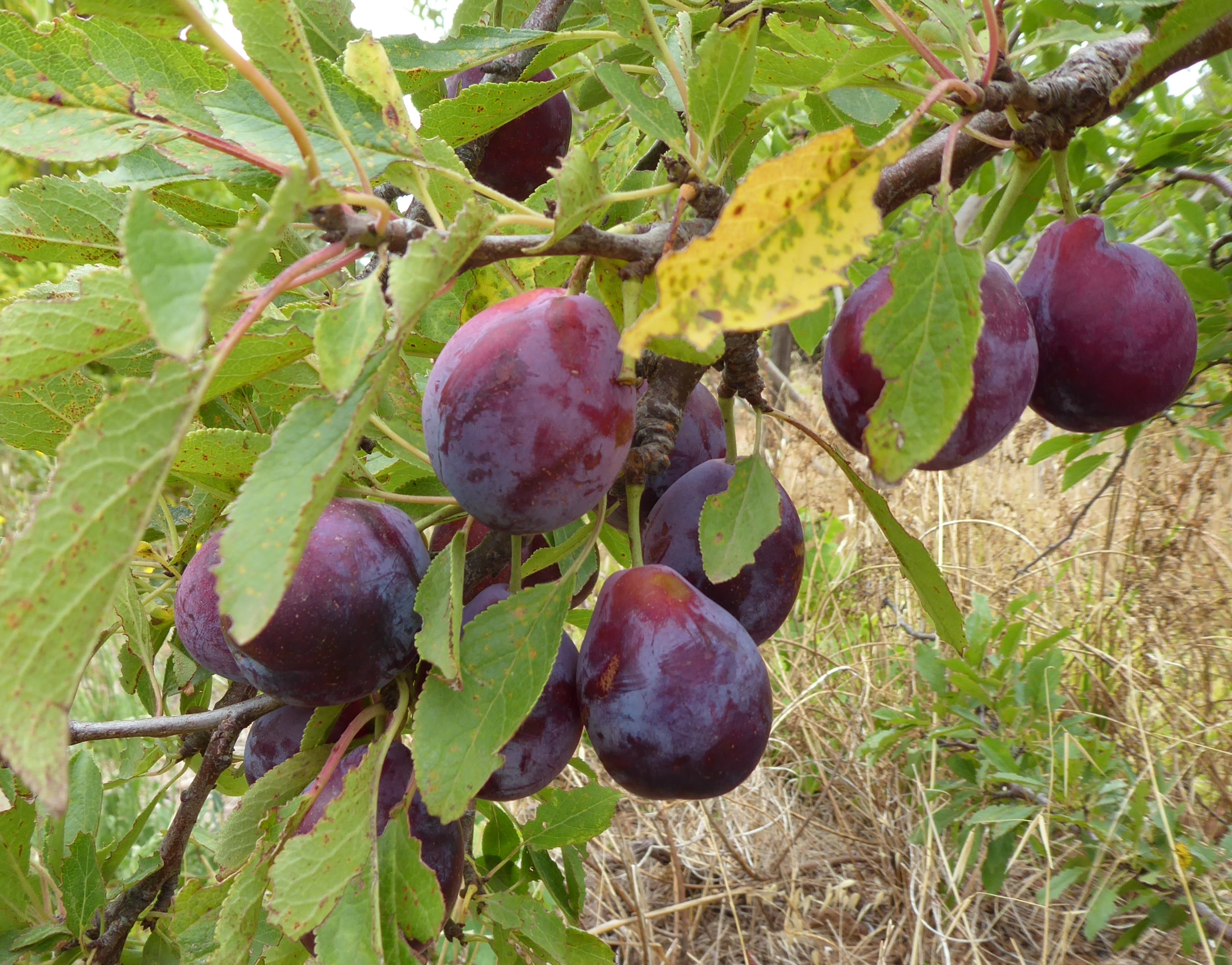
January is the middle of the fruit harvest and the time to enjoy peaches, plums and pears. My Santa Rosa plum ripened at Xmas and we have enjoyed a few peaches from young trees, but the star of the month has been the van der Merwe prune plum. Sweet and luscious these are a real delight and I plan to dry some in the hot sun to enjoy in winter. The Cape mulberry also fruits now in January. This tree has firmer leaves than the common mulberry which fruits in spring and the fruits are bigger and better. My tree does not get enough water and is a dwarf with small fruits, but each is an explosion of flavour, the perfect balance of sweet and sour. It is another fruit which is out of fashion. Once nurseries sold several varieties, but I doubt you could buy a single one now. Along the boundary fence some of the Kei apples, Dovyalis caffra are bearing their round yellow apricot sized fruits which make a lovely acid jelly. This tough, tall plant with long spines makes an excellent barrier. It needs no water after the first summer.
In the veggie and cutting garden, everything is struggling to stay alive in the heat and plants are being eaten by little red ladybird like insects which lurk under the leaves in pairs. Not sure what they are and what to do about them as I garden organically and don’t spray. We are enjoying courgettes, gem squash, tomatoes, aubergines and peppers and watching the butternuts grow. This is the month for dahlias too, but this year they have struggled for some reason and I have lost several from the collection I was building up. They are old fashioned flowers and great to pick for the vase.
Other highlights
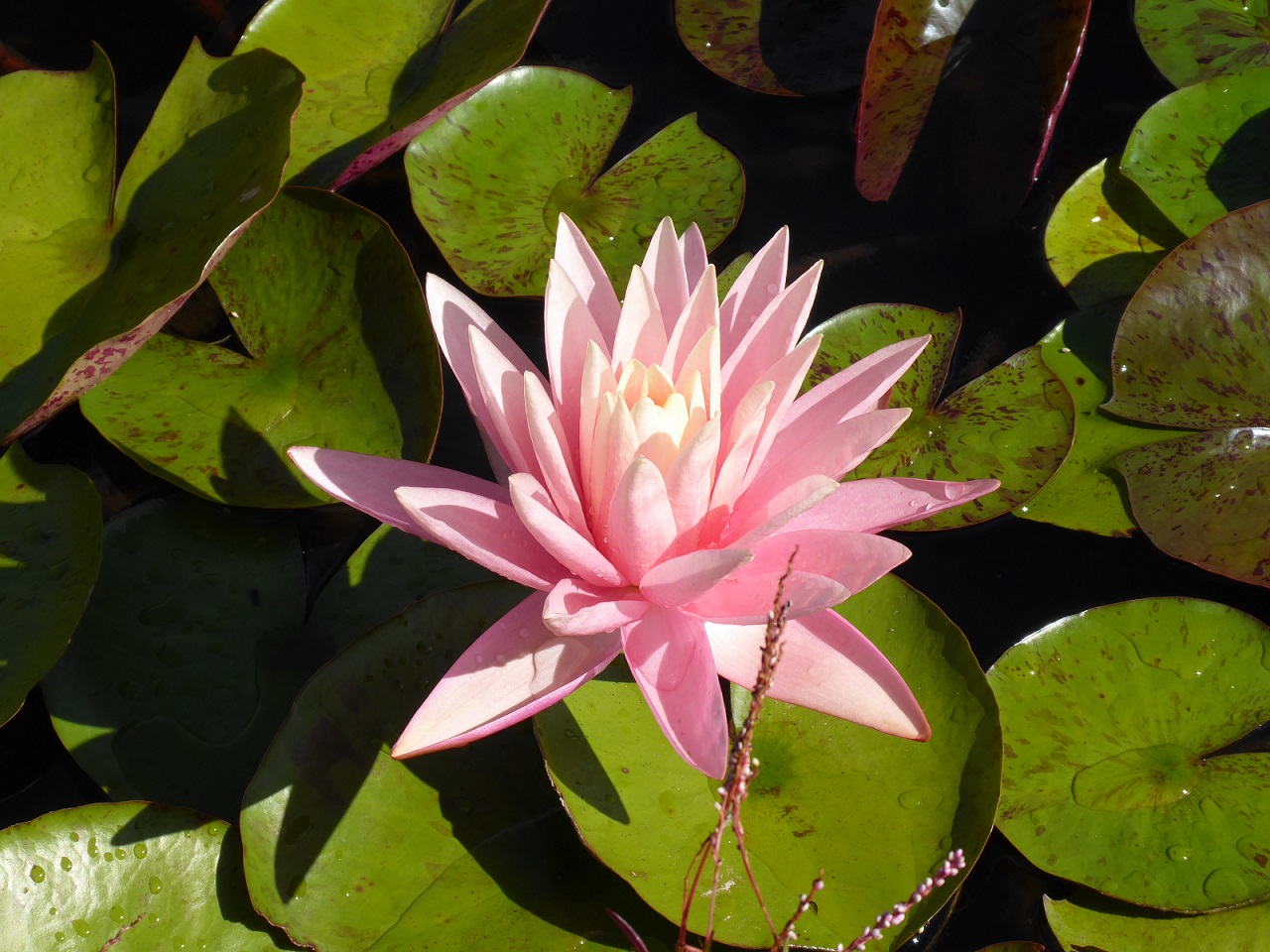
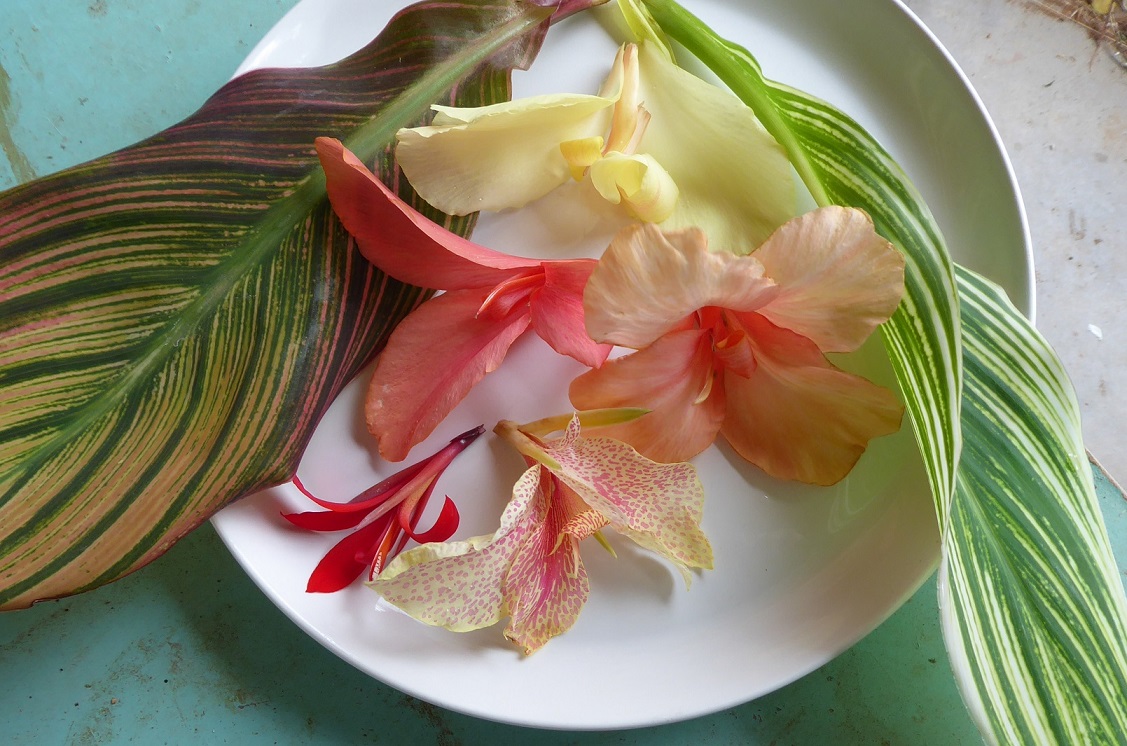
The waterlilies in the pond are also still flowering well. The slightly cooler summer suits them. Nearby is a small plant of Bauhinia galpinii whose orange red flowers are at their best now. I also have a small collection of cannas growing in pots. People either love or hate cannas. Some of the road verges here sport magnificent colourful rows of them. I have opted for the more subtle colours, and some have lovely striped leaves. I still need to find a spot in the garden to suit them though – on the “to do” list.
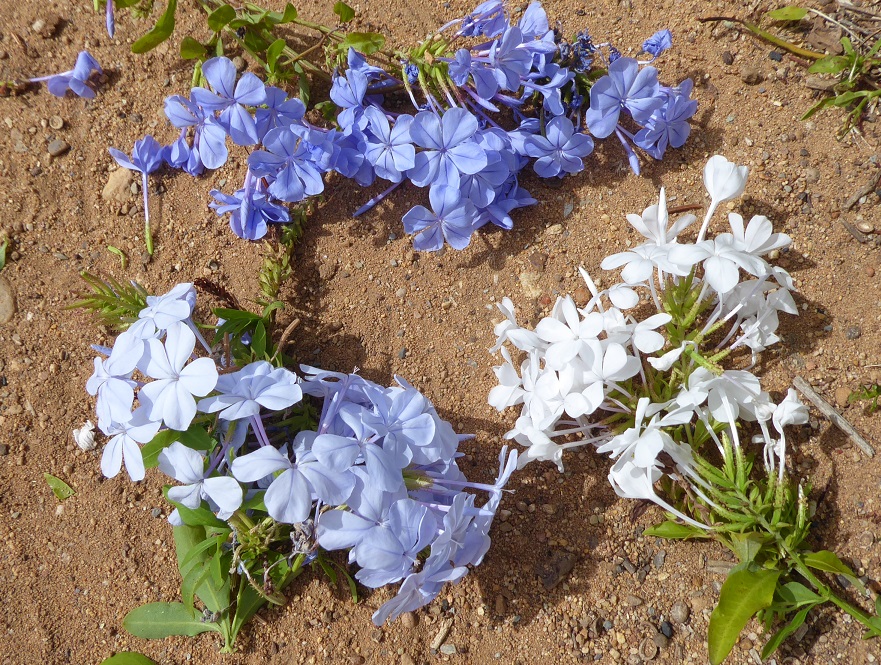
So January has many stars, but I haven’t mentioned the very best yet – plumbago. Without a doubt plumbago is the mainstay of the summer garden here at KSU. I have planted lots of it as hedges and along the boundary. I like all three colour forms; the common pale blue, the white and the bright blue form, Royal Cape. All of them are tough, versatile plants and the colours refreshing in the midday heat as well as magical in the long evening gloaming.
The best time to enjoy the garden here in January is early in the morning and late in the evening and to spend most of the day aestivating!
January 2019 Gallery