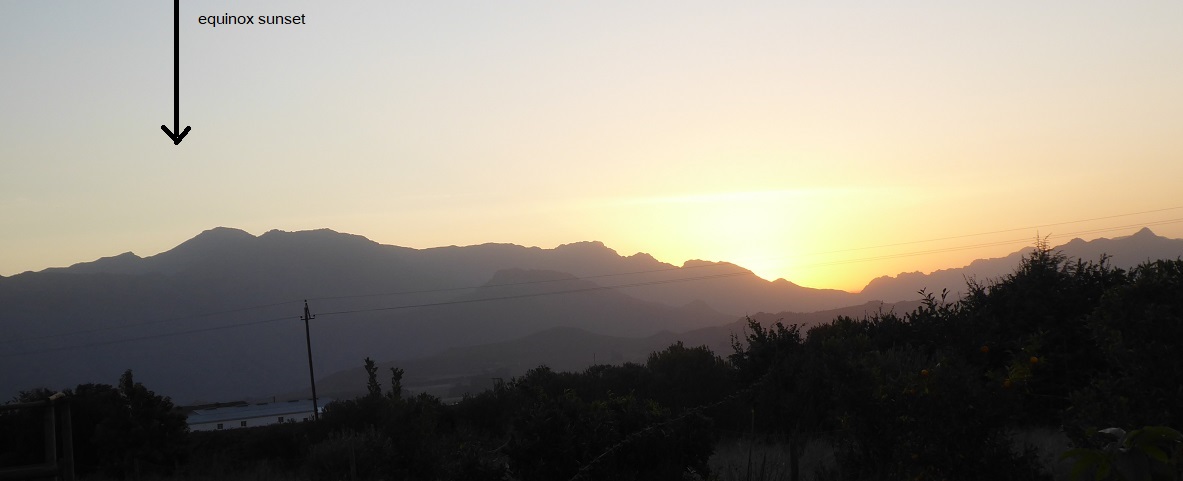
As I write at the end of October we are shivering and the peak of the mountains to the east has a very light dusting of snow. We have had over 50 ml of rain in the past 5 days too, which has helped after the extremely dry early spring. I had been watering everything in the garden, but can hold off now for a week or two.
This month has its beauties in bold shades, but it is also hay fever month. The grass all runs to seed and the syringas flower. Both of these seem to trigger my sneezing. This year we have been lucky to be spared the howling south east wind which often arrives now and we have had some glorious days.
Every Saturday two men who work on the farm next door come to cut grass for me. It is vital that we get it all cut back now as fires are a hazard in summer. It also makes it easier to spot snakes as I wander about watering. Much of the grass is wild oats, but there is also something we call steekgras which has horrible prickly seed-heads which penetrate boots.
Purple glories
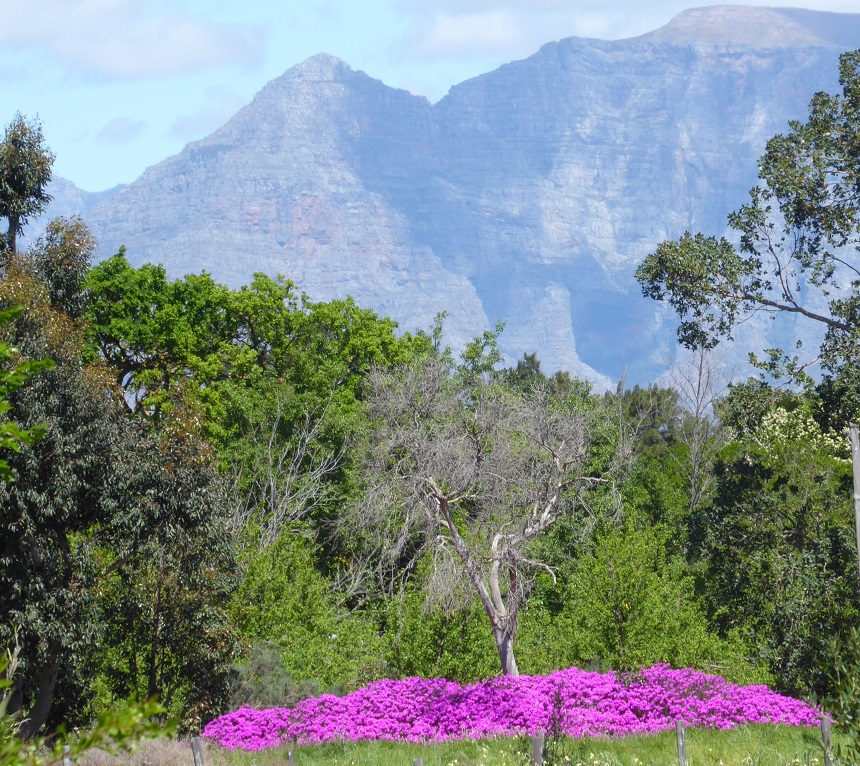
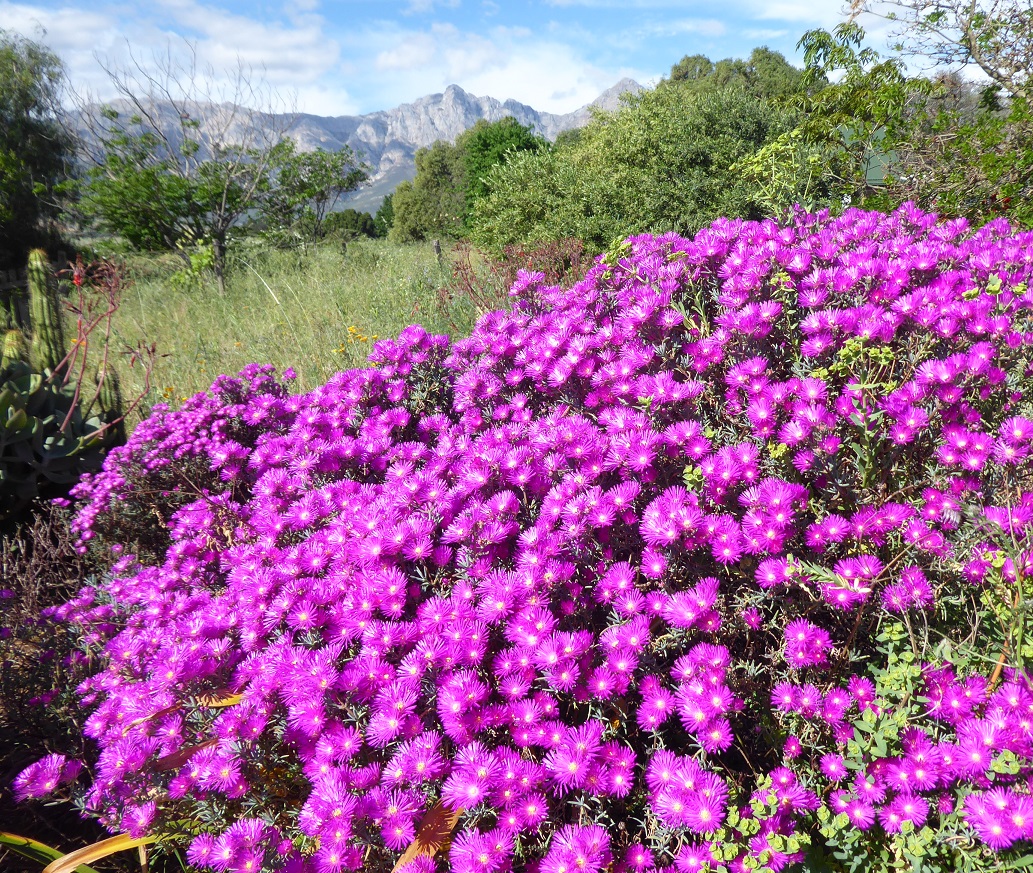
October had a dazzling welcome with big bushes of purple pink lampranthus planted by a neighbour flowering down our road. I also have big bush of it on one of the succulent mounds which has survived for about 15 years. There is nothing subtle about this vygie. This is prime time to visit the Karoo Desert Botanical Garden in Worcester as it has an impressive collection of vygies in shades or red, orange, purples and pinks. Take your sunglasses!
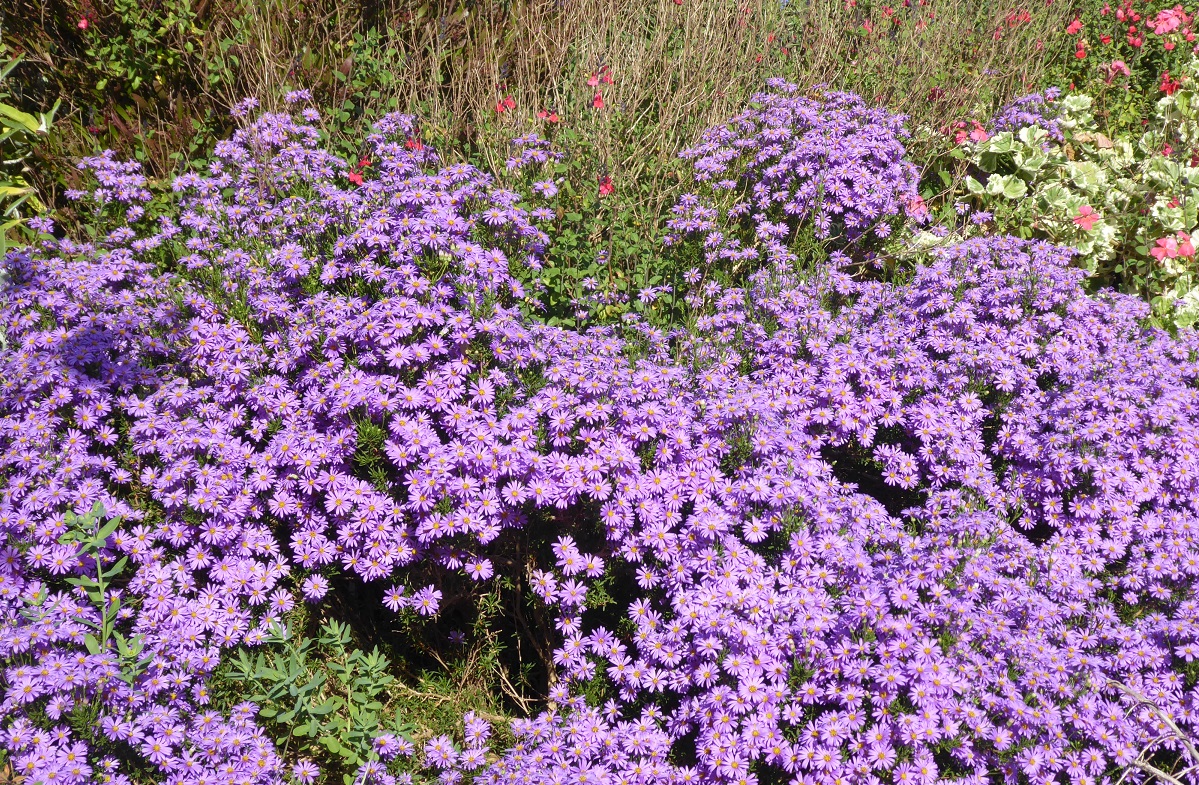
Felicia filifolia is also covered with small starry bright mauve purple flowers this month. This is another native plant and occurs widely in South Africa. It also does not need any water in summer. With its fine, light green leaves it is an attractive shrub even when not in flower and can spread to about 2 m x1 m. One has been growing in my garden for about 12 years now and dazzles for about three weeks every spring.
Growing near the Felicia is another stunning shrub, a Pride of Madeira (Echium candicans). With its towering spikes of tiny bright blue flowers and elegant grey leaves this is another joy in October. This shrub also doesn’t need water in summer, but it is fairly short lived and needs replacing every three or four years. Seedling do pop up sometimes when the mother plant dies.
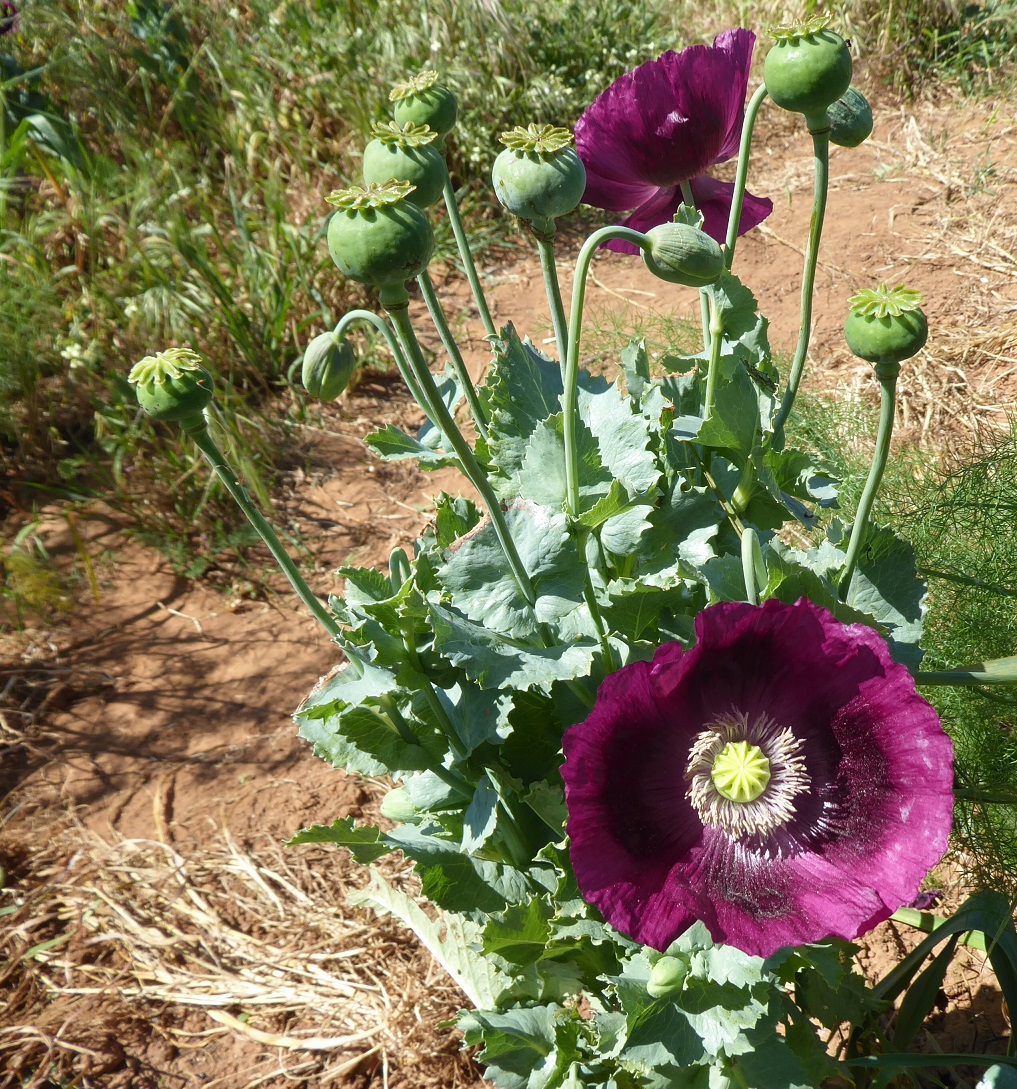
I love poppies and wish I could grow more. The opium poppies self-seed in the veggie garden and open their big purple flowers this month. I like their handsome silver grey leaves and silver pepper pot seed-heads too.
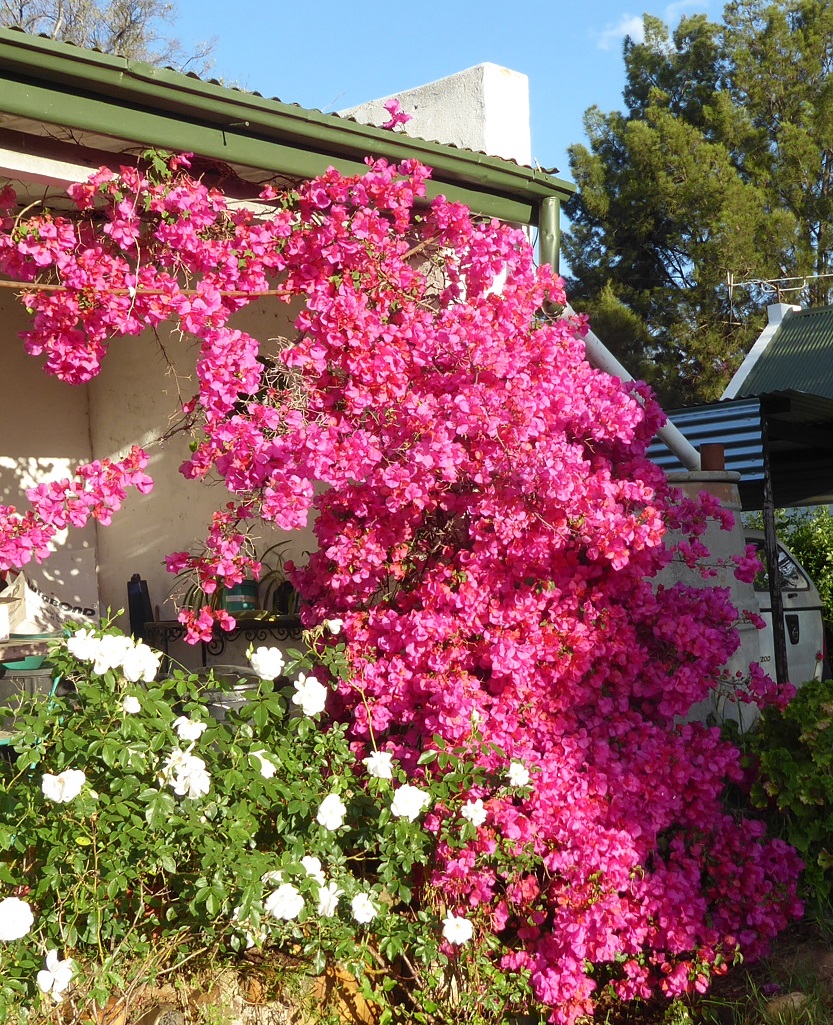
Bougainvilleas also start flowering this month. Growing up the side of my stoep is a bright pink purple bougainvillea which will be a joy all summer long.
Orange and red
I am very fond of pomegranates. They are attractive in almost all seasons and this month they bear their bright orange red flowers which show up brilliantly against their glossy green leaves. Aside from pomegranates which bear fruit, I have two purely decorative forms. One has double bright orange flowers which are fuller than the normal form and the other has striped cream and orange double flowers. I think this form is called ‘Madame Legrelle’ and it is a beauty. I once saw a pomegranate with yellow flowers in a garden in Alice, but unfortunately the cuttings I took did not grow.
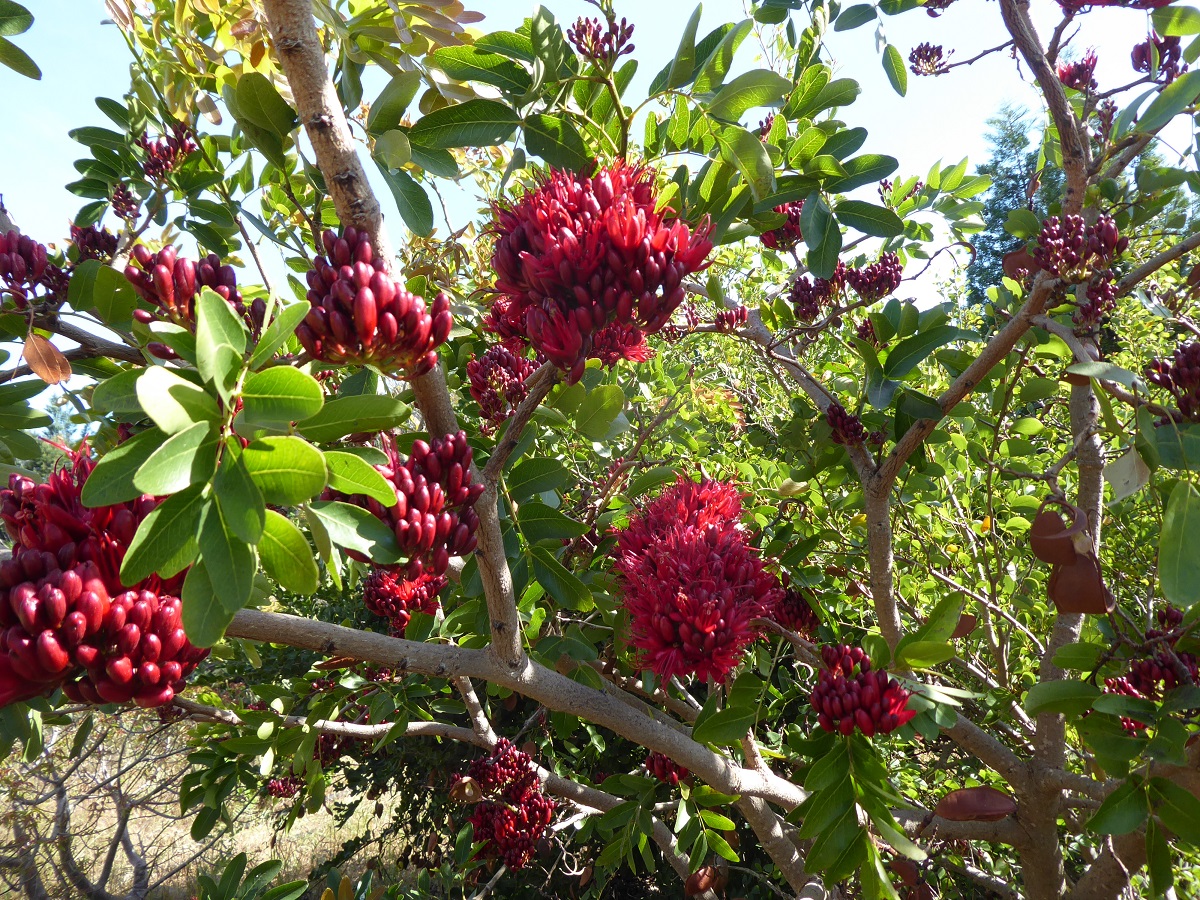
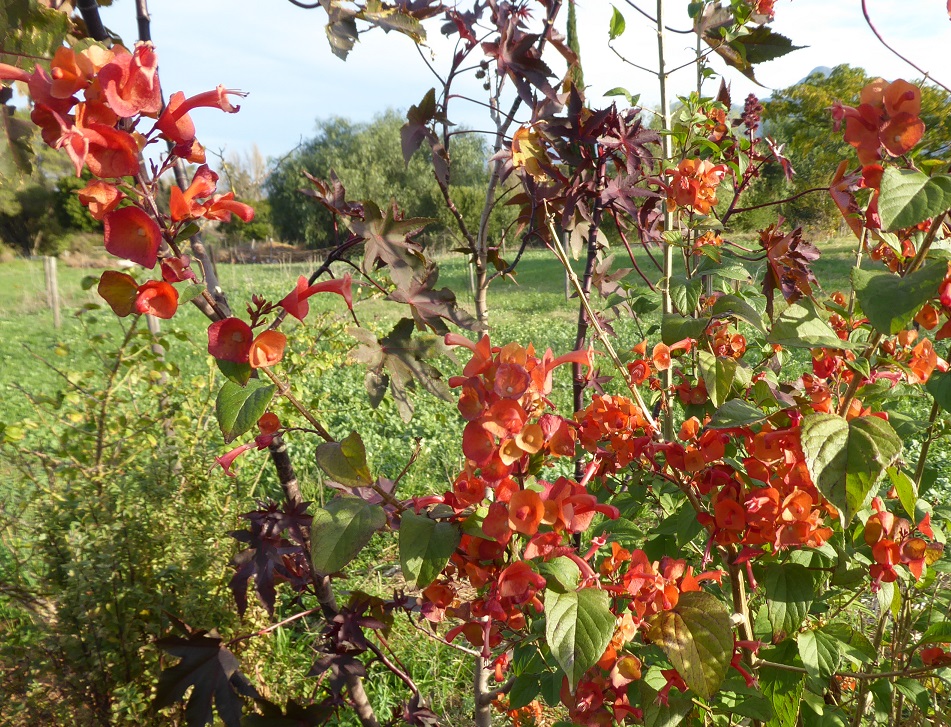
The other marvellous combination of red and green this month is the weeping boerboon, (Schotia brachypetala). In my garden this shrub starts its season with beautiful bronze new leaves which turn a fresh light green as the trusses of flowers form close the trunk and branches. My tree is still quite young and small, but is a treat for whole month of October.
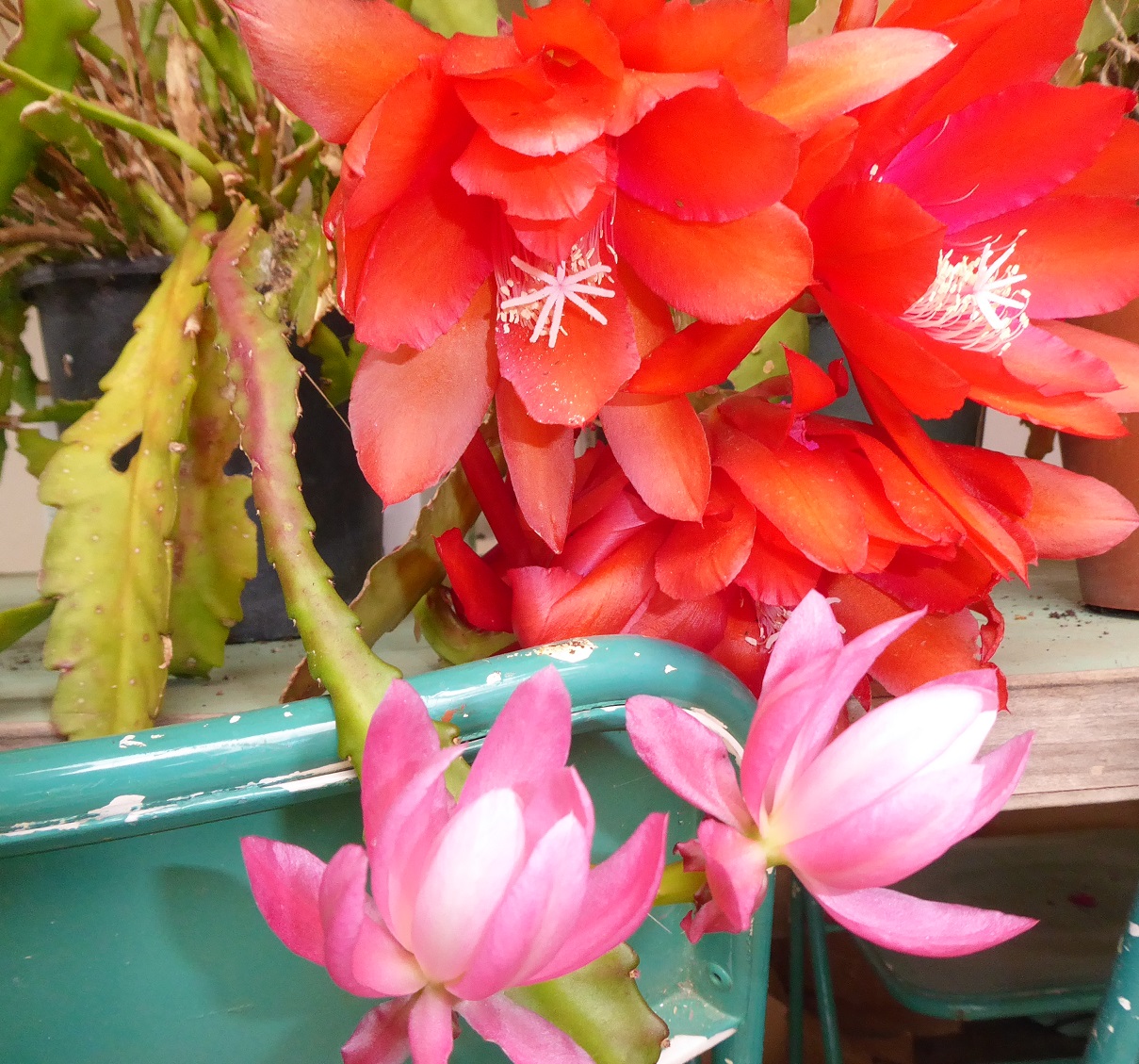
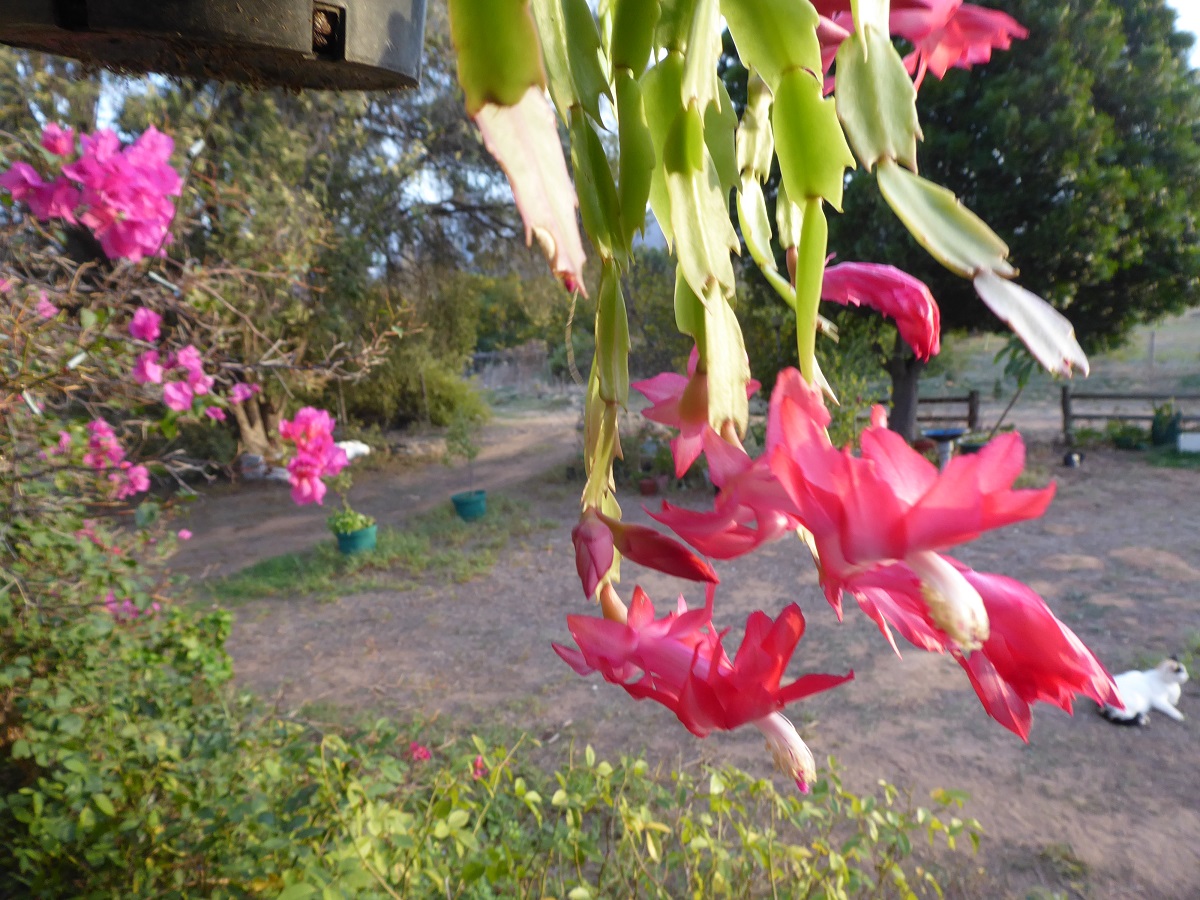
Last of the glorious reds is a cactus with large red flowers with almost iridescent purple interiors. I am not sure of the name, but although fleeting this flowering is stunning. A smaller pink and white cactus also flowers now. I must track down the names.
White beauties
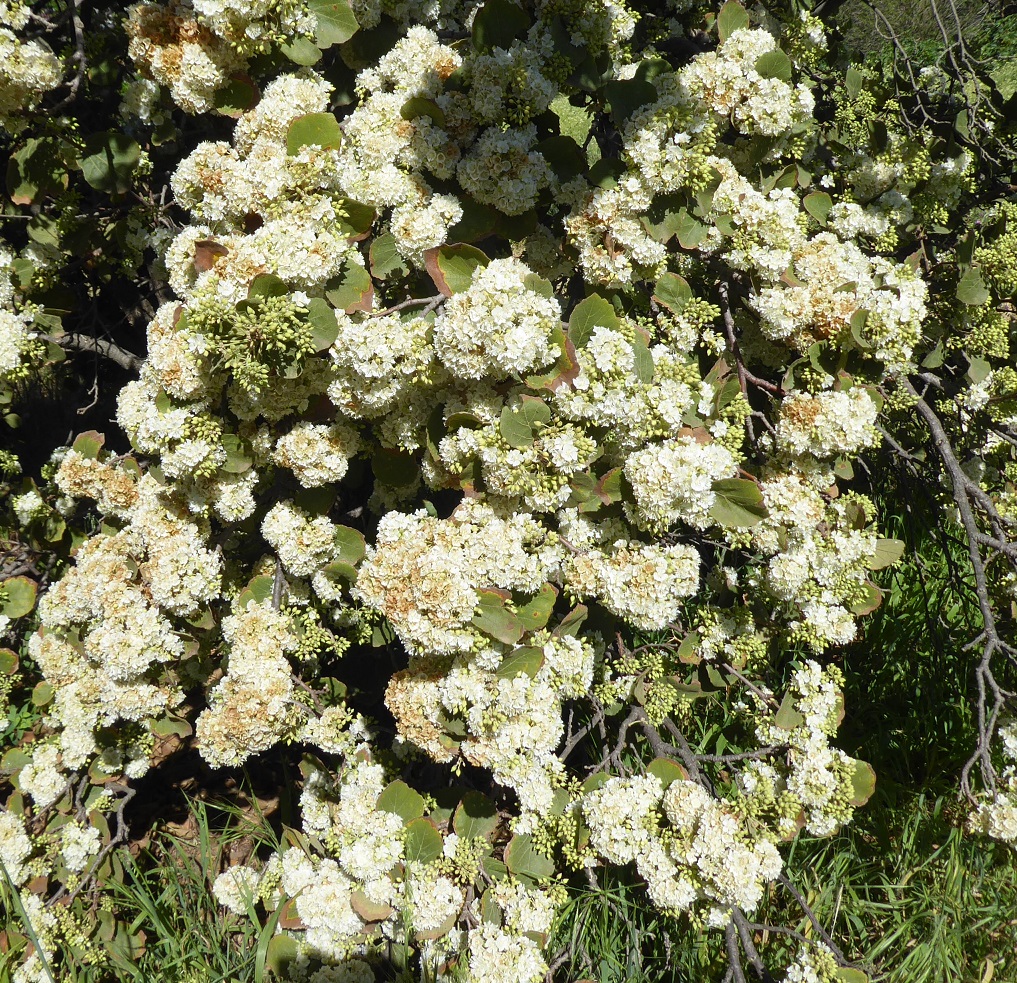
As a contrast to the bright colours, Dombeya rotundifolia the wild pear comes covered in trusses of white blossom early in the month. This tree comes from further north in South Africa, but mine has survived for 15 years, with very little summer water. Sadly the flowers turn tan within a week, so the pristine spectacle is short lived, but this little tree has attractive rounded grey green leaves in summer and warrants its place in the garden.
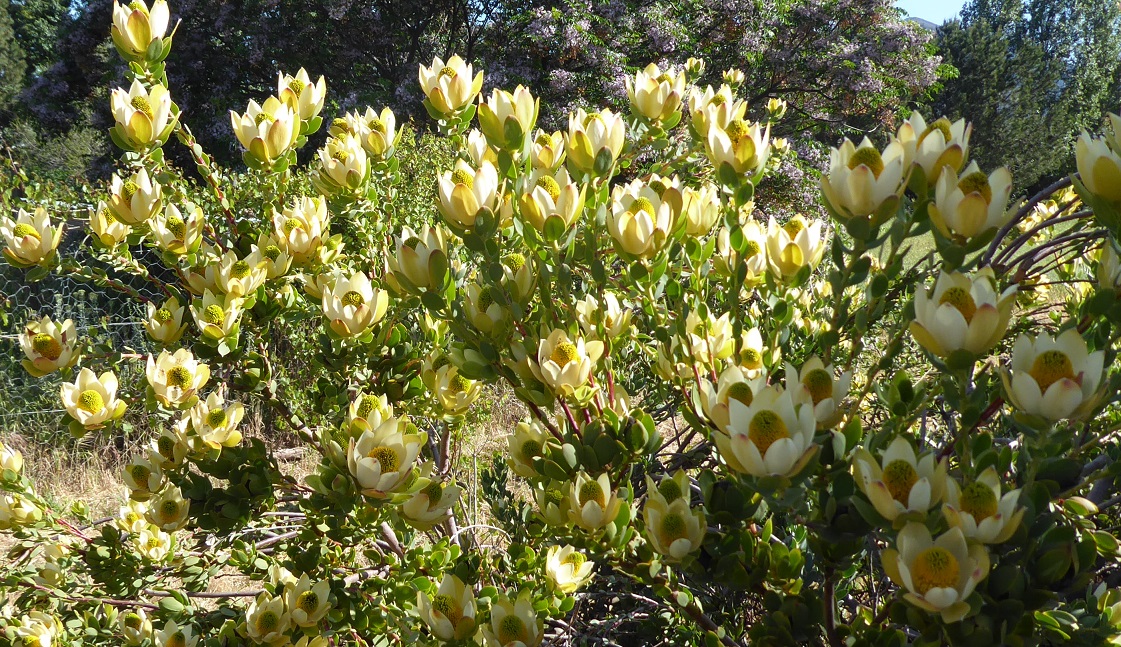
Quite near the Dombeya is a big Leucadendron bush which is also at its best this month. I think it might be L.discolor. It has limey green yellow flowers which last well in the vase
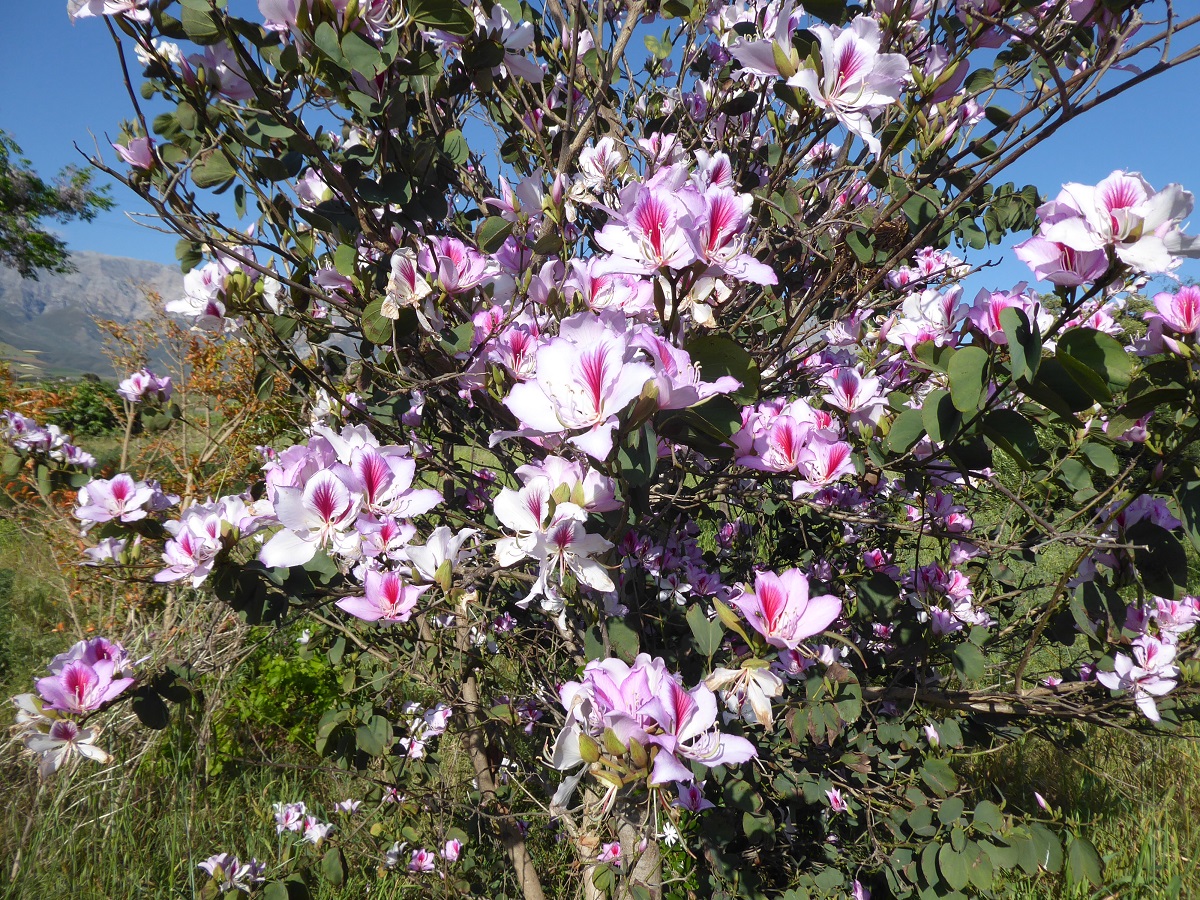
Although they are on the no no list I cannot resist the pink and white orchid-like flowers of Bauhinia variegata and these trees are the glory of the garden now in October. But even more special in my view is the pure white form which has a touch of green to the flowers. These flowers are lightly scented and as beautiful as magnolia blossoms. I planted it near a dense green yellowwood to emphasize the purity and beauty of these exquisite white flowers.
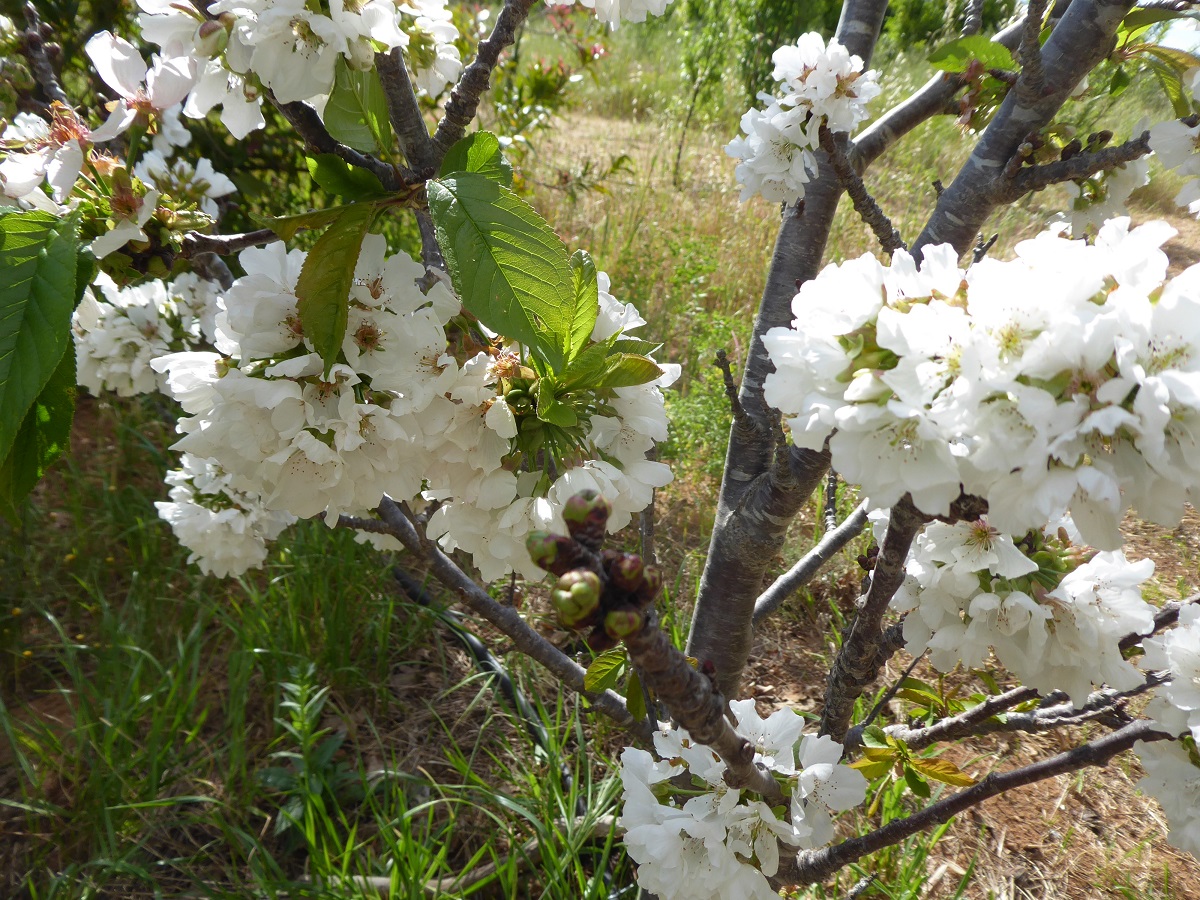
Gardeners are often a little crazy and I have planted 2 fruiting cherries. This climate is too hot for cherries and they are not thriving. If I get 5 cherries it is a lot, but when the little trees bear their pure white flowers, they are beautiful.
Although more cream than white, the olives also flower this month, their small lacy flowers a harbinger of the crop to come.
Scents of October
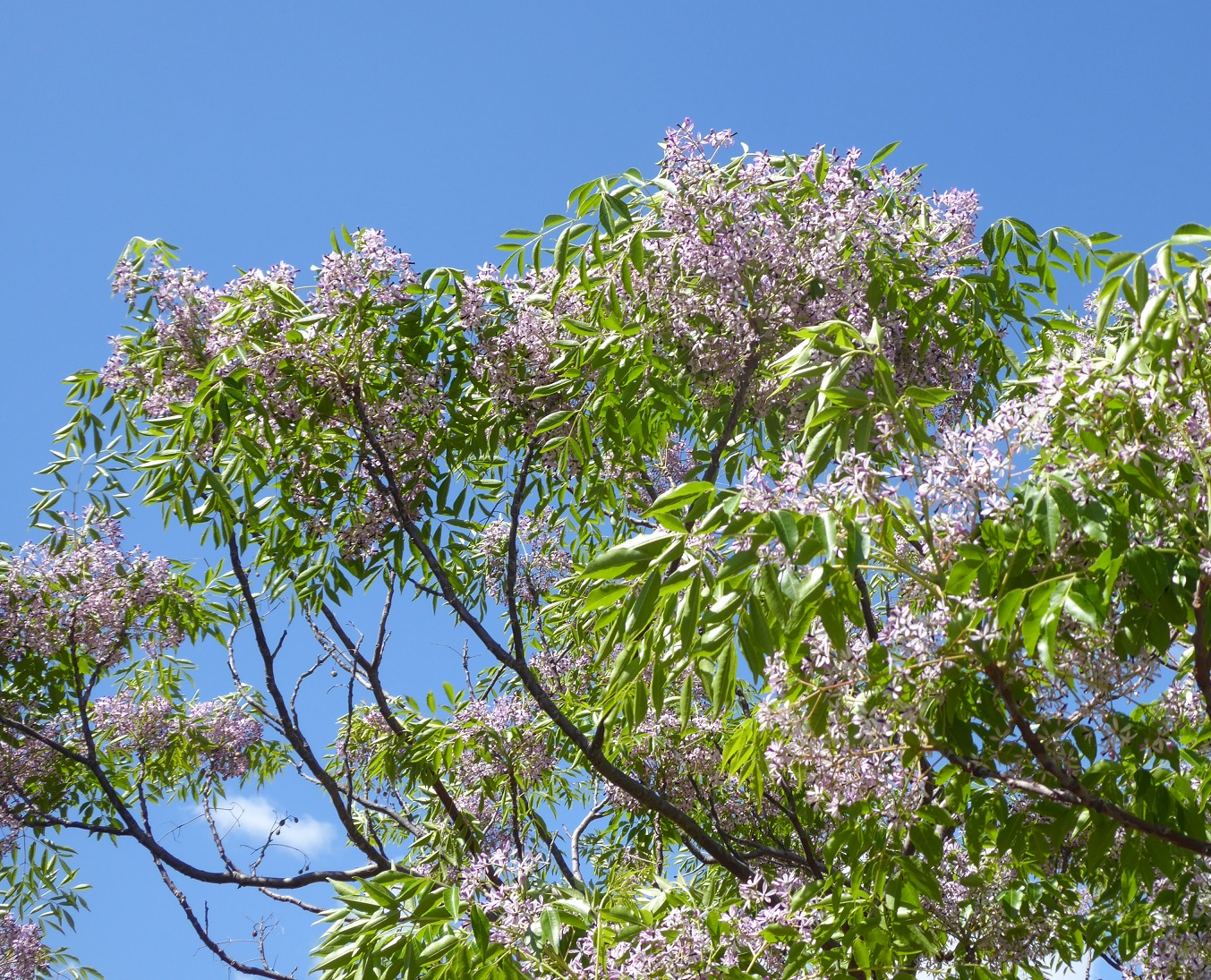
The garden in early October is pervaded by the scent of syringa, or Persian lilac (Melia azedarach) as it is sometimes called. With trusses of lilac coloured flowers, this is another plant on the no no list and I do diligently remove seedlings, but have left some trees. They are nowhere near as invasive as the wild olives in my garden.
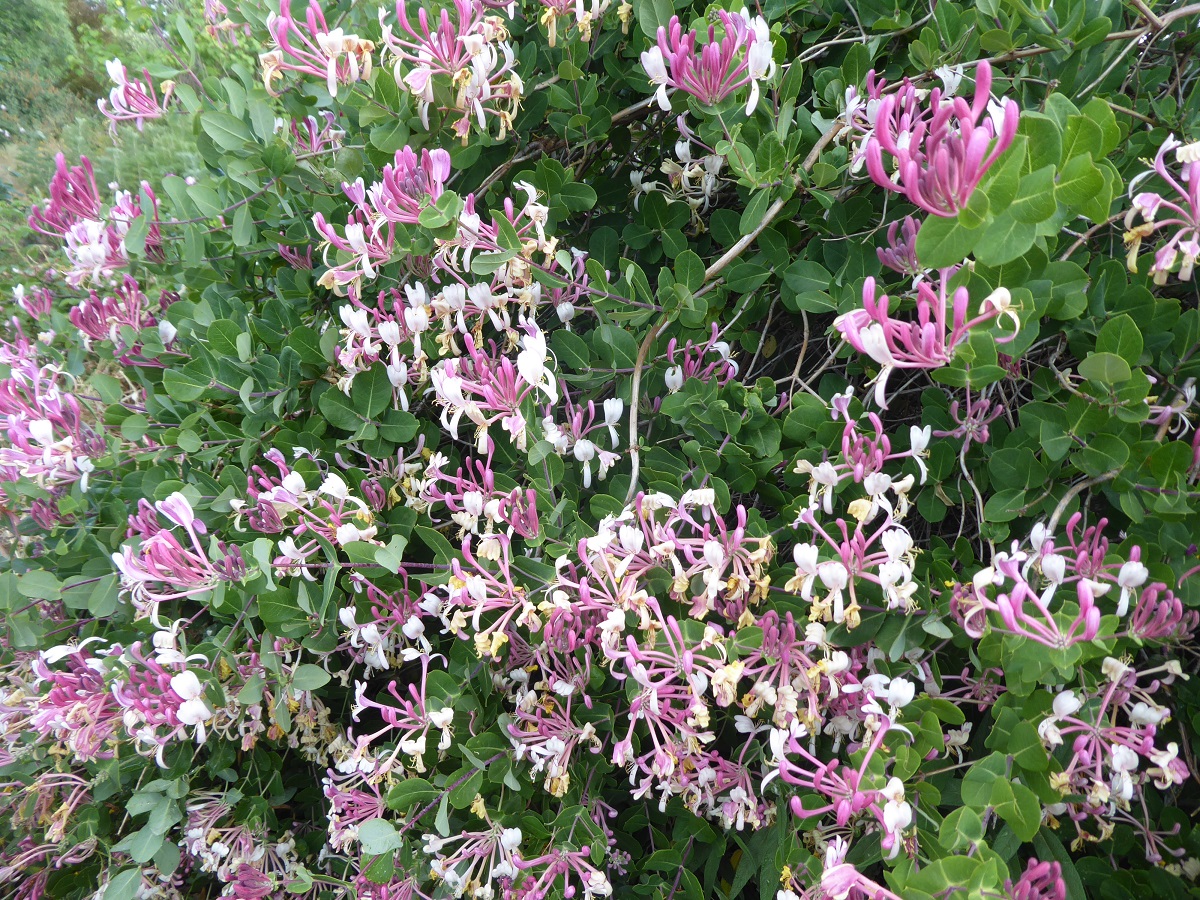
The other gloriously scented plants are the honeysuckles which are especially nice this month. In the rose garden is an enormous bush of European or Belgian honeysuckle ( Lonicera periclymenum) with flowers in shades of cream and pink which looks lovely beside apricot roses. And growing next to our cottage is a huge mass of the climbing cream and white Japanese honeysuckle (Lonicera japonica). The former only flowers for about a month now, but the other will flower all summer long. I also have a plant which might be a hybrid between the two.
Another glorious scent in October is that of the common mock orange, (Philadelphus coronarius). The bushes in the rose garden come covered in pure white single flowers enhanced by yellow stamens. There is something virginal about this shrub with its sweetly scented flowers and pale green leaves, but is surprisingly tough, surviving with very little water. I also have a mock orange from Mexico which I got from Peter and Barbara Knox- Shaw. It does not flower as well, but it equally strongly scented.
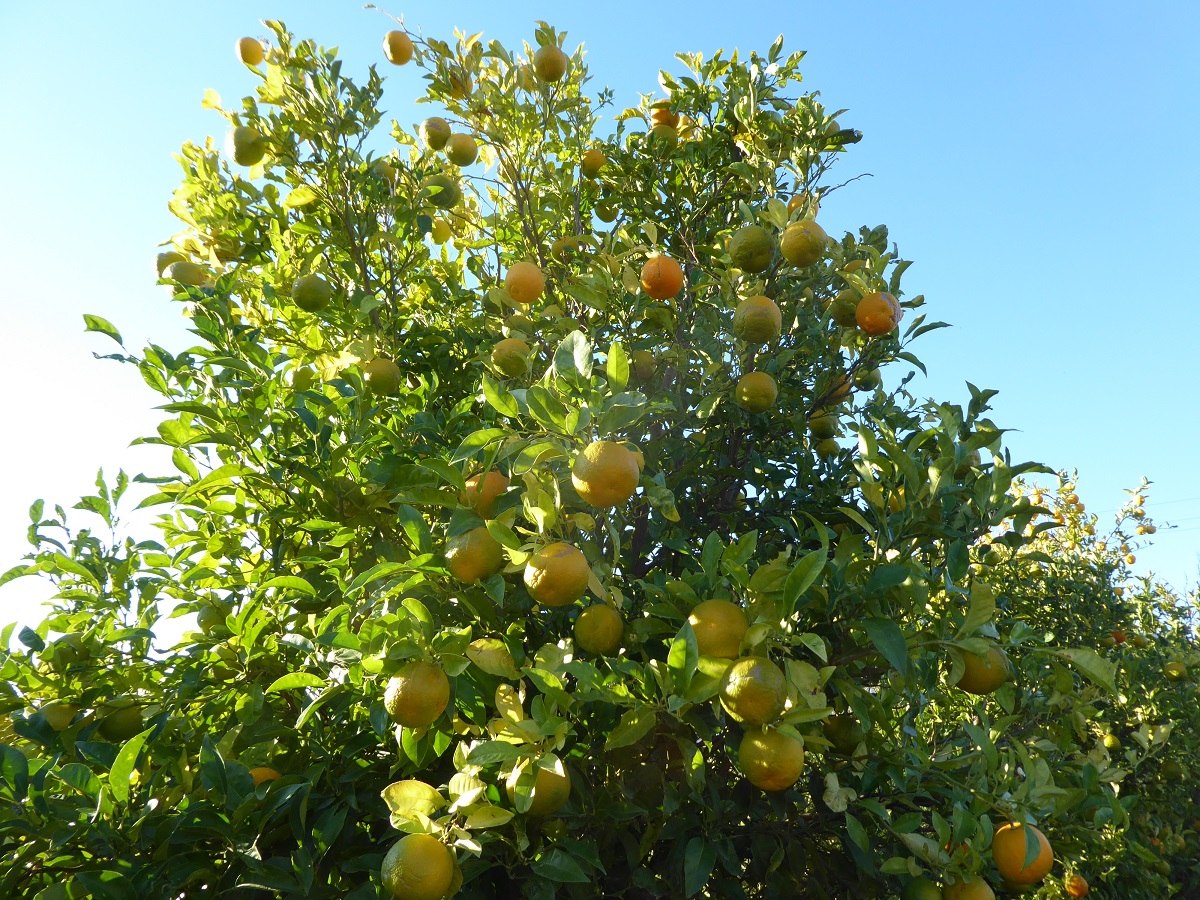
The orchard is redolent with the scent of real orange blossom in October. Now is the time I make my van der Hum liqueur. The old Cape recipe calls for naartjie peel and a handful of orange blossom which one soaks in brandy with other spices for 40 days.
Roses and Irises
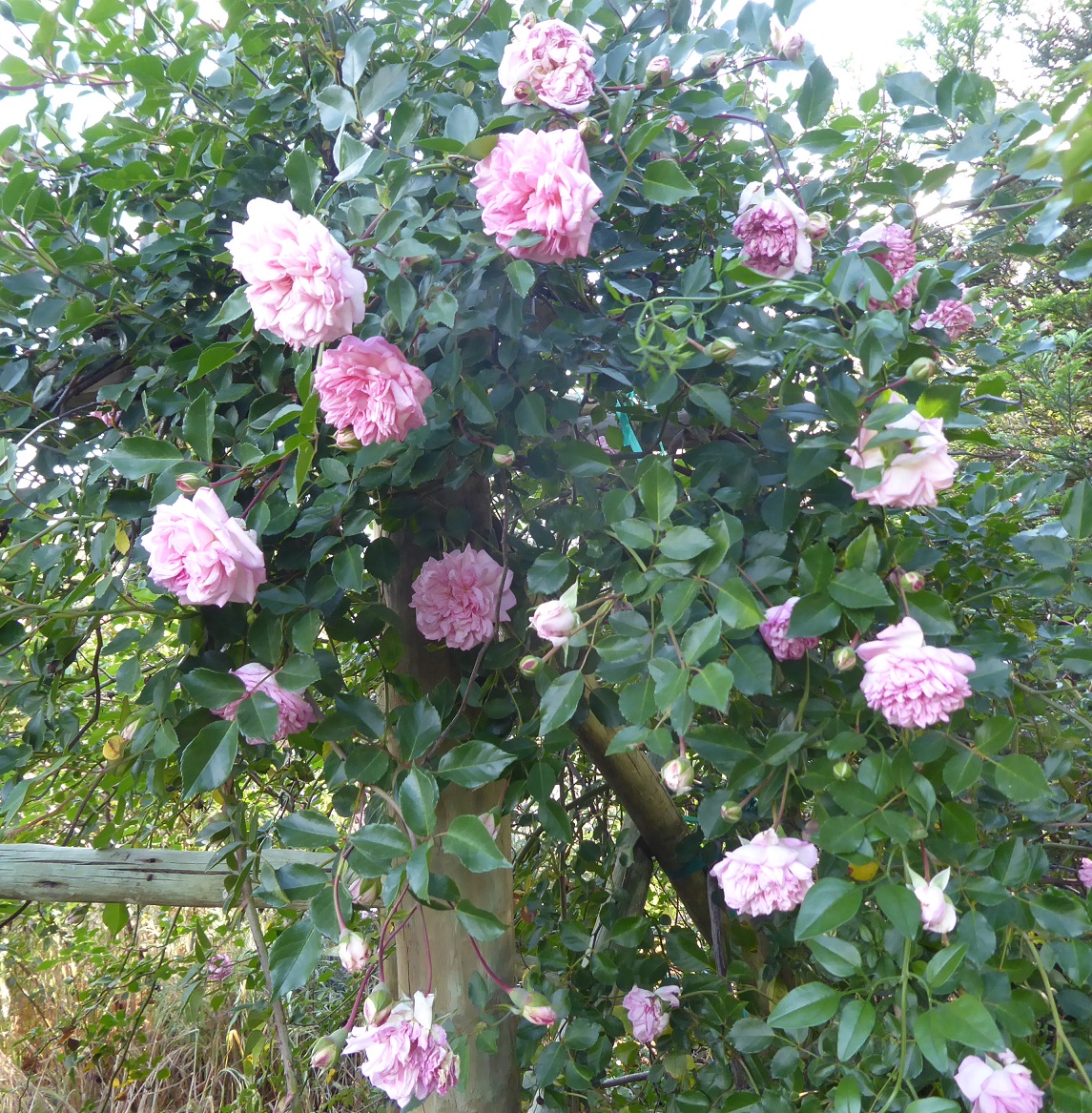
I love old fashioned roses and grow quite a few of them. October is the month when they are at their best and the old rose garden was one of the first gardens I planted when I came to KSU 16 years ago. It is a joy to be there now and to drink in their perfume and admire their subtle colours, but it isn’t that easy to capture the essence of their enchantment in photographs.
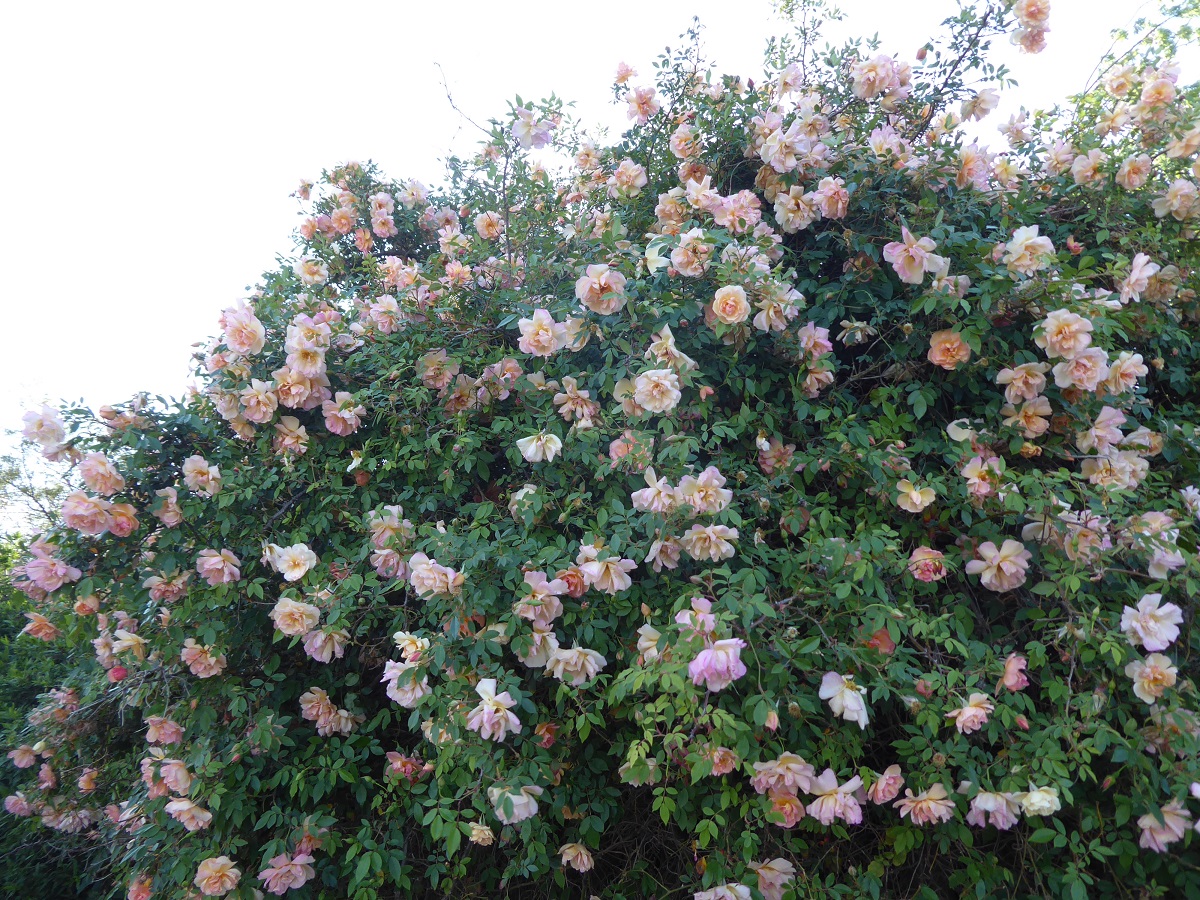
In mid October we travelled to Barrydale for a weekend to see the gardens in bloom there. It is a charming little town with some lovely and interesting gardens and it was very nice to see lots of old roses still growing along boundary fences, including a glorious bush of an apricot coloured rose I could not identify. I took some cuttings- ever hopeful.
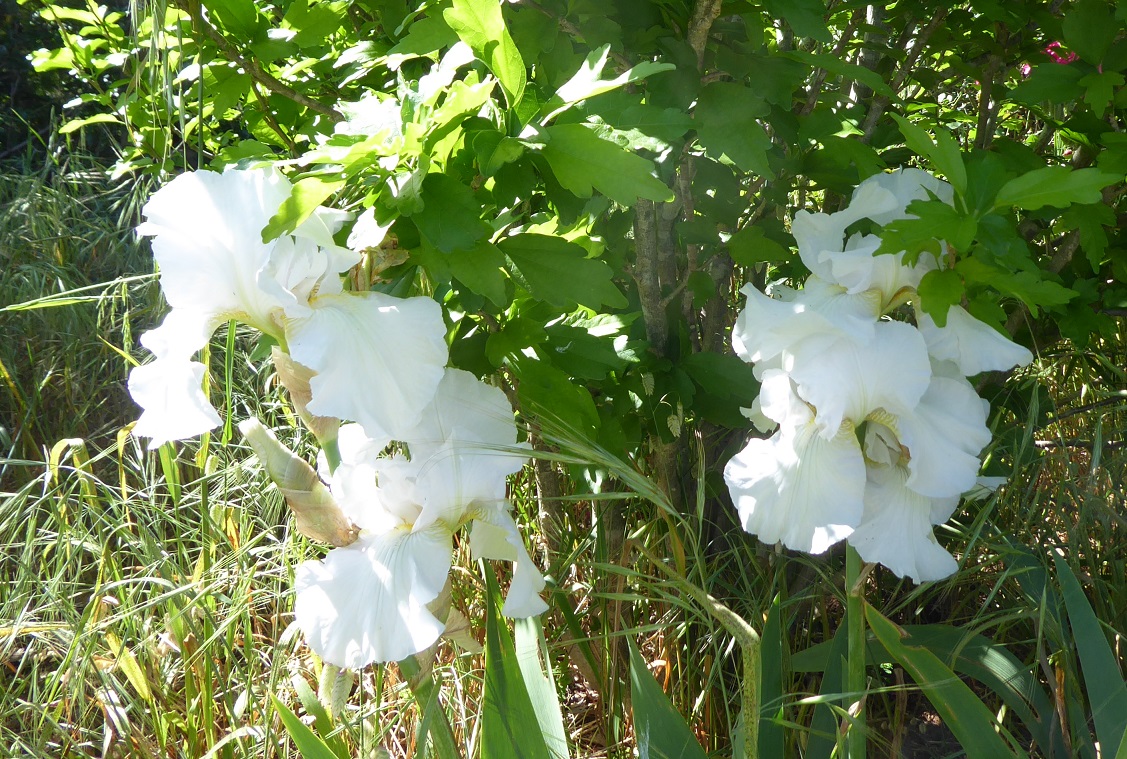
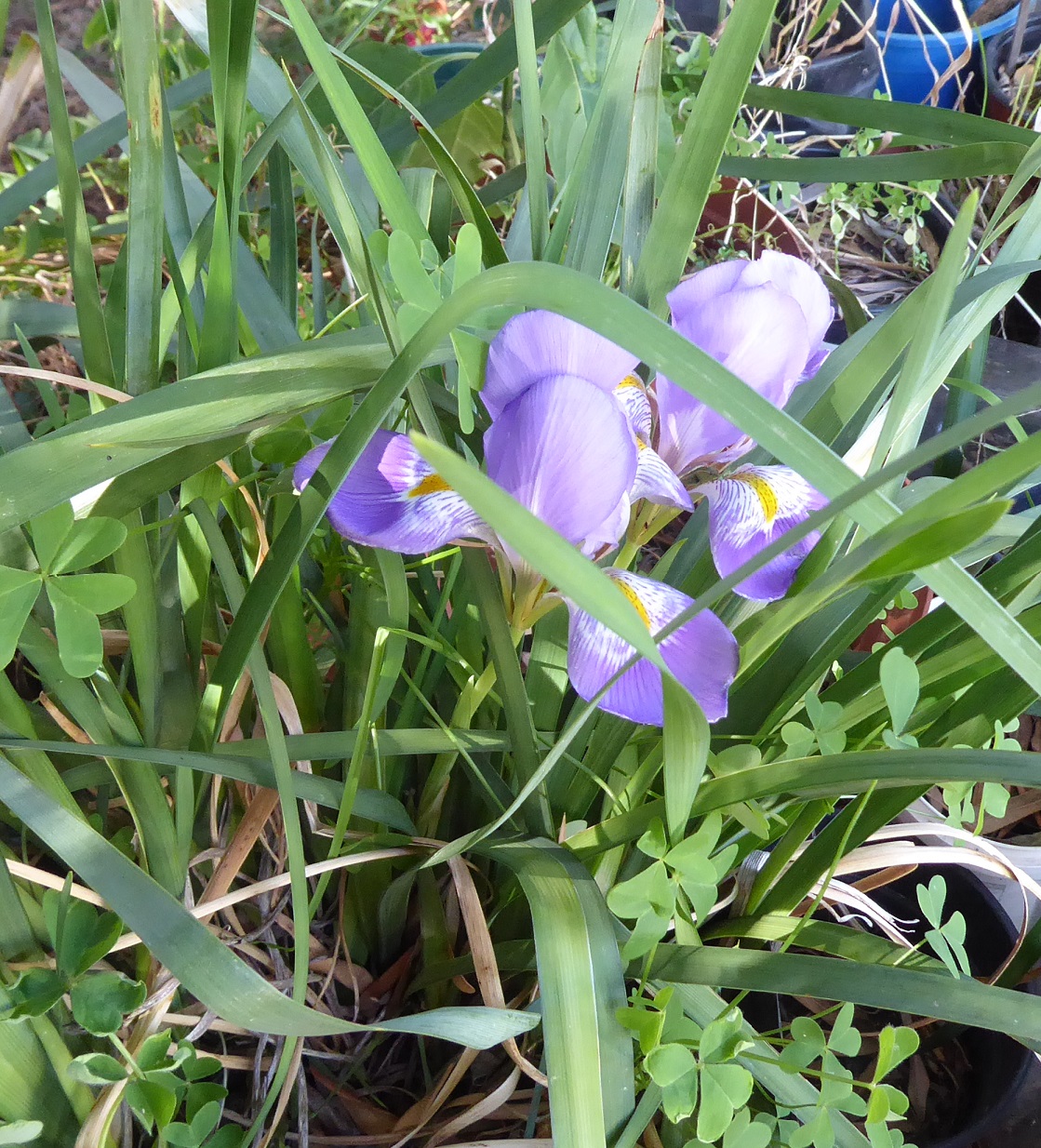
I also love bearded irises and have a large collection, but sadly they do not do well here. The wretched moles disturb them and we just don’t seem to have enough cold, or enough rain for them. This year very few have flowered. I guess I should move them to fresh ground. There is something so special about their elegant flowers that I continue to hope for a better year.
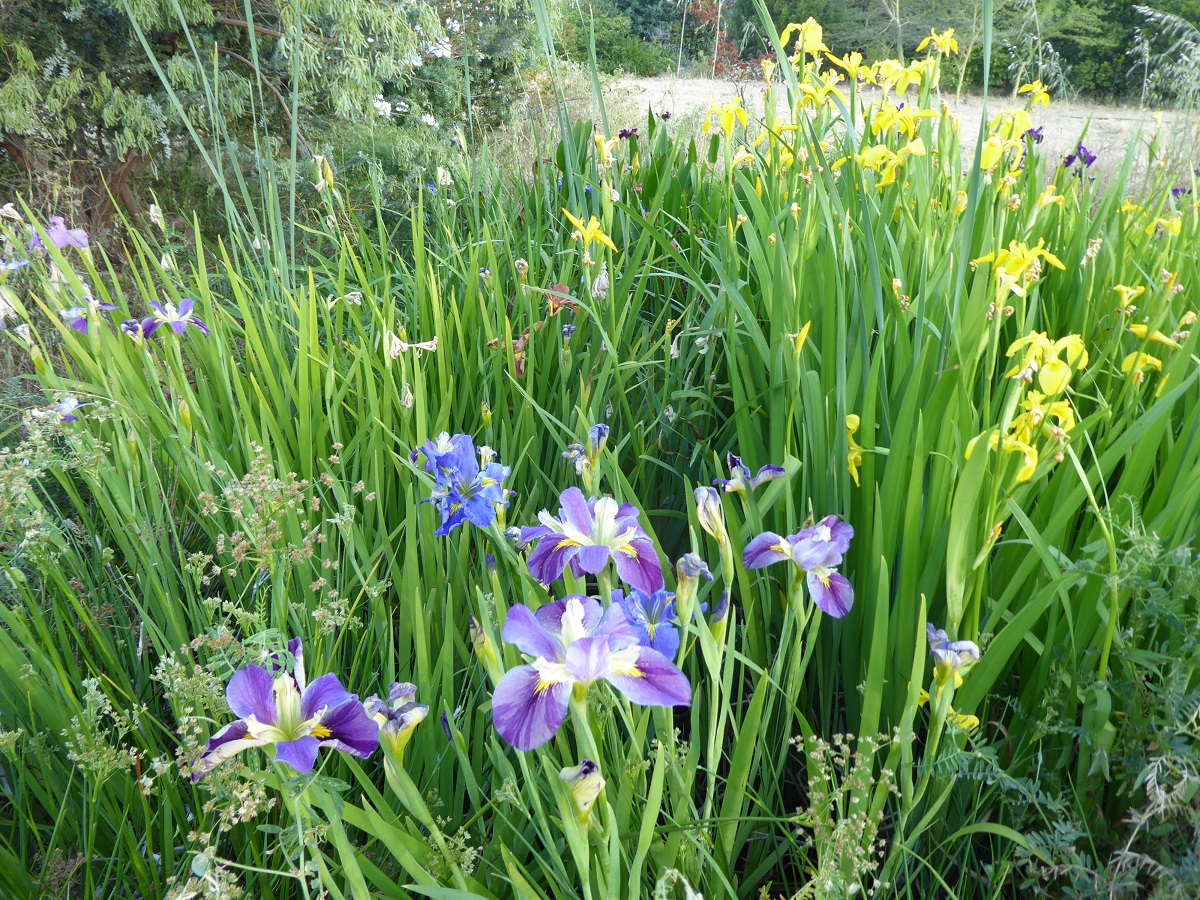
Louisiana irises do much better. A few years ago I made a shallow pond for my collection of about 10 different varieties. Usually they flower in September, but they have been later this year them. For about a month this little pond looks great.
Tasks and treats in October
October is also the month when the pelargoniums are at their best. Often incorrectly called geraniums my mum and I have made quite a collection of species and garden hybrids. I need to take cuttings now after they have flowered as often lovely cultivars will disappear off the market and cannot be replaced if one loses a plant.
This month I planted my dahlia tubers and hope they do better than last year. I also planted more beans and courgettes, watermelons, butternuts, pumpkins and gem squash for the summer. The asparagus plants have shot up now that we are no longer picking spears and make a waving green forest about a metre high. I hope to pick enough Cape gooseberries to make some jam and we have enjoyed a few artichokes.
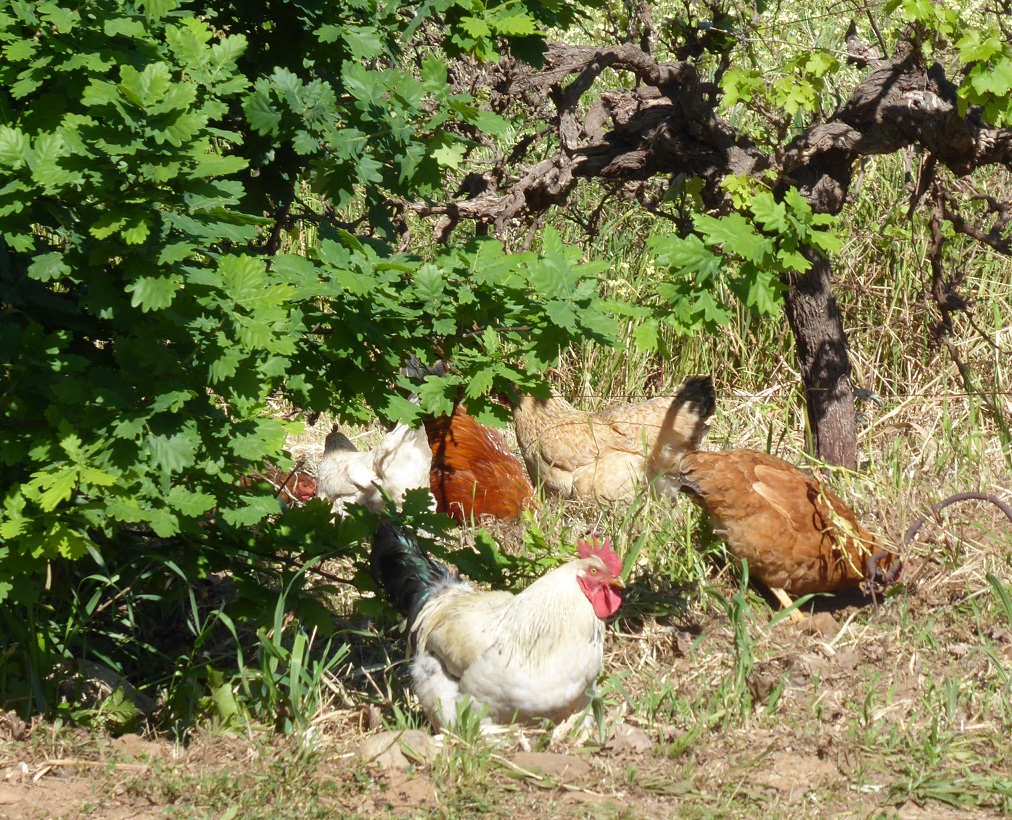
The fruit season is about to start and we can buy early peaches and nectarines. Summer is definitely on the way. The swifts and hoopoes are about as are my neighbour’s chicks who spend a lot of time scratching in what remains of the old vineyard.
KSU October 2019 gallery