Istanbul : Weekend around Geneva : Paris and Nîmes : Barcelona and Cádiz : Seville : Granada : Córdoba : Mérida and Cáceres : Madrid & Valencia :
Salamanca was the city I visited after Mérida. Then I went to Madrid. I decided to do an organised bus day trip to Avila and Segovia from there.
Salamanca
This city, in the west of Spain, is home to one of the oldest universities in Europe. It is famous for its Renaissance and Plateresque buildings, built of golden sandstone. I arrived in early afternoon and had quite walk to my hotel from the bus station, but it took me past some of the handsome buildings of the city.
Plaza Mayor and Casa de las Conchas
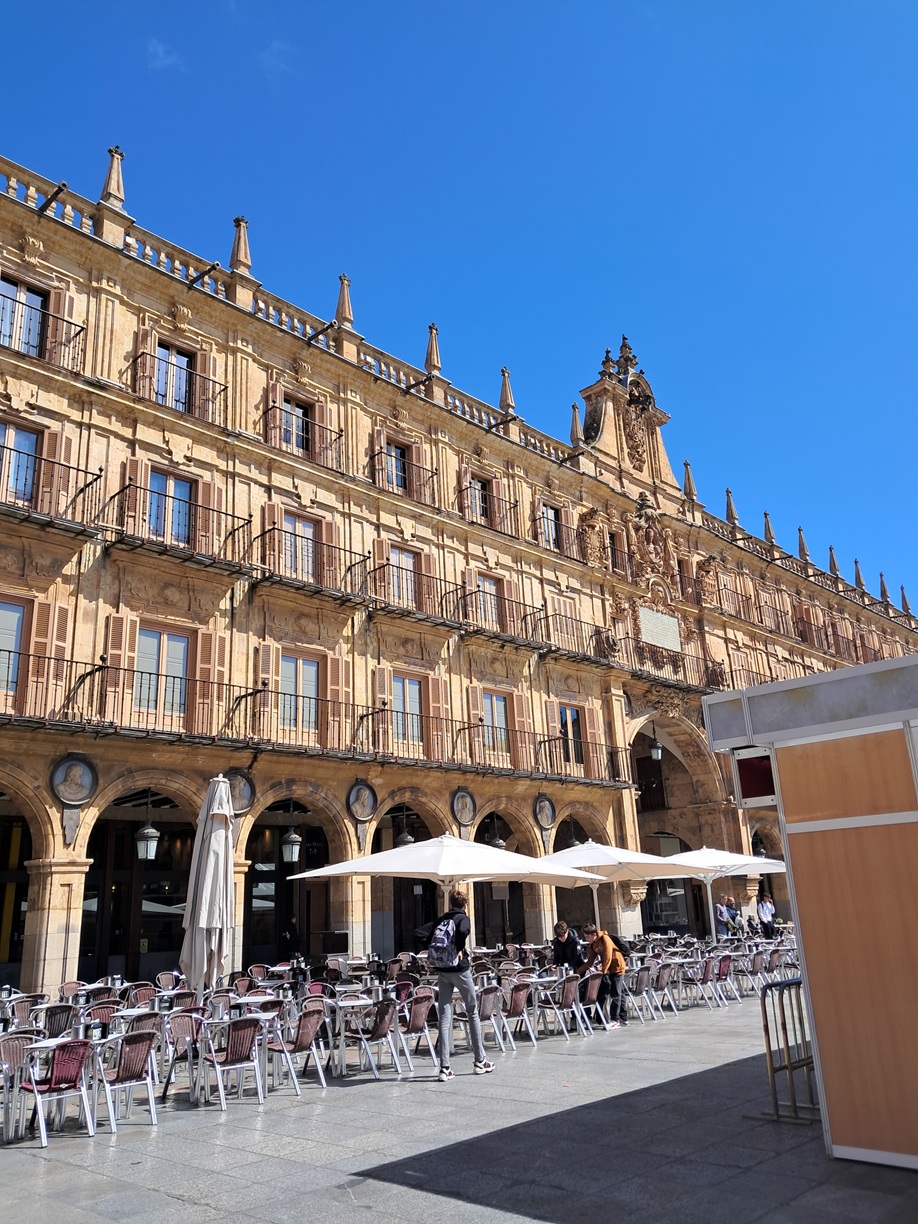
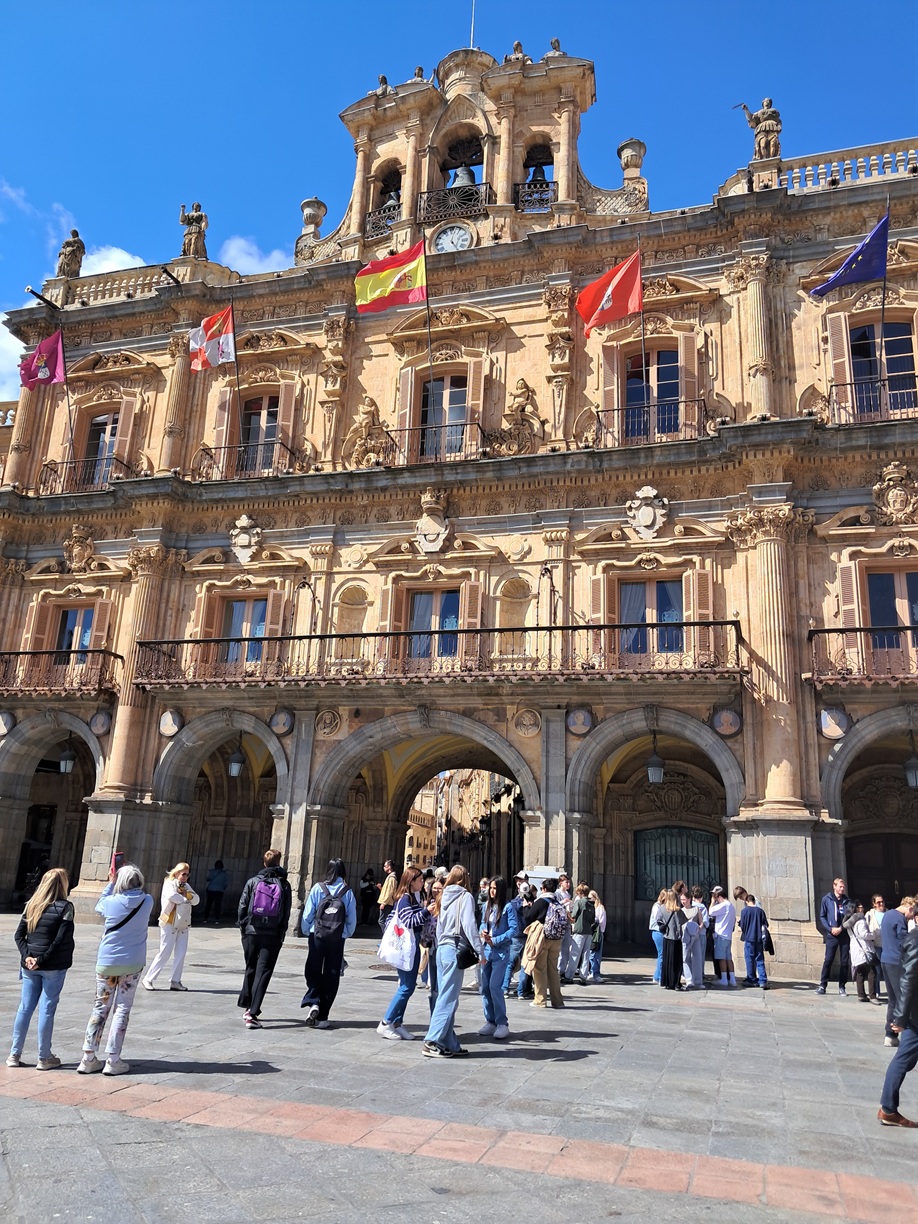
Once I had checked in, I went exploring. I found the Plaza Mayor. The streets around were crowded, maybe with students as well as tourists. I was disappointed by the square itself as it was jam packed with marquees and temporary structures which partially obscured the fine buildings. Any sense of space and dignity was lost.
Nearby I found the Casa de las Conchas, a grand house made famous by the many scallop shells carved on its walls. It now houses a public library. Opposite was a large building, possibly part of the university, with a tower one could climb. If my hip had not been so sore, I might have given it a go as the view from the top must have been splendid.
Cathedral
Instead I went searching for the Cathedral which was close by. It was set apart, allowing one to admire the very fine portals. In effect there are two cathedrals, a new one built in the 16-18th century and an older Romanesque one adjacent. One enters through new cathedral, which has the very fine stonework around the doors. The old cathedral has a splendid altarpiece made up of 53 panels depicting the life of Christ.
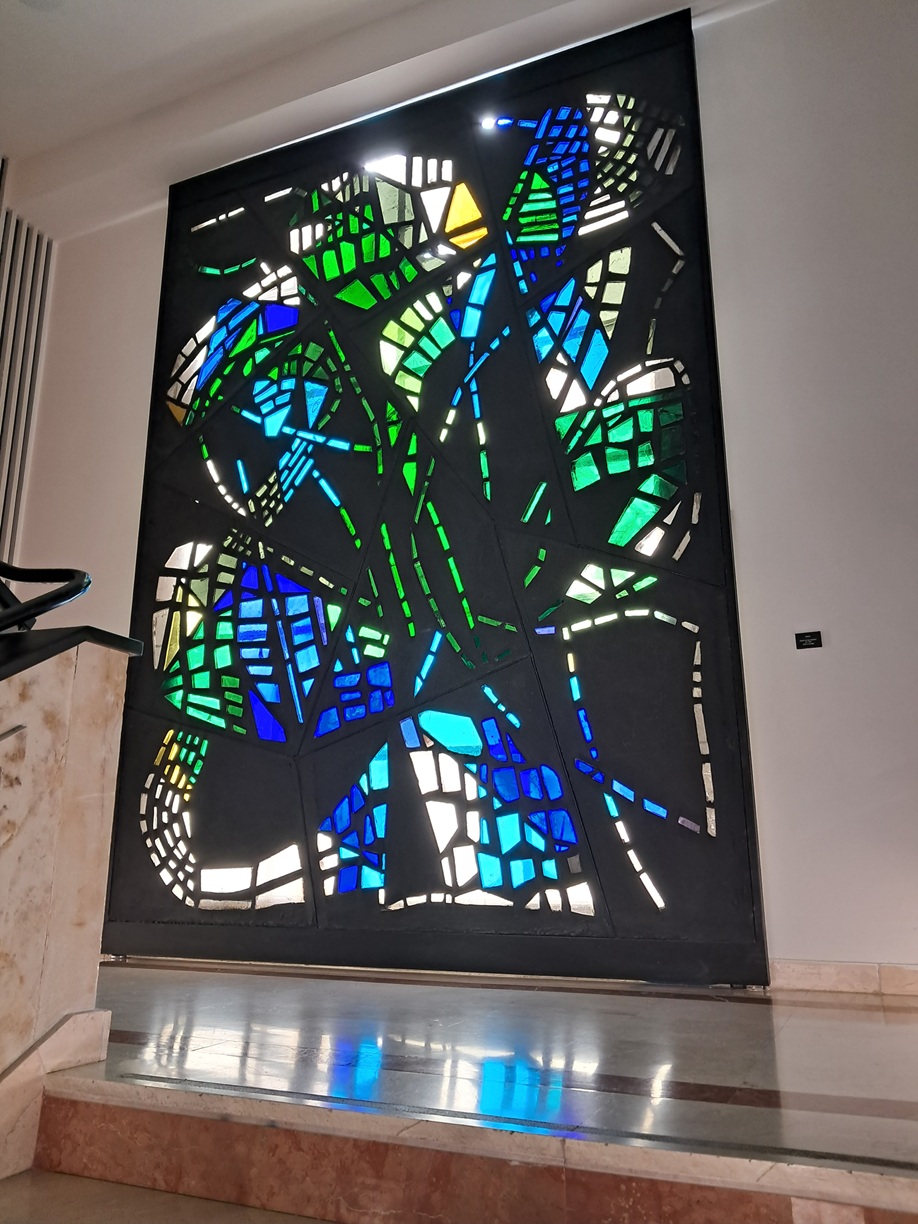
Across the road is the cathedral museum which can be accessed with the ticket for the cathedral. It contained some fine paintings as well as a piece of modern stained glass I liked.
Stick to tapas
I started making my way back to the hotel looking for somewhere for supper. I made a bad choice and had the worst meal of the trip. I was wanting some salad or veg, so ordered crumbed chicken breast with chips and salad. The chicken breast was as thin as a piece of blotting paper, barely present inside the crumb; the chips had no salt. The salad of lettuce and tomato with no dressing was edible, but hardly enjoyable. Stick to tapas, I decided.
Convents
The next morning I wasted an hour looking for somewhere to leave my backpack for the day as my train for Madrid was only leaving at 6pm. I gave up and carried it for the day. Fortunately it was small and light.
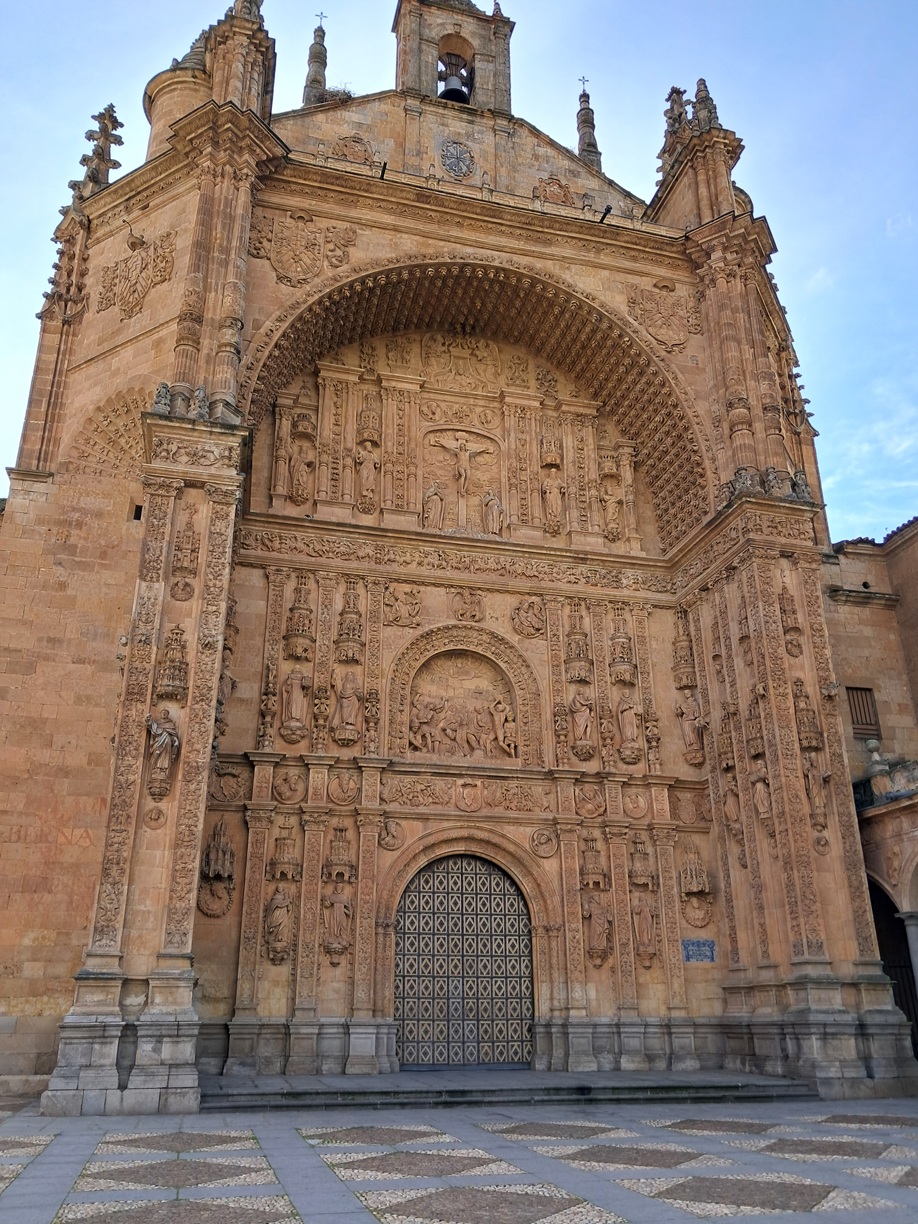
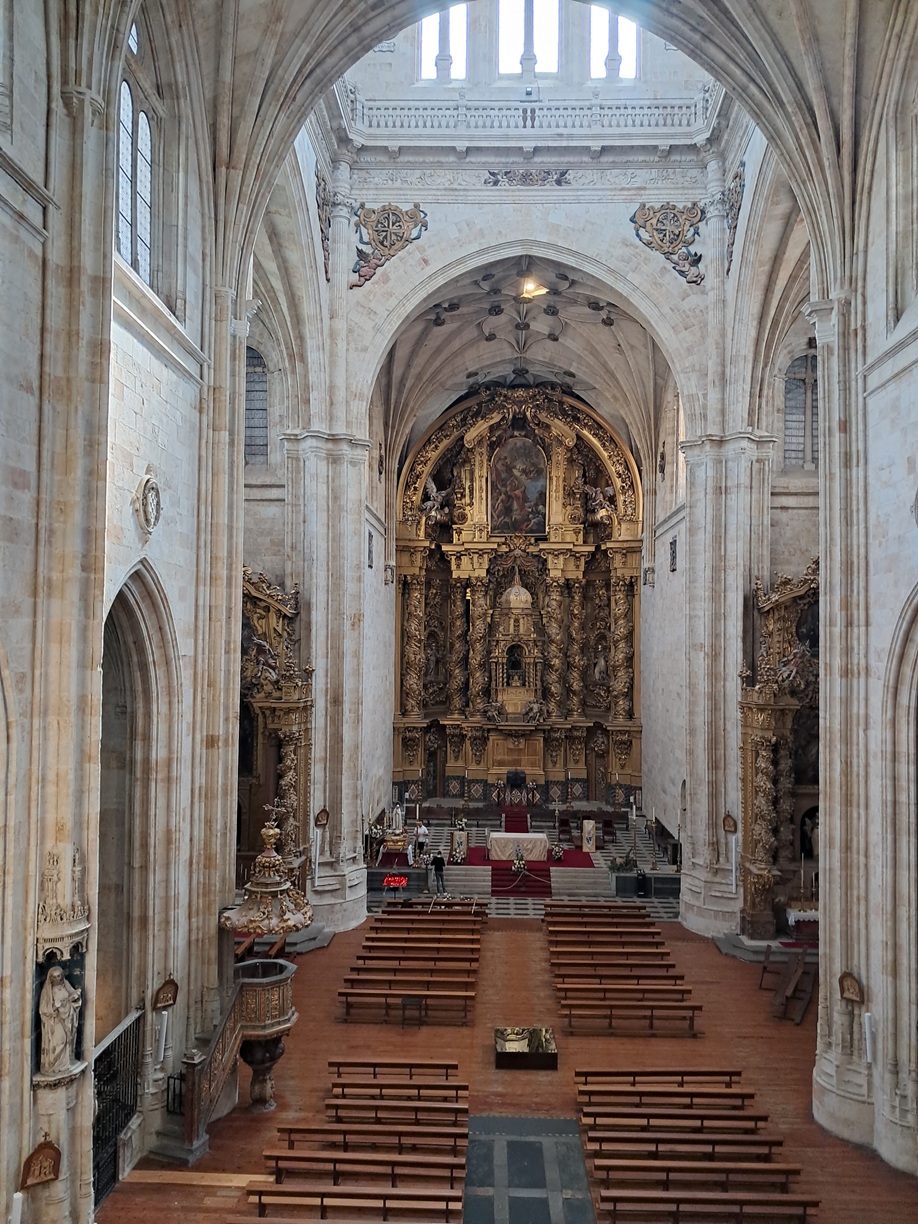
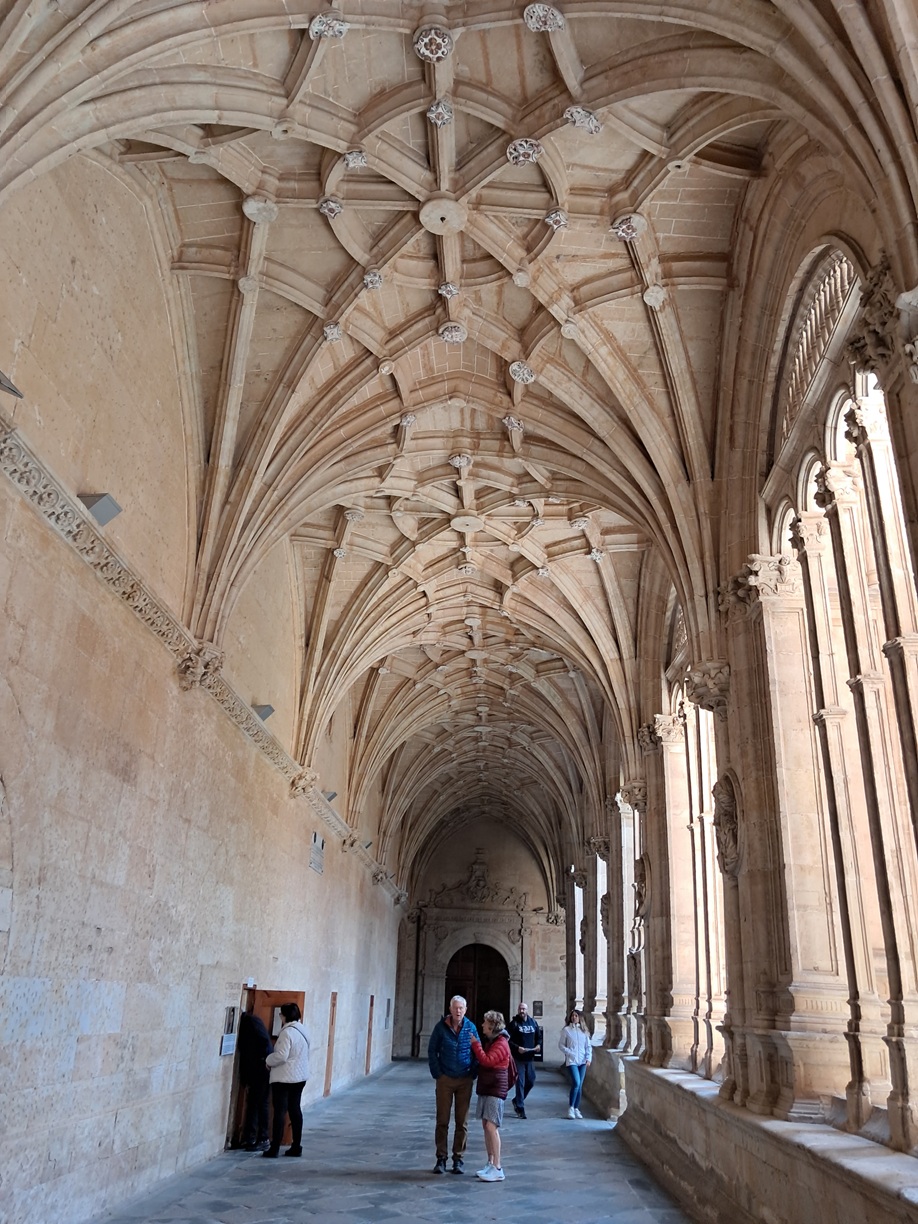
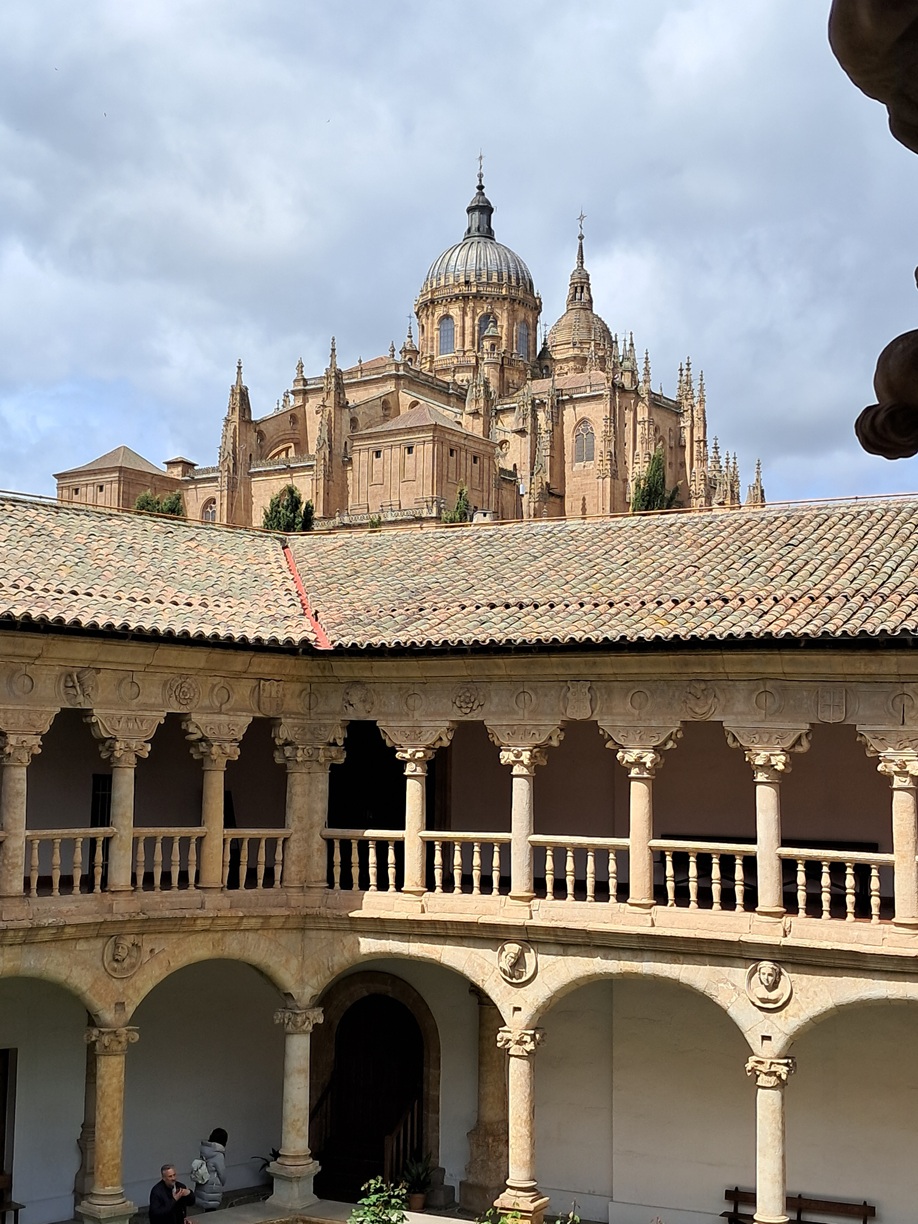
Most of the sights to see in Salamanca are linked to the church. I visited the Convent of San Estaban which has a fabulous ornamented Platesresque façade. The inside of the church is also splendid as is the cloister. Close by is the Convento de las Dueñas which also has a two storied cloister with grotesque carvings at the top of the pillars and an attractive garden
Art Nouveau and Art Deco Museum
What I enjoyed most was the Casa Lis Museum of Art Nouveau and Art Deco. It is a fabulous collection and based in a house of the period. Unfortunately no photographs were allowed, but I would highly recommend a visit if you find yourself in Salamanca.
I rather ran out of things to see in Salamanca and just wander about the streets admiring the cluster of buildings around the cathedral and convents. I also spotted a butcher shop proudly advertising their Iberico ham. The west of Spain is famous for this. It was quite a long walk to the station but I got there well in time for my train to Madrid.
Avila
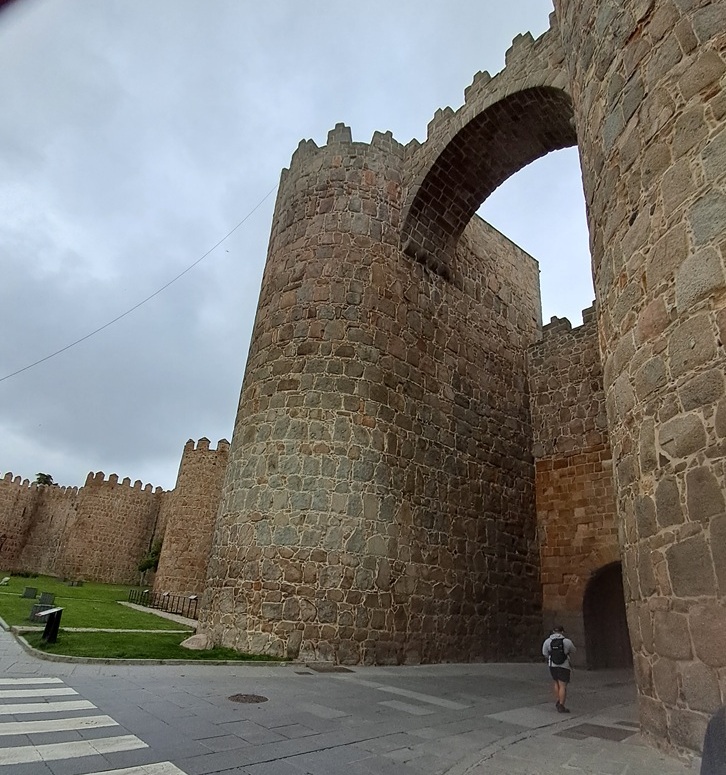
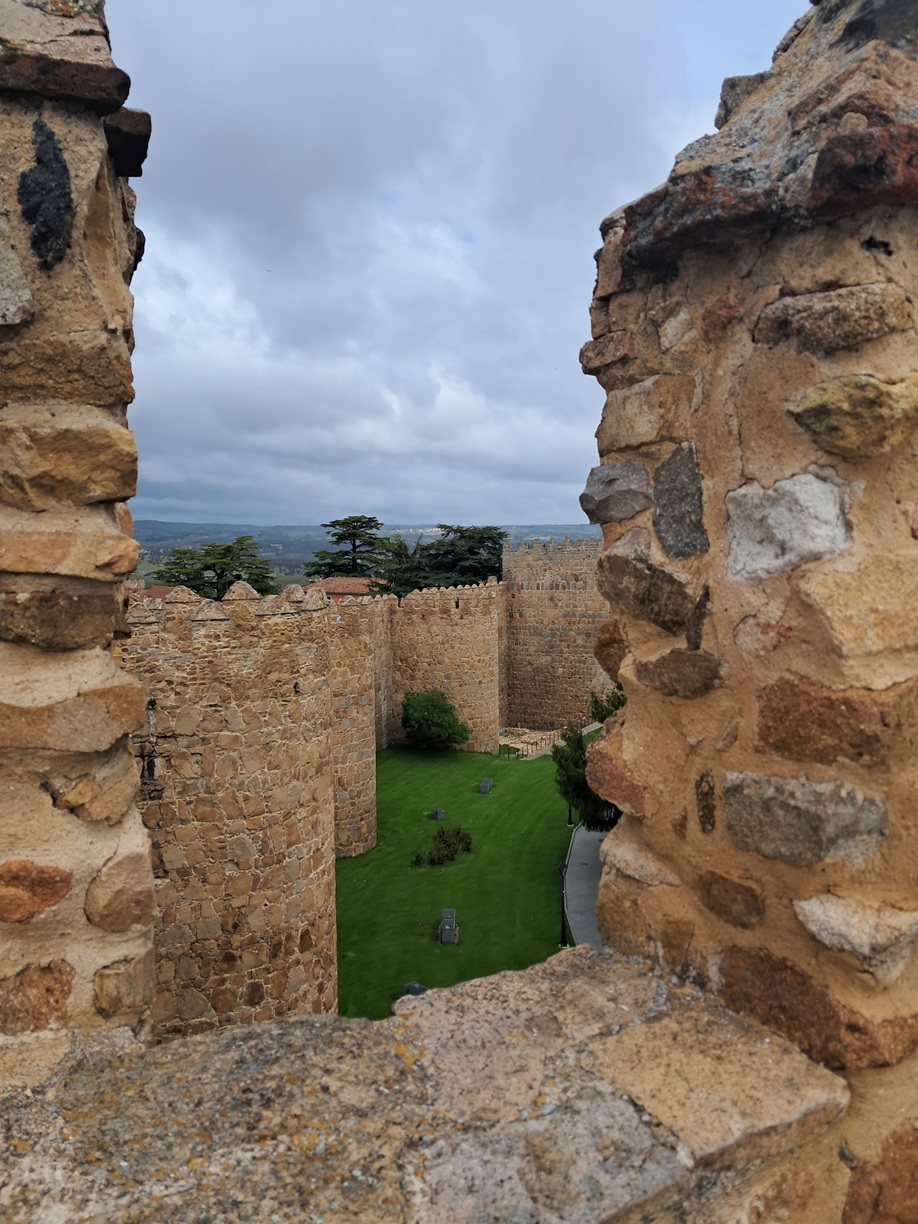
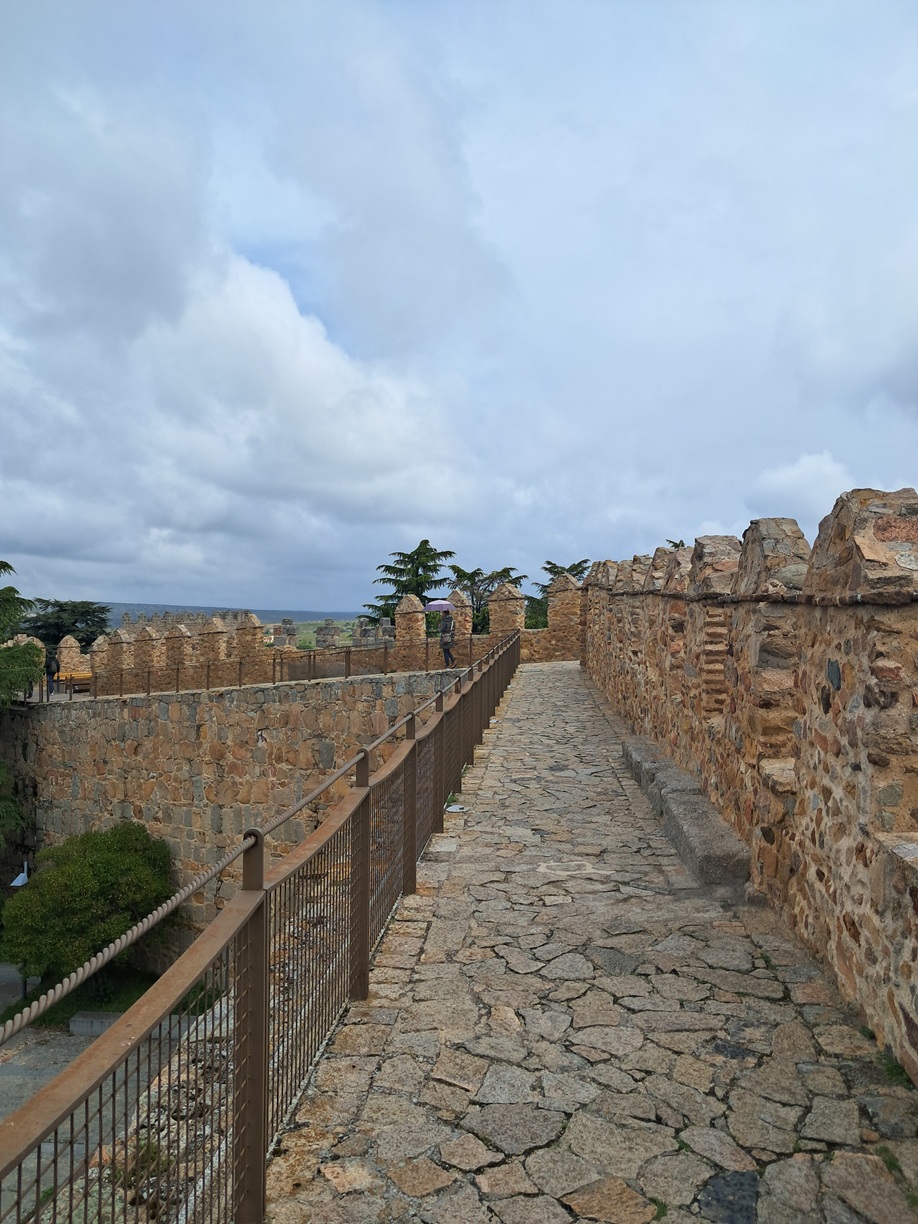
Avila and Segovia are fairly close to Madrid and I took an organized bus day trip to visit the two cities. We started with Avila which is situated high up and was freezing cold. It is famous for the centre being surrounded by the most complete medieval walls in Europe. They are over 2 kms long and were built in the 11th century. One can climb up and walk along them and I regret I did not have the time to walk more than about 100m. It would be fun to do the entire circuit.
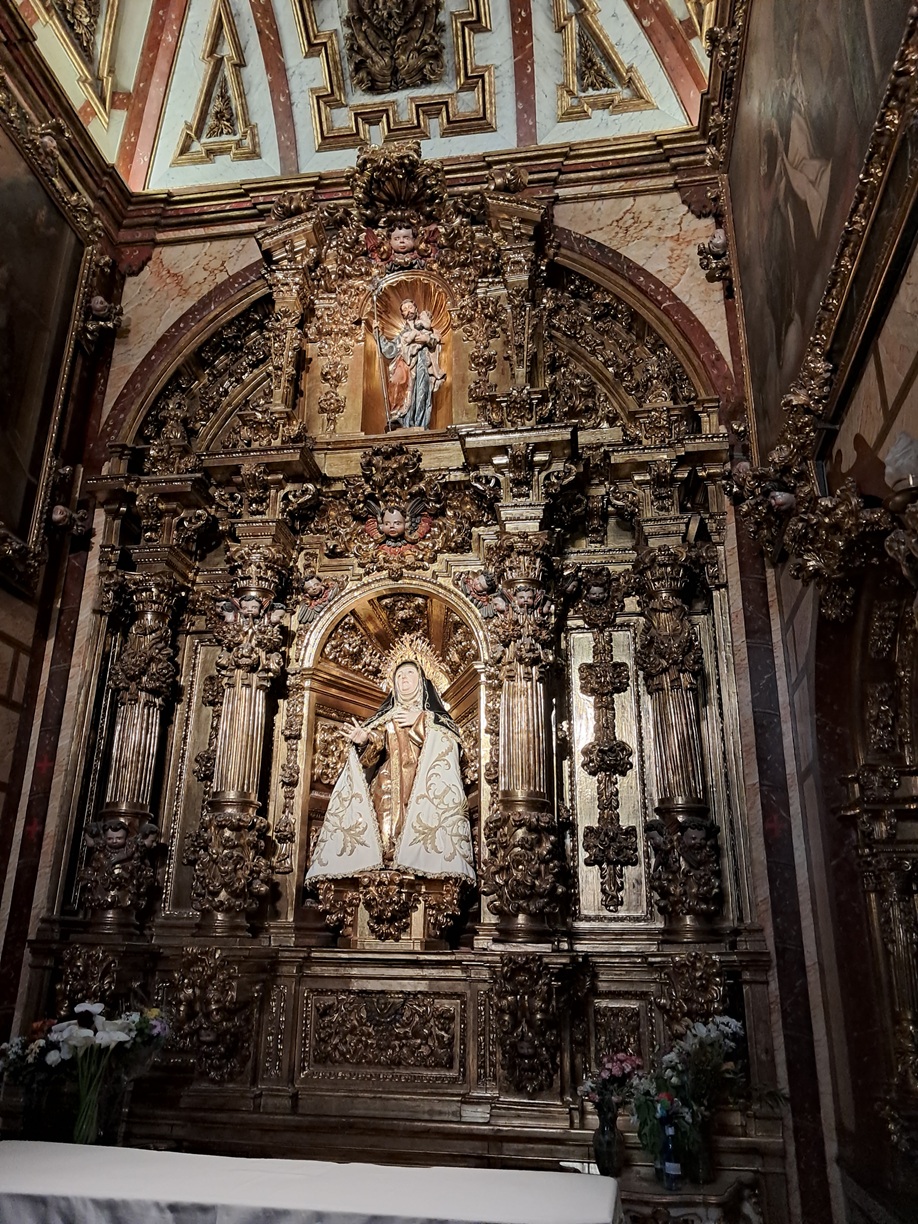
It also has a cathedral, but it better known for being the home of St Teresa de Avila who founded the order of the Barefoot Carmelites. The church dedicated to her is within the walls.
One gets the feeling that this city is very dependent on tourism and, being a cold and rainy day, it had a bit of a deserted, sad feel to it.
Segovia
Our bus parked near the Roman aqueduct, the most famous feature of Segovia. It was built in the 1st century and is 728 m long and has a maximum height of 29m. It is impressive and our guide said it was used up until the 1950’s or thereabouts. The water was taken to the Alcázar at the other end of town and tiny brass plaques are inset into the streets that the water ran under. At the base of the aqueduct was a public square where people were thronged about a merry-go-round with weird rides which I felt might give the imaginative child nightmares.
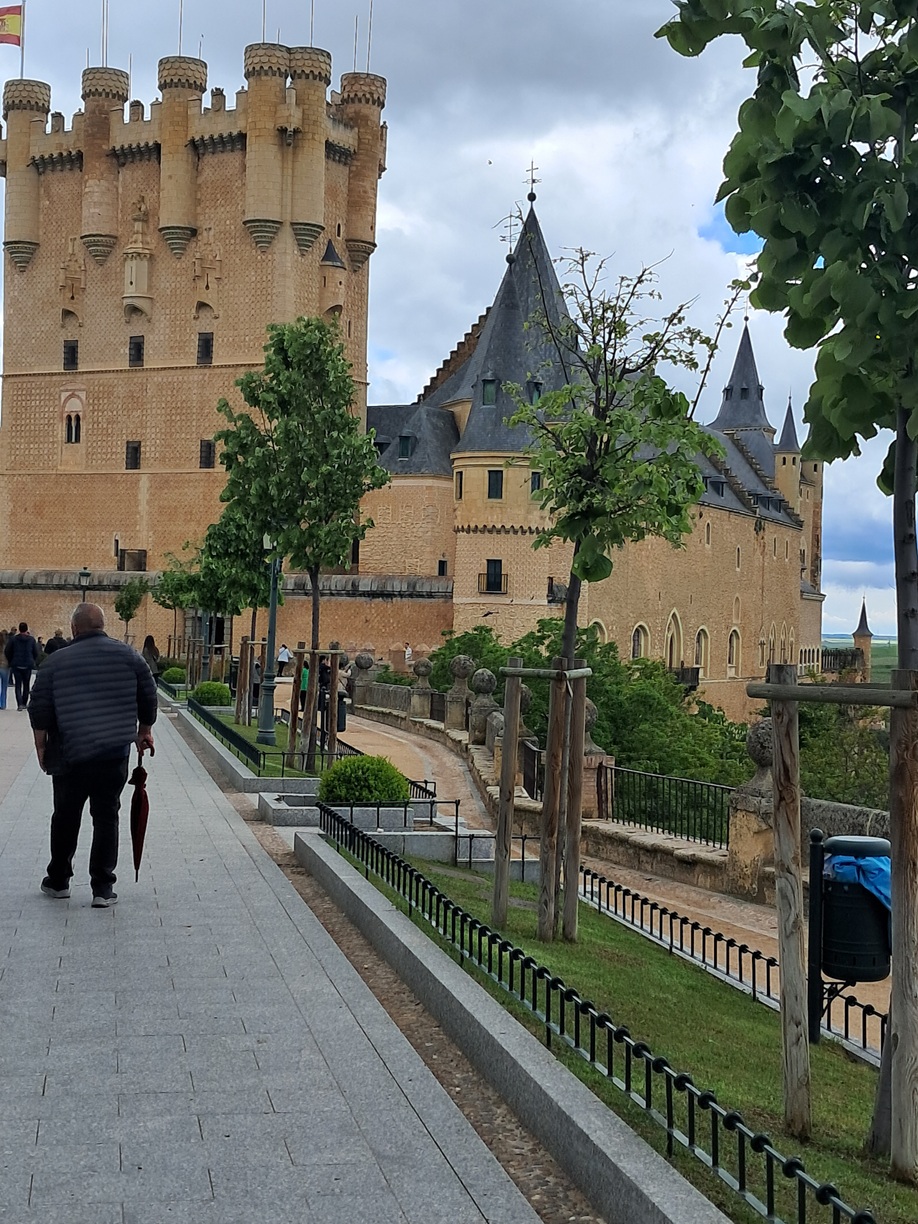
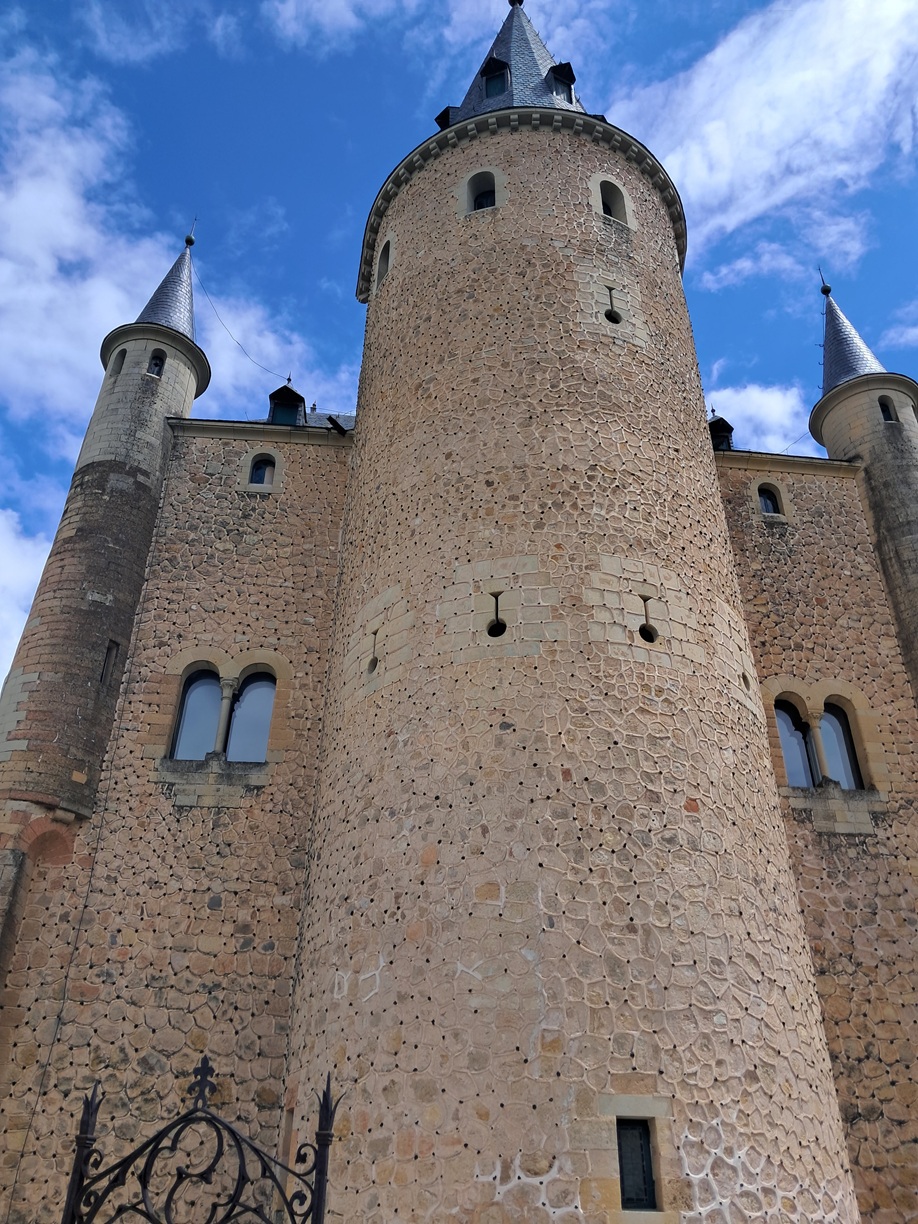
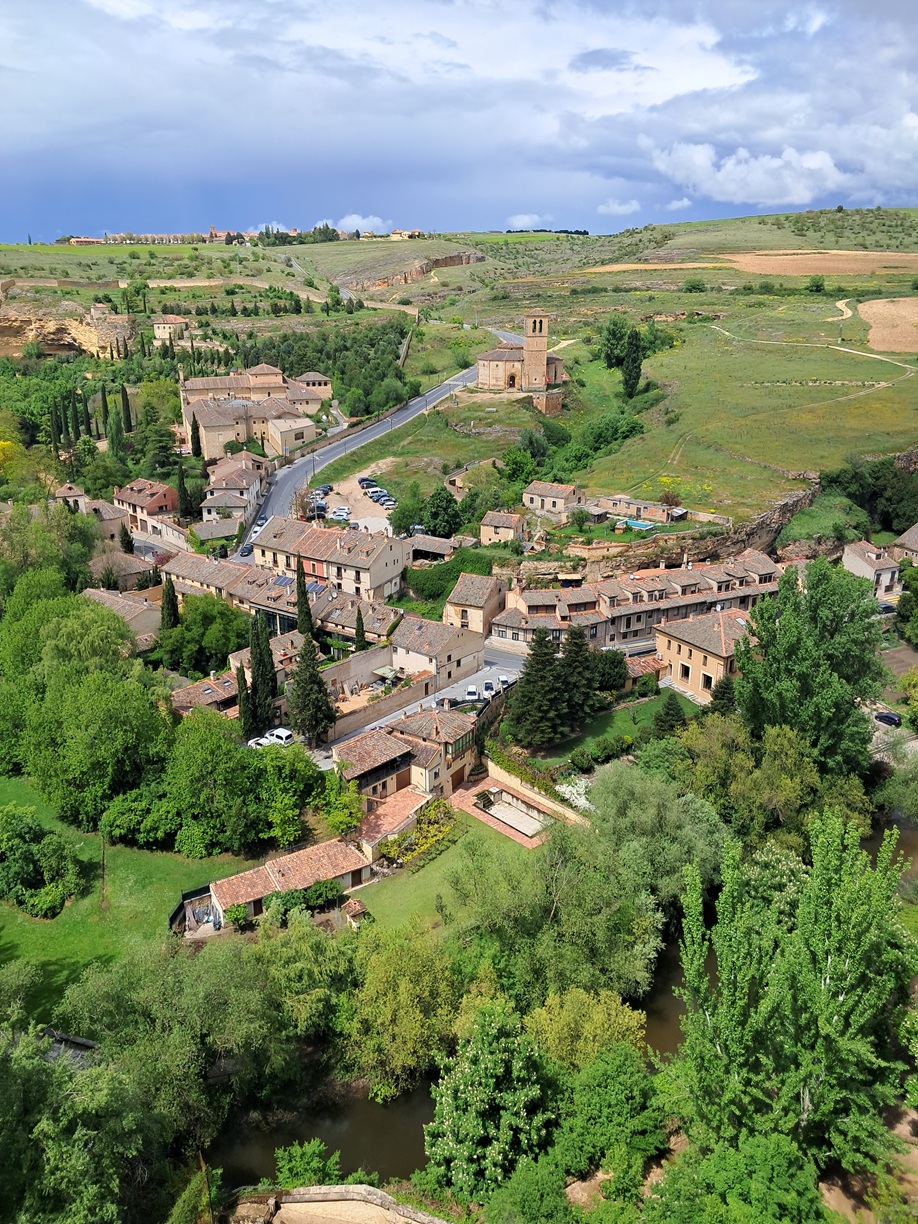
The Alcázar, which was largely rebuilt after a fire, stands on a spur of ground and looks like Sleeping Beauty’s castle with its turrets. One can visit the richly decorated rooms on the ground floor. The views down to the river are magical.
I also visited the cathedral and admired the decorative finishes on many of the buildings in the main streets. The guide mentioned that this was a feature of Segovia and craftsmen in more recent times had set out to copy what Moorish builders might have done.
Segovia seemed larger and much busier than Avila and I am sorry I didn’t have more time there, but I am very pleased to have seen the highlights of the two cities.
Read about Madrid and Valencia or click on an image below to enlarge.
2025 Trip: Salamanca, Avila & Segovia Gallery