Istanbul : Weekend around Geneva : Paris and Nîmes : Barcelona and Cádiz : Seville : Granada : Córdoba : Salamanca, Avila & Segovia : Madrid & Valencia : Art in Paris : Art in Spain
I caught an early train from Córdoba to Puertollano, a town which does not feature much in travel guides, and then a midday train to Mérida which lies to the west in Extremadura. After Mérida, I was planning a brief visit to Cáceres, famous for its walled old town on the hill.
I expected the countryside on the trip west to be dry and barren, cactus country, but it was not. There were extensive oak forests for first part of the trip. I think they were the ballota oak that fatten the famous black pigs. Nearer Mérida oaks gave way to farmlands. It might all look more barren in the heat of summer.
Mérida
Mérida, the capital of Extremadura, is a town famous for its Roman ruins. The entire town is built on the site of the Roman city of Augusta Emerita, one of the largest Roman settlements in Iberia. After the Romans came the Visigoths and then the Moors, followed by the Christians. Some sites, especially the Alcazaba, show this layering.
I was very lucky that my hotel was about 5 mins from the station. After checking in, I went in search of some lunch. Here I discovered the weird Spanish food regimen. Everyone had closed their kitchens. I could only get drinks and sweet pastries at 3-4 pm. Most shops were closed, but I found a grocer and bought an apple. I then set off to explore.
Museum
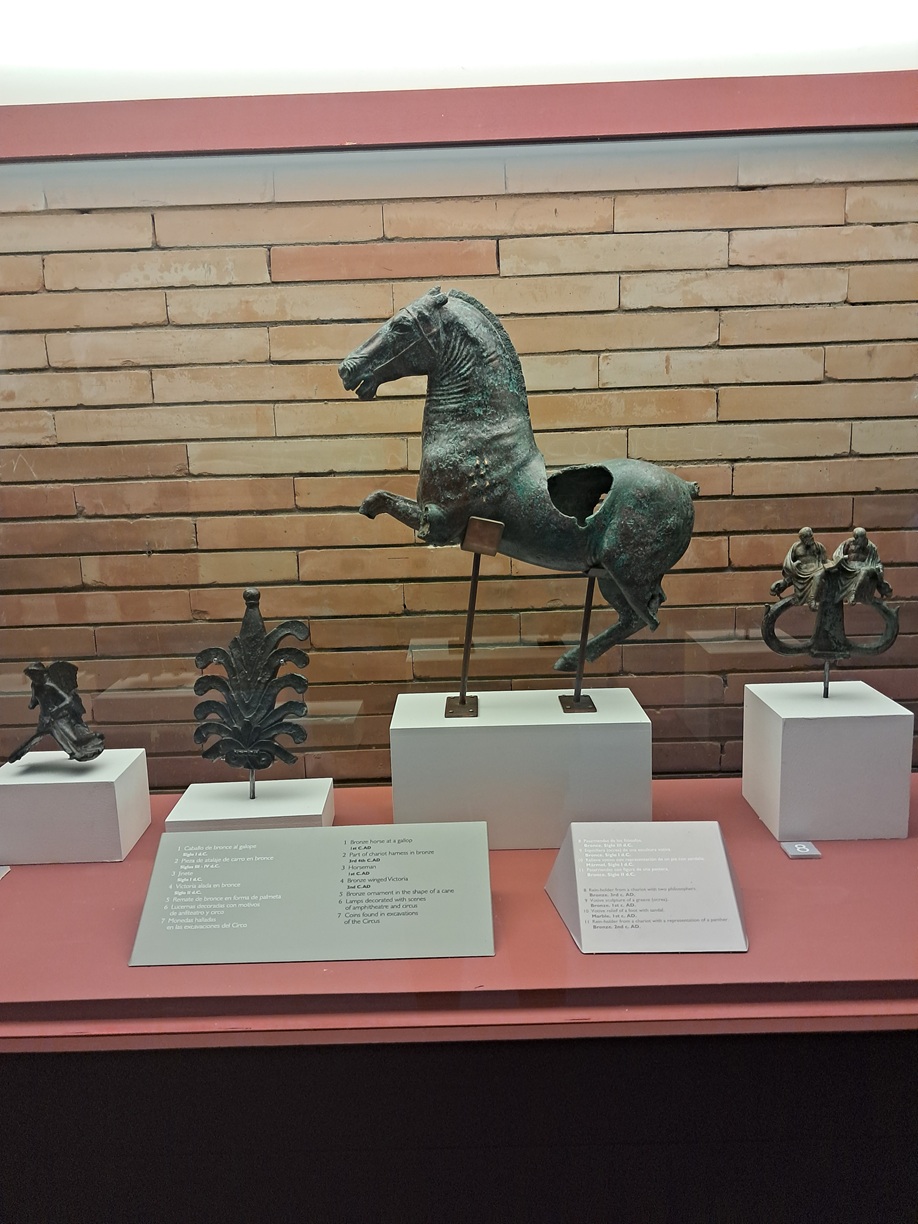
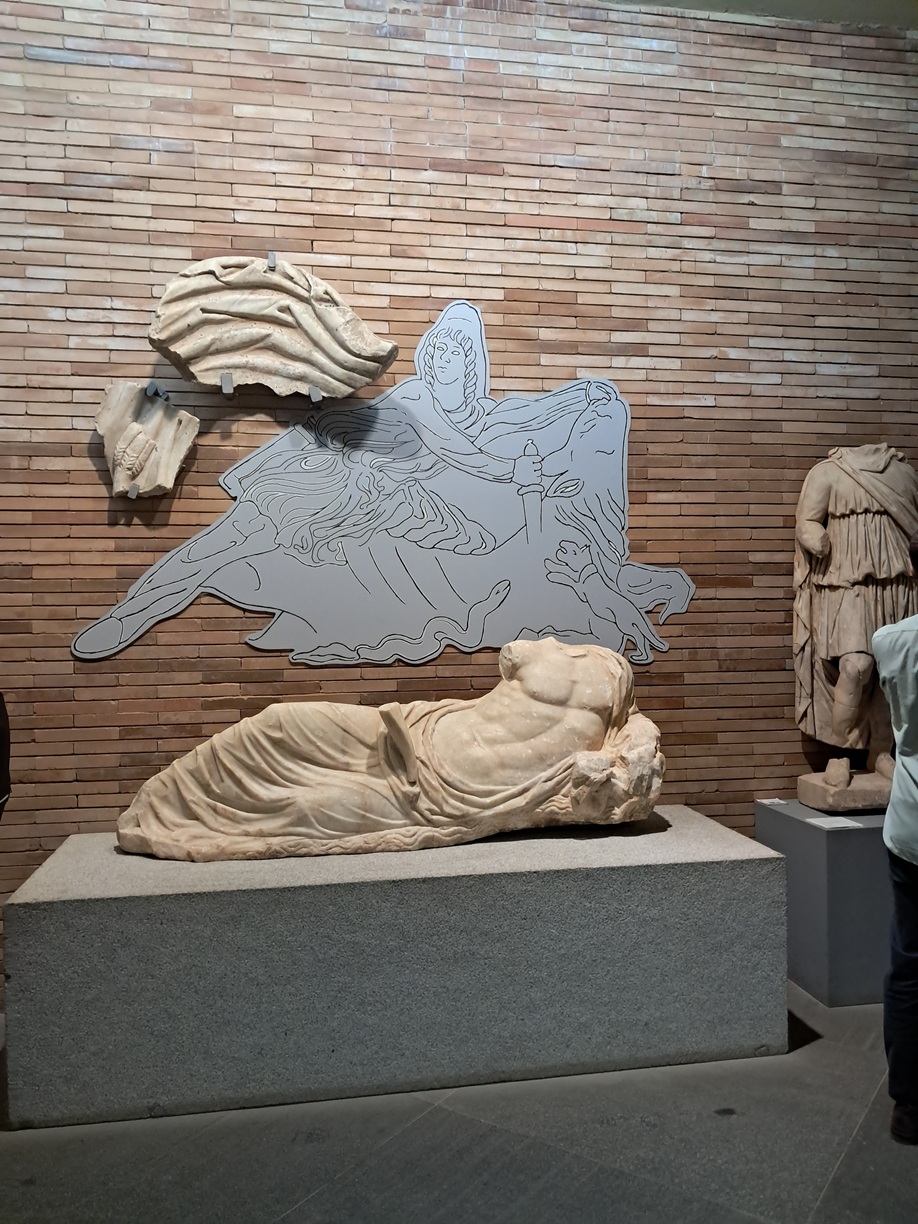
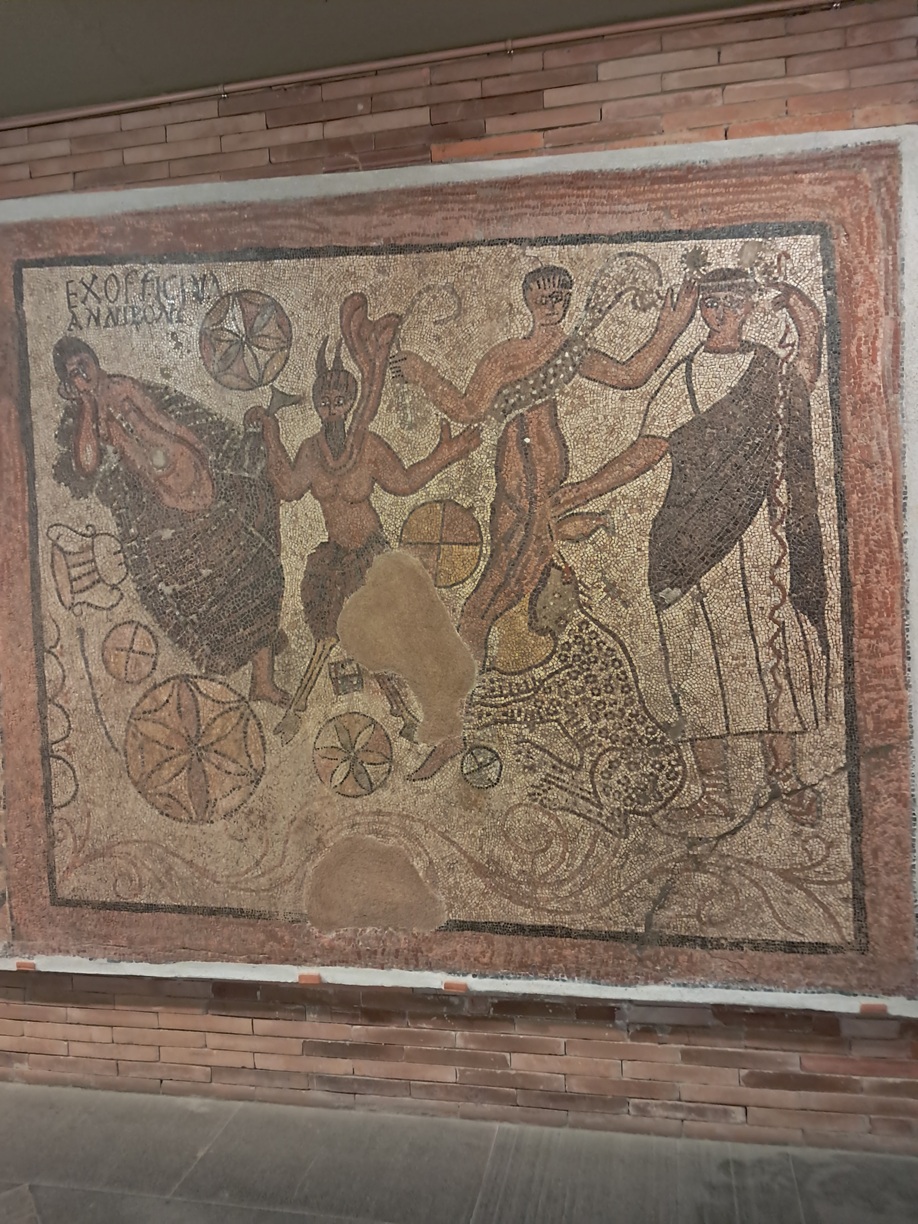
I was very lucky to find the excellent Museo Nacional de arte Romano had free entry on Saturday afternoons and spent quite some time there looking at the artefacts. Hunger drove me back to the centre of town. It start raining and I had one of the low points of the trip, tramping about in the downpour trying to find some food. Eventually I found a restaurant serving tapas, including a delicious red pheasant terrine.
Roman theatre and surrounds
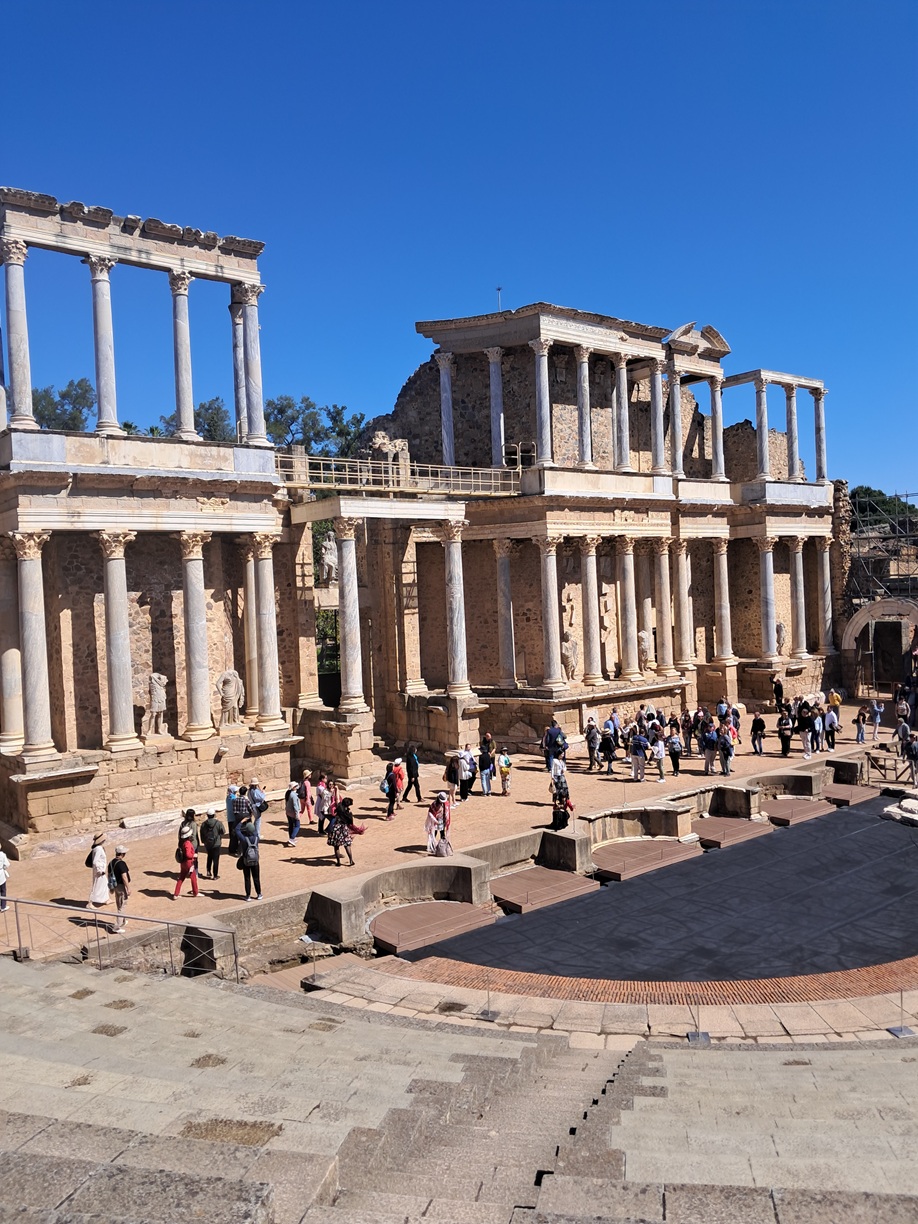
The following morning, having enjoyed a hotel breakfast which included the Spanish special of chopped tomato on toast and paid my weekly visit to the laundromat, I set out to see as many of the Roman ruins as possible. One can buy a ticket which gives one access to many of them. I criss-crossed the town several times. Most impressive is the Roman theatre, which still hosts a festival every summer. Nearby is an amphitheatre and the ruins of some houses and burial sites.
Temple of Diana, Bridge and Alcazaba
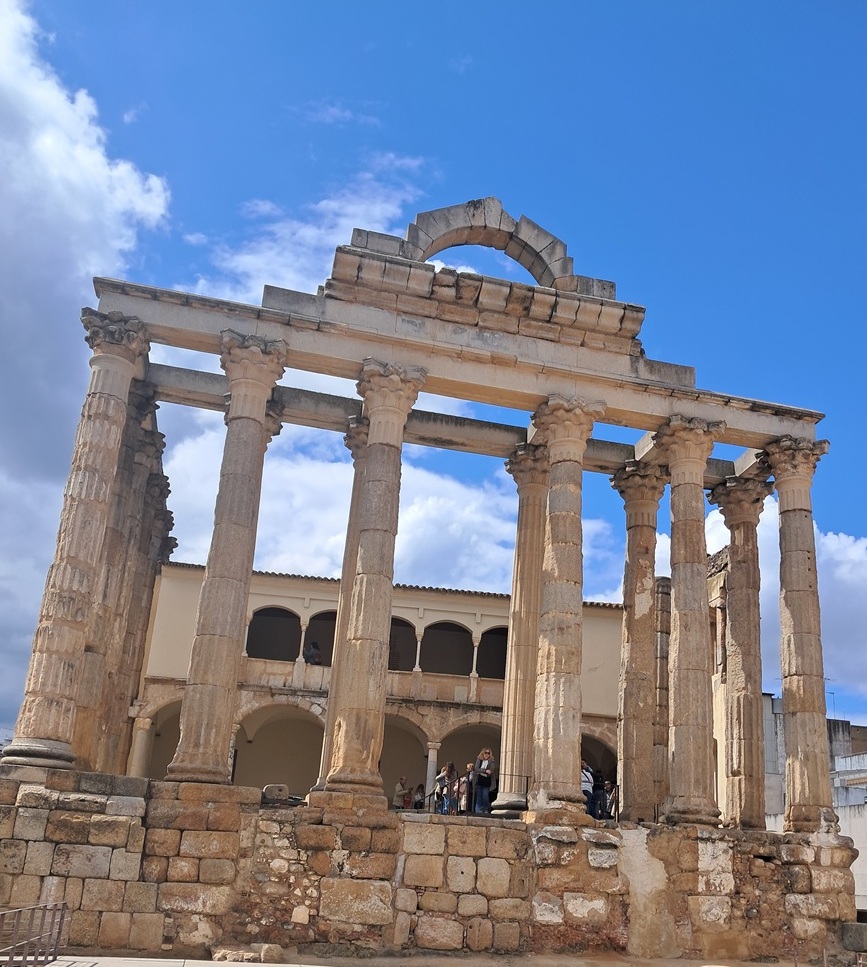
Further down in town is what is regarded as the Temple of Diana. It is also most impressive, and even more interesting is how it was restored to its present condition by demolishing the building that had incorporated it.
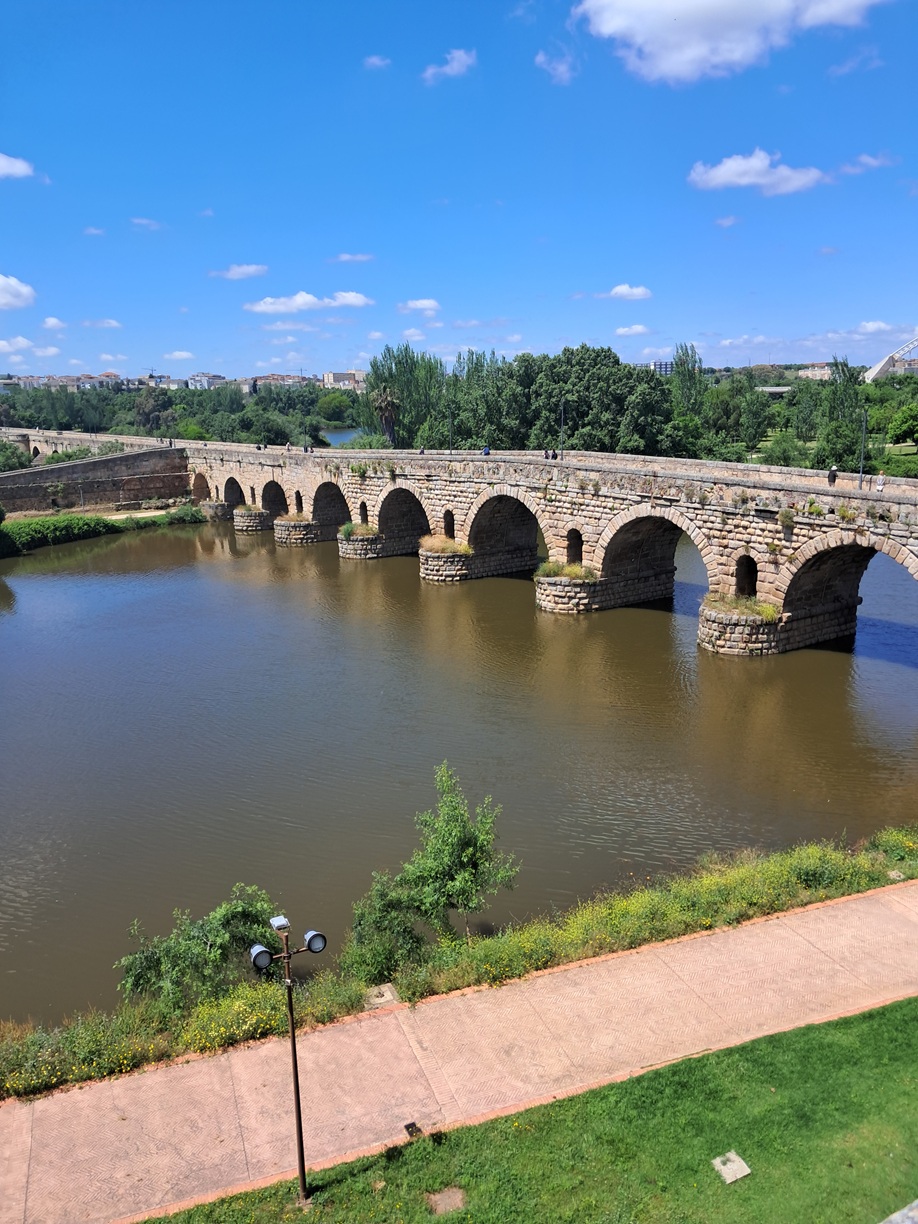
Spanning the river is a very long Roman bridge. I think it has 60 plus arches and was once even longer – much longer than the bridge at Córdoba.
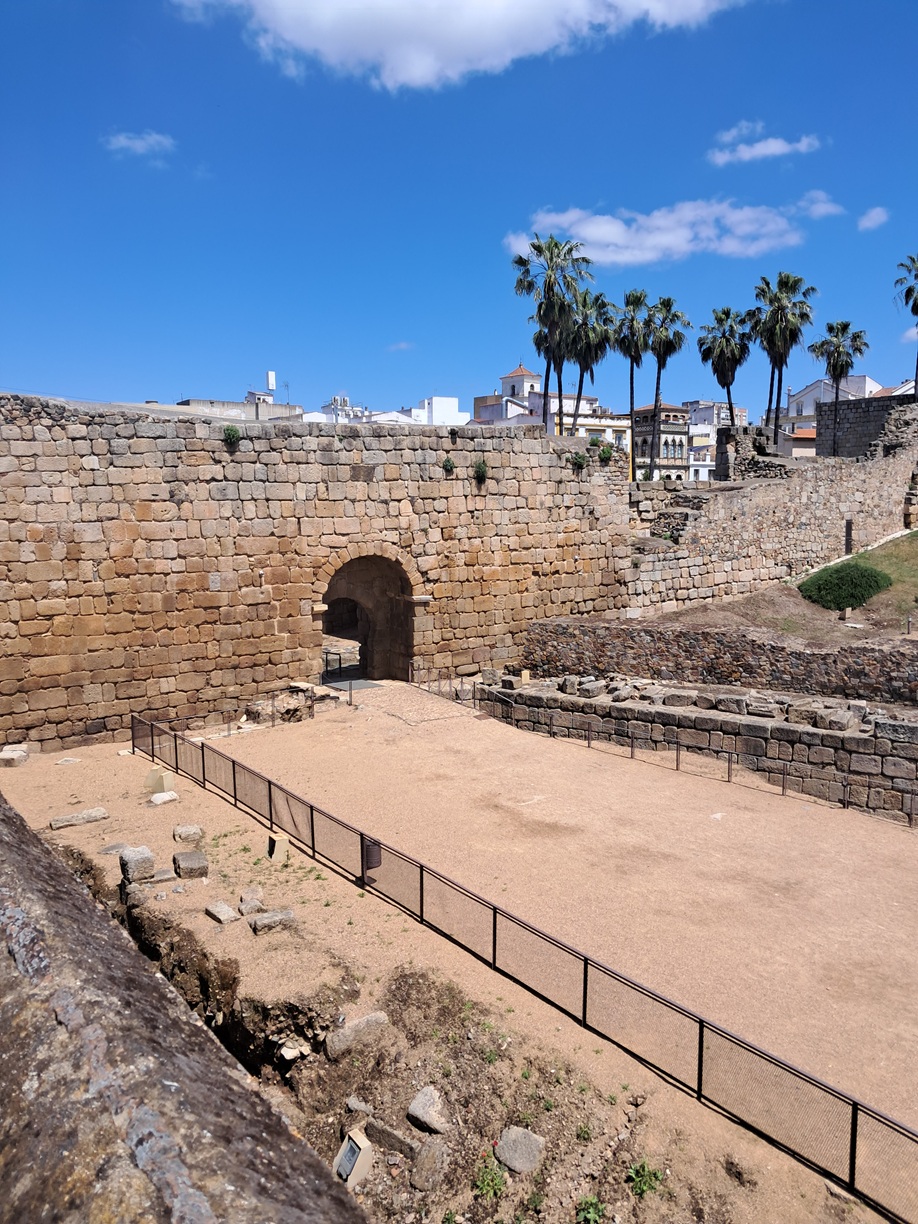
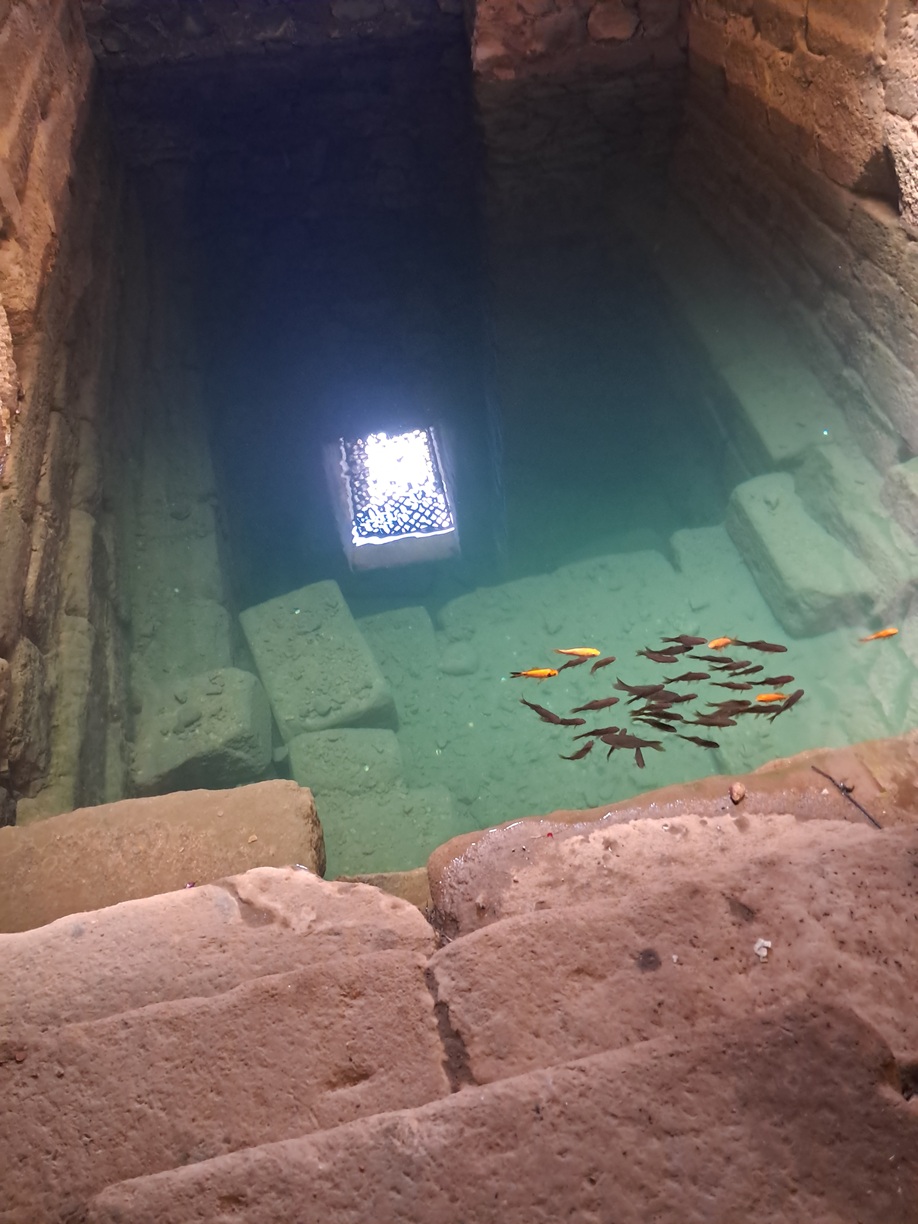
On the banks is the fortress, the Alcazaba with its walls intact. This site was first used by the Roman garrison, the Moors built the walls, probably reusing some of the Roman material. One of the most interesting things, is the well built by the Moors near the wall, so that water from the river seeps through and it was not necessary to leave the fortress for water. It is accessed by a sloping staircase. After the Reconquista, a monastery was built inside the walls.
Los Milagros
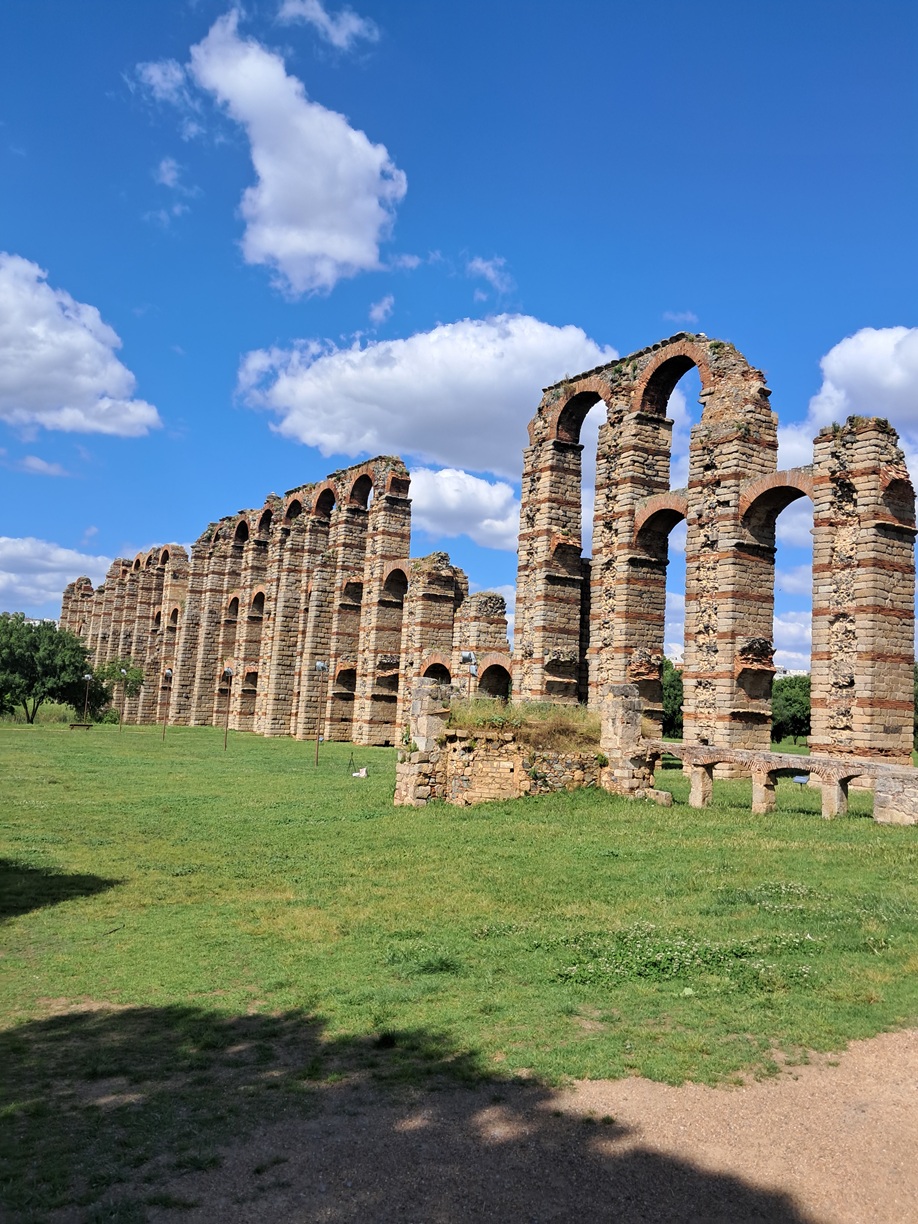
There were other excavated sites to see; one near an old bullring on the edge of town. I wish I could have seen inside the bullring. I almost missed going to see the Aqueduct Los Milagros, which is most impressive. It was interesting to note that it appeared to be built of brick and flat smaller stones, unlike the Pont du Gard, which is blocks of sandstone.
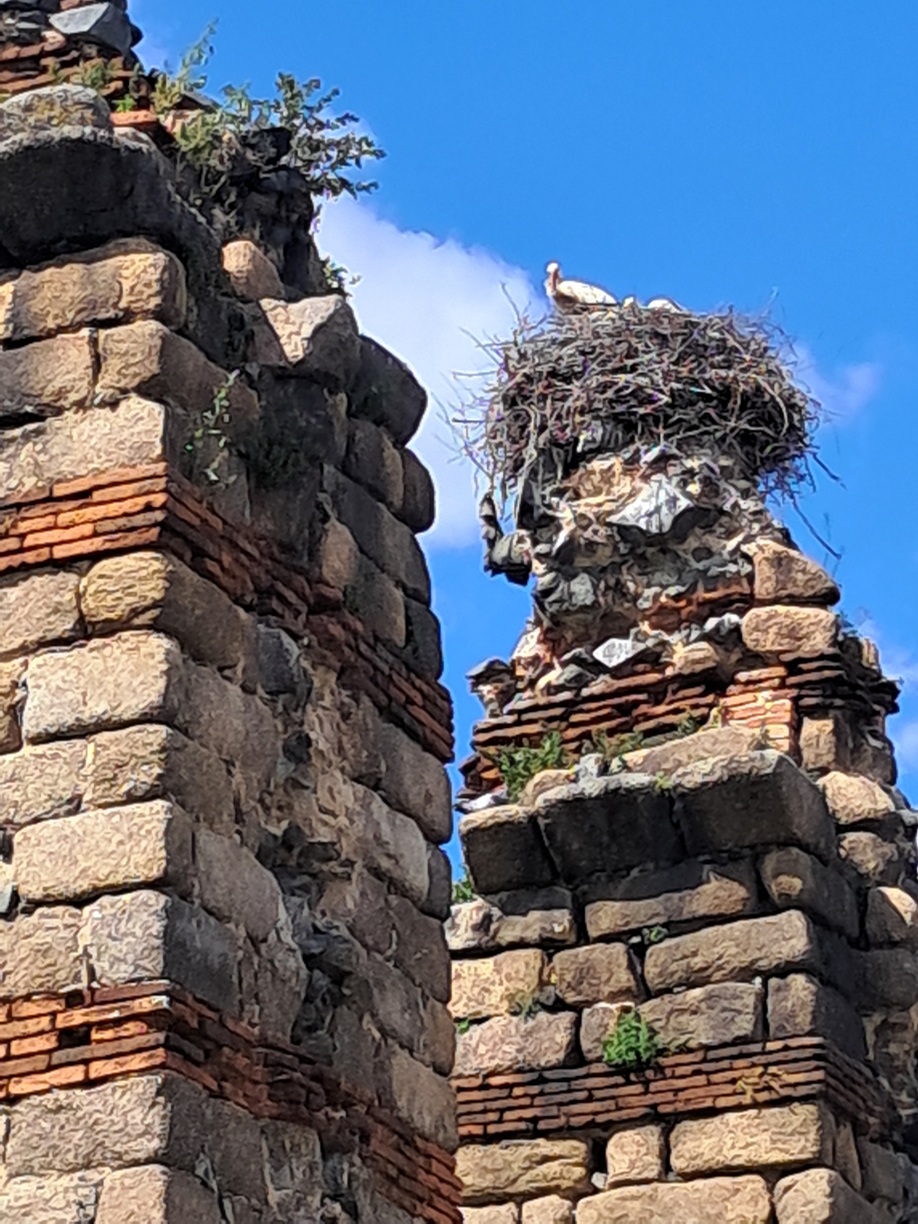
Extremadura is noted for the storks which build their nests on top of buildings. They loved the piers of the aqueduct and the tower of the Church of Santa Eulalia which was close to my hotel. The church bells rang every quarter hour during the day, so the storks must have a tolerance for noise.
Circus and Aqueduct San Lázaro
The last site I visited was the Roman circus where they had the chariot races. One needs to apply one’s imagination as there is not much to see, but the entire oval space is intact. Nearby is another aqueduct, San Lázaro, of which very little remains from Roman times. The lengthy section one sees today was built in the 16th century.
After an exhausting day tramping the streets of Mérida, I revisited the restaurant Cachicho for more of the partridge pâté and then it was off to bed. The next morning I was leaving early for Cáceres en route to Salamanca. I enjoyed my stay in Mérida. It was not as full of tourists as previous stops and there is plenty to see. Just don’t go looking for lunch at 3 pm!
Cáceres
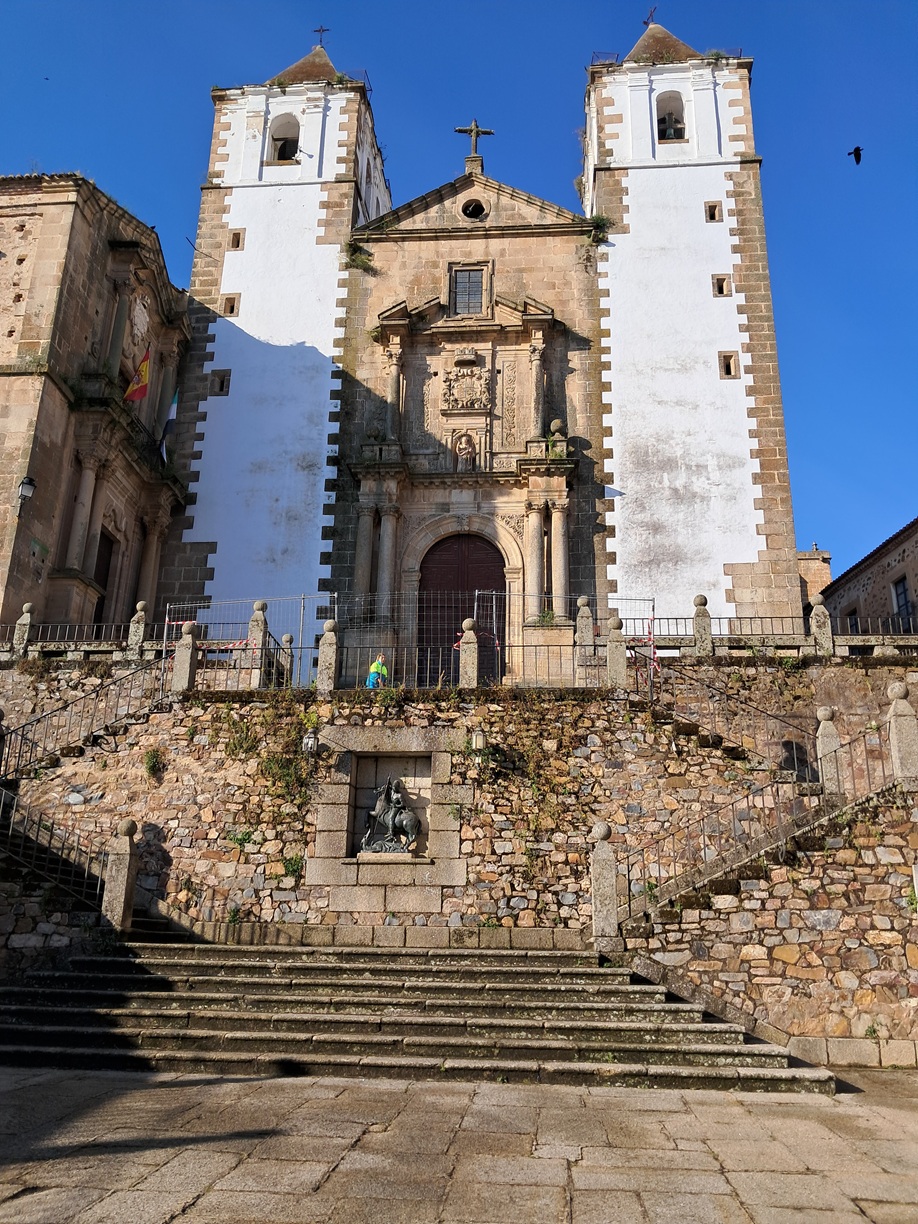
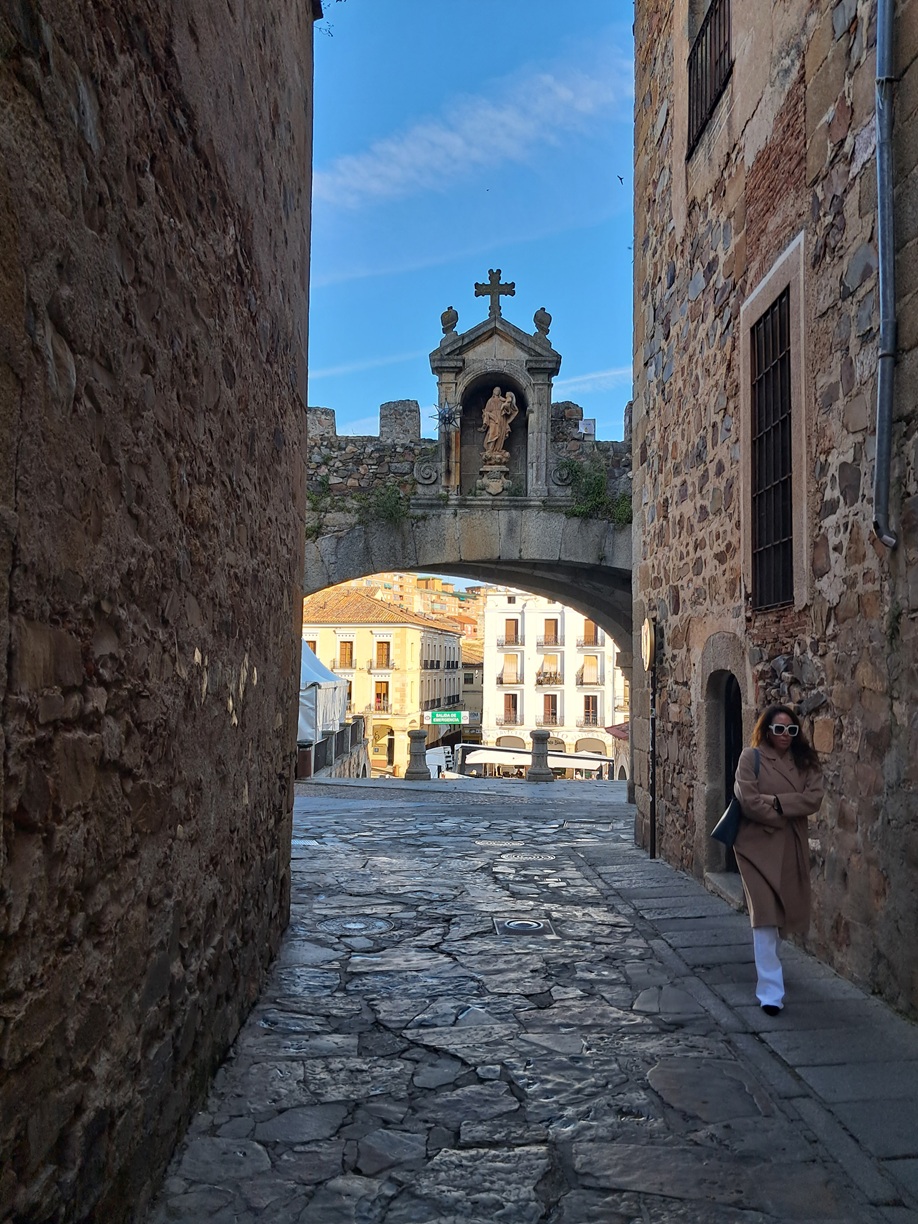
Cáceres is a place that I had long wanted to visit, intrigued by descriptions of this unspoilt Renaissance town of fine mansions built by many of the Conquistadores. It was Spain’s first listed heritage city. The walled old city lies on a hilltop about 40 mins from the station. I hurried there through the streets of the new town.
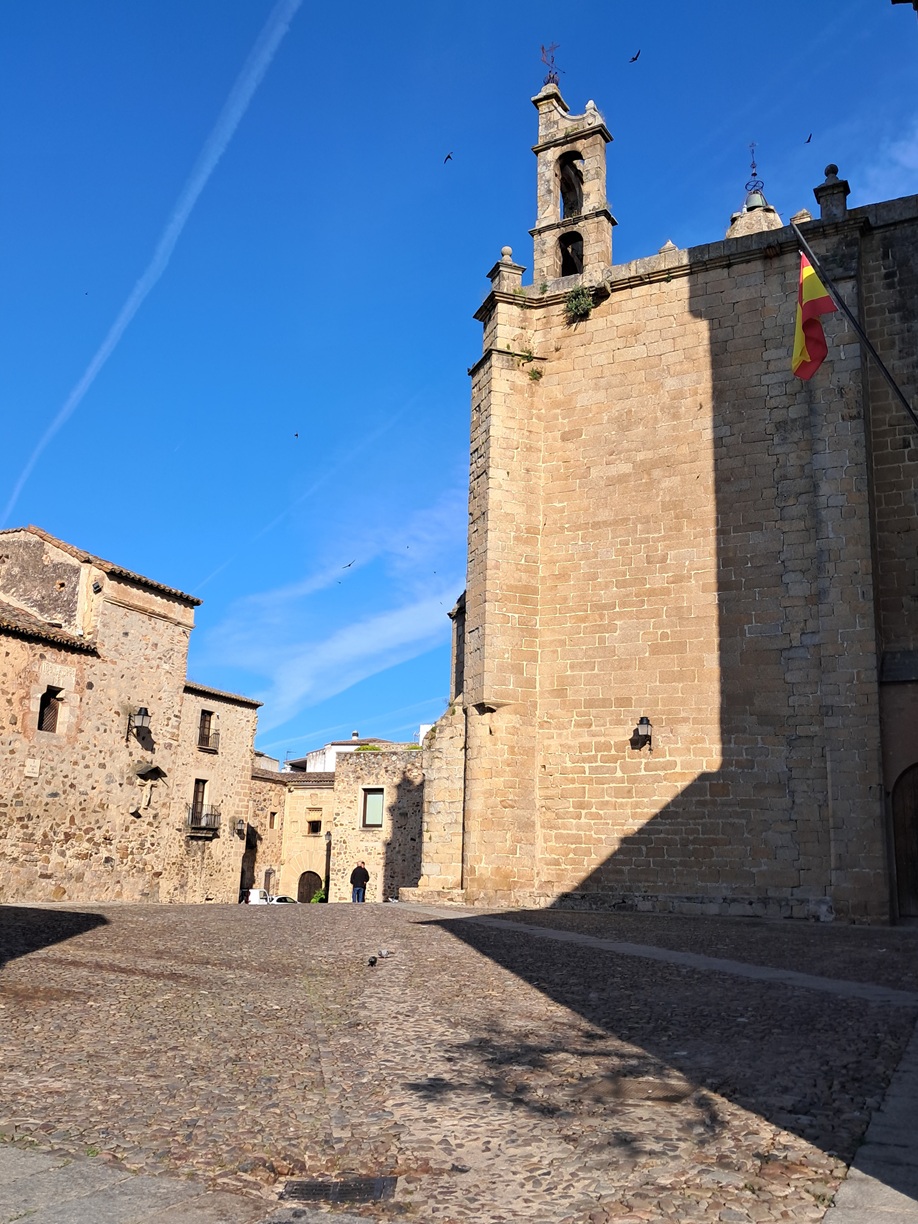
It was still early (for Spain) and no one was about except for workmen clearing away from a weekend beer festival. I found the place quite eerie. Not quite what I had expected. The streets are very narrow and the buildings often seem to loom over one with strange gargoyles and chimney pots. They are a lovely honey colour which glows in the sun, but nevertheless I did not warm to the place. I think if there had been more people about the atmosphere would have been very different.
I had a good look about, but did not see it all and then went in search of a coffee and croissant in the main town. On the way back to the stations (train and bus were close to each other), I passed a greengrocer who was selling what looked to be strange potatoes. From the conversation – I had no Spanish and she had no English – I think they were some kind of local truffle- a delicacy of the area. (Checking on the web now, they were Terfezia extremadurensis truffle, also called desert truffles or “criadillas de tierra”). I stocked up on snacks for lunch. I was taking a 3 hour bus trip to Salamanca as the direct train up the west of Spain has been discontinued.
Read about Salamanca, Avila and Segovia or click and image below to enlarge.
2025 Trip: Mérida and Cáceres gallery