Istanbul : Prague : Vienna : Trieste & Milan : Stresa : Switzerland : Art
Vienna to Trieste
The UK Guardian newspaper in its Travel section described a train trip from Vienna to Trieste that appealed, and when planning this trip, I decided to include it. Click here to read the Guardian description.
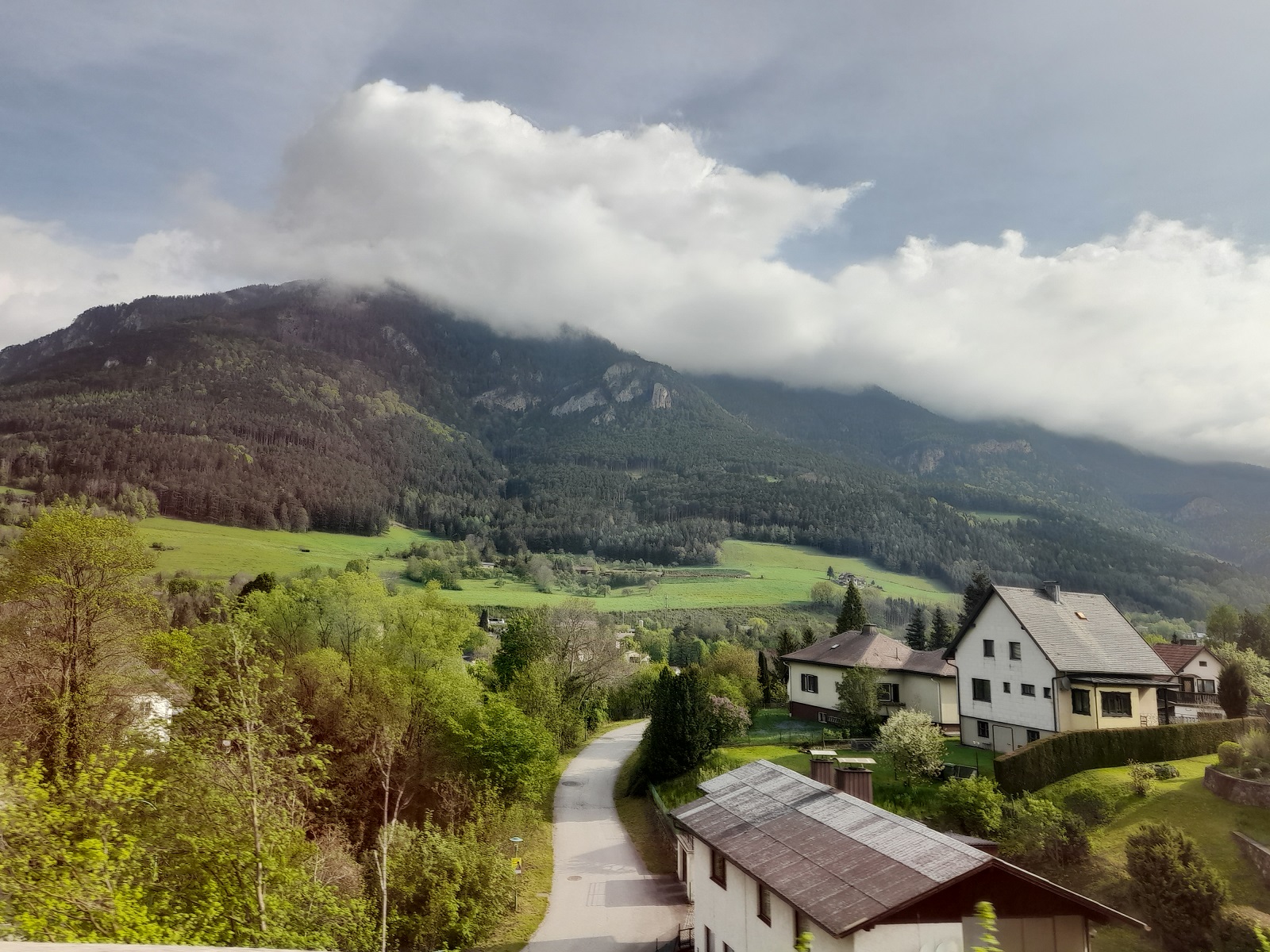
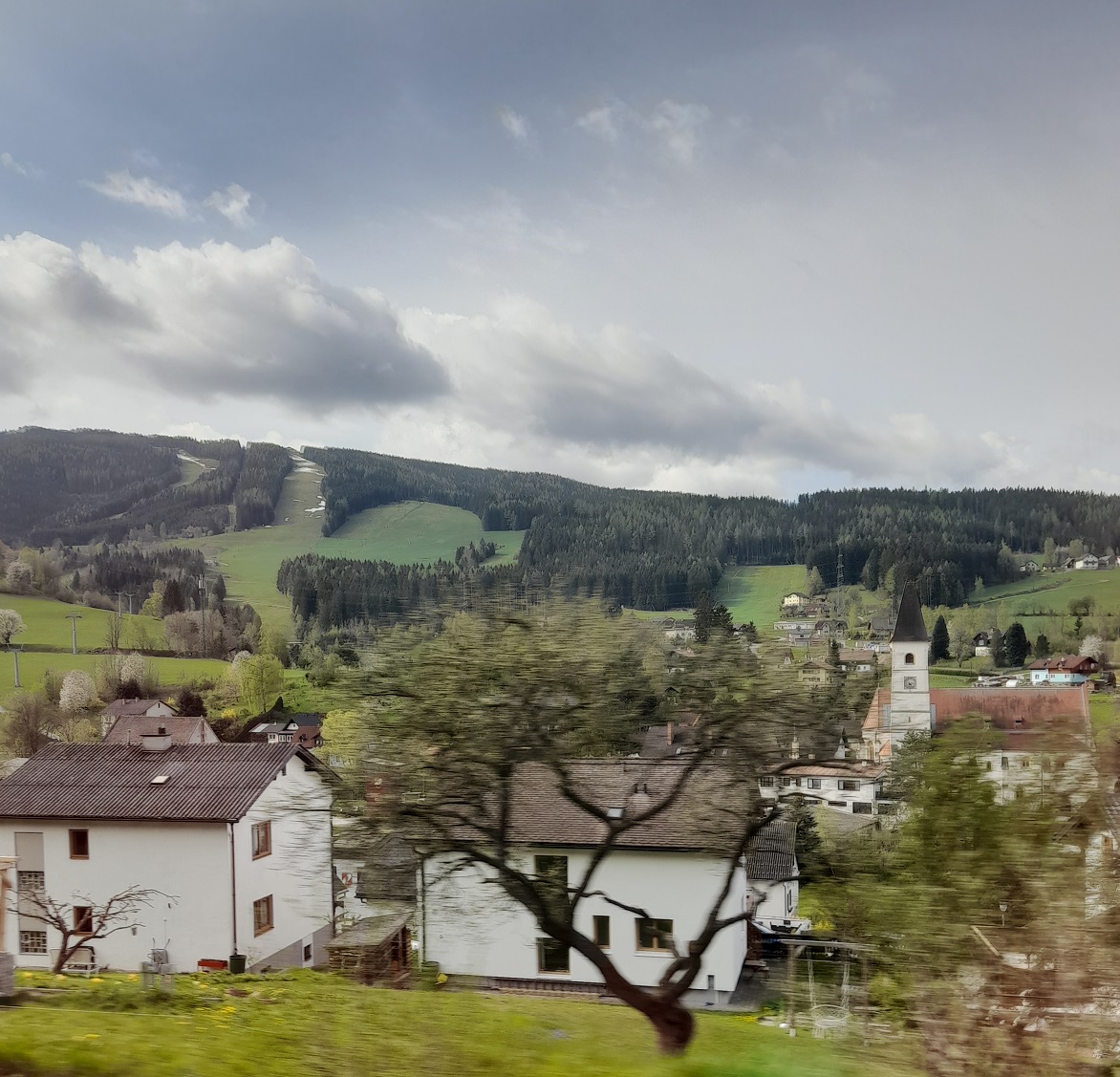
The old train (with compartments) left Vienna just before 8am, and once we had cleared the suburbs, embarked on a very pretty trip gradually climbing up the side of a valley passing little settlements. Every so often we passed what appeared to be guard houses, or maybe they were old stops on the side of the line. Eventually we crossed to the other side of the valley over an impressive arched bridge/ viaduct and reached the town of Semmering. This was once a very fashioned holiday retreat for wealthy Viennese, but one could not see much of the town From Semmering we started a gradual descent to the coast.
It was on this trip that I really missed my camera which takes a picture when you depress the shutter, unlike the phone which may take a picture, or more likely, zoom in when you press the “button” on the screen. I swore many times as lovely images passed while the phone kept zooming in, instead of taking the picture! For the sake of my blood pressure, I gave up and hence very few pics from my train trips.
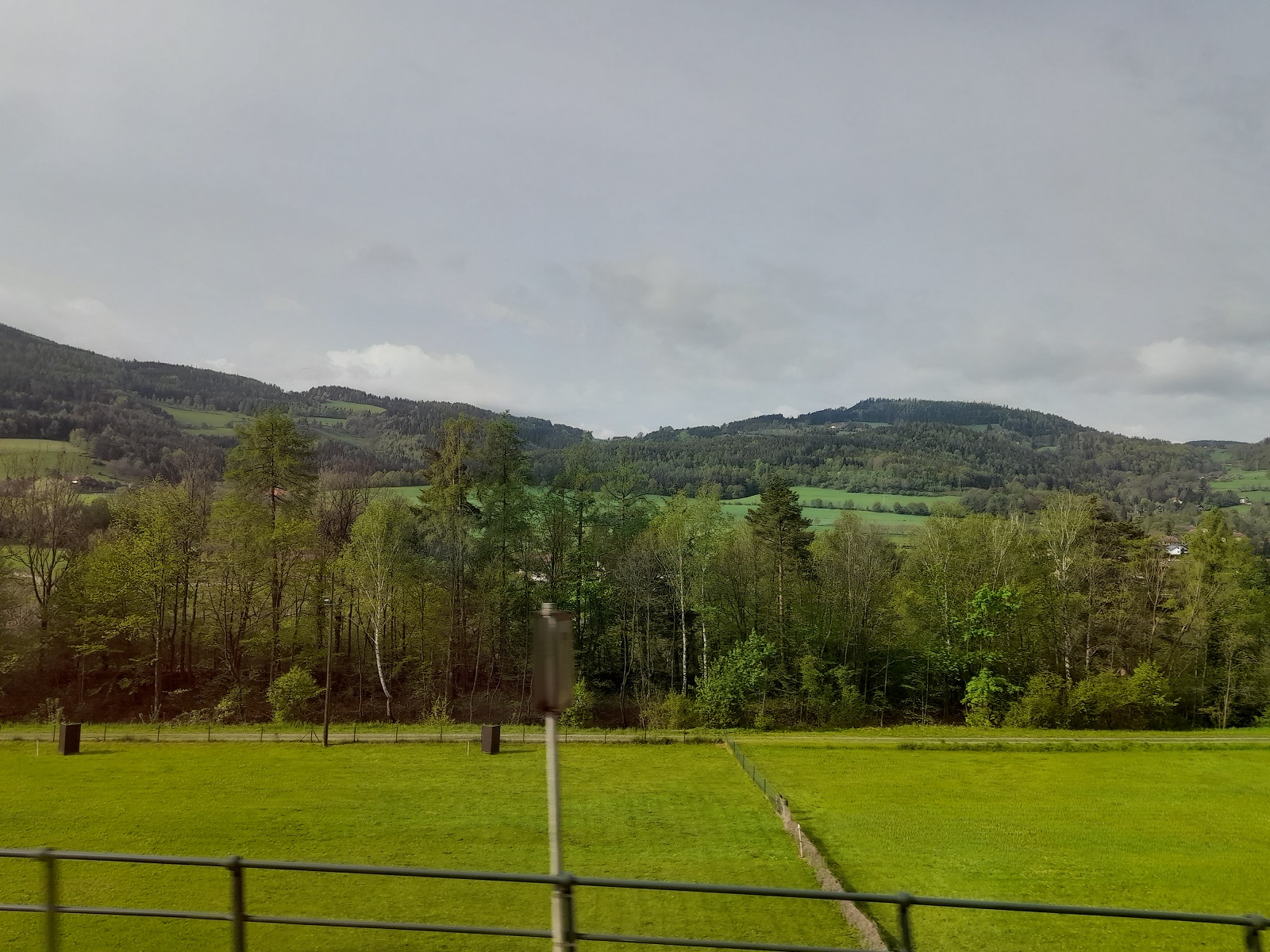
After a while I noticed station names were no longer German and we had passed into Slovenia. This was very pretty countryside, sparsely populated with rolling hills and woods. Ideal for hiking I thought. I made my way to the buffet car for what was to be my last large non-alcoholic beer. Once in Italy, I discovered they were small and costly, and it was back to acqua frizzante.
Around 2pm we reached Ljubljana, the capital of Slovenia, but I could see little of the city from the train. I had a nap and when I woke we were travelling through the karst hills above Trieste. They were wooded and for a long distance there was a drystone wall separating the track from the woodland. We descended quite rapidly and the line ran along the coast for some way before arriving at Trieste station around 5.15pm. All in all it was a very pretty trip which I can recommend to those who like to do things a little more slowly and see the scenery. The ticket, including booking fee, only cost me 37.50 euros.
Trieste
My hotel was close to the station and after dropping my bag, I set out to explore. I had few expectations of Trieste, but had read Jan Morris’s book about the city which I enjoyed. Trieste reached its heyday in the nineteenth century when the rail link to Vienna made it the premier port for the Hapsburg Empire and many of its grand buildings date from that period. It fell on hard times after the World War 1 when the Empire broke up. It is now part of Italy although very close to Slovenia.
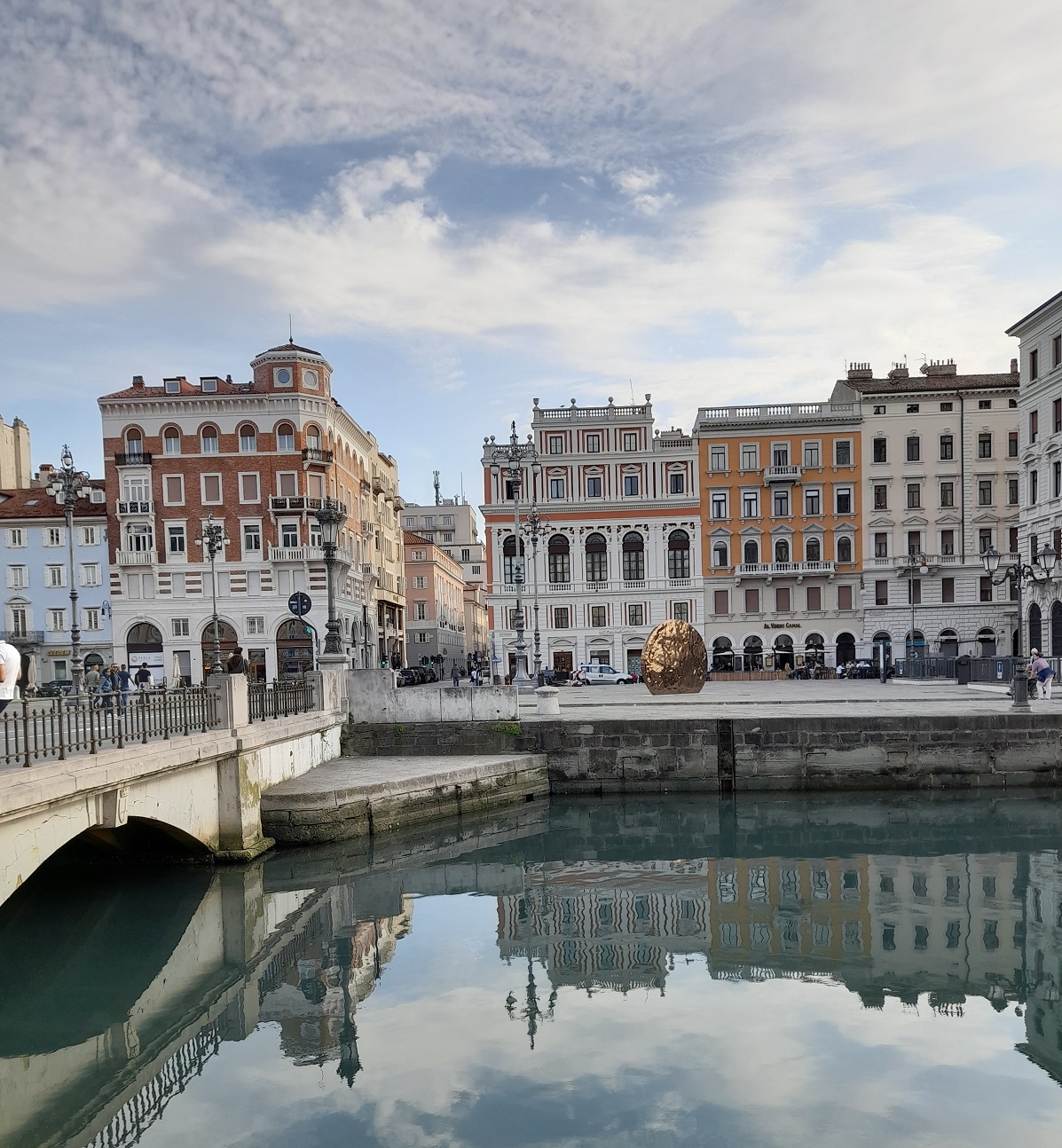
First I headed down to the Grand Canal which runs from the sea up into the city for 200 metres. It is lined with beautiful building and many outdoor restaurants and I decided to return there for supper. Small boats were moored alongside and the reflections in the water made it a very pretty spot. I strolled on to the harbour where an enormous cruise ship was moored, dwarfing everything around it. Now that these are not allowed into Venice, they are coming to Trieste.
At breakfast next morning the owner of the hotel was bemoaning this move. He said two arrived at 7am on a Sunday disgorging 4000 tourists who expected all the museums and attractions to be open for them. They cause great pollution in the harbour, both from the waste dumped overboard and also diesel pollution when the engines started up. It seems that these cruise ships are a contentious issue.
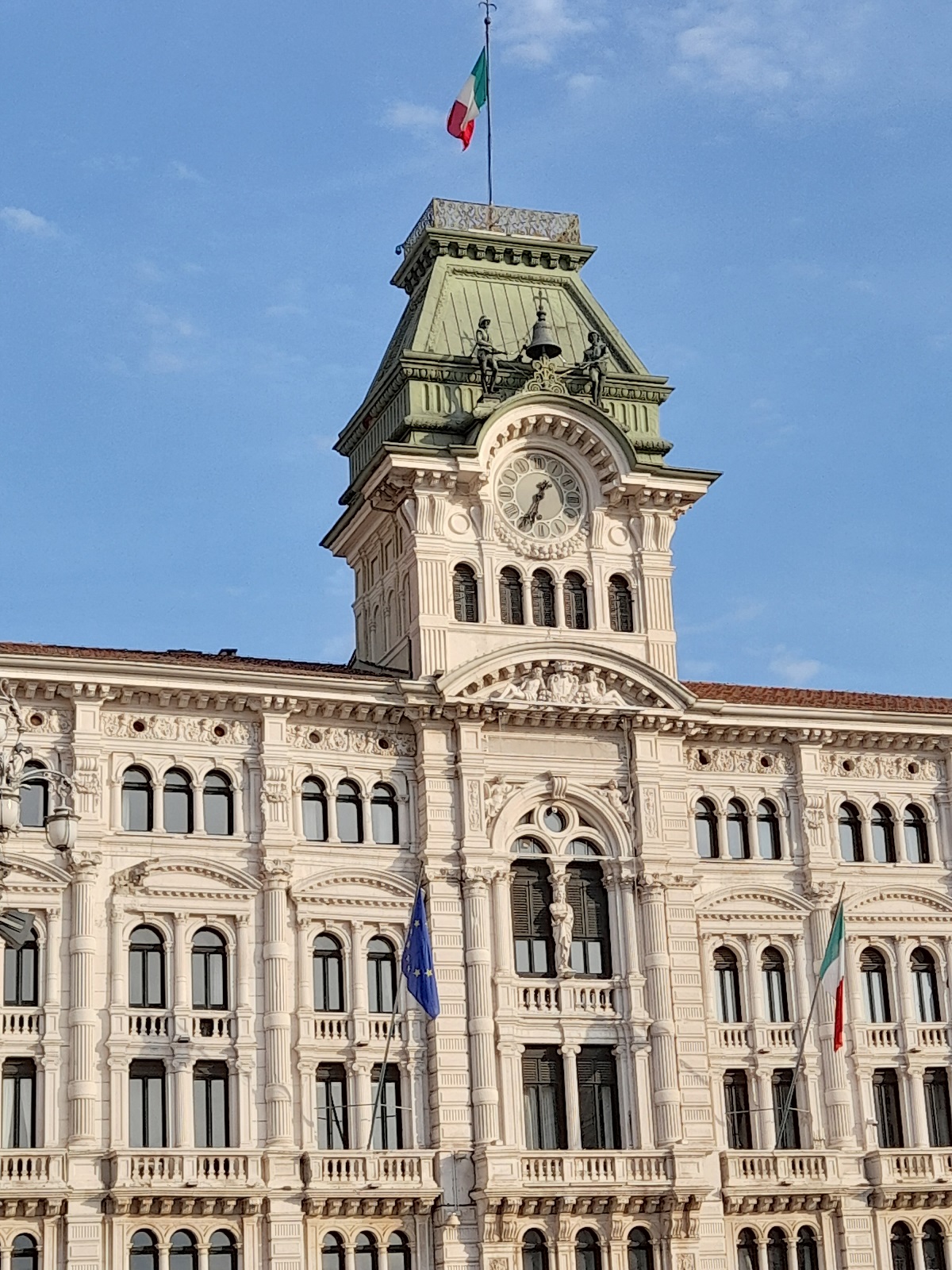
The Adriatic sea was beautiful in the afternoon light and I was reminded of a Turner painting. Along the walkway were bushes of Pittosporum tobira with orange blossom scented flowers. I saw these again in Stresa and wish we could grow them here. About halfway along the seafront, I turned to explore the city and found some magnificent buildings and large squares. One I am assuming was the city hall as it sported a clock tower with figures which looked as if they would strike the hour. Unfortunately I was not there to observe.
I headed back to the Grand Canal where I enjoyed a very pleasant fish fritto misto while seagulls called and the late afternoon sun played on the face of the church nearby. When the bill came, I was reminded of the Italian habit of including a service charge, which I did not find in other countries on this trip.
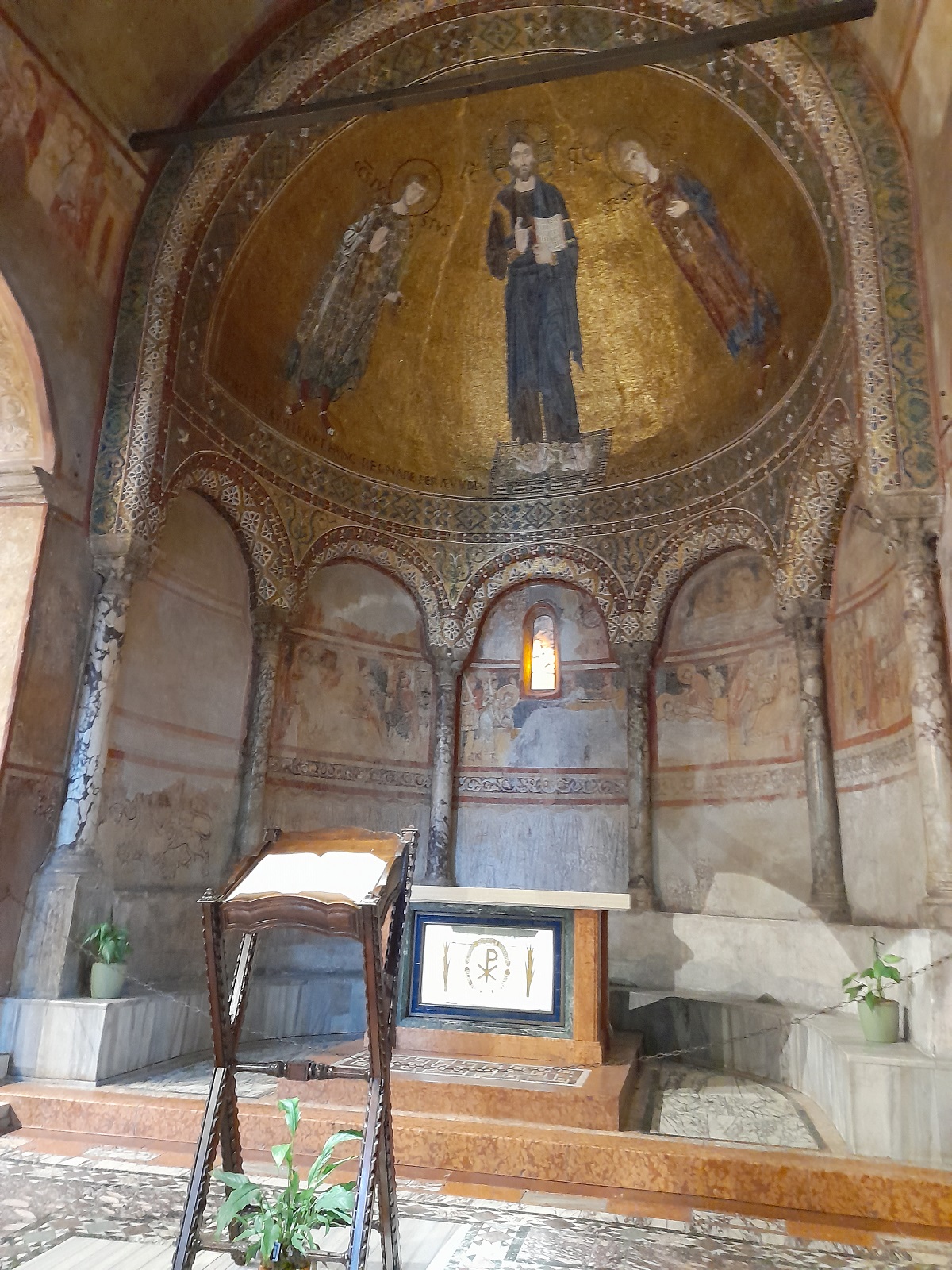
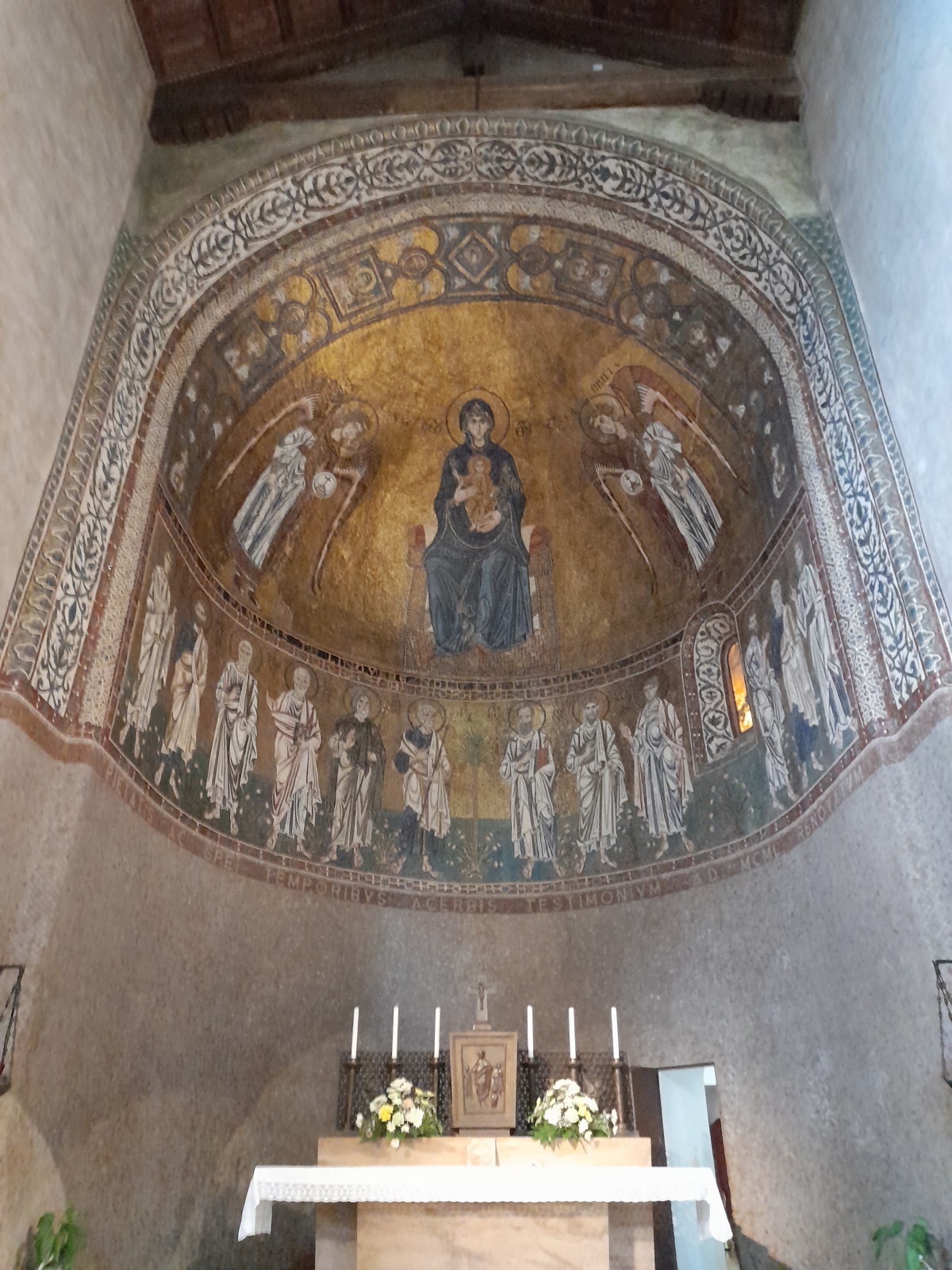
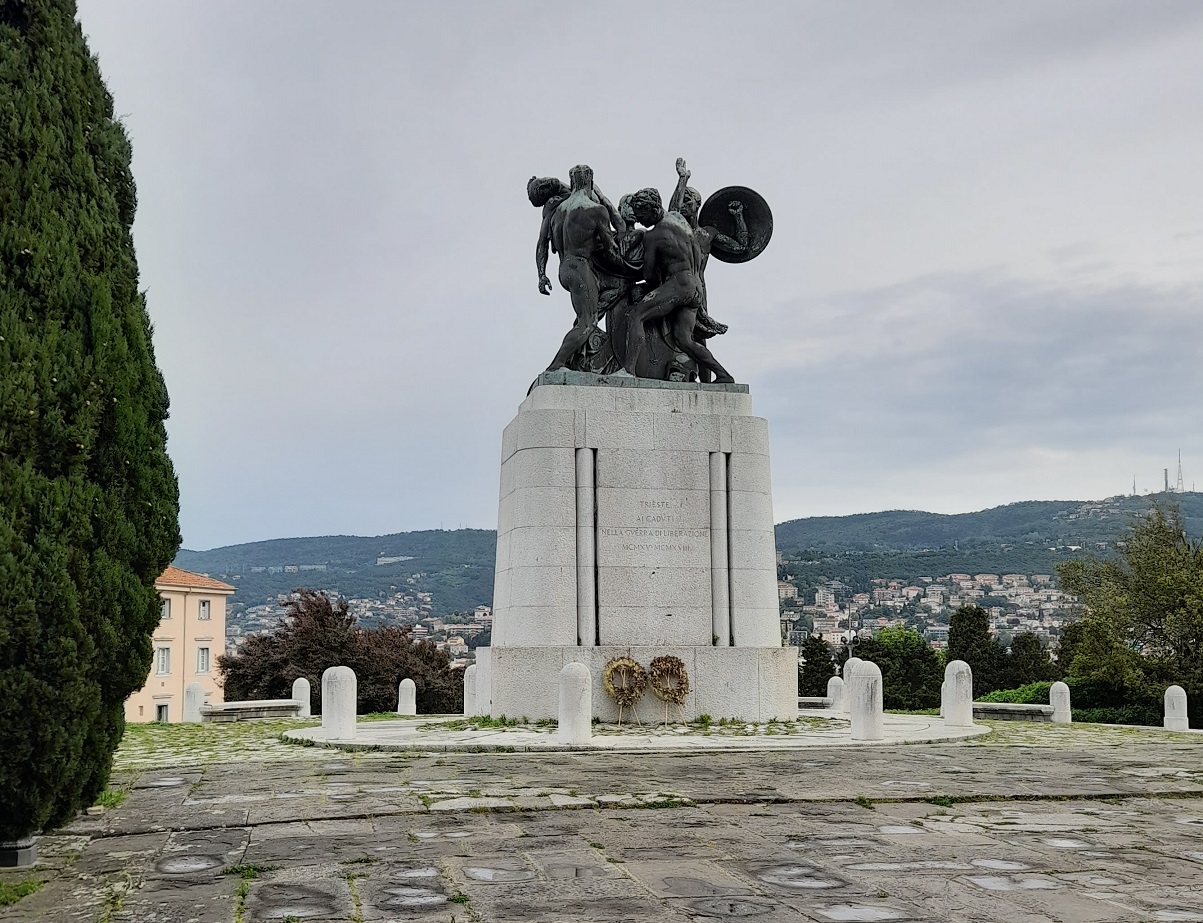
The next morning I headed up to the cathedral which is part of the old city on the hill. The friendly hotel owner had given me directions to a lift in a car park which would save the climb to the top. I emerged near a square with what I think may be Roman ruins and a huge war memorial overlooking the city. The cathedral which was originally 2 separate basilicas, stood to one side. There are beautiful 13th century mosaics in the two apses of the cathedral, well worth seeing.
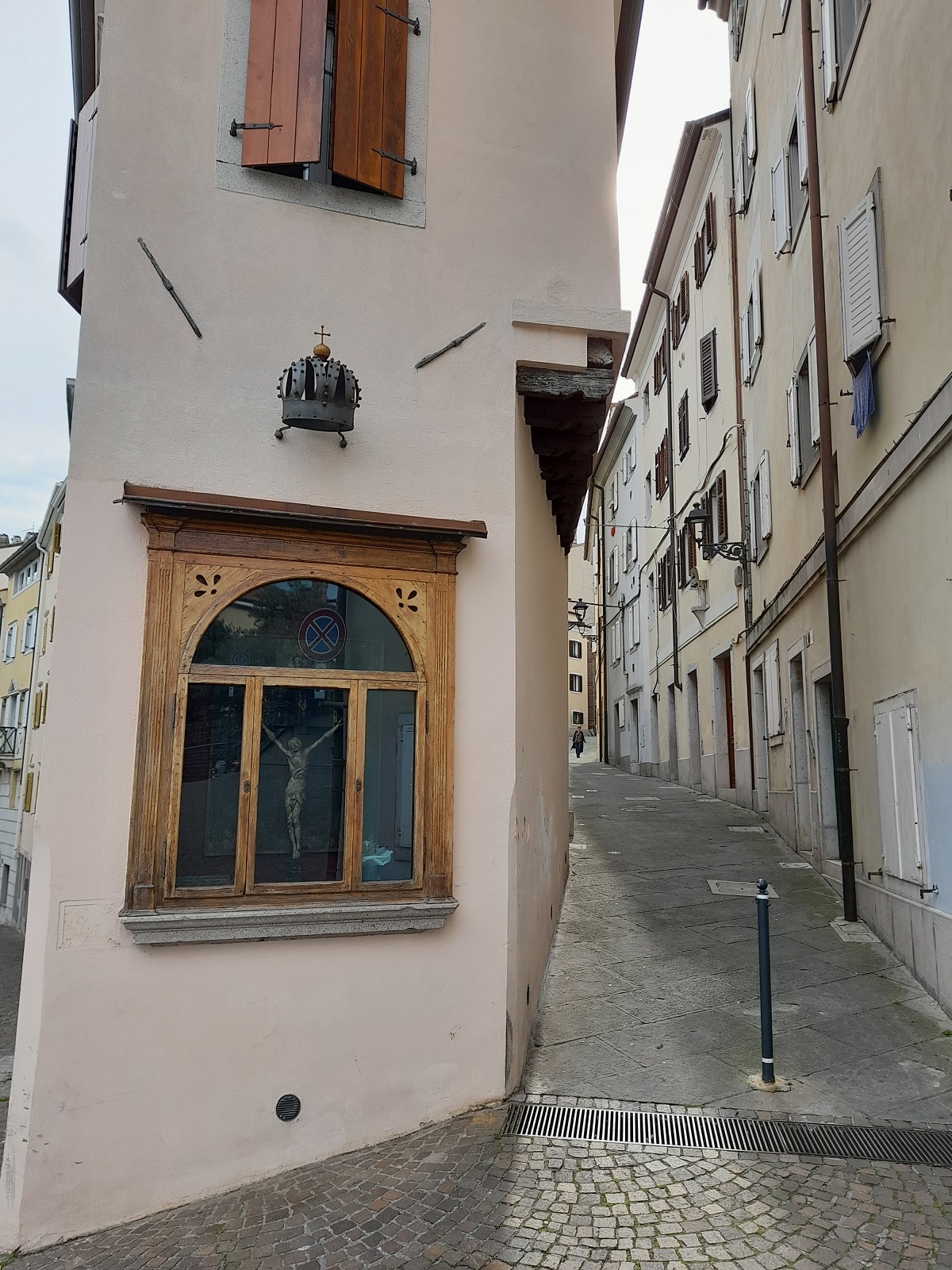
As I was catching my train soon after 10am, I just had time to scurry back down some extremely steep, narrow streets (this old part of Trieste is very different to the spacious, lower section) and through a pretty park to the Roman Amphitheatre. This is fairly large and well preserved. I then headed back over the Grand Canal to my hotel, stopping for what was the best ice cream I had on my entire trip; Bacio flavour with lots of whole hazel nuts. Everyone else was drinking expresso, but as the smiling proprietor of Gelateria Nicola said “It is never too early for gelato”.
I enjoyed my time in Trieste. Tucked away in the NE corner of Italy, it struck me as the ideal spot to hide away and lead a very happy life. A little like the feeling I had about Lüderitz in Namibia; full of past grandeurs. Trieste is of course much bigger and one feels it is on the up, but not yet overrun with tourists. Jan Morris was inordinately fond of it and visited often and one can maybe see why.
If I visit again, I would very much like to explore Miramare castle, built by Archduke Ferdinand Maximilian in the 19th century and the coastal villages around it. From the train heading towards Venice that coast looked lovely.
Milan (Milano)
I arrived in Milan around 4pm on Monday. The trip from Trieste (aside from the first 30 mins or so as one skirts the coast) was rather flat and boring. I stopped in Venice Mestre for around an hour, waiting for a connection and having some lunch. This is rather a grim station full of beggars. The highlight was having my first chinotto drink (made from the fruit of Citrus myrtifolio) and it was delicious. The train from Venice Mestre to Milan was a high speed express which whizzed along at about 200 kms an hour. I hoped to see some lovely buildings in the old towns we passed, but I think the line stays away from town centres and I did not notice anything special en route.
Once I had found my hotel near the station and checked in, I decided to walk down to the Duomo, cathedral, in the centre of the city. This was quite a walk and took me along some tree lined streets and through a large park (Giardini Indro Montanelli) before heading down Via Alessandro Manzoni, one of the main streets in Milan. This passed La Scala, the opera house and I was surprised by its relatively modest façade. Unfortunately I was not tempted by the current item on its programme.
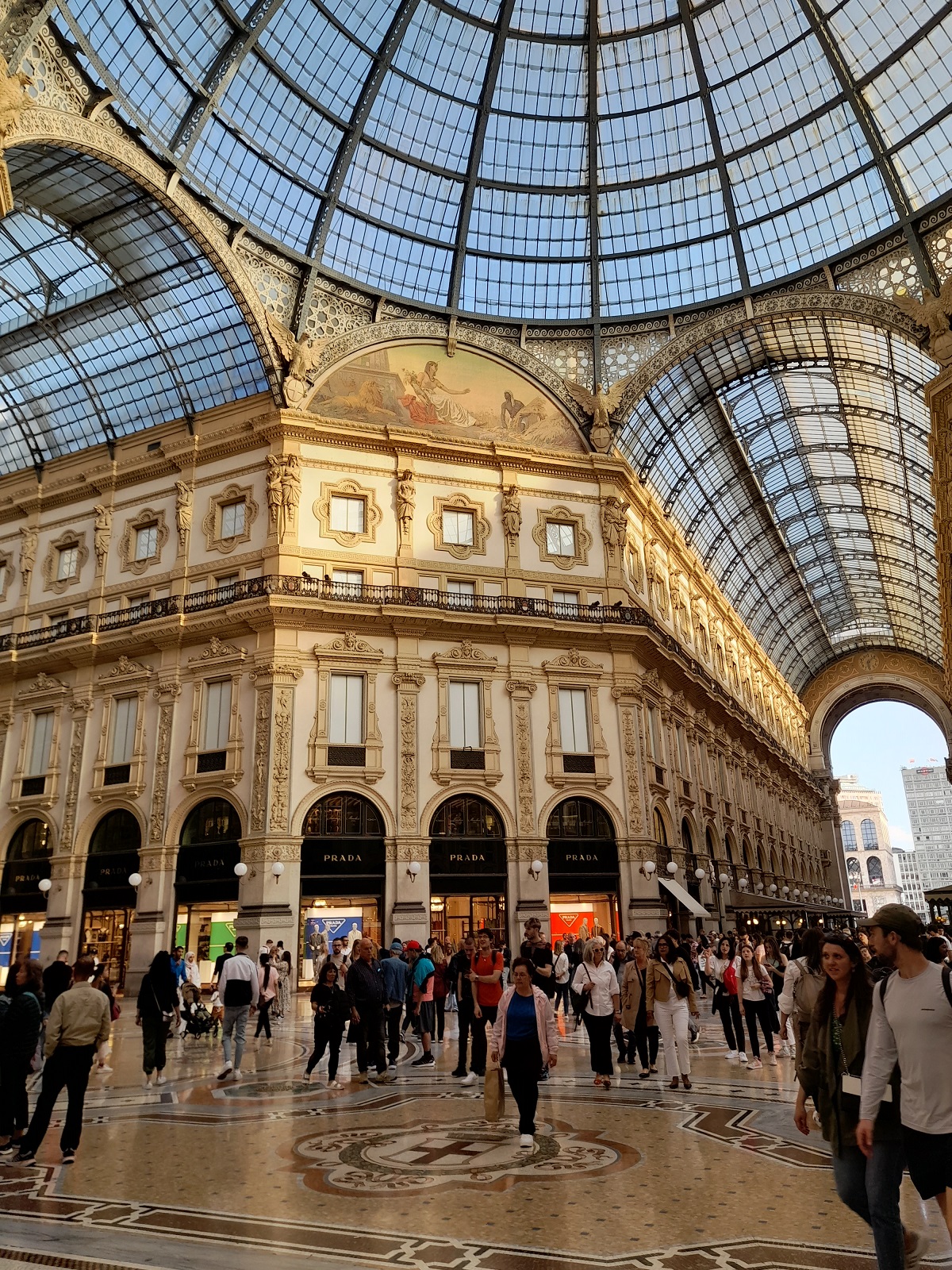
Across the attractive piazza in front of the opera one comes to a truly impressive shopping arcade. The Galleria Vittorio Emanuele II was designed by Giuseppe Mengoni and completed in 1877. With elegant proportions, it has a beautiful marble floor and an amazing curved glass roof. All the top brands have stores here.
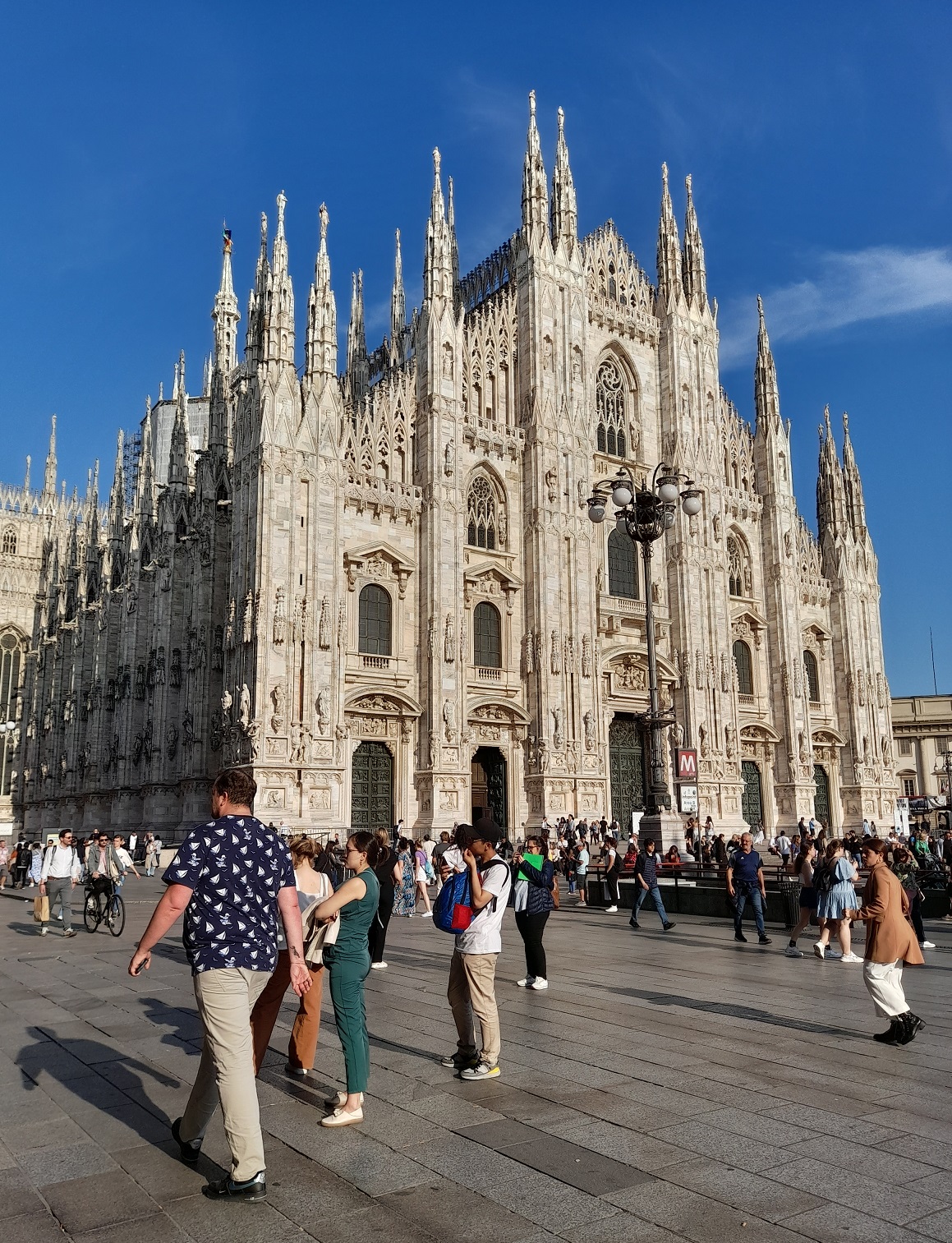
The Arcade opens out into the large Square in front of the Duomo and one has space to stand back and admire this large cathedral with its amazing roof covered in pinnacles. It was to be my first stop next morning. Meanwhile I caught the underground back to the stop near my hotel and found a local restaurant for supper where I had rather a disappointing pizza.
Duomo
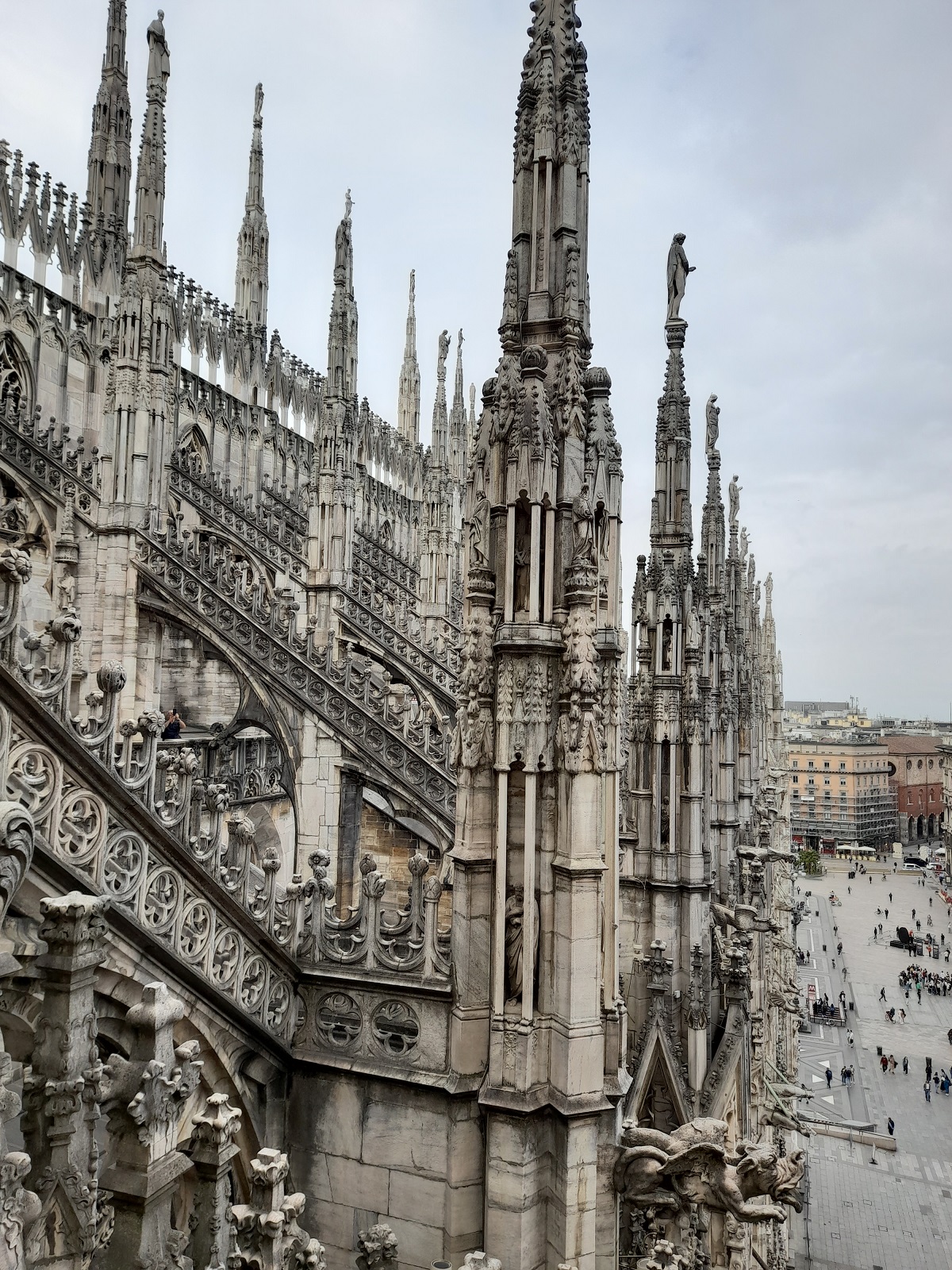
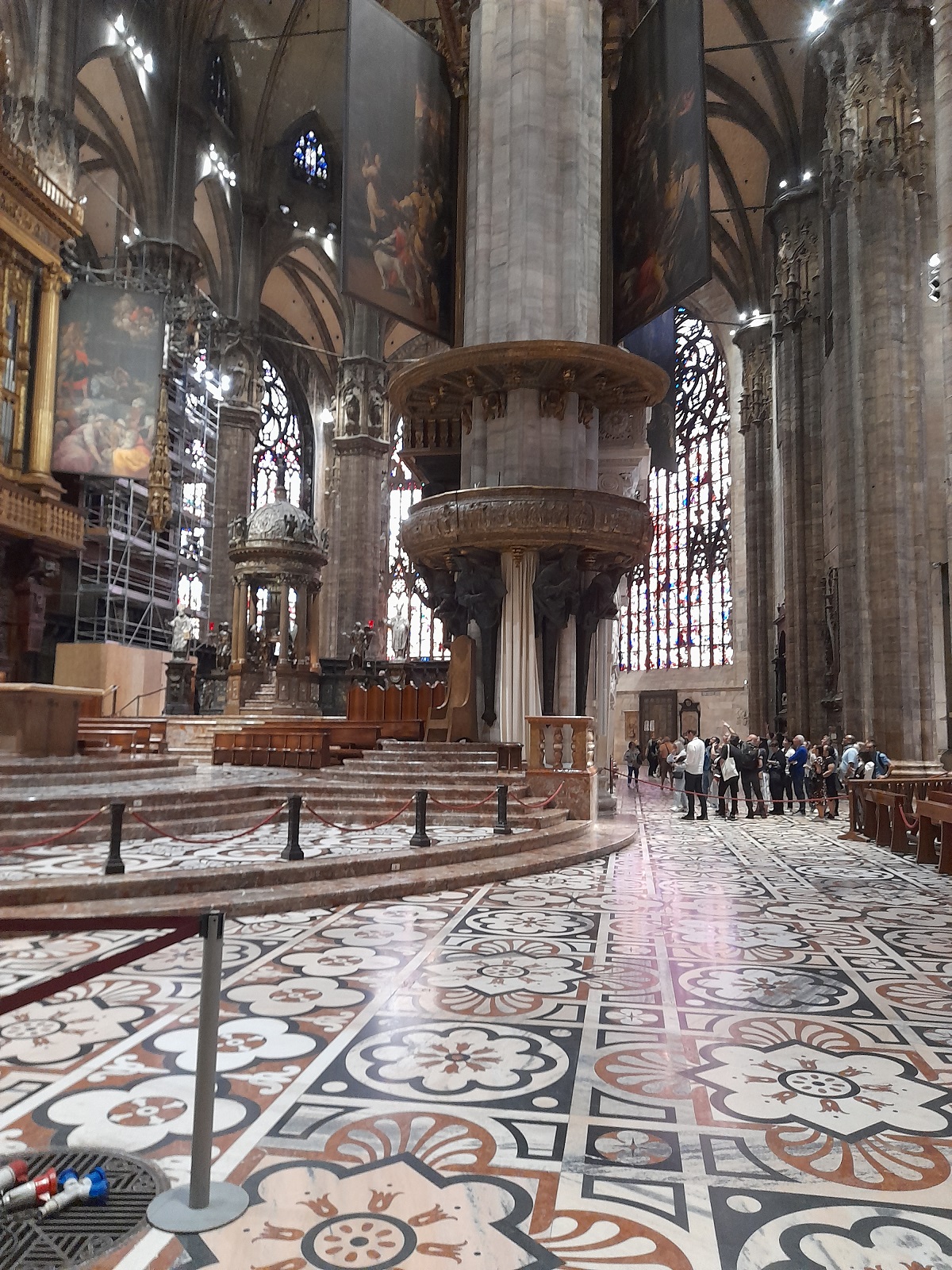
I was up bright and early next morning and walked down to the Duomo again to join the queue for a ticket. One can buy these online, but I had not bothered. I wanted to climb up to the roof first. There is a lift, but part of the fun is staggering up the 250 stairs in one of the towers. Once on top the view is amazing One is up amongst the pinnacles, but there are more exterior staircases to climb as the roof has 3 levels. One can walk along the centre of the top. An active restoration programme is ongoing and it is rewarding to see how beautiful the newly cleaned stone is. One climbs down a different tower- be warned if you take the lift up, you still have to climb down. You emerge from the staircase inside the cathedral. It is enormous, the largest in Italy (excluding St Peter’s which theoretically is not in Italy, but in the Vatican). I particularly liked the boldly patterned marble floor (somewhat garish maybe, but it ties the large space together) and the windows in the apse are amazing, sadly we could not get close to them. The ticket for the Duomo also included access to the Duomo museum in a building on the square. I rather rushed through this. It has some nice glass and lots and lots of statues, plus a rather nice model of the cathedral.
Art Museums
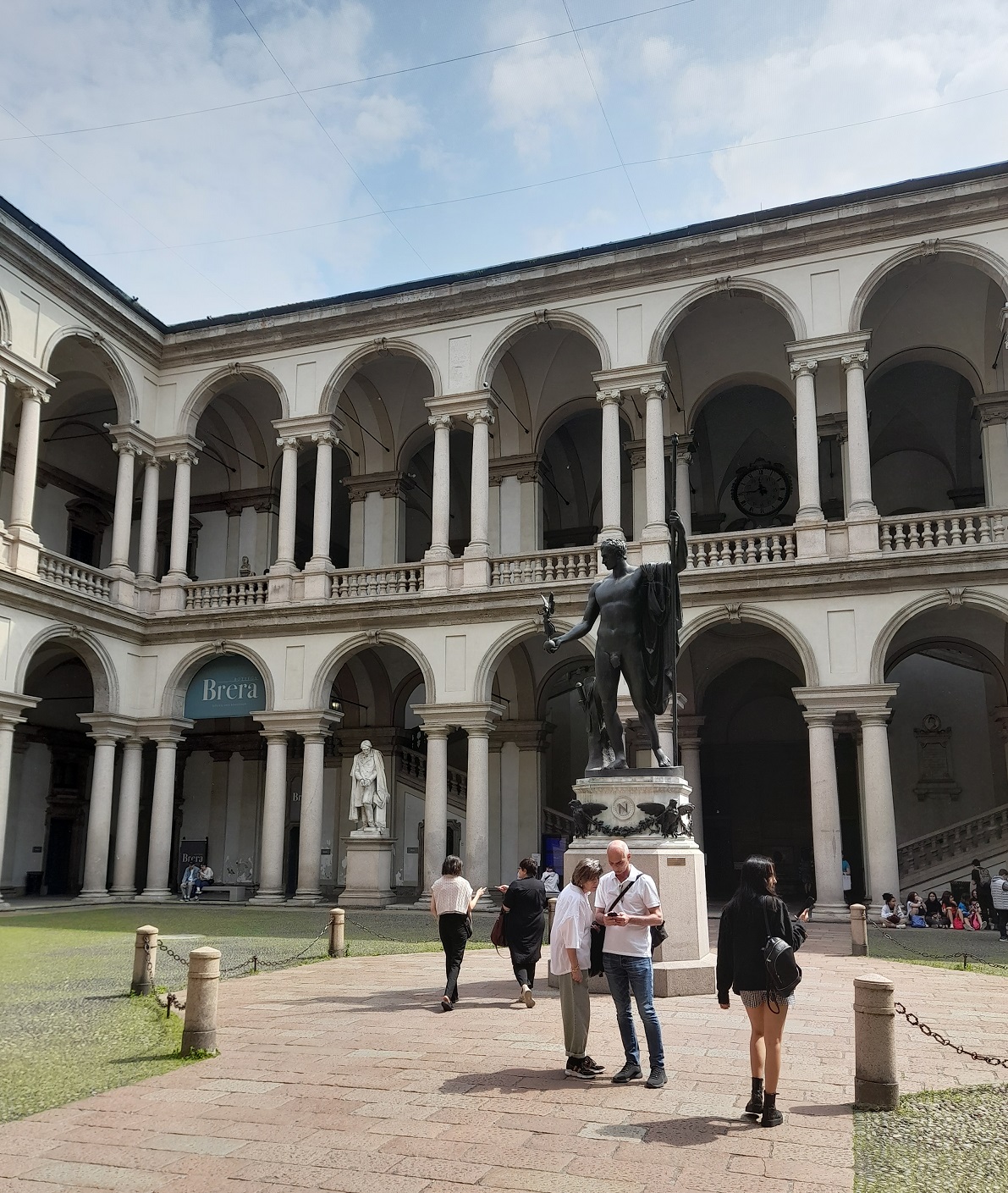
My main reason for visiting Milan was to go to its famous art museums, so after my visit to the Duomo, I set off to find the Museo Poldi Pezzoli, but unfortunately it was closed on a Tuesday. I then headed for the Pinacoteca di Brera, the premier gallery in Milan. It is situated in an impressive building with statue of Napolean on horseback in the inner courtyard. One nice thing about Italy is that most galleries and transport systems offer seniors discounts. I cannot remember what the entrance fee was, but it was not excessive. Pride of place in this museum is given to Renaissance and slightly later art. Modern art is consigned to hanging wire cages. I shall describe some of the paintings a bit more on the 2023 Trip Art page. One in particular caught my eye. It was an enormous painting by Gentile Bellini entitled St Mark preaching in Alexandria, but the church resembled the Aya Sofya in Istanbul. It was painted in 1504-7.
It was lunch time and I found a crowded restaurant nearby and enjoyed a plate of Risotto Milanese. It was very rich and creamy and set me up for the walk to the Modern Art gallery (GAM). It is back near the gardens I had walked through earlier, situated in the grand old Villa Reale. I must confess to being a tad disappointed by this Museum. It has lots of 19th century portraits and landscapes mainly by Italian artists and not much 20th century art. The few “big name” items are not that impressive. Perhaps if I knew more about Italian painters of the period, I would have appreciated it more. I did fall for one painting by Federico Faruffini called The Reader. It is the back view of a woman sitting on a couch reading. Her hand resting on the back of the couch is holding a cigarette; very modern for 1865. Sadly this artist did not win much recognition in his life time and committed suicide at a relatively young age a few years later.
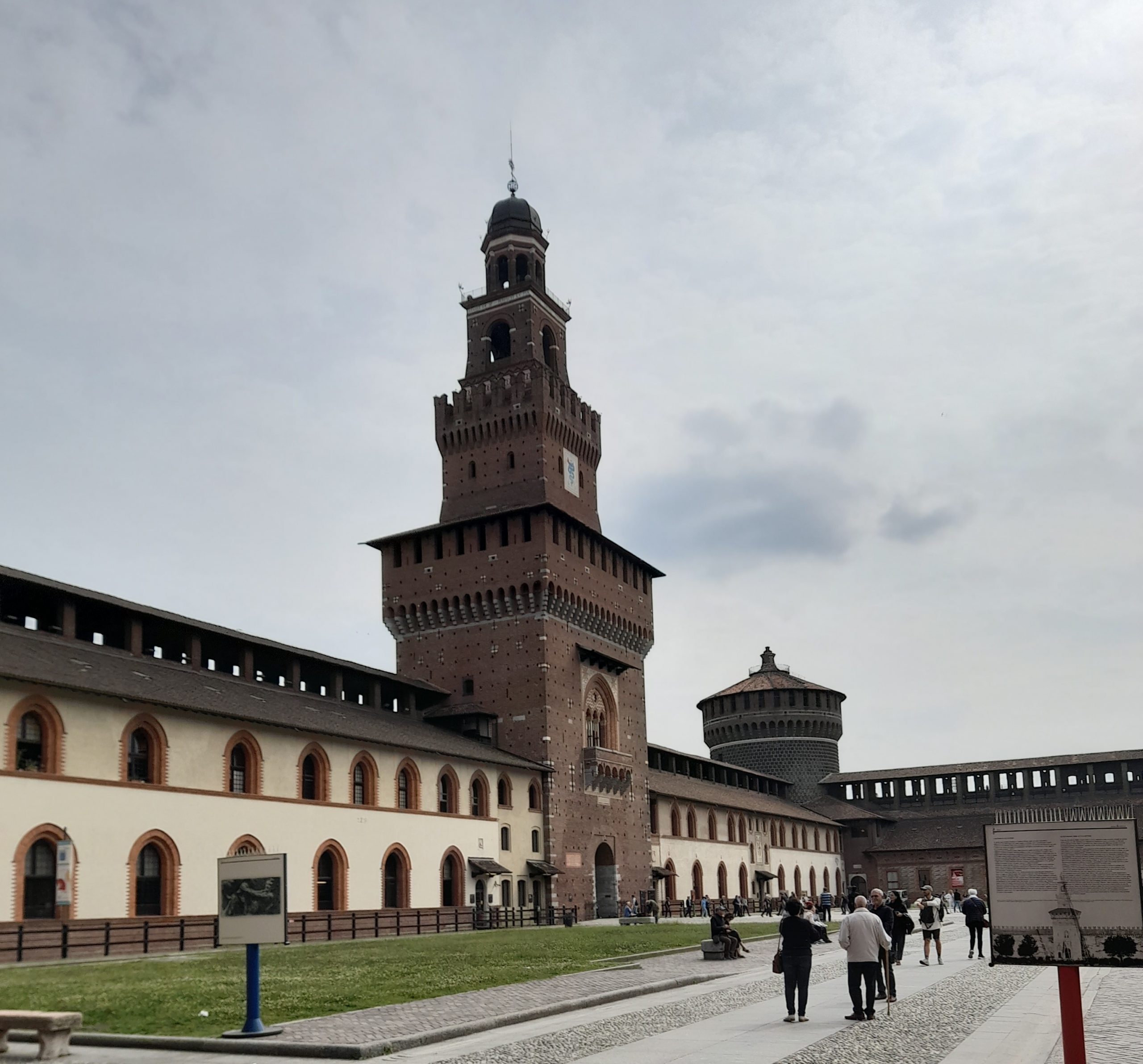
I was hoping to find something more contemporary so headed across town to find the Triennale di Milano which is a museum of design in Sempione Park. On the way I passed the large Sforzesco Castle with its grassed moat. Here someone had recently thrown some food which was being enjoyed both by the pigeons and stray cats. It was rather fun to watch the temporary alliance.
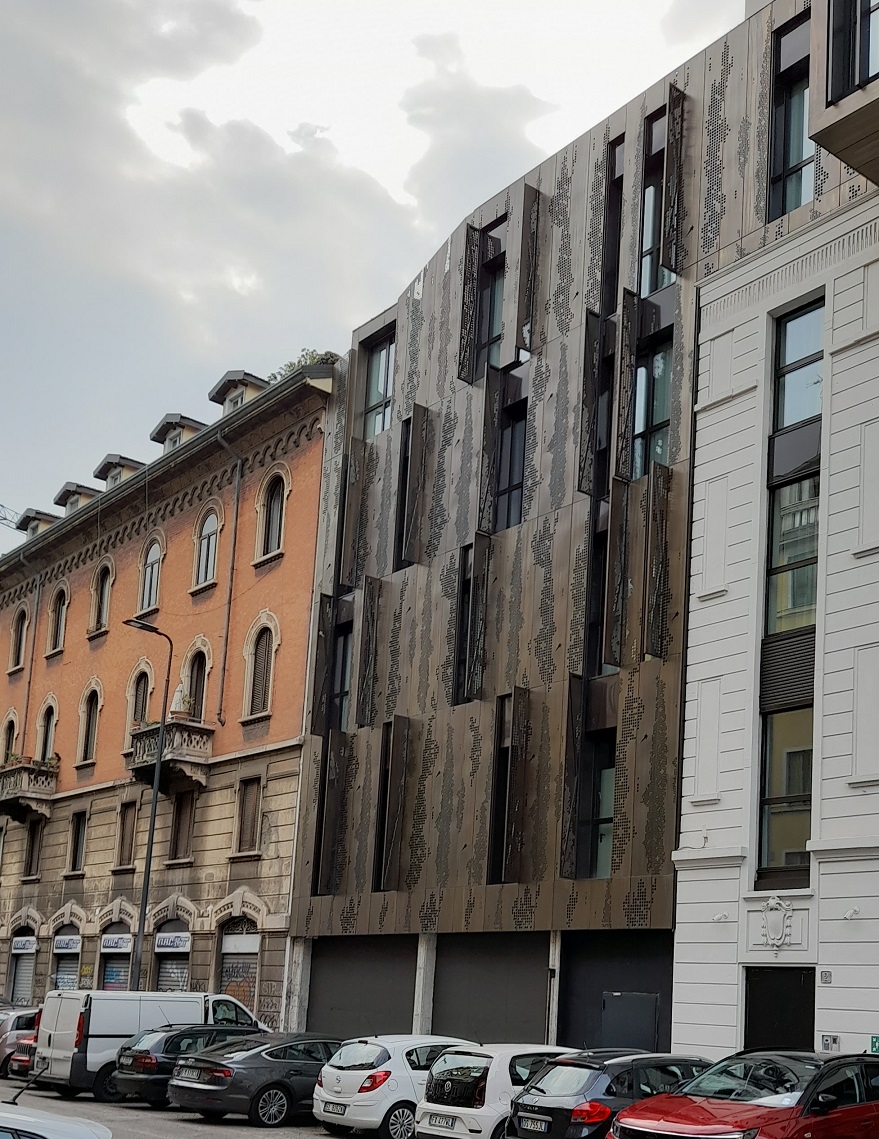
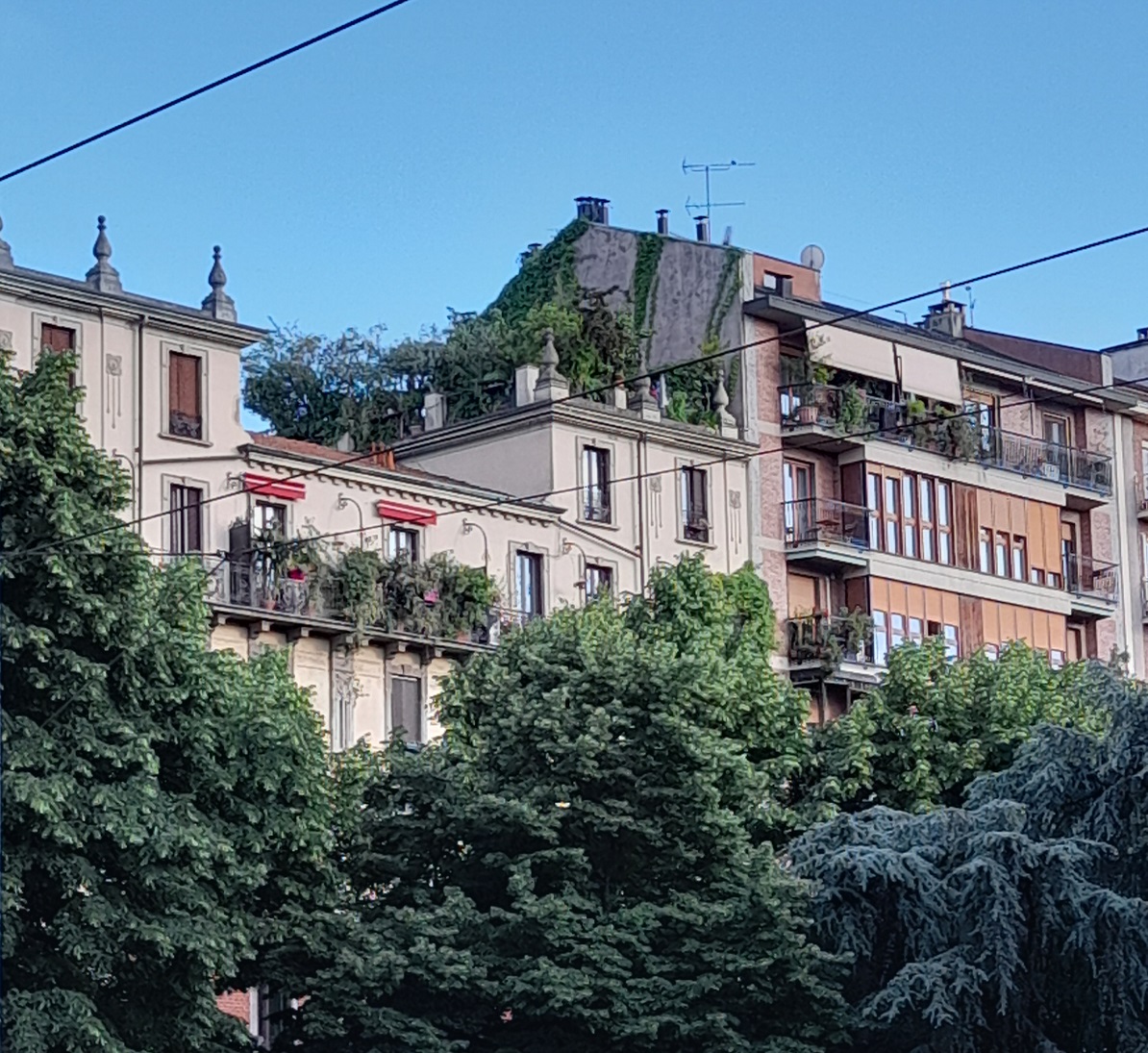
I also noticed how many roof gardens there are in Milan on this walk and elsewhere in the city. It is an interesting city to walk around as modern buildings are side by side with the old.
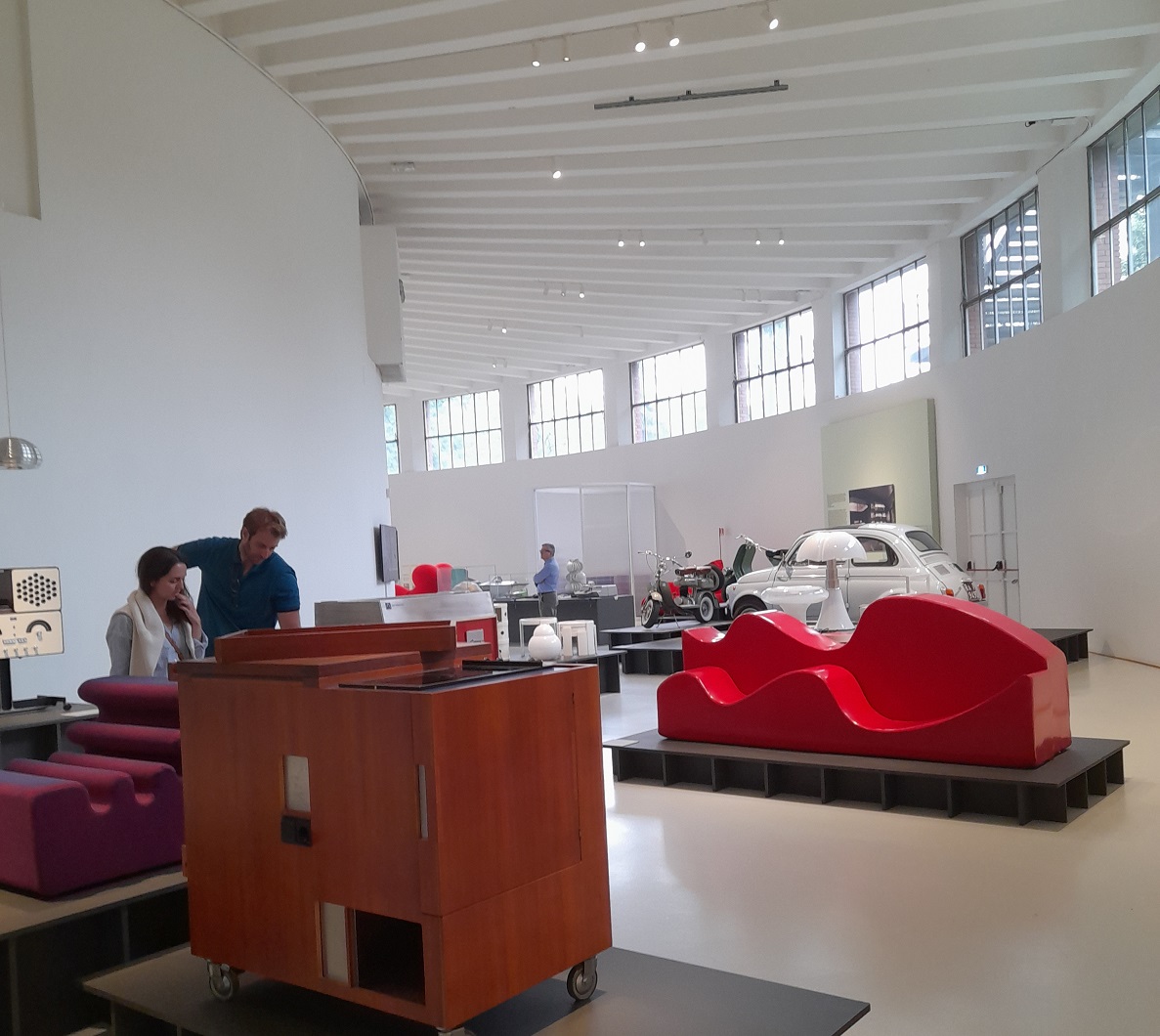
The Triennale di Milano hosts various exhibitions, but the basic entrance fee is for a large exhibition of objects illustrating Italian design from about the 1930s. One can view the classic chairs, light fittings even a Fiat 500 and Vespa scooter. Some of the items became household names, some remained collector’s pieces.
Arrivederci Milano
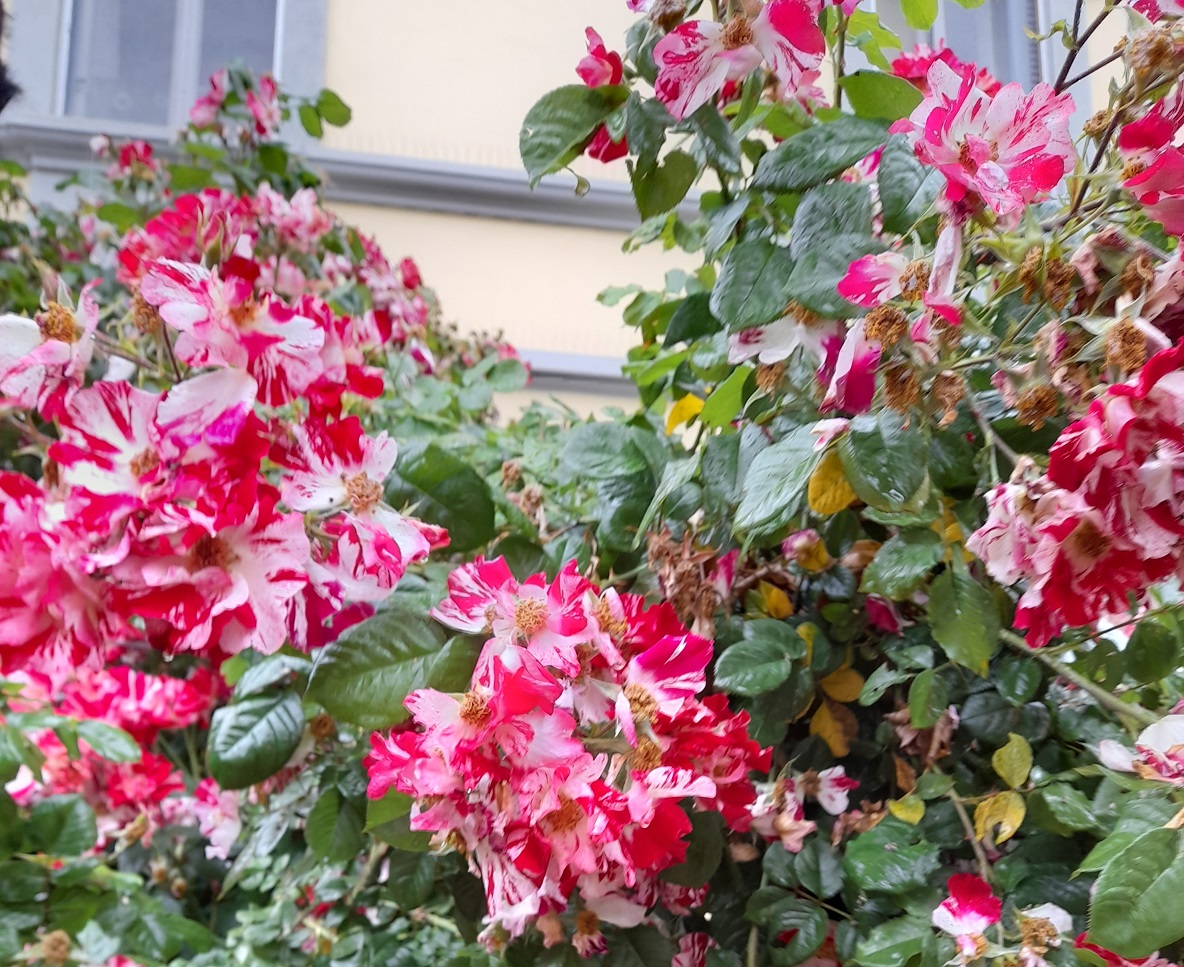
It was time to head back for supper and I made a better choice with salad of artichokes and parmesan and a plate of prosciutto. The next morning after breakfast I found time to photograph a startling bicolored rose blooming in the hotel garden before heading off to the station to catch the train to Stresa.
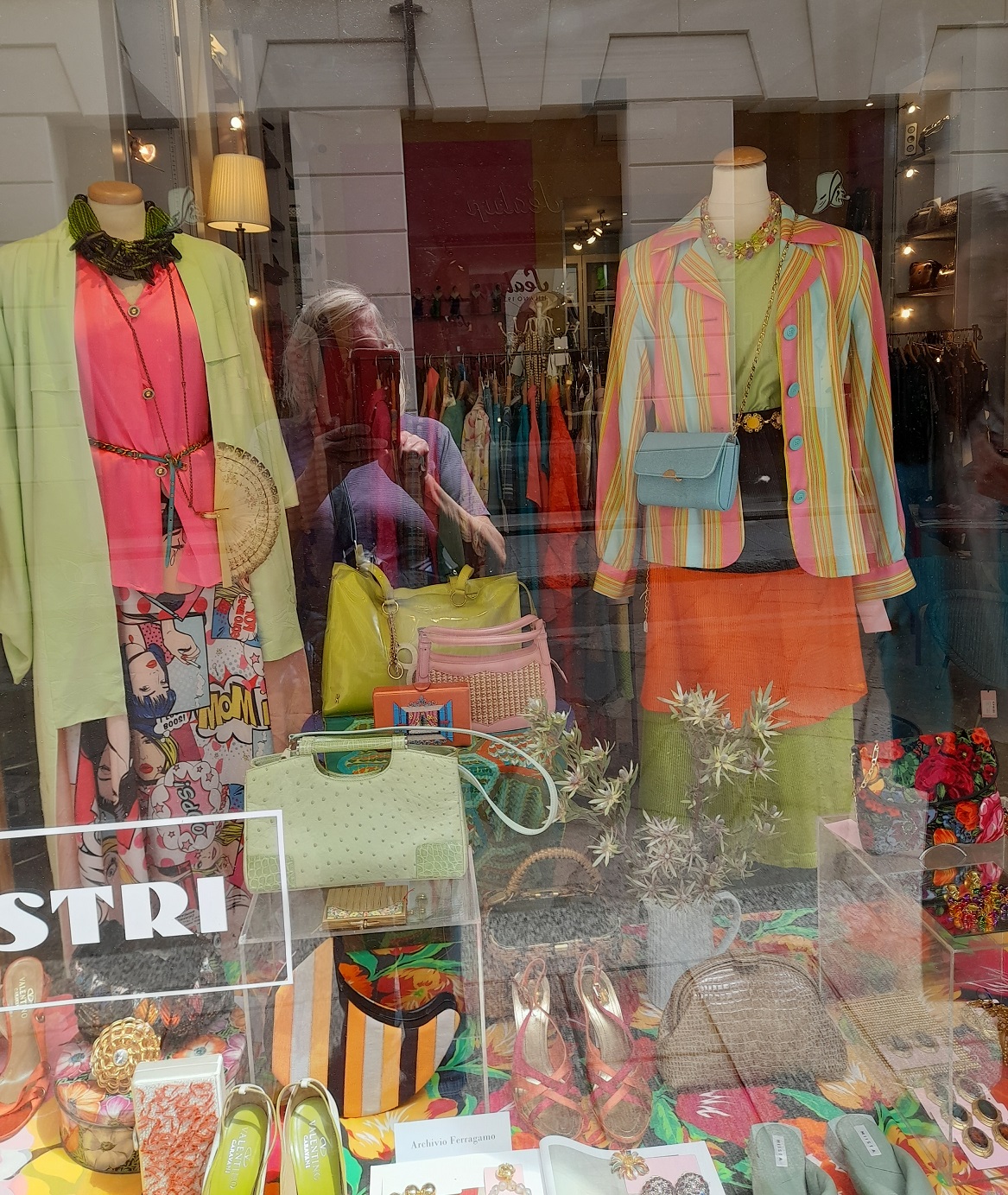
It is not possible to leave Milan without saying a bit about the fashionably dressed people one sees. I am not very observant, but I did notice men were very suave in beautifully cut suits and young women wore an array of fashionable jeans or skirts and amazing shoes. I even saw some ankle boots with peep toes. I also spotted a mature lady with a stylish dress and jacket carrying a pair of gloves- very 1960s? I wish I had had more time to window shop and watch people passing by – next time maybe?
2023 Trip – Italy -Trieste & Milan Gallery