I had never been to Springbok in the Northern Cape to see the flowers, so on Wednesday, 9 August 2023, my friend M and I set off. The plan was to travel up to Springbok, which is in the N of Namaqualand, spend a day there and then come south to Kamieskroon ( centre of Namaqualand) to meet up with a group from the Indigenous Bulb Society (IBSA) for the weekend. We had had lots of rain so it promised to be a good season for flowers.
Wednesday
Springbok is about 515 kms north of my home, so we left early to give us time to see flowers on the way up. We also wanted to detour to the Biedouw Valley near Clanwilliam as we had heard it was looking good. It was a lovely sunny morning, but we didn’t see any flowers on the side of the road as we sped past green wheat and yellow canola fields up to the Piekenierskloof pass at Citrusdal. Once we had crossed over the pass (leaving the wheat fields behind) and started up to Clanwilliam the white daisies and other colourful annuals started to appear.
Biedouw Valley
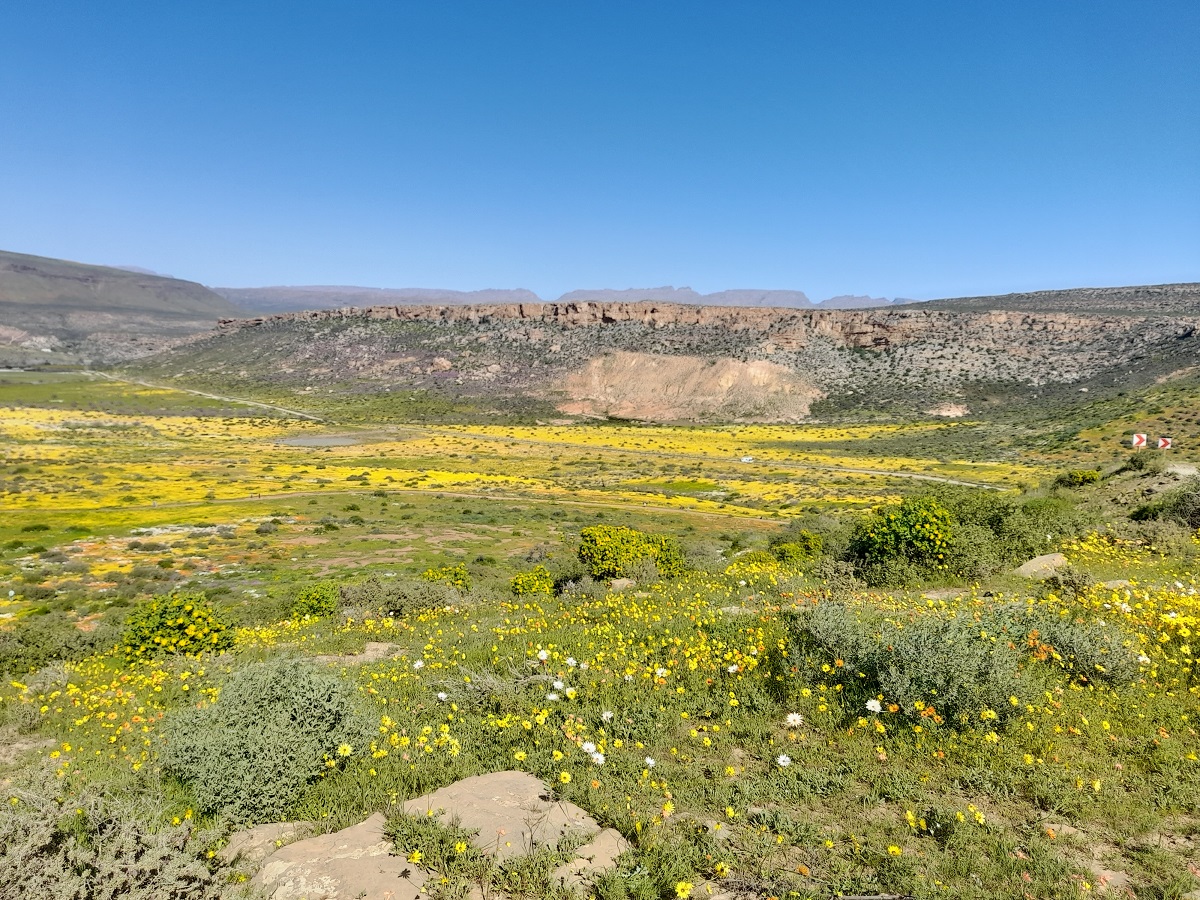
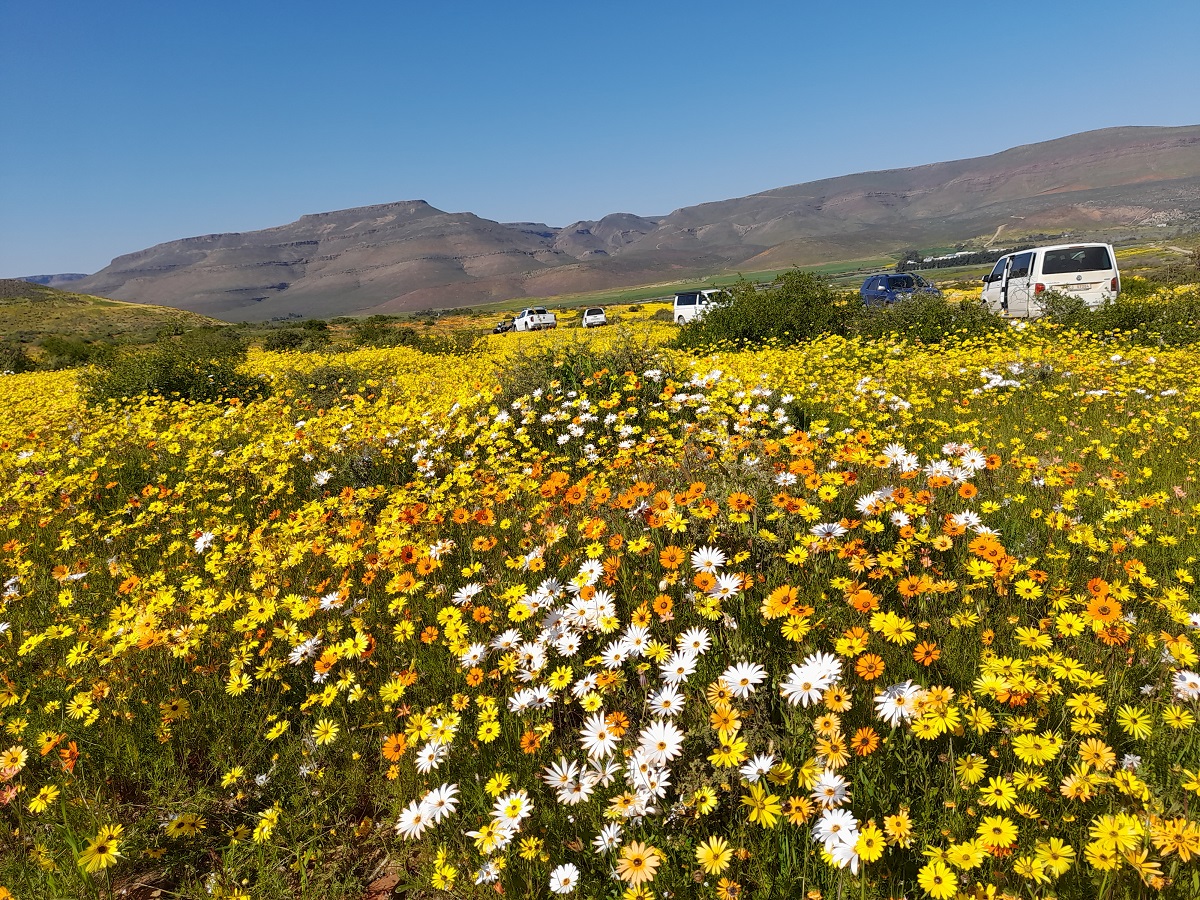
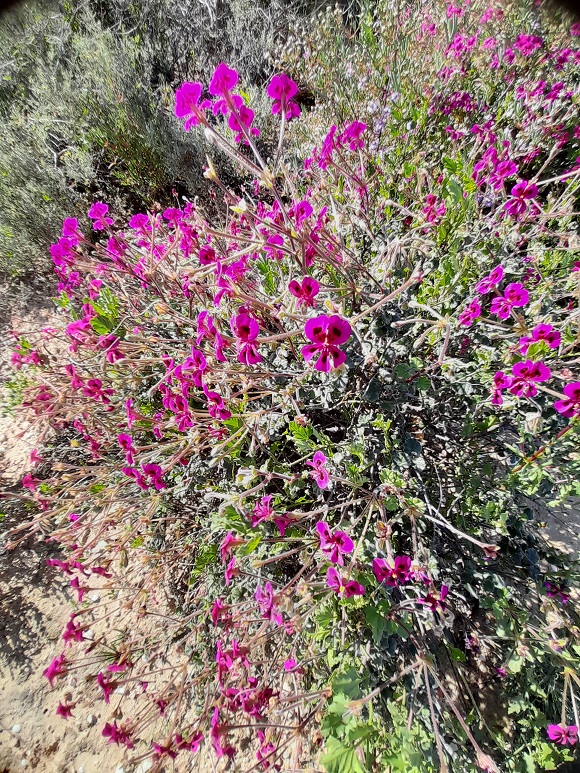
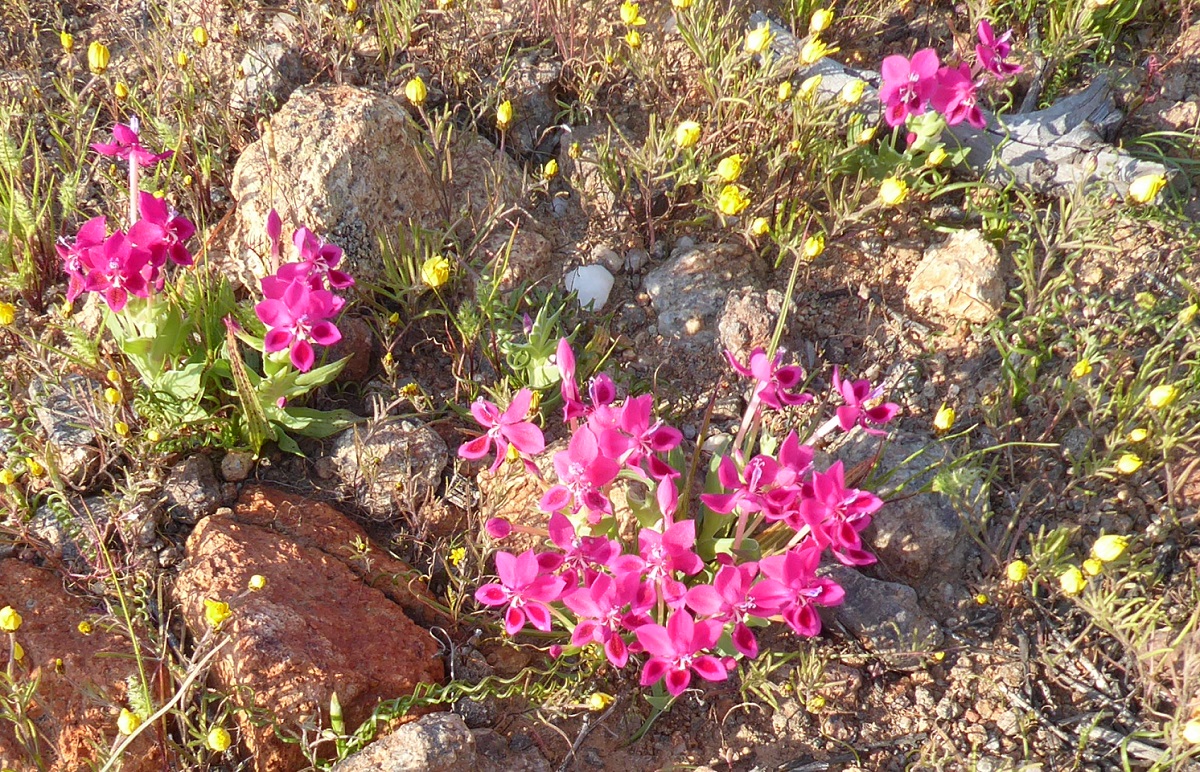
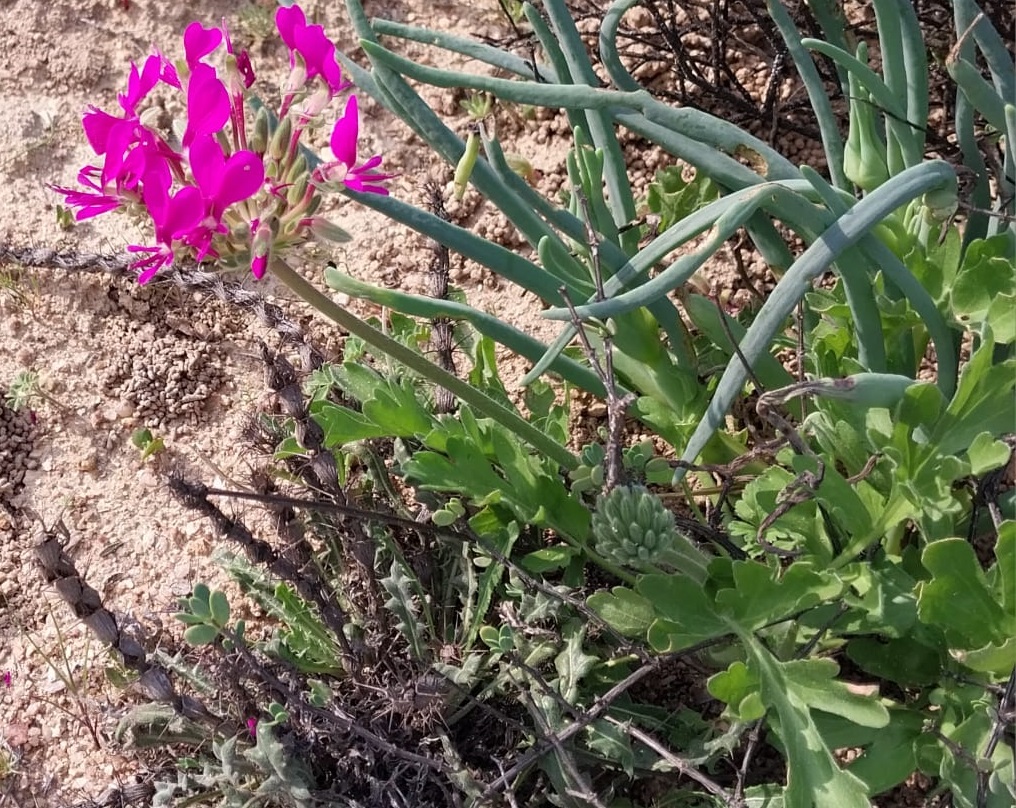
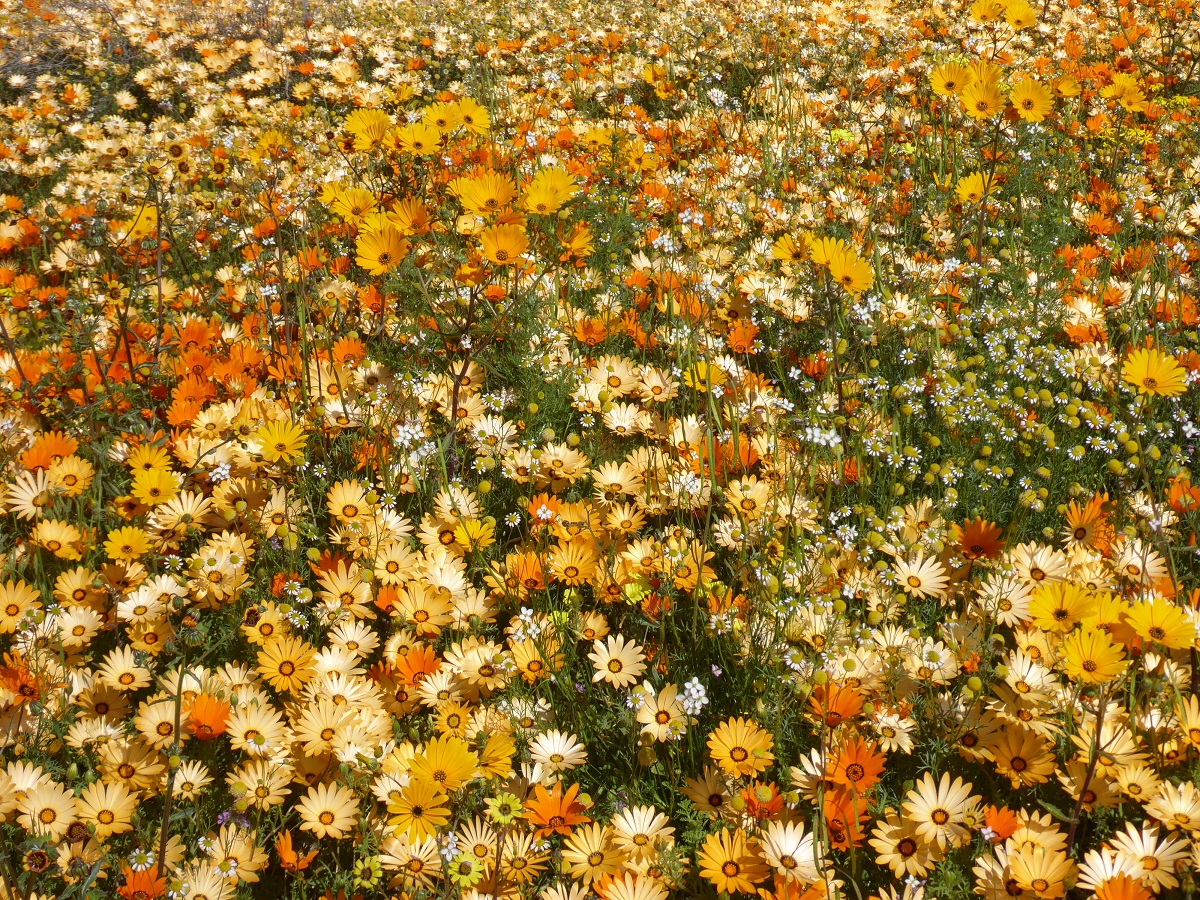
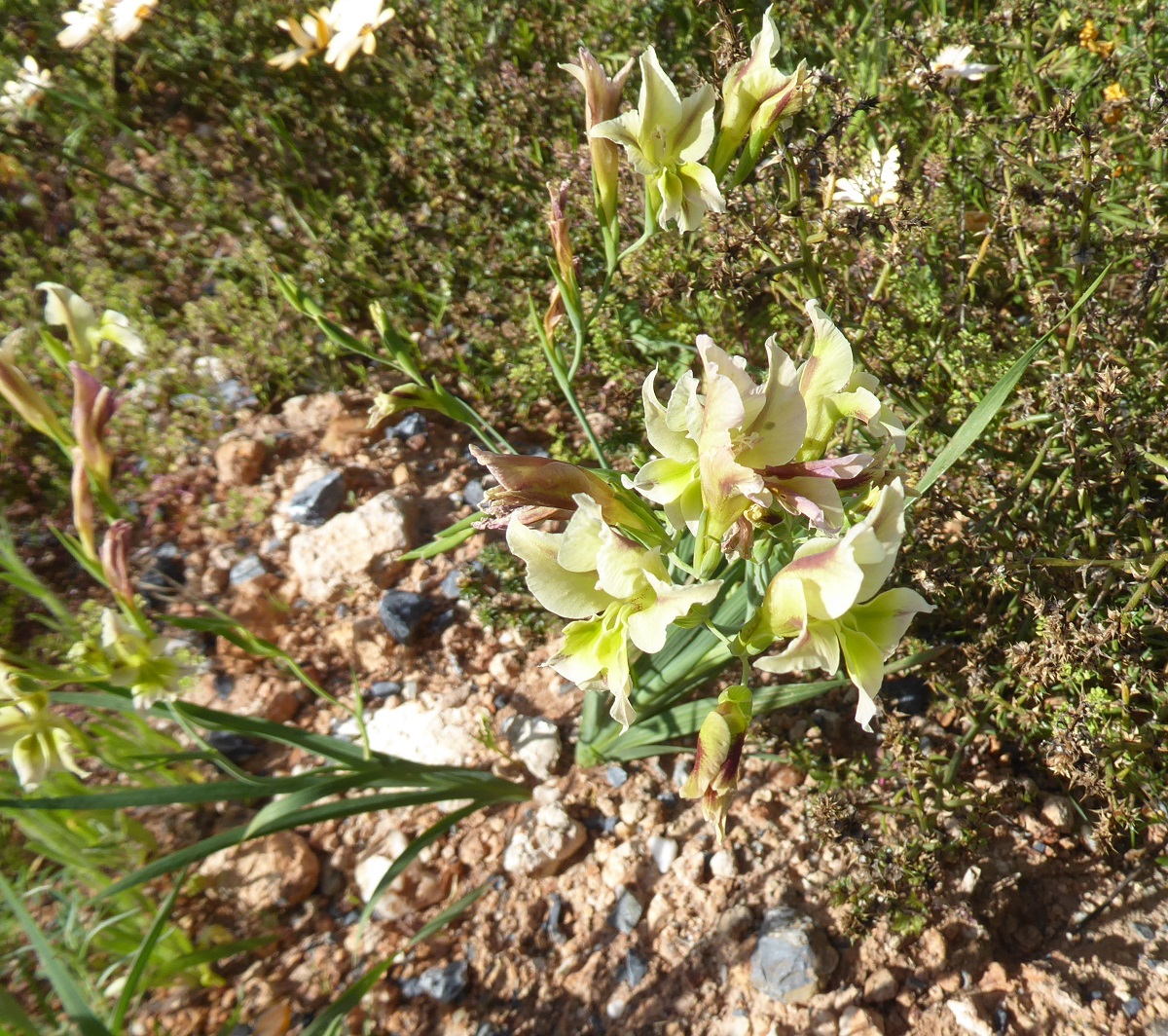
The detour to the Biedouw Valley which lies NE of Clanwilliam, took longer than expected as the round trip was about 100kms. One drives through lovely Cedarberg rocks and over the Pakhuis pass. The last bit of the road down into the valley is gravel. We made several stops; at the turn off to see the stunning red arctotis that grows there, but they were just starting, instead we saw a bright pelargonium, maybe P magenteum; halfway down the pass where we saw some gladiolus among other plants. The valley itself had sheets of daisies at the bottom of the pass. Lots of vehicles were parked here with people admiring the flowers. From the top of the pass we had noted that the flowers did not seem to extend far into the valley, so after we had admired the daisies at the bottom and taken some pics, we headed back up and stopped at the top of the pass for lunch and to view the white bulbinellas we had seen growing there.
North to Springbok
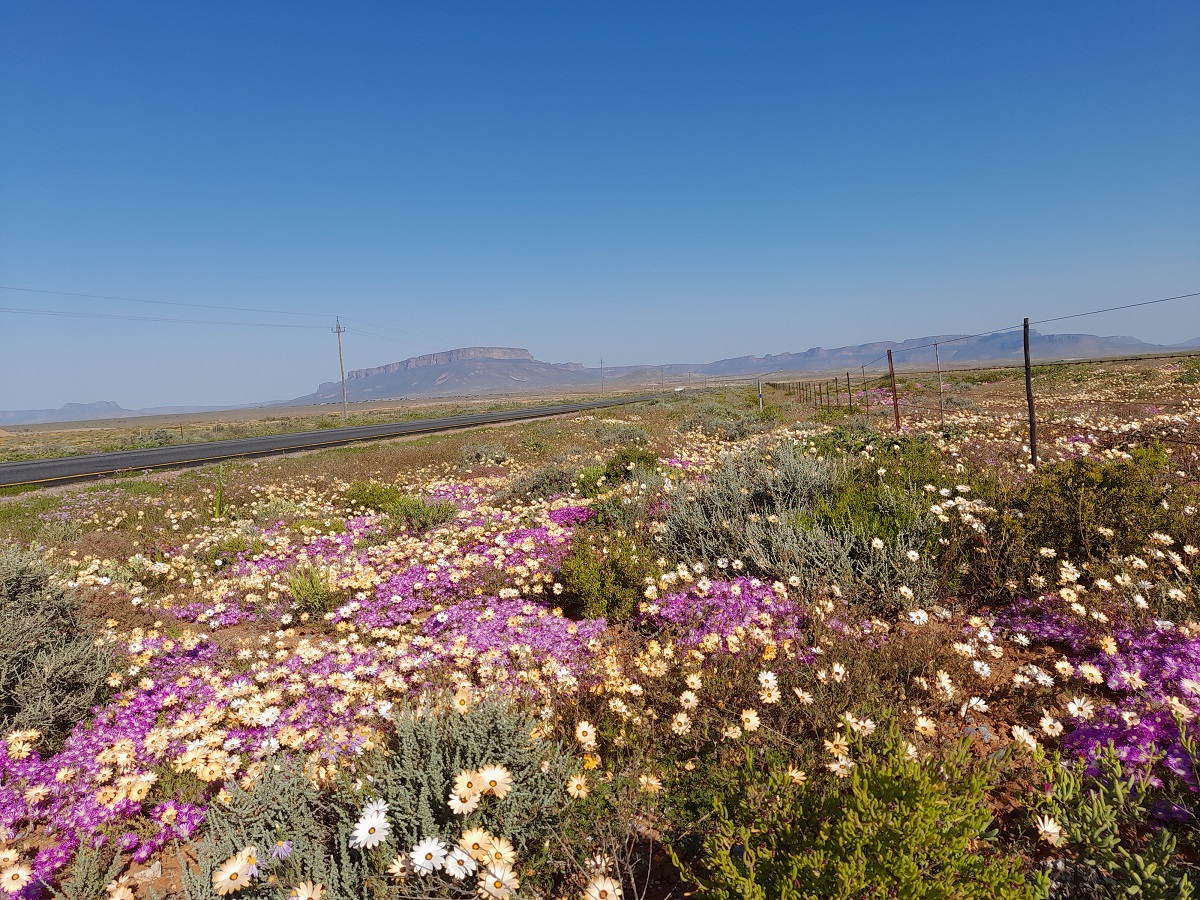
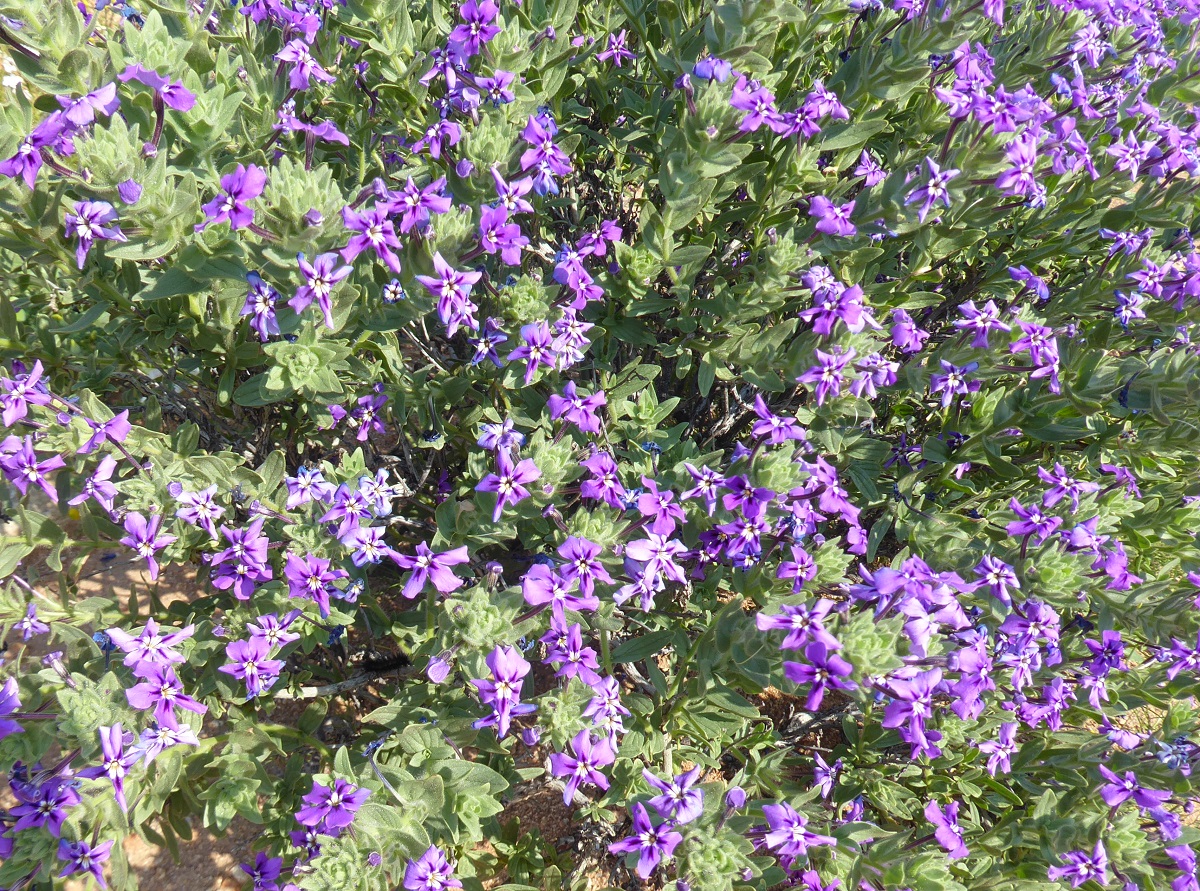
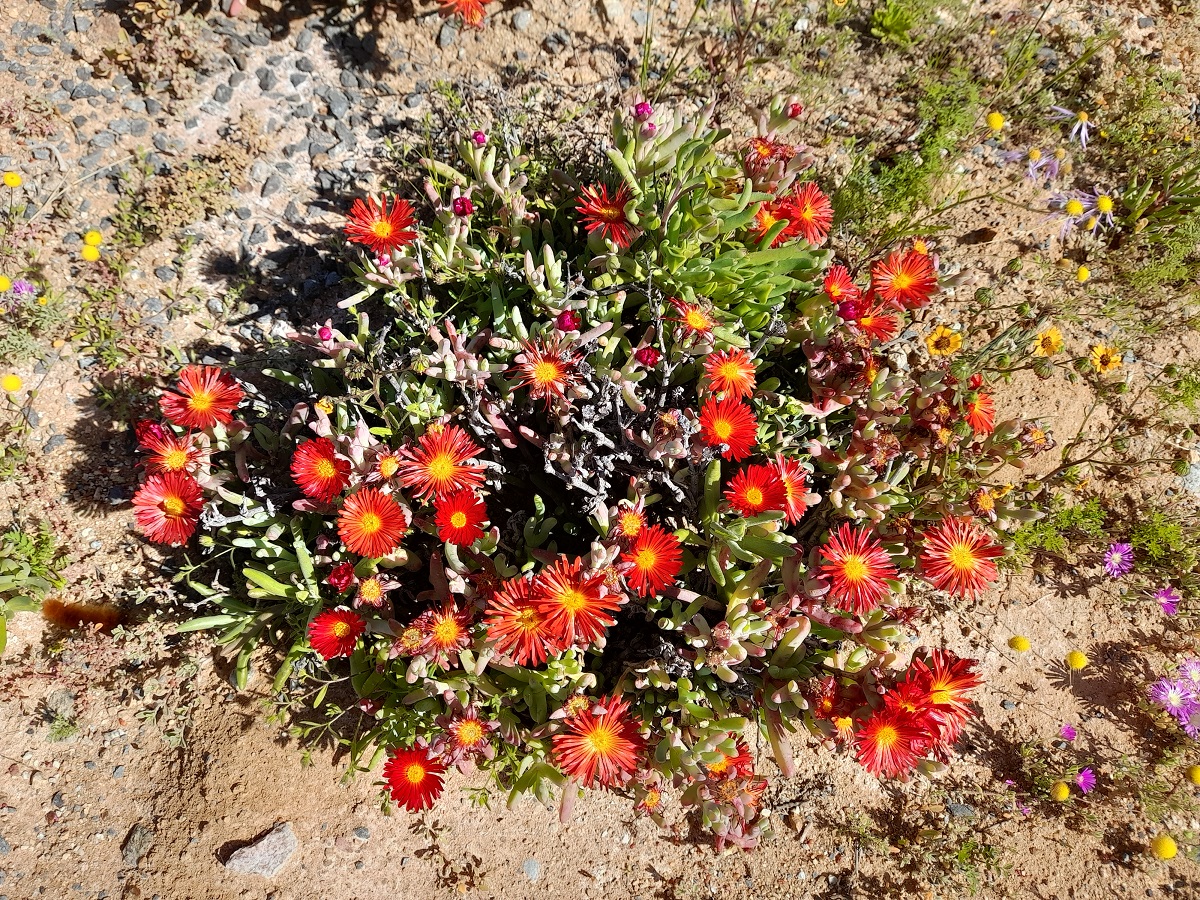
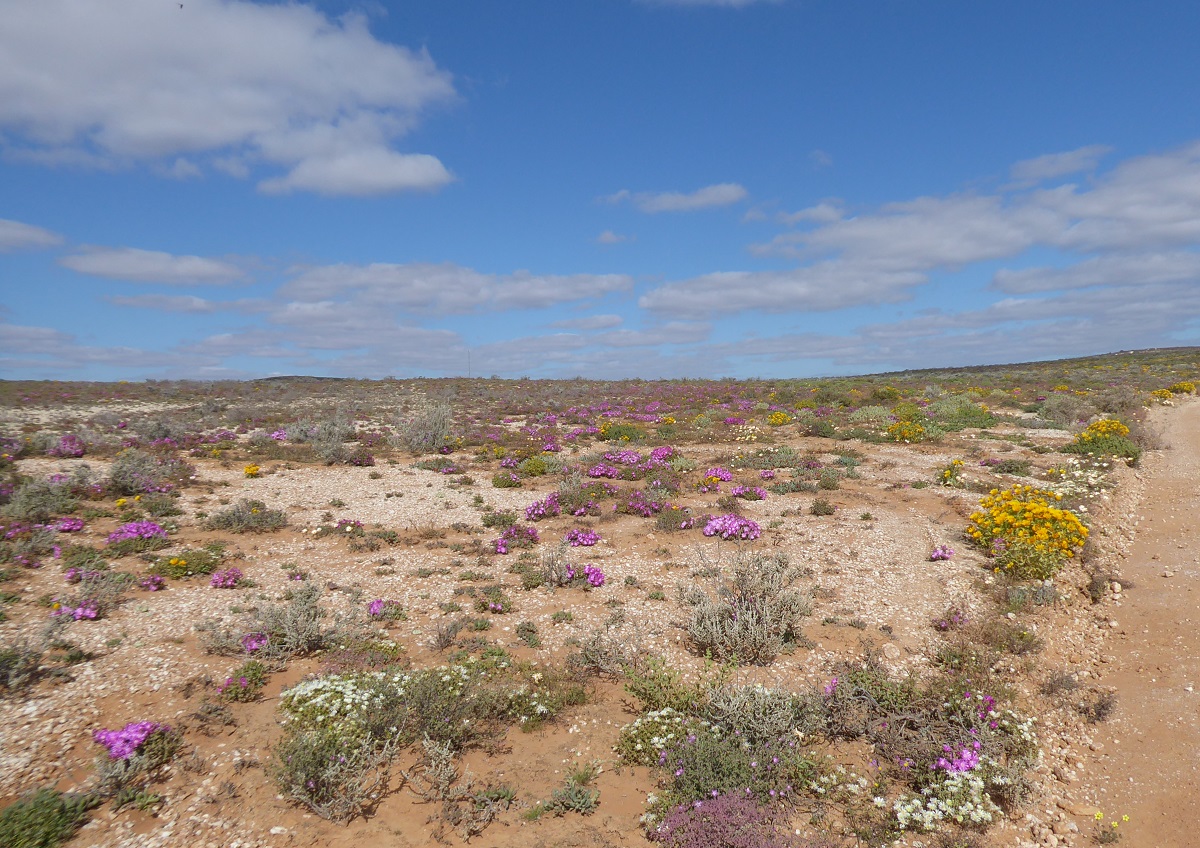
After lunch we sped of back to Clanwilliam, then up the N7 past Klawer and Vanrhynsdorp, seeing some roadside flowers all the way. North of Vanrhynsdorp we stopped to admire the bright pink/purple vygies (mesembs) growing with white daisies near the beginning of the Knersvlakte (quartzite pebbles). North of the Knersvlakte we started seeing the granite koppies which are such a feature of this part of Namaqualand.
The afternoon was drawing on as we raced up past Nuwerus, Bitterfontein, Garies. We had planned to fill up with petrol in Kamieskroon and we pulled into the small town with the emergency tank light showing just after 5pm to find no petrol. The only source of petrol does not operate 24/7. It was a public holiday and they had closed at 1pm. Disaster! We still had 70kms to go to Springbok and would not get there on what was left in the tank, neither could we get back to Garies. We were advised to ask at the hotel, but they could not help us. M remained optimistic we would find a source and boldly flagged down a passing motorist. It was our lucky day as he had half a jerry can full to sell us. He said he kept some petrol in flower season as we were not the first visitors to get stuck! Thanking him profusely, we sedately drove the remaining 70kms, arriving in Springbok as it was getting dark.
After checking into the Du Repos self-catering guest house, we followed our host’s recommendation to the local steak house where we wolfed down their special of rump steak and chips together with a nice bottle of red wine, giving thanks for having survived the challenges of the day!
Thursday
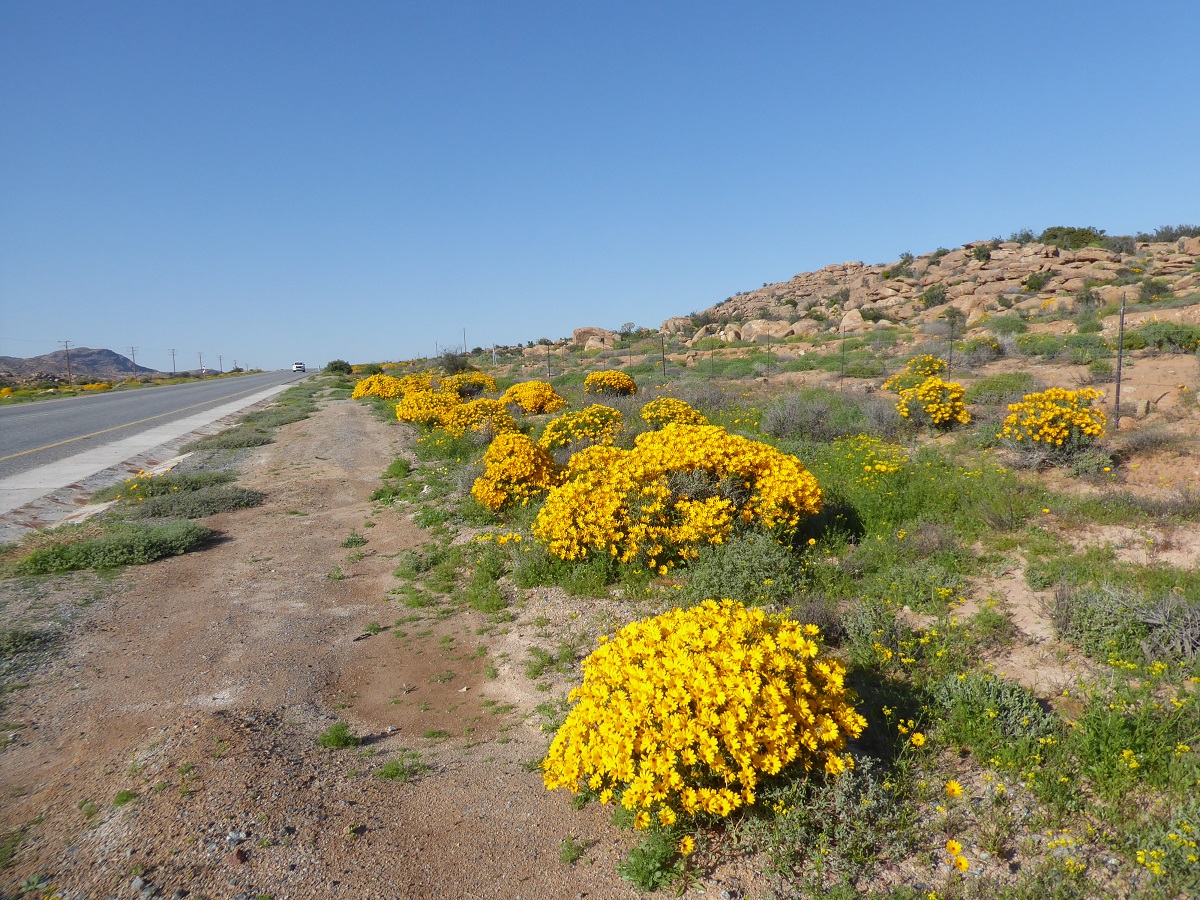
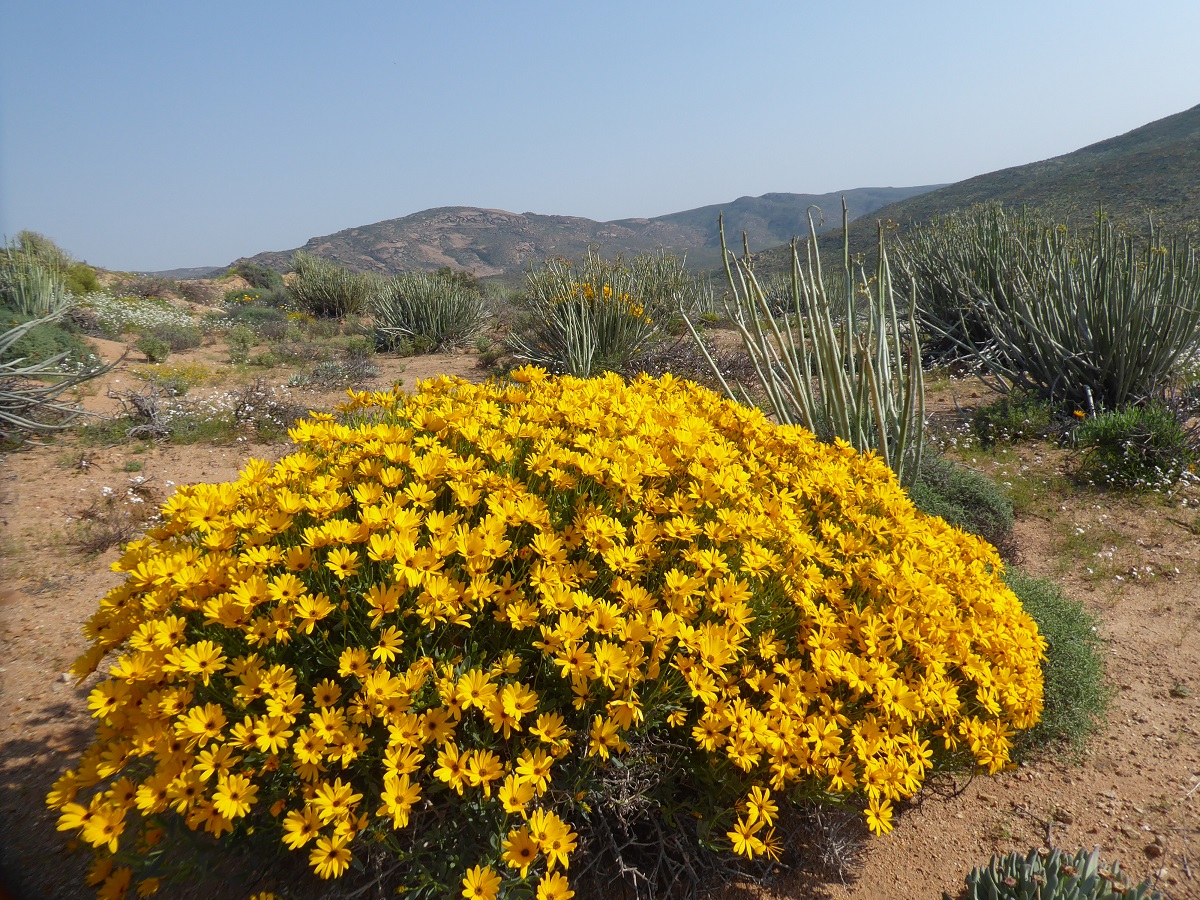
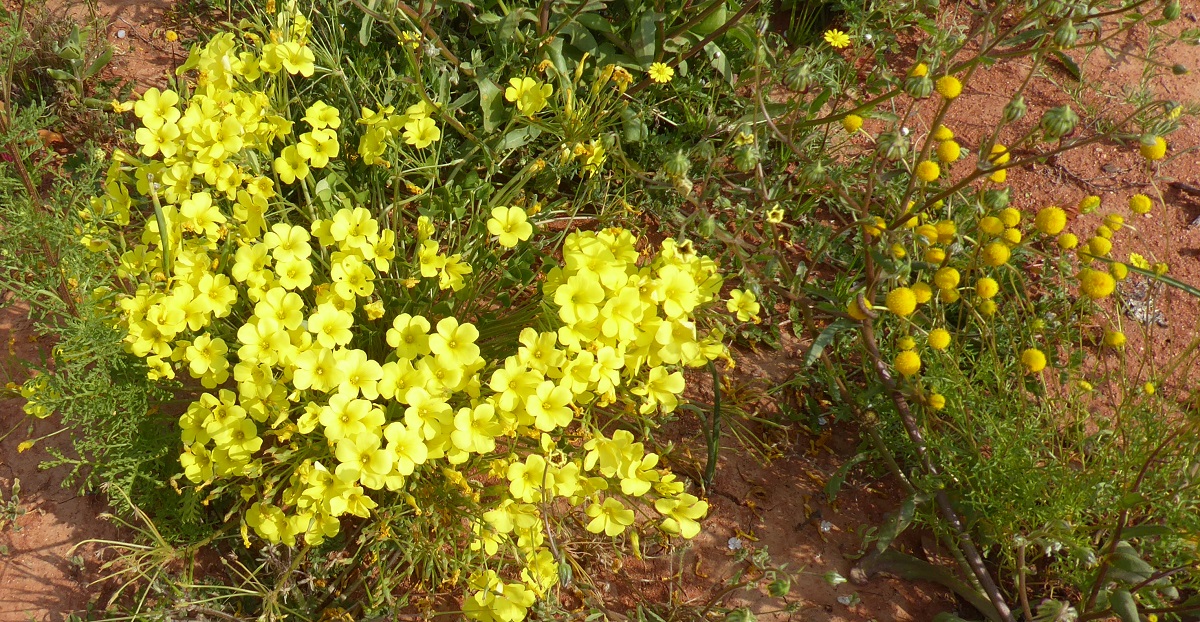
First stop the next morning was to fill up with petrol and to buy provisions for supper. That accomplished, we drove up the N7 to the Bulletrap road as M had heard we might find interesting bulbs up there. We had been warned by our hosts that the flowers around Springbok were only just starting, but there were daisies in the open areas around town and we saw some spectacular bushes of yellow flowering daisies on the N7 north of the town.
Bulletrap.
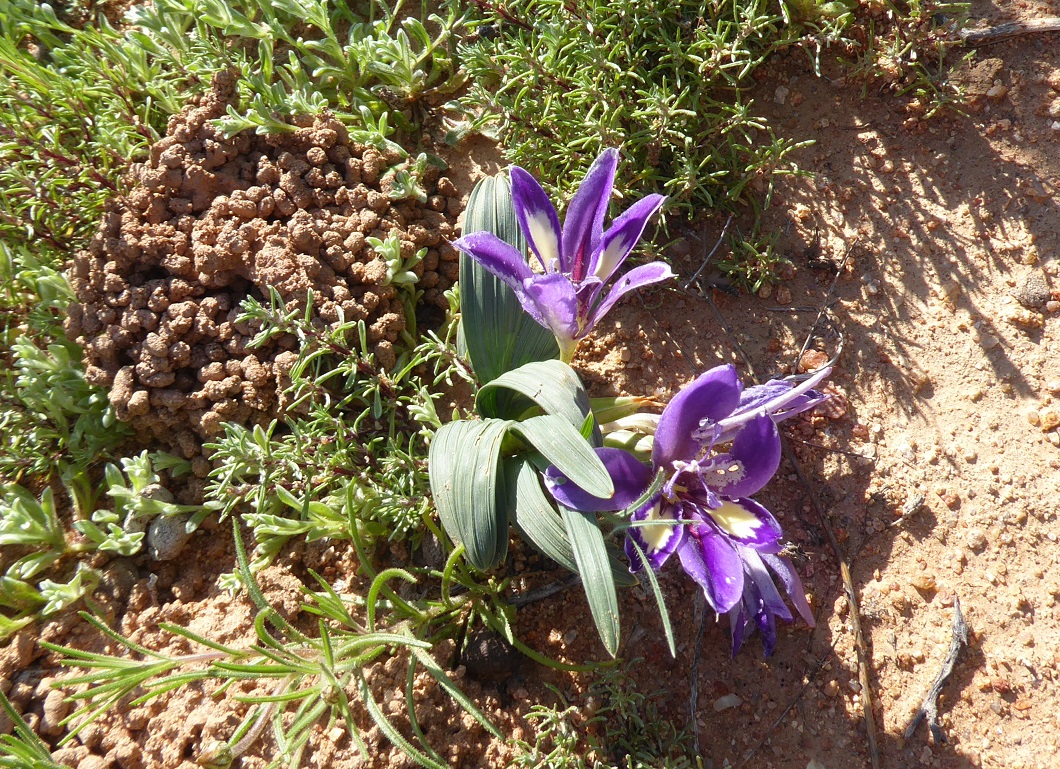
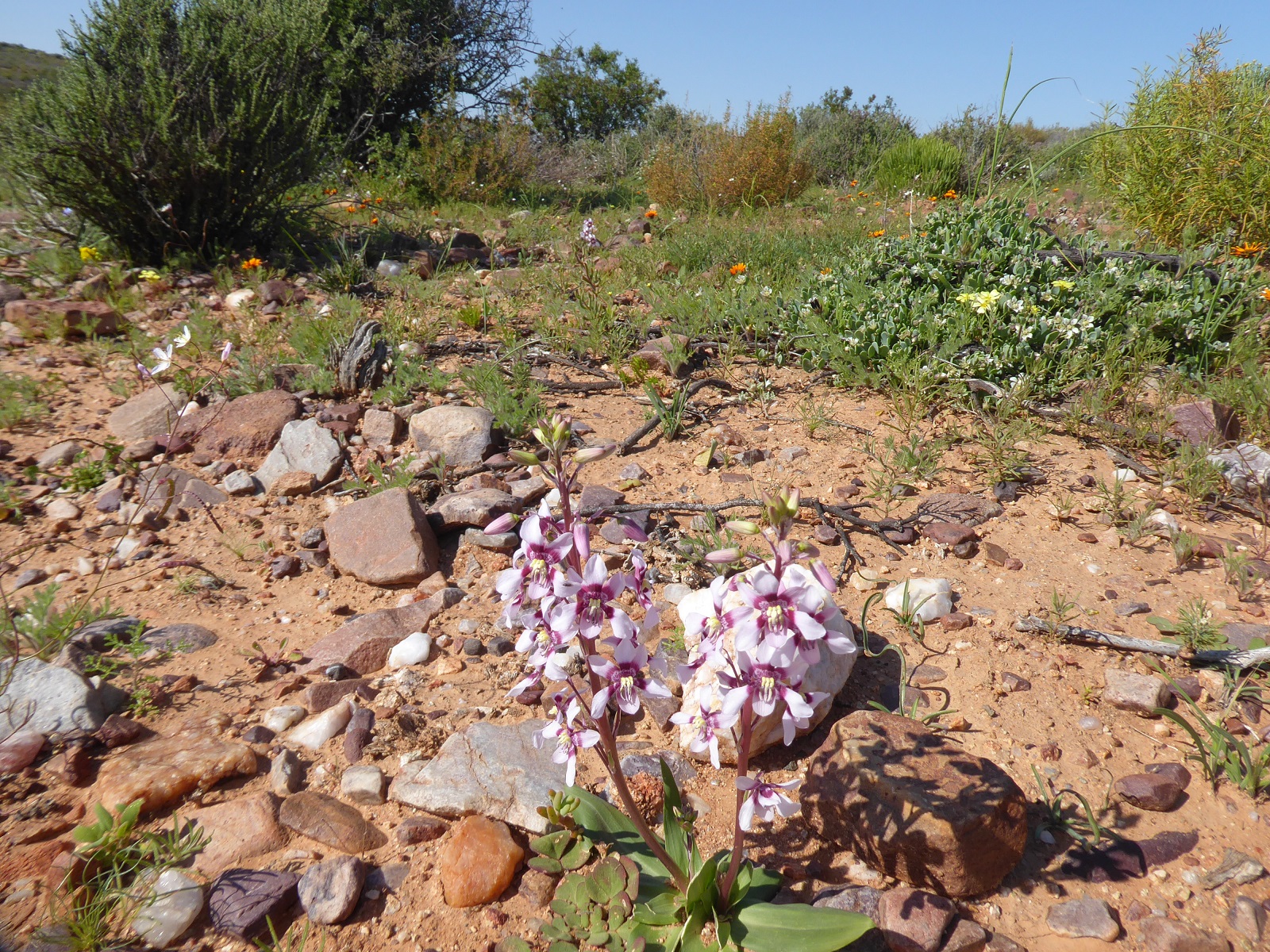
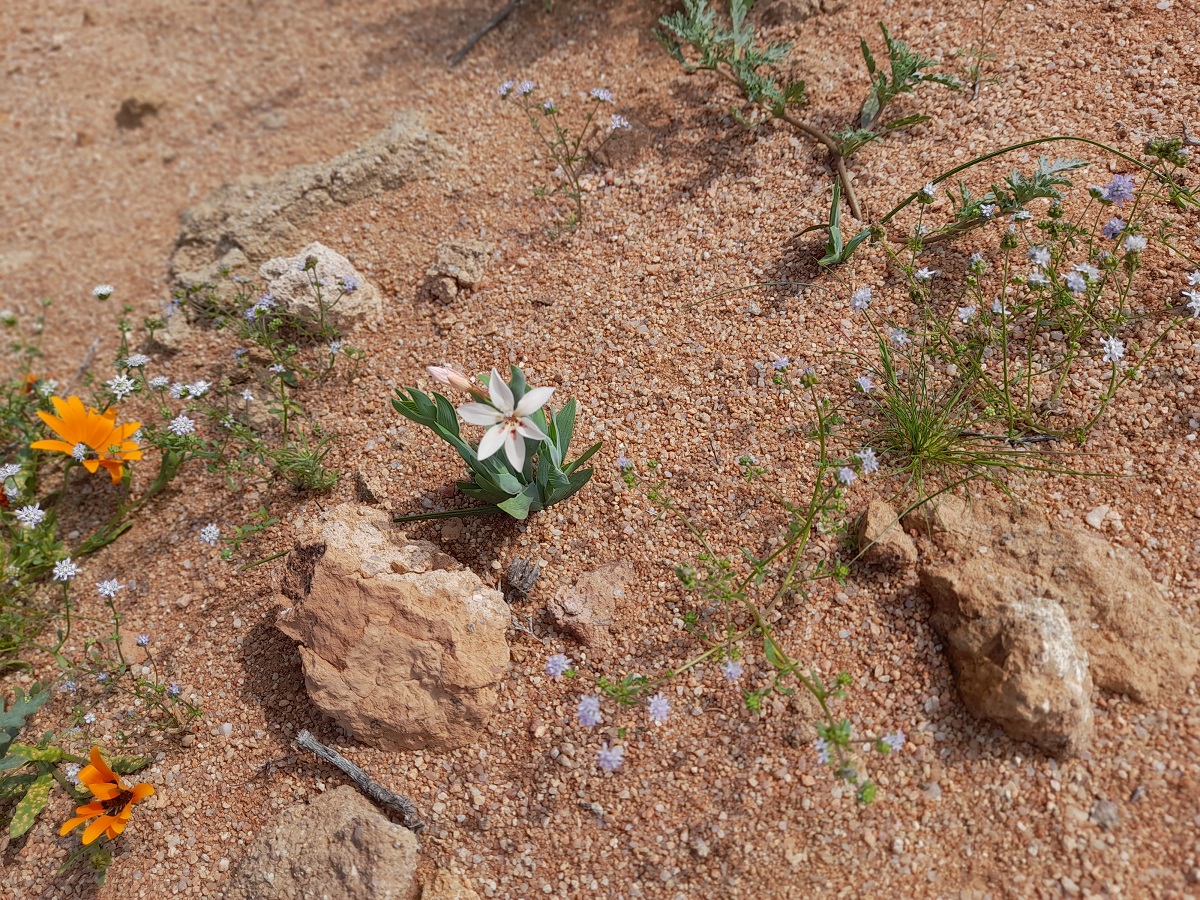
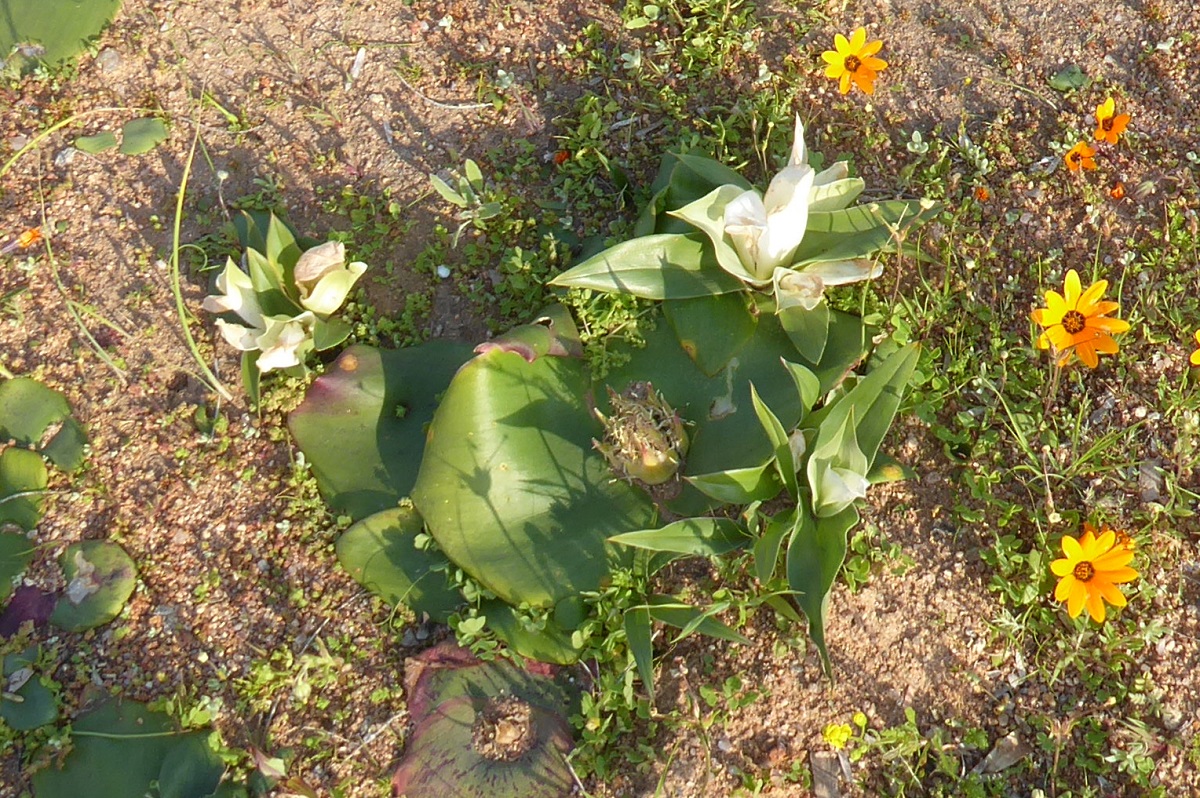
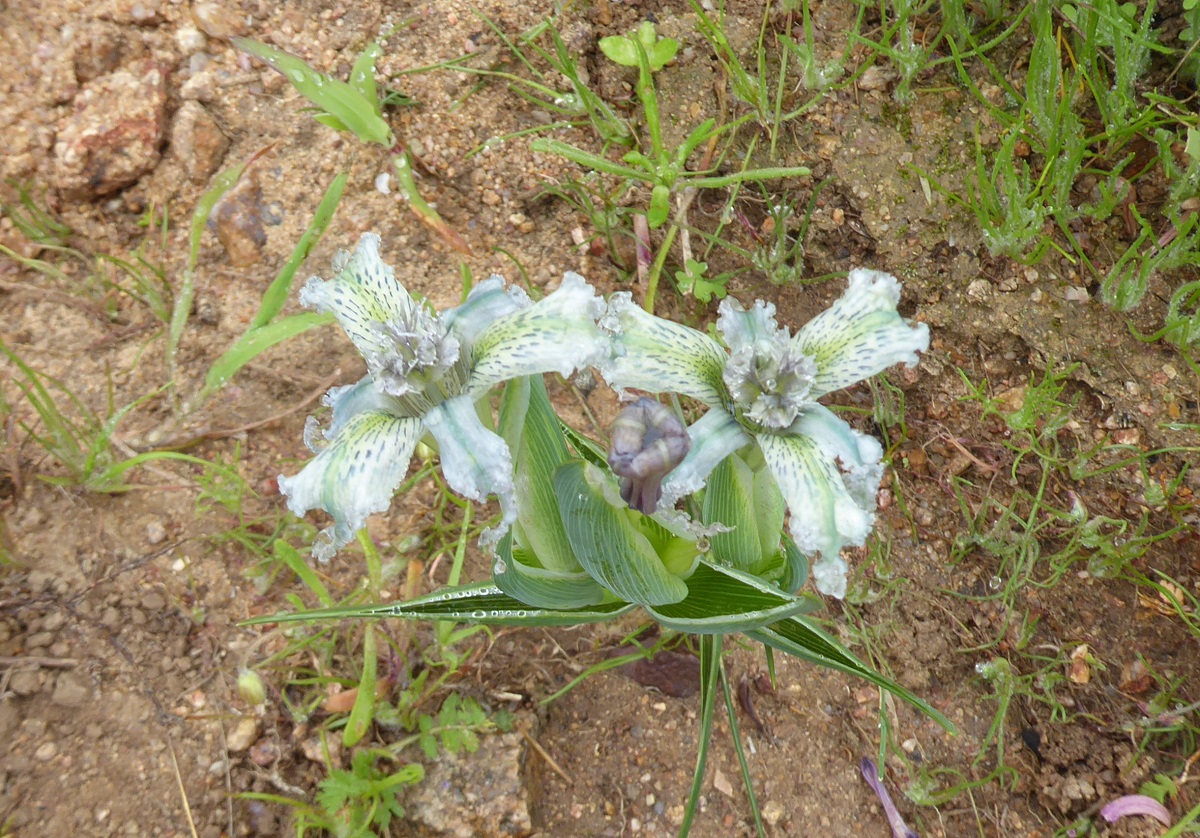
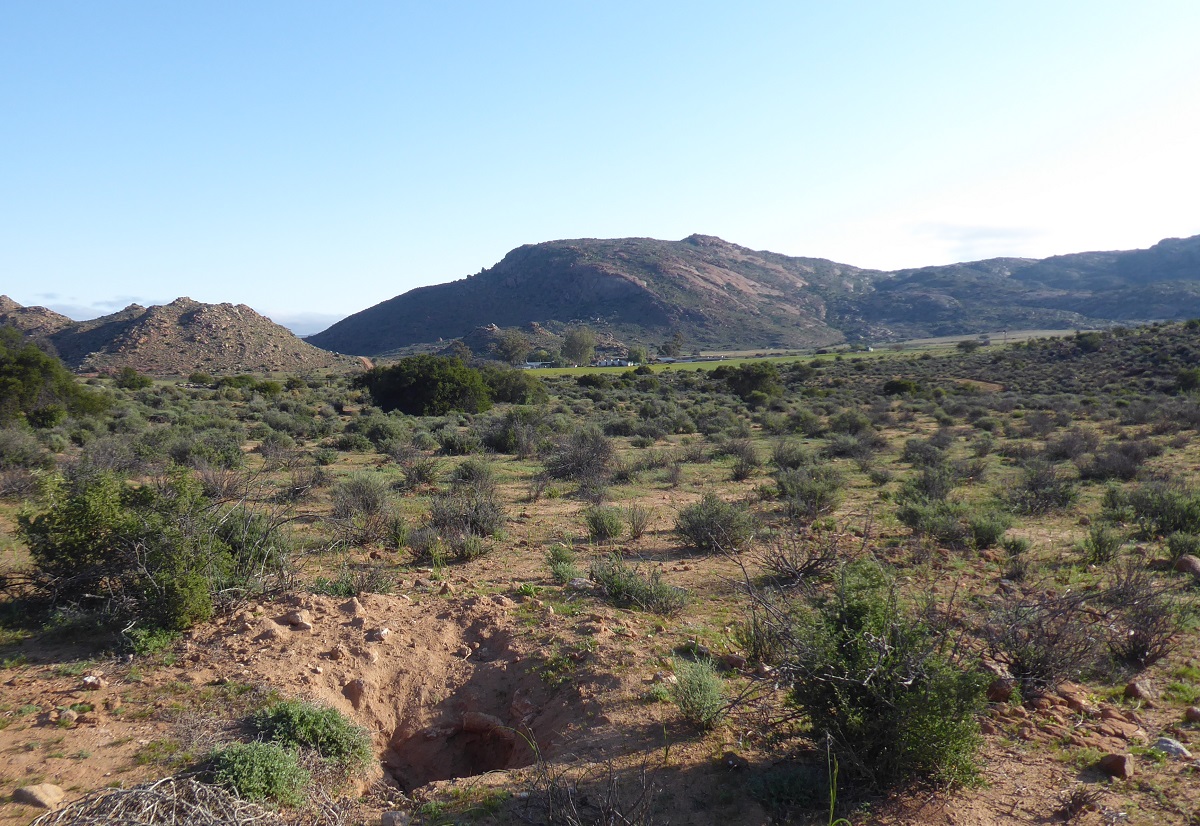
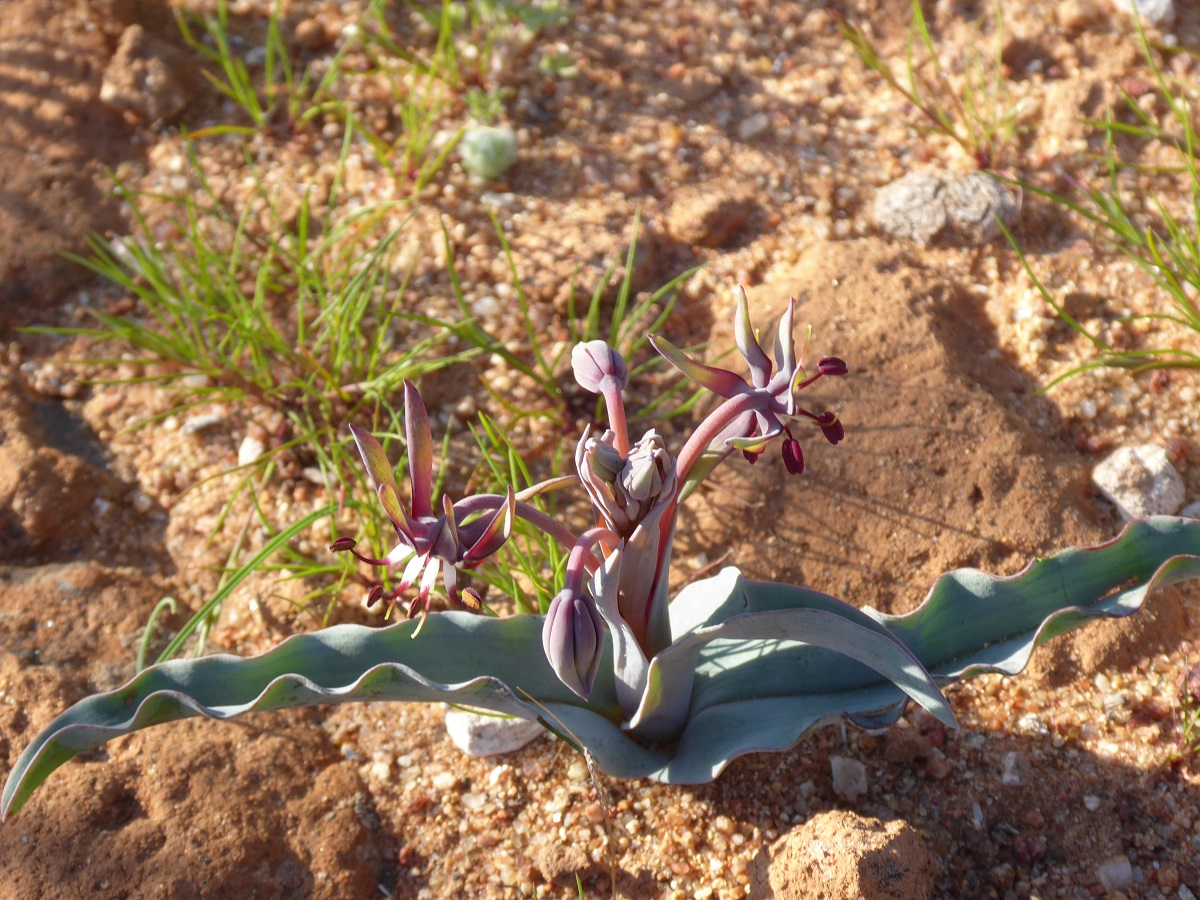
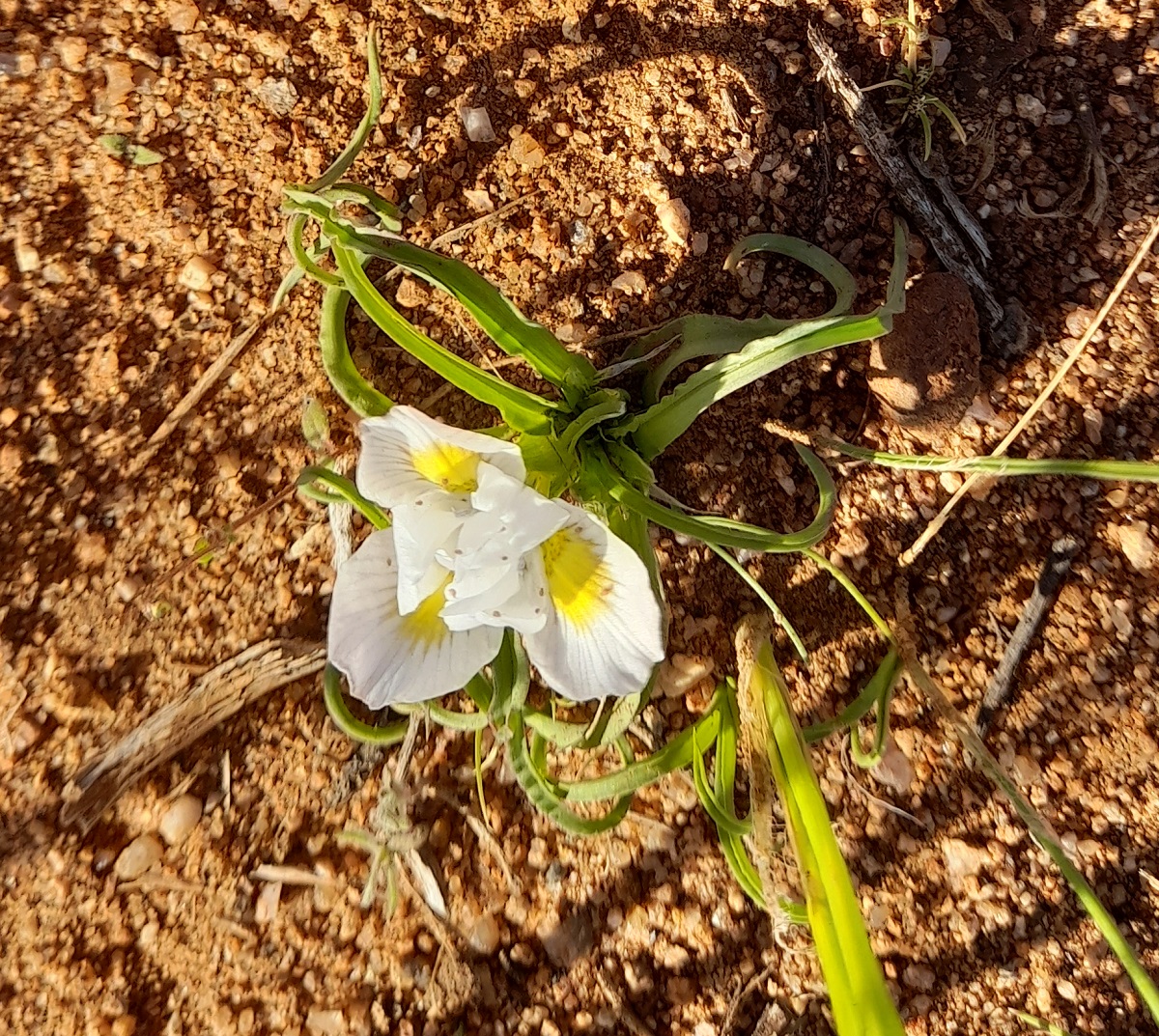
The Bulletrap road was rather disappointing to begin with but we drove on past the little town along the gravel road for a few kms and got out of the car to explore. Here we found some interesting geophytes; a babiana which seemed to have a blue as well as cerise form, two different lachenalias, a lovely large flowered lilac oxalis and a lovely Cynella orchidiformis, among other geophytes. Most of these we were to see again further south.
Okiep and Concordia
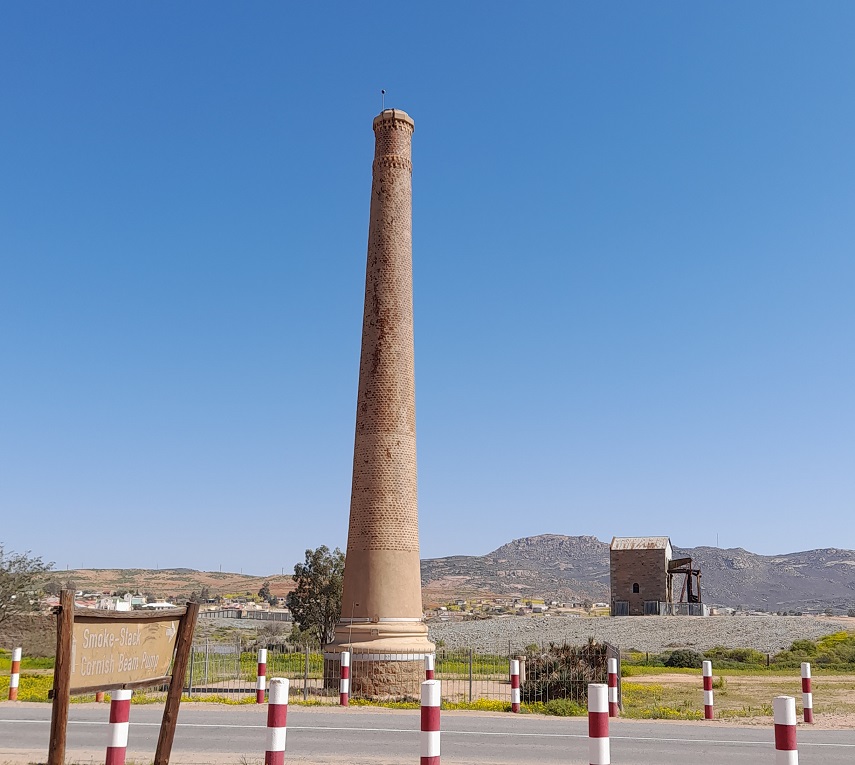
After Bulletrap, I was keen to visit 2 sites marked in my map book: firstly in Okiep the Cornish smoke stack and then near Concordia the very rare geological Orbicule granite koppie. These towns are all close to Springbok. It was easy to find the smoke stack, a tall brick chimney built in 1880 to power a pump to drain the copper mines there. The area around Springbok was famous for its copper mines, although I think all have closed now.
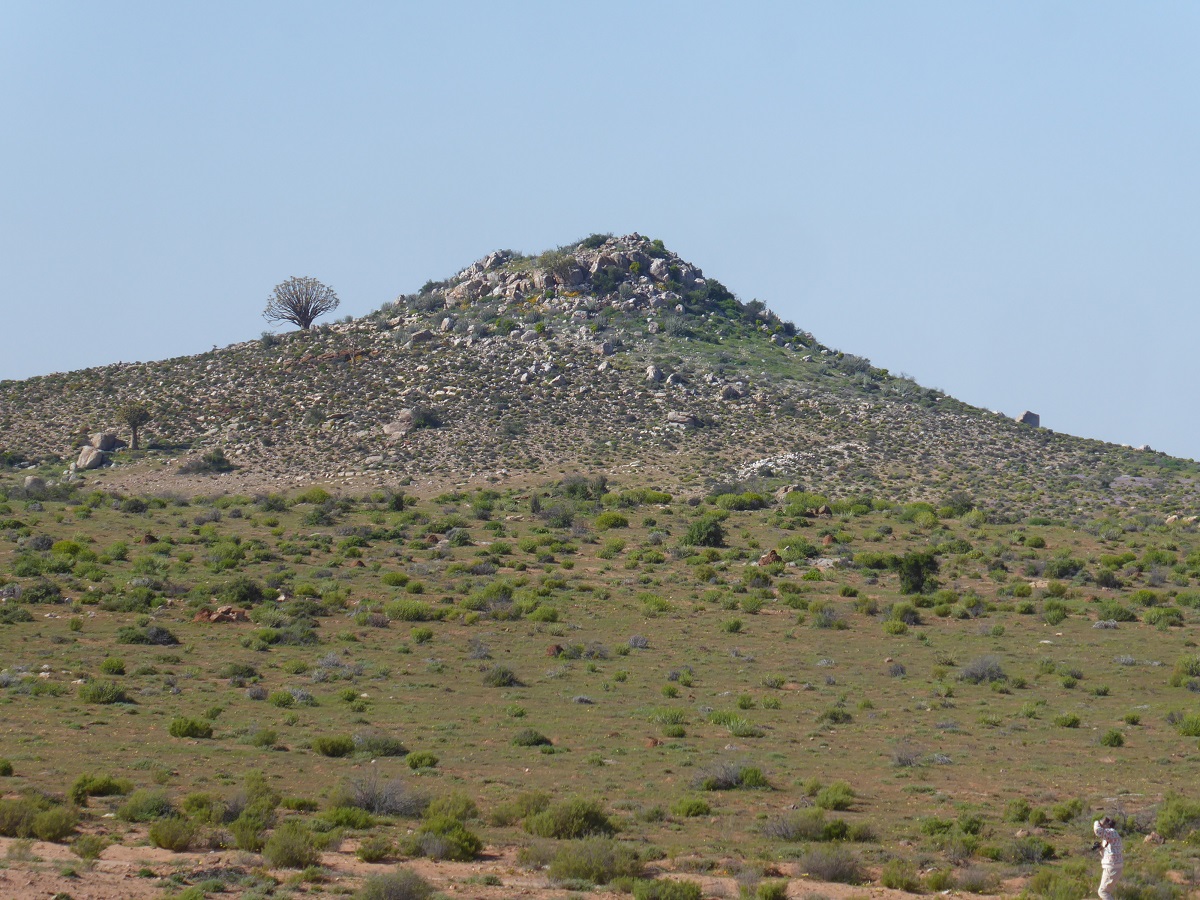
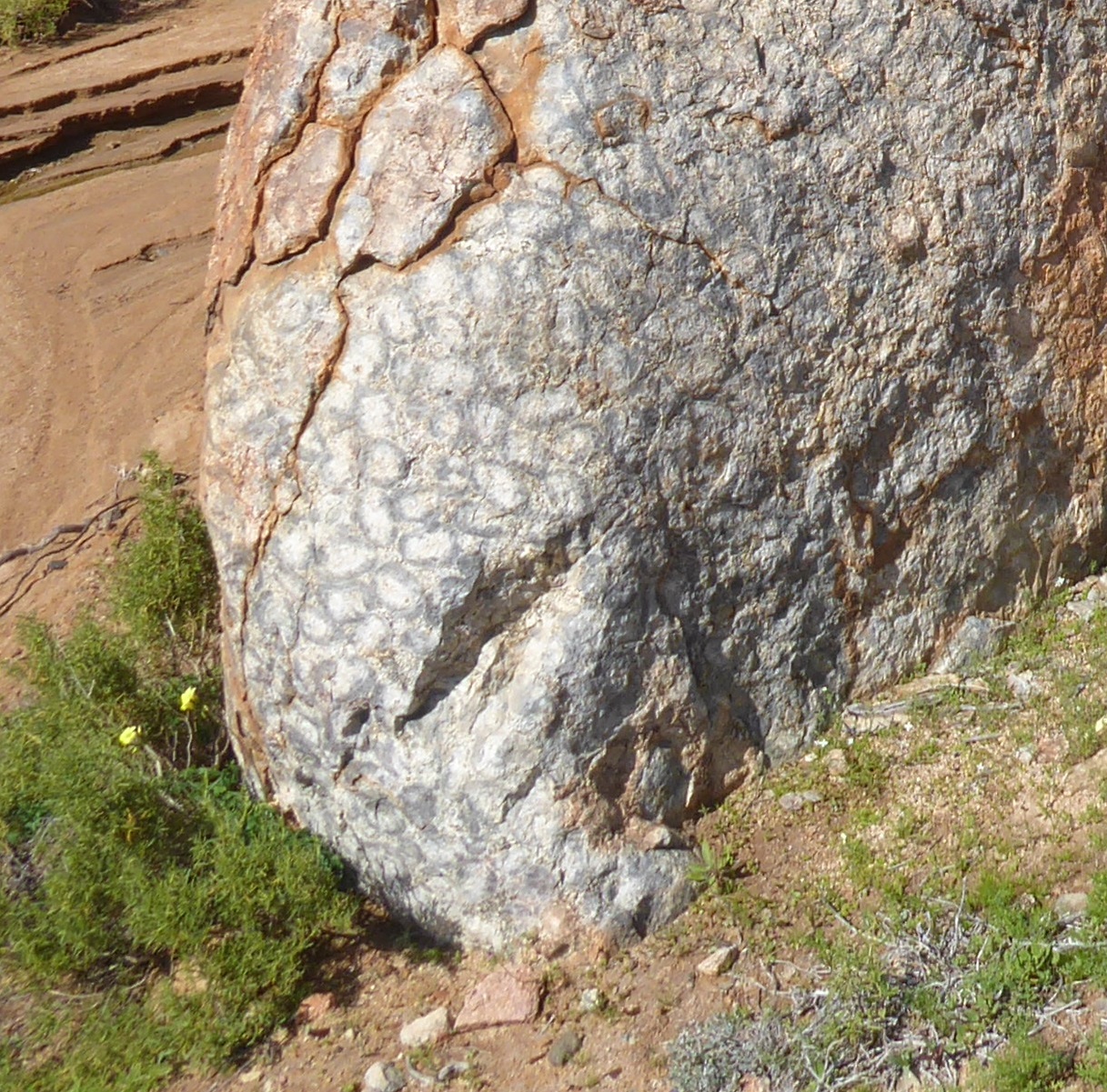
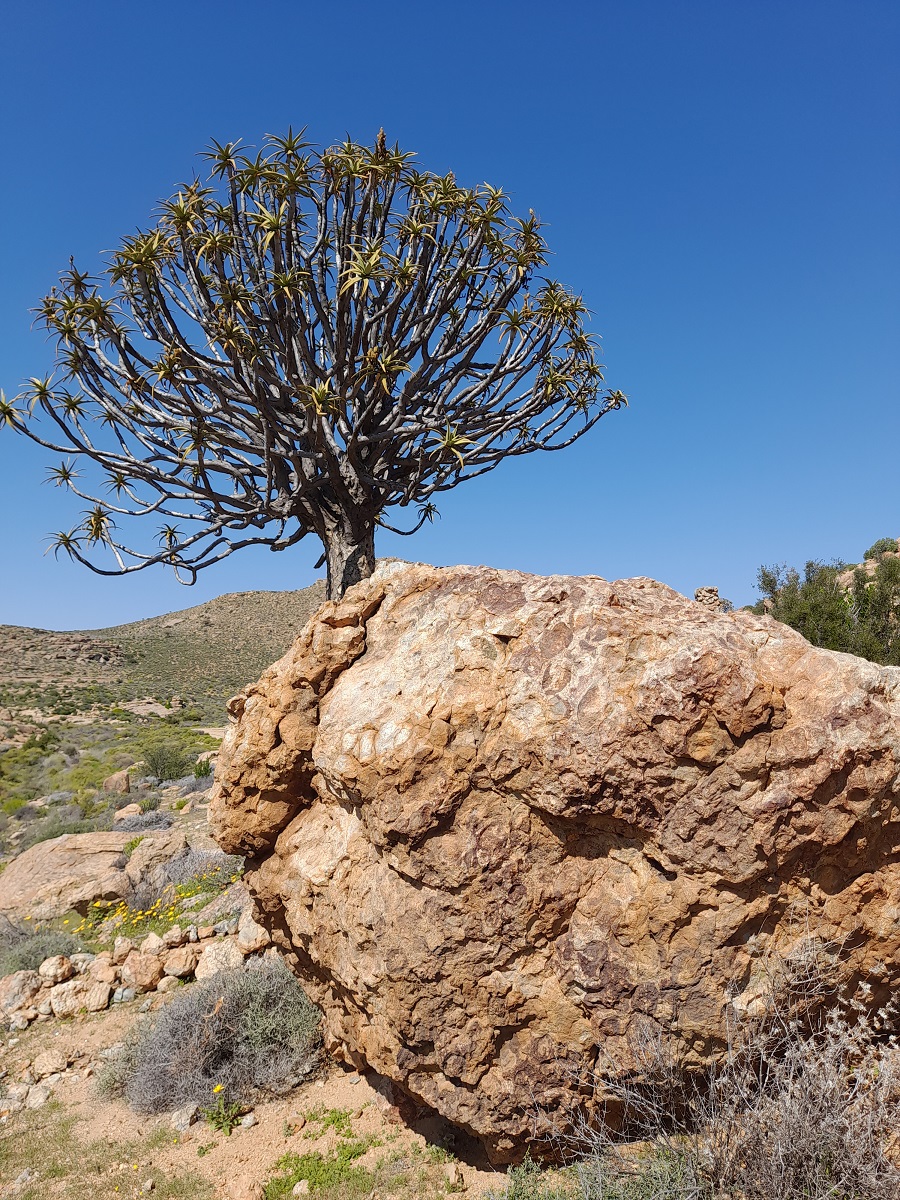
It was very challenging to find the koppie. Firstly there was no signage and we had to ask the way in Concordia. Then the road to the site was appalling and lastly when we arrived there, the site was trashed with broken glass everywhere and information plaques stolen. It is a very scenic spot with some large Aloidendron dichotoma (kokerboom/quivertree) on the koppie. Not being geologists, we were not sure what to look for, but we found some boulders that did not look like anything else about. They seemed to be made up of what looked like round lumps of mud clumped together, unlike the layered or solid look of the surrounding boulders. Some were brown and one was grey. We did not have time to walk around the koppie to see if there were more.
Goegap Nature reserve and Nababeep
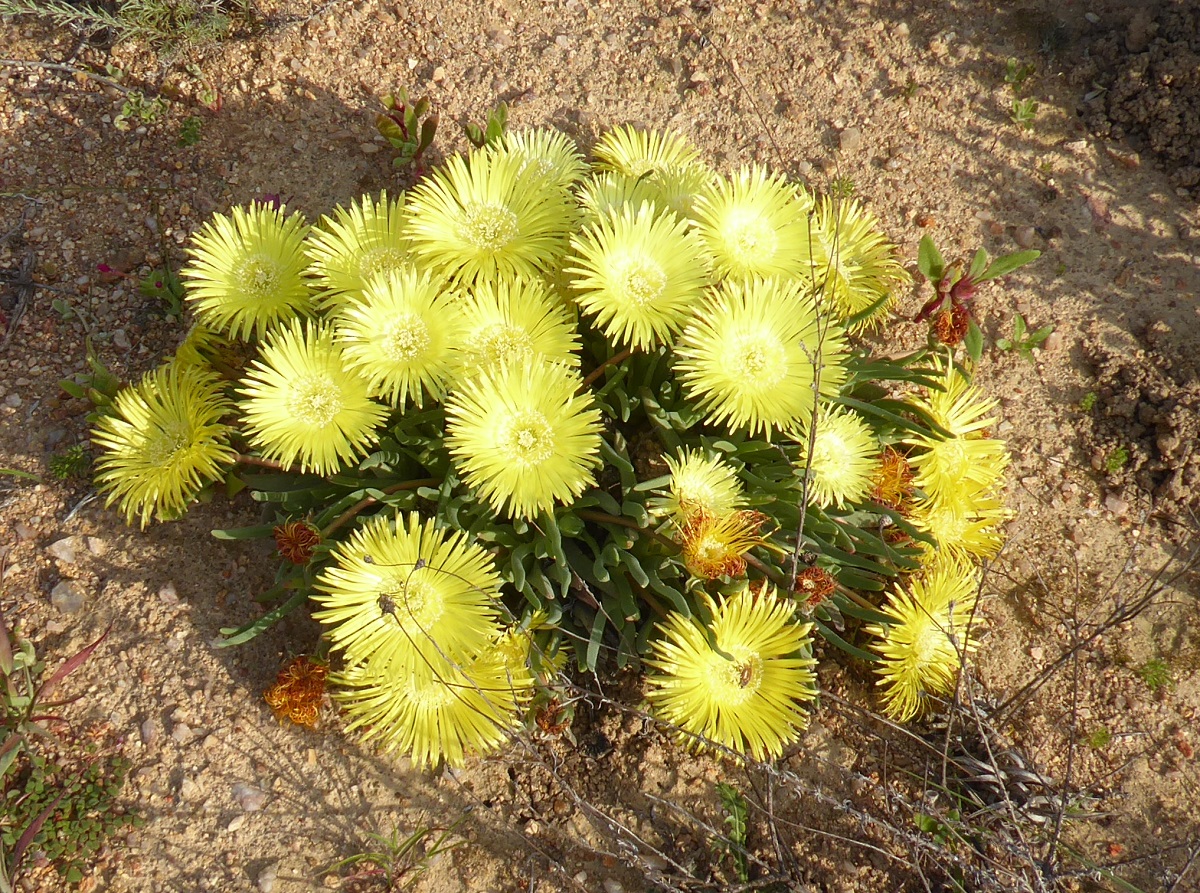
After lunching at the koppie we headed to the Goegap Nature reserve which lies just SE of Springbok. Here we visited the Hester Malan succulent garden which was interesting and well labelled and then drove around their 13 km tourist trail where we saw some flowering sarcocaulons (candlebushes). The reserve was not ablaze with colour, however. On the way back to Springbok we passed a hillside covered in lemon yellow vygies that was rather spectacular.
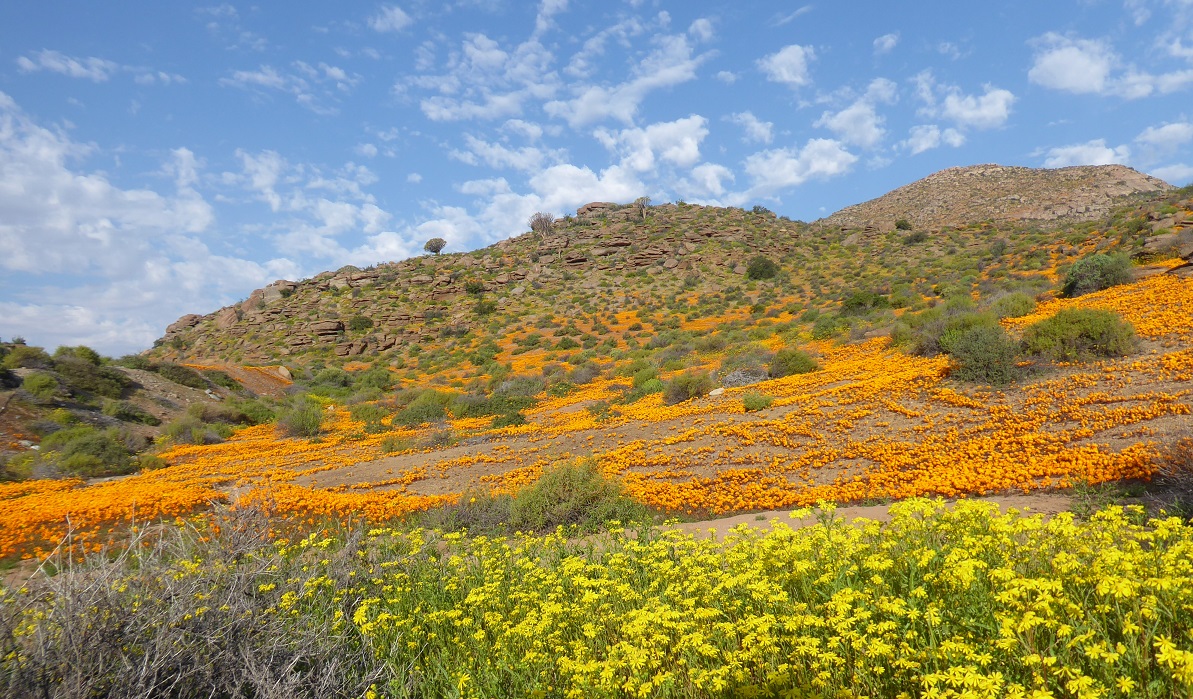
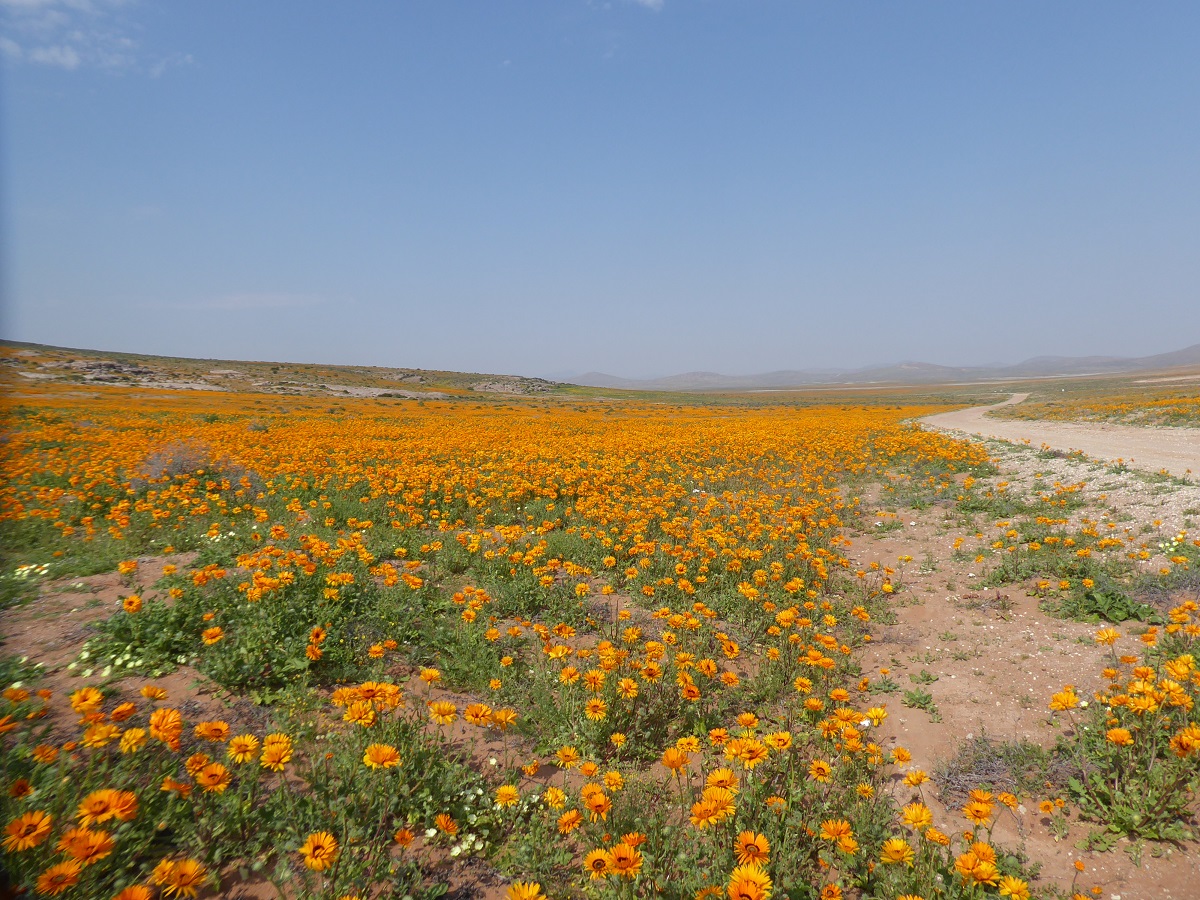
As the afternoon was still warm and sunny we headed to Nababeep which is another old mining town, just NW of Springbok. Here we saw hillsides covered in orange daisies which were just starting to close for the night. It was all rather spectacular.
Back in Springbok we cooked ourselves some delicious local lamb chops for supper and settled down for a comfortable night.
Friday
This was another lovely sunny warm day. After packing up, we headed back down the N7, till we found a turn to Hondeklipbaai. It was our plan to take the gravel roads down W of the N7 to Soebatsfontein and then work our way E across to Kamieskroon. We had been told the flowers were good around Soebatsfontein. My bakkie might not have enjoyed this day as the roads were rather challenging in parts, but we saw some lovely flowers.
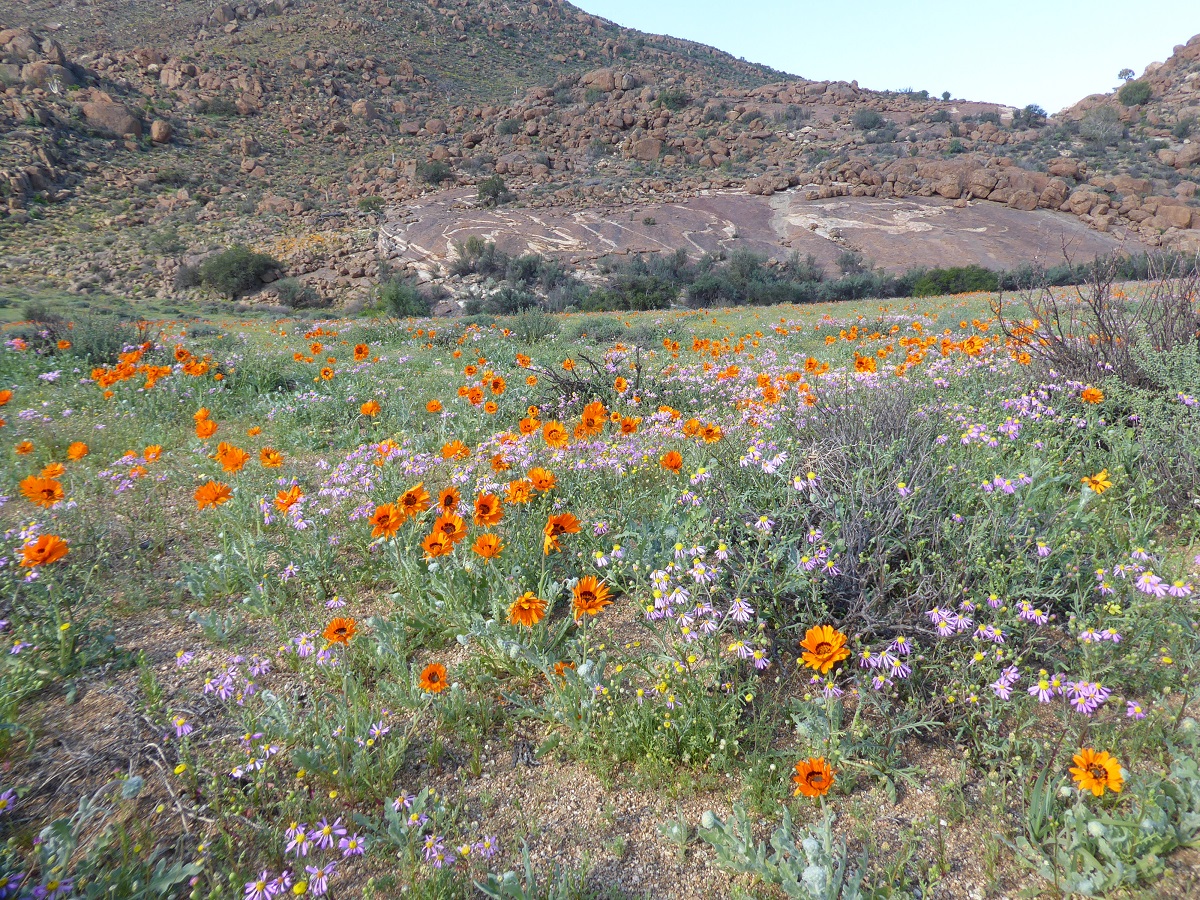
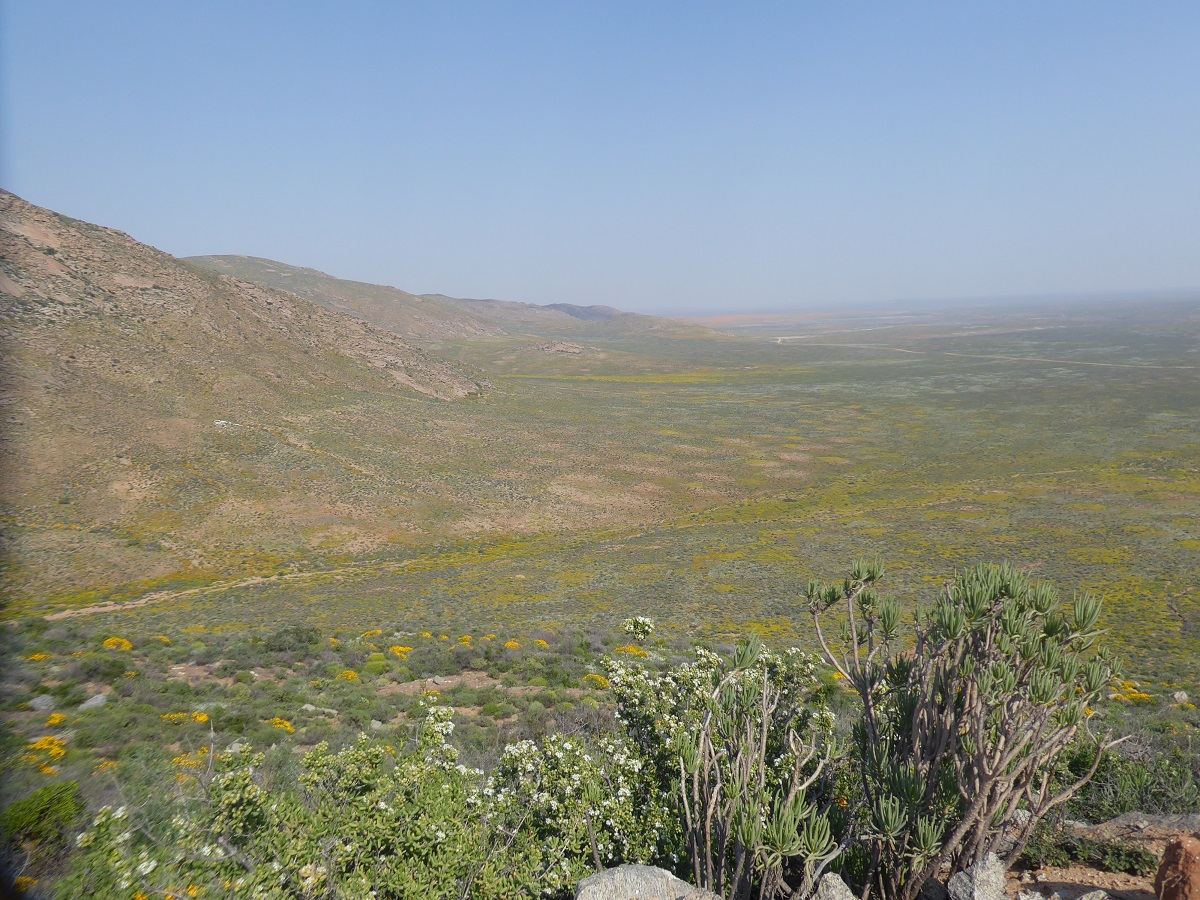
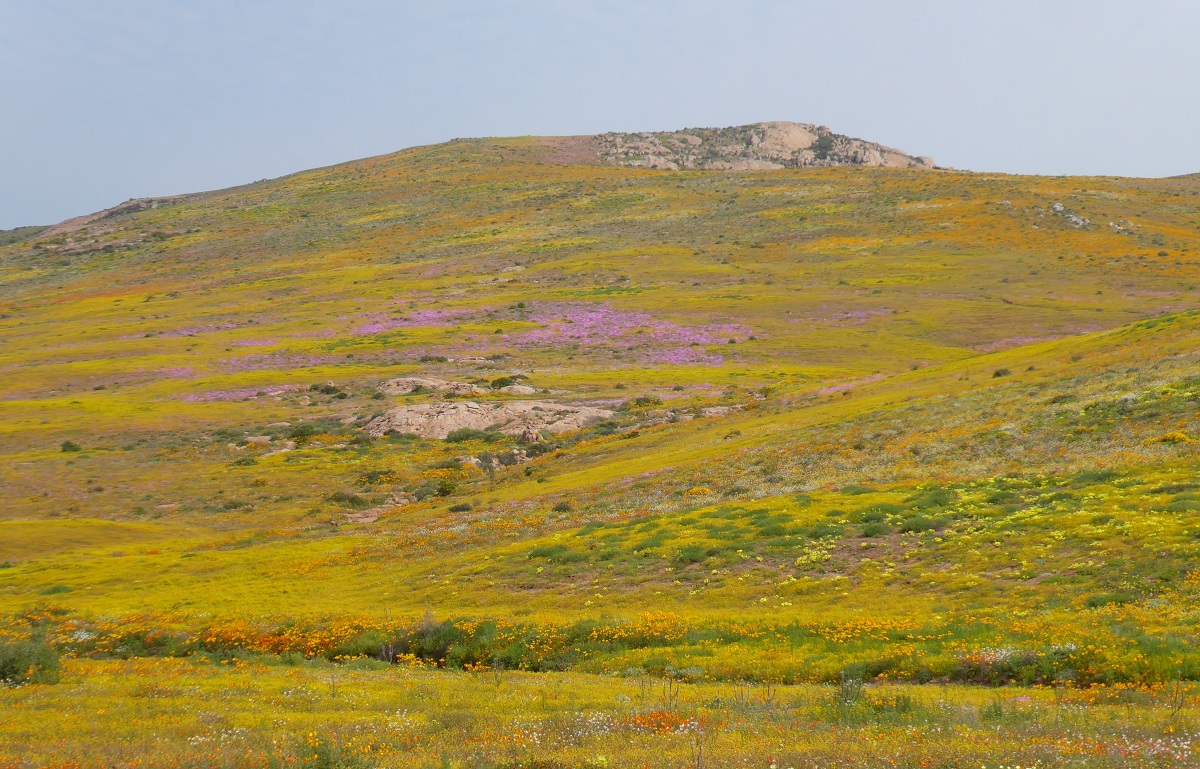
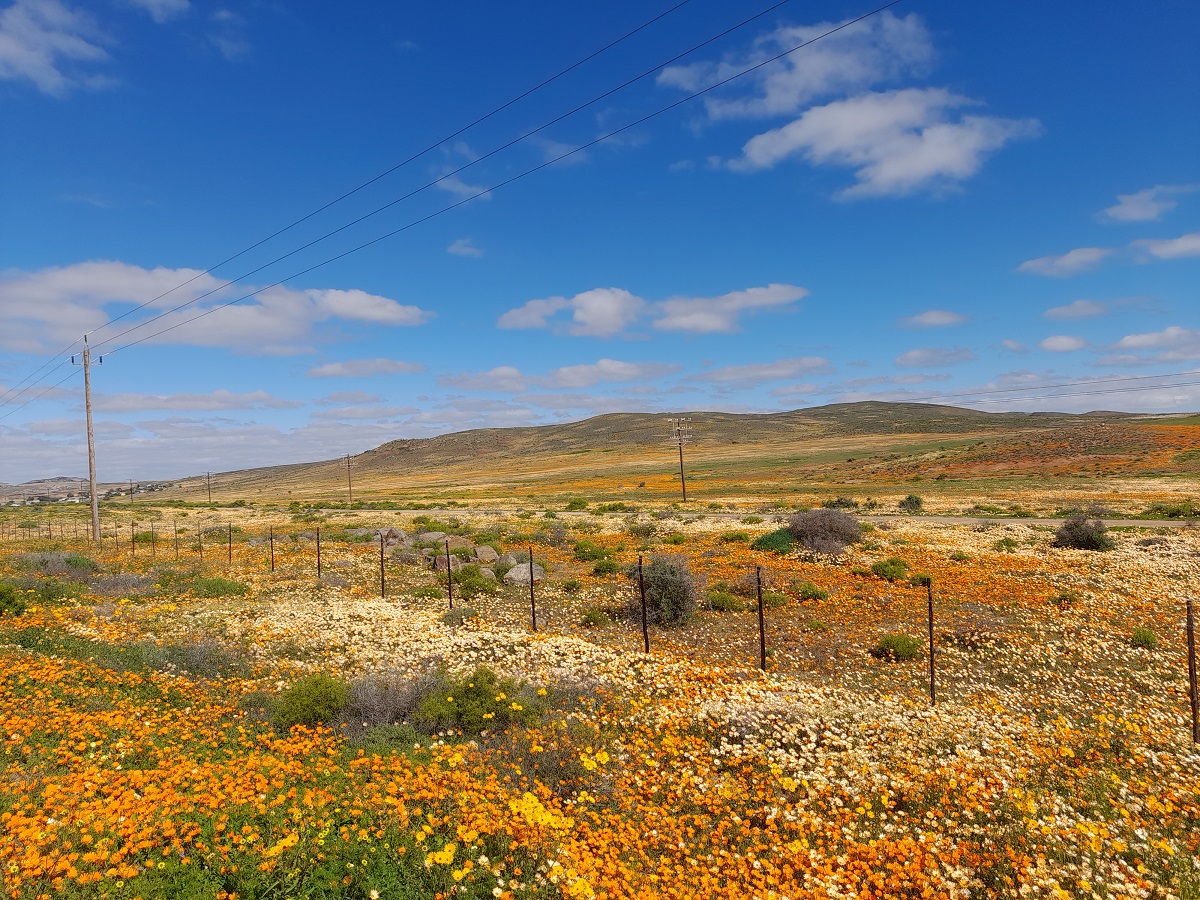
About halfway along to Soebatsfontein we descended the Messelpad and Wildeperdehoek passes and travelled along the Messel (mortar) pad which had been built by convicts from the Cape in the 1860’s. They were brought by boat to Hondeklip bay and housed in prison below the road. The ruins can still be seen in the distance. The road was built to get the copper to Hondeklipbaai, but then plans changed and Port Nolloth was chosen instead. Before the final descent one has a far reaching view of the sandy flats stretching towards Soebatsfontein. At this time of the year they were ablaze with colour.
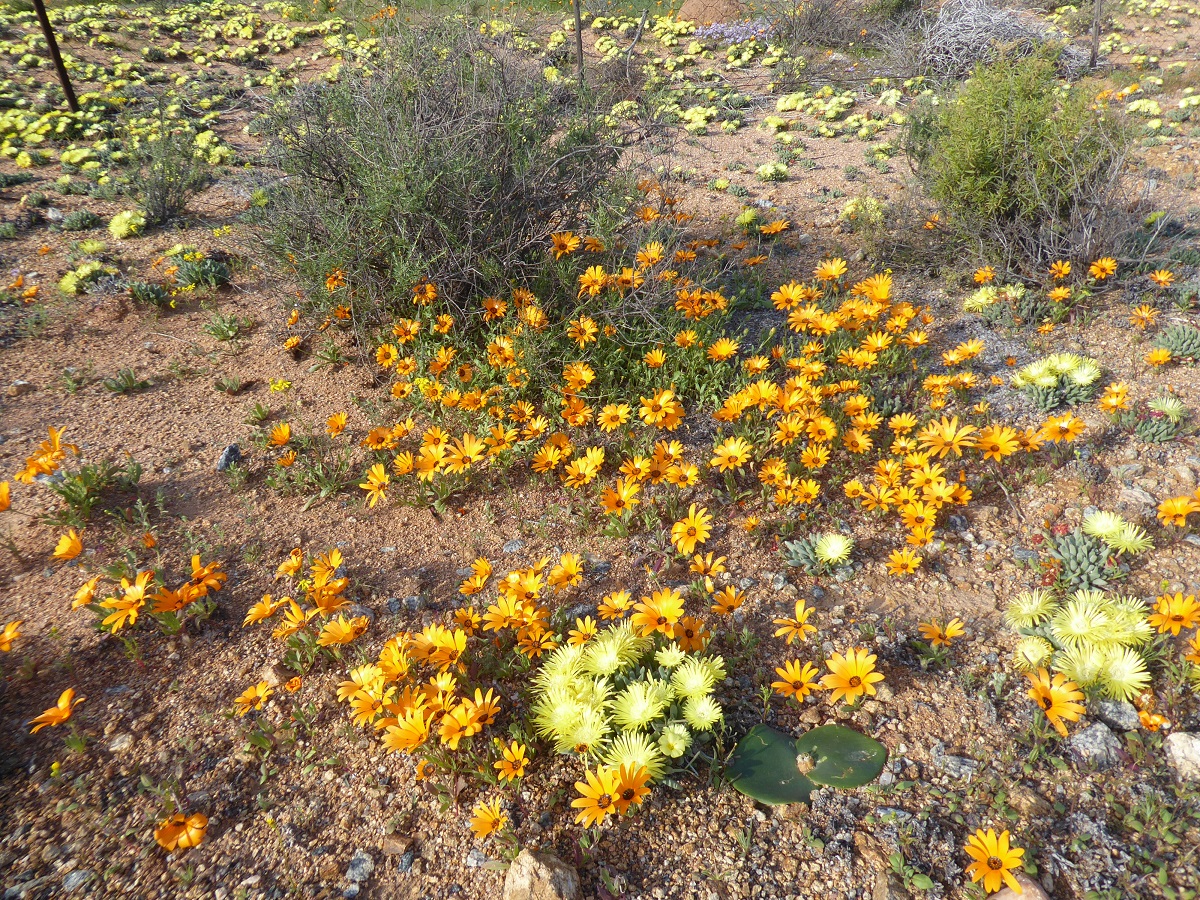
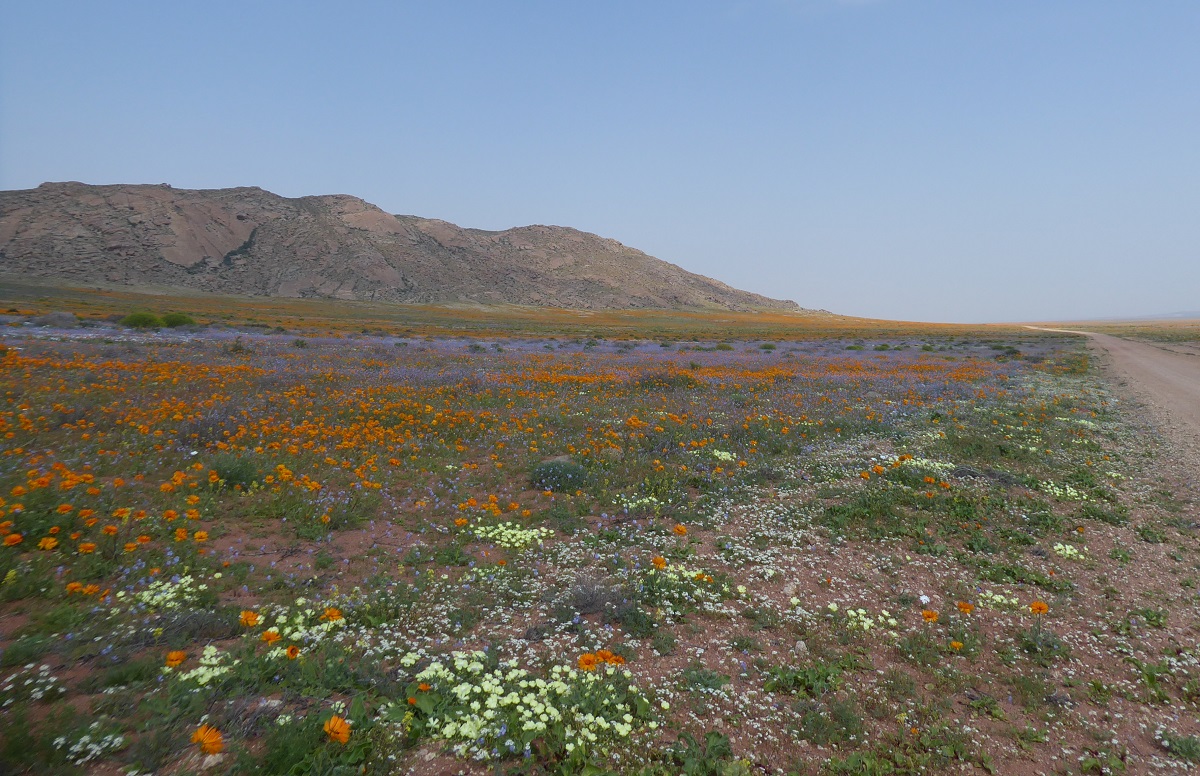
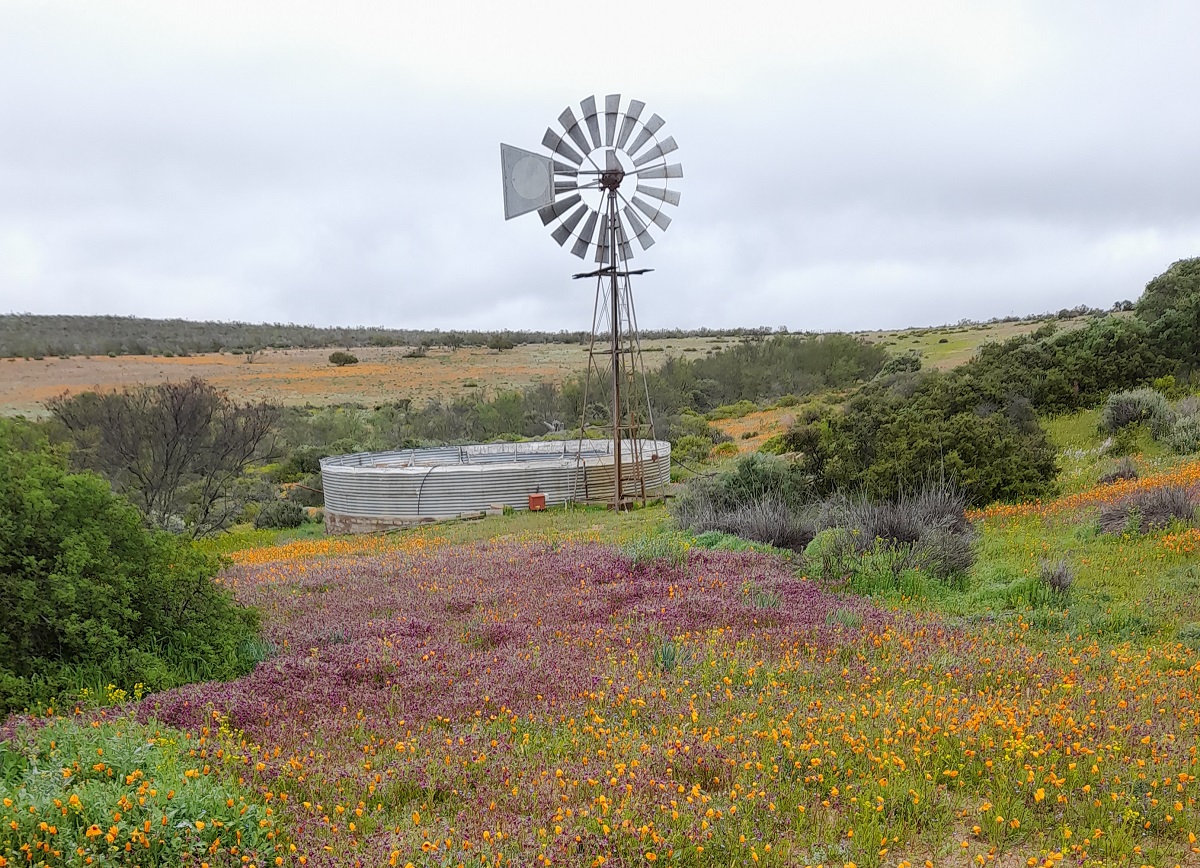
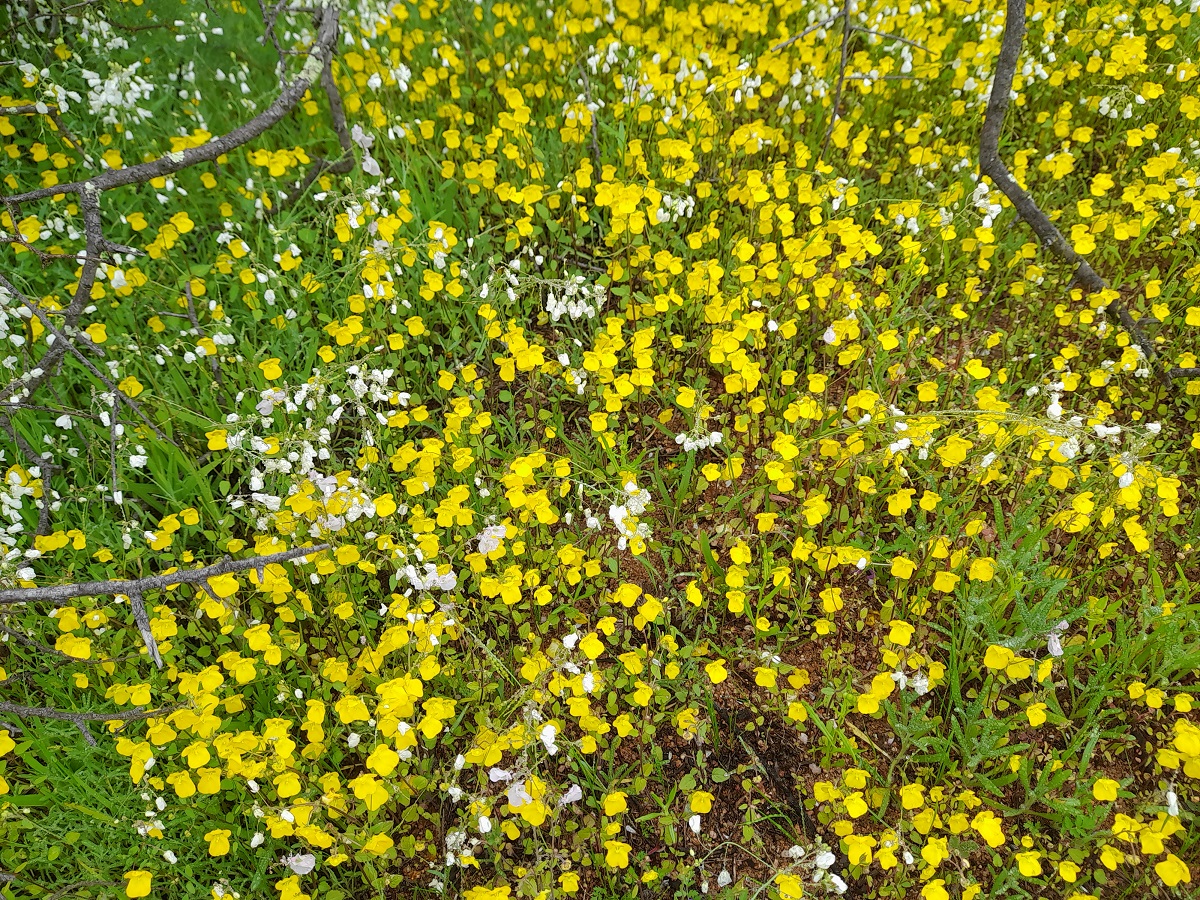
We stopped on the flats to admire the daisies (orange and white), purple senecio and yellow satin flowers (Grielum) which made up the large patches on colour, along with other little annuals and some geophytes. When we reached Soebatsfontein we hoped to travel through the Namaqua National Park to a section called Skilpad, but we were warned that it was a 4×4 route only. We entered the park and travelled a few kms to find a spot to picnic for lunch. The hills there were all lemon yellow, covered by a cotula which has little balls of flowers.
After lunch we returned to Soebatsfontein and took the road south. Here once again we were lucky and saw some spectacular sights of hillsides covered in yellow (cotula) and mauve (senecio) and orange patches. It is difficult to describe how beautiful these are, like some subtle abstract painting.
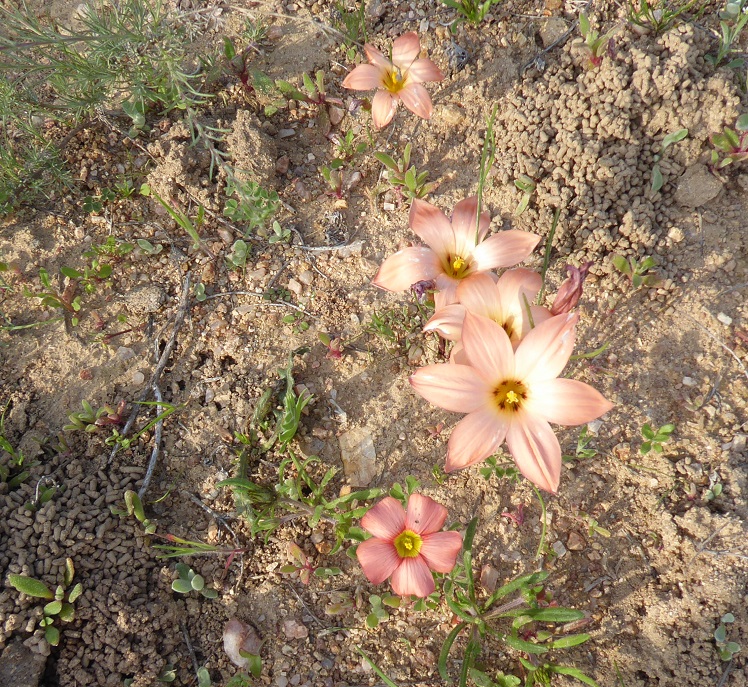
The road was heading to Wallekraal, but we took the left turn to Kamieskroon. After the Grootvlei pass we stopped to admire flowers again and found a fascinating little clump of a romulea and oxalis of exactly the same shade of salmon pink growing together. It is fascinating how often different species are exactly the same colour in a location. I think this mimicking has to do with attracting pollinators.
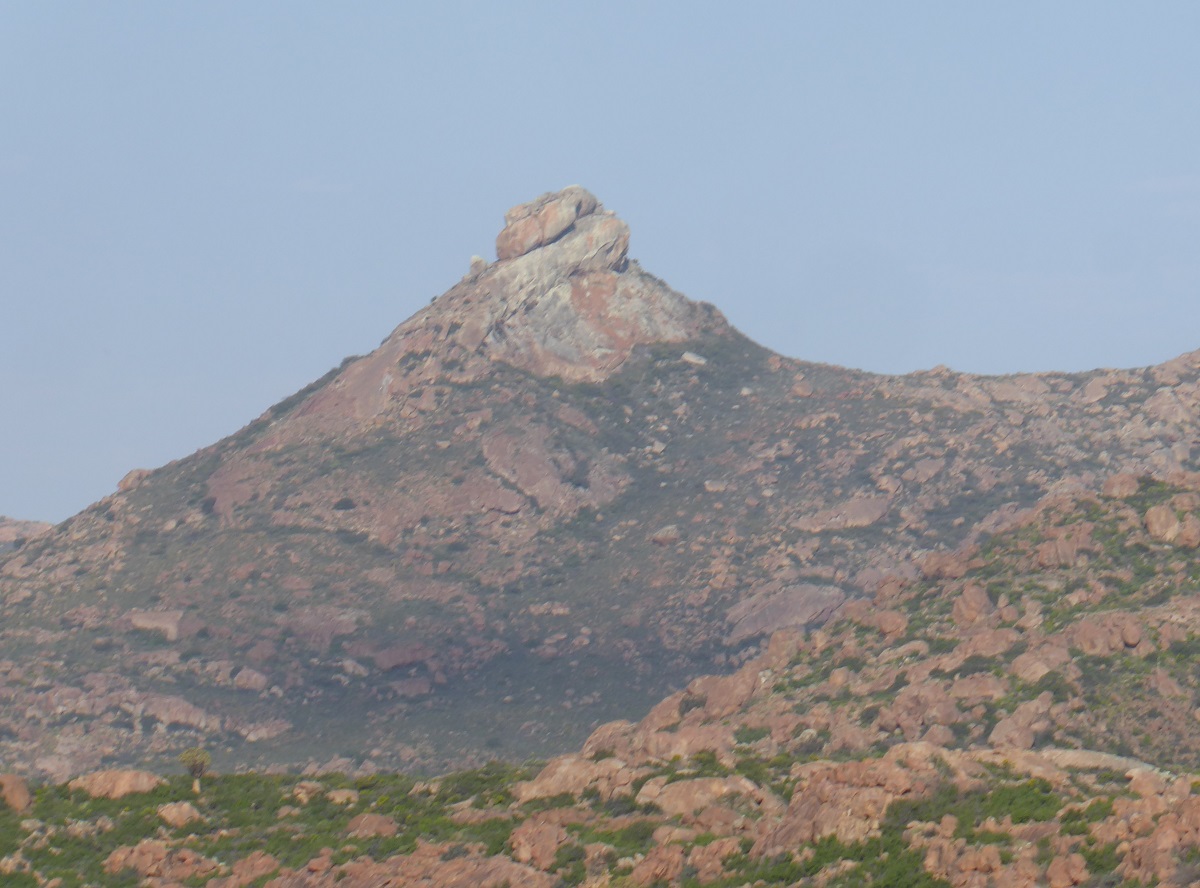
Just before reaching Kamieskroon, we noticed Bushman Kop on the left. This bears an uncanny resemblance to a man lying down. Look out for it if you travel this way. Another koppie near the town is called the “kroon/crown”. We got to Kamieskroon before 5pm and were able to fill up with petrol before heading out along another gravel road to our accommodation at Pedroskloof 27kms away up in the Kamiesberg mountains. Pedroskloof is a farm offering self-catering and other units.
It was lovely to meet up with fellow IBSA members, some of us only seeing each other on these weekends away once a year. After checking in we enjoyed a real boerekos dinner at the Pedroskloof restaurant and retired for the night.
Saturday
The morning was cold, but sunny on the farm. Plans were to head back to Kamieskroon in the morning and on to the Skilpad Wildflower Garden in the Namaqualand National Park. This lies about 15 kms from Kamieskroon. However as we descended the pass to Kamieskroon we were engulfed in mist and by the time we reached the town it had become a light drizzle. Hoping that this would lift soon we repaired to the local church hall where the ladies of the parish were selling snacks and handicrafts. I bought a colourful knitted cap to try to stave off the unexpected chill.
Skilpad
After a while we decided to press on the Skilpad even though the clouds were not lifting. Once there, there was lots to see and we took some short walks as well as a short drive. M and I had enjoyed 3 sunny days and we felt so sorry for the people who had travelled up just for the weekend.
However even though many of the flowers were not open, some were not weather dependent and in bloom. Even those which were not open had an impact and it was interesting to see the different ways the flowers close. Some have petals that roll up, others furl like an umbrella.
Back to Pedroskloof
After a rather chilly lunch at the park picnic tables we headed back to Pedroskloof, hoping for some sunshine. We were rewarded and were able to take a short walk in the veld there. Our host had warned us that it was too early to expect to see many flowers, nevertheless we did find some interesting plants.
That evening most of us joined forces for a braai and we had a good time till chased to bed by imminent load shedding (another SA tradition).
Sunday
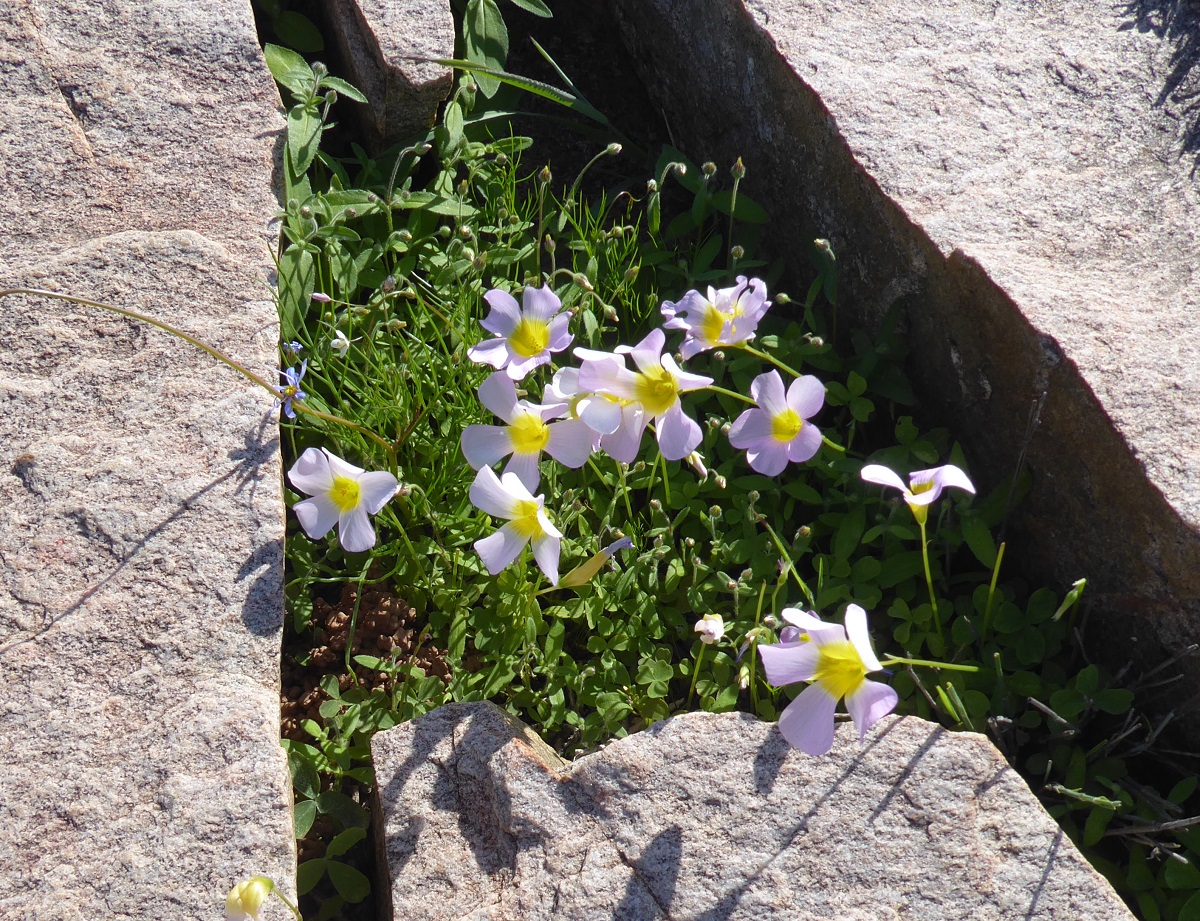
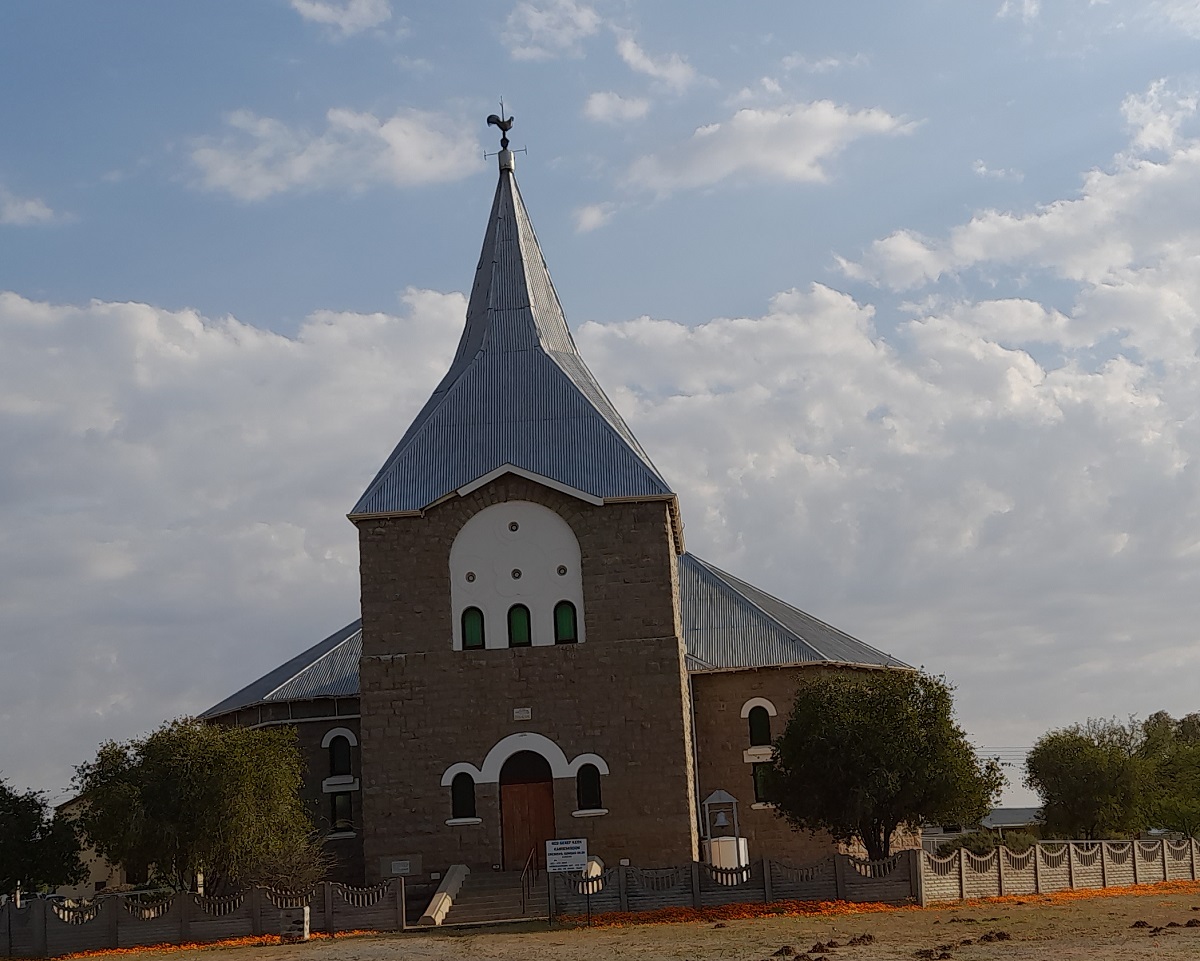
Most of us were returning home today and had a long way to go. Rather than heading back to Kamieskroon and returning down the N7, M and I, along with some others, decided to take the gravel road E of the N7 to Garies. This passes the old mission station, Leliefontein, en route and goes down Studer’s pass. The road was bad in parts, with ruts and deep puddles, but we took it slowly. We popped into Leliefontein briefly to see the old church, but a service was about to take place so we didn’t see the interior. We stopped on the pass at a scenic spot and found some flowers growing amongst the granite boulders there.
Eventually we reached Garies and were back on the N7. As we were heading S most of the flowers were facing us and we stopped several times to take pics. They were particularly nice around Bitterfontein. We stopped for lunch at one of the roadside picnic spots. It was interesting to see how the species changed as we neared the Knersvlakte.
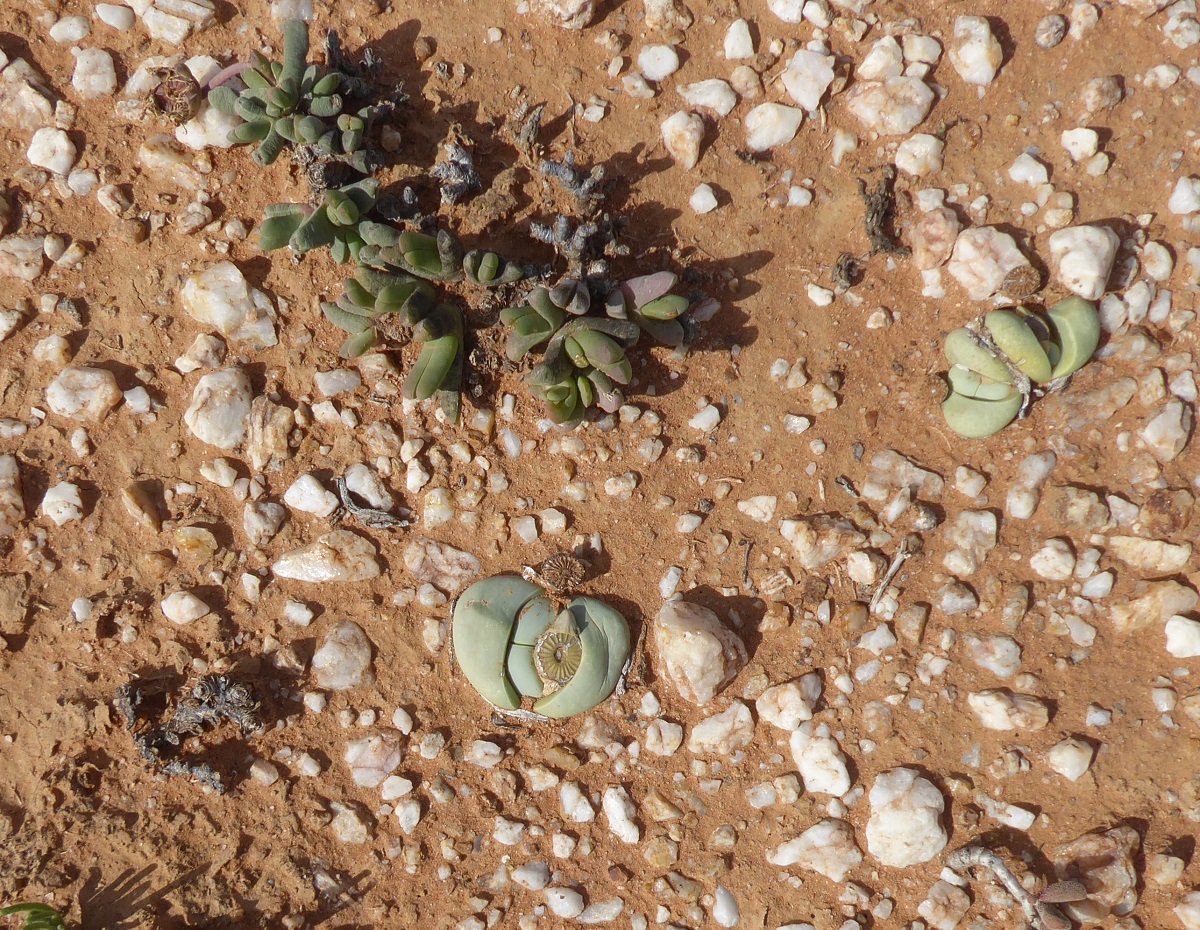
We had been intrigued by the sign to Douse the Glim in the Knersvlakte and decided to drive down the road for a few kms to explore. There were some vygies in flower and we saw a few conophytum (stone plants). The place name relates to a remote farmstead where Scottish soldiers were stationed during the Anglo Boer war. They were commanded to “put out the light” to avoid revealing their position to the Boers. We got nowhere near the farmstead.
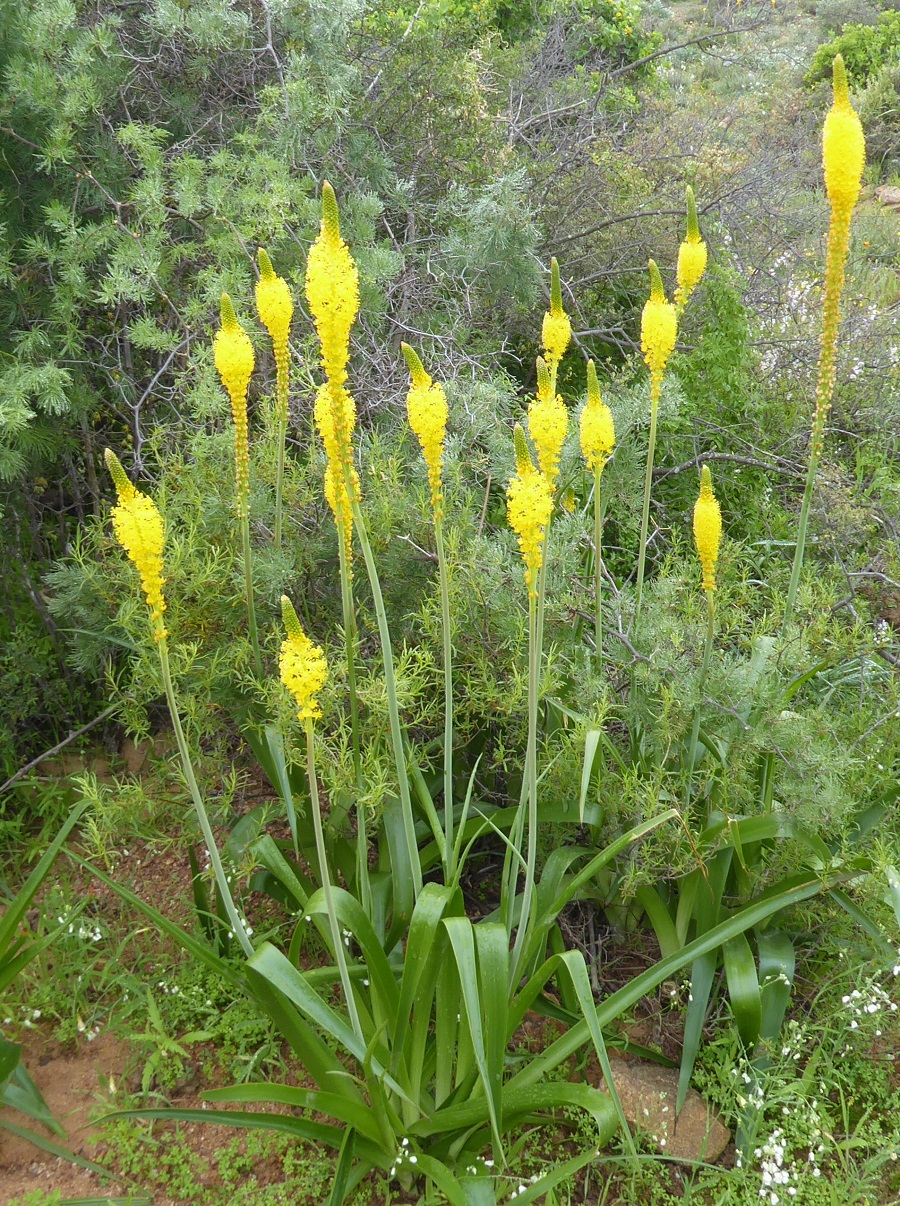
Just S of Vanrhynsdorp we stopped again and among the tall albucas on the roadside, found some gladioli. On southwards to home we sped, stopping briefly on top of the Piekenierskloof pass outside Citrusdal. We detoured to Piketberg for petrol then on home through the wheatfields as evening was falling.
We arrived back at KSU at around 6.30pm having travelled about 1650 kms, much of it along roads I had never travelled before, seeing lots of flowers and beautiful sights and catching up with friends. It was a lovely few days, albeit somewhat exhausting!
Wildflower trip to Springbok 2023 Gallery